
Micron Technology(MU)

Search documents
Hedge Fund and Insider Trading News: Chris Rokos, Michael Burry, Stanley Druckenmiller, Scott Bessent, Jain Global, D E Shaw, Kinder Morgan Inc (KMI), Micron Technology Inc (MU), and More
Insider Monkey· 2026-02-05 18:45
Core Insights - Generative AI is viewed as a transformative technology by Amazon's CEO Andy Jassy, indicating its potential to significantly enhance customer experiences across the company [1] - Elon Musk predicts that humanoid robots could create a market worth $250 trillion by 2040, representing a substantial shift in the global economy driven by AI innovations [2][3] - Major firms like PwC and McKinsey acknowledge the multi-trillion-dollar potential of AI, suggesting a broad consensus on its economic impact [3] Company and Industry Analysis - A breakthrough in AI technology is believed to be redefining work, learning, and creativity, leading to increased interest from hedge funds and top investors [4] - There is speculation about an under-owned company that may play a crucial role in the AI revolution, with its technology posing a threat to competitors [4][6] - Prominent figures in technology and investment, including Bill Gates and Warren Buffett, recognize AI as a significant advancement with the potential for substantial social benefits [8]



今夜,无眠!全崩了
Zhong Guo Ji Jin Bao· 2026-02-05 16:27
Market Overview - Global markets experienced a significant downturn, with major indices in the US suffering substantial losses. The Dow Jones dropped approximately 600 points, while the Nasdaq fell nearly 2% [1][2]. Stock Performance - Major technology stocks faced considerable declines, including Qualcomm (-7.58%), Oracle (-4.55%), Google (-4.51%), Amazon (-4.38%), and Tesla (-3.66%) [3]. - Alphabet, the parent company of Google, saw its stock decrease by 4% following its announcement of expected capital expenditures related to artificial intelligence, which could reach up to $185 billion by 2026 [7][8]. Commodities and Cryptocurrencies - Precious metals experienced sharp declines, with silver prices plummeting over 16% [3]. - Oil prices also fell significantly during this period [4]. - Bitcoin dropped below the $70,000 mark, settling at $67,000, indicating a loss of interest from traditional investors and a growing pessimism regarding cryptocurrencies [5]. Economic Indicators - Concerns about the labor market intensified, with US employers announcing 108,435 layoffs in January, the highest number for that month since the global financial crisis [8]. - Initial jobless claims for the week ending January 31 exceeded expectations, further contributing to a negative market sentiment [8]. - The US Bureau of Labor Statistics reported that job vacancies fell to their lowest level since September 2020 by December 2025 [9].





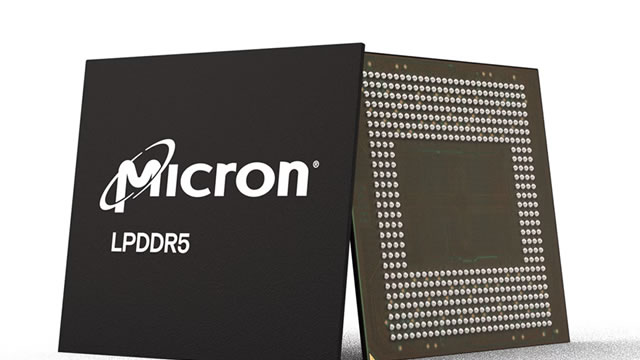
Micron (MU) is a Top-Ranked Momentum Stock: Should You Buy?
ZACKS· 2026-02-05 15:51
For new and old investors, taking full advantage of the stock market and investing with confidence are common goals. Zacks Premium provides lots of different ways to do both.The popular research service can help you become a smarter, more self-assured investor, giving you access to daily updates of the Zacks Rank and Zacks Industry Rank, the Zacks #1 Rank List, Equity Research reports, and Premium stock screens.It also includes access to the Zacks Style Scores. What are the Zacks Style Scores? Developed alo ...
一文读懂:华尔街“抛AI”妖风祸从何来?
Xin Lang Cai Jing· 2026-02-05 13:15
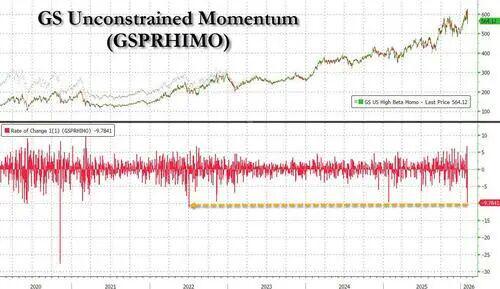
(来源:创业板观察) 自2022年年中以来,动量交易员曾以足以让沃伦·巴菲特感到汗颜的夏普比率统治着市场。然而周三, 这一切几乎遭遇了全线崩盘——他们蒙受了载入史册的损失。 动量交易简单说来就是"买入最近涨得最好的,卖出涨得最差的"。而根据业内的统计,高盛的"高贝 塔"或无约束动量组合(GSPRHIMO)刚刚创下了自2022年以来表现最糟糕的一天,超过了去年1月 Deepseek风暴之后的AI抛售潮。高贝塔股通俗而言就是指那些波动比大盘更剧烈的股票。 如果说,周二市场的跌幅源于软件股因人工智能颠覆风险引发的"投降式"抛售,那么周三的疲软则更集 中于基本面因素与仓位调整,使得大盘指数的变动相对于底层发生的剧烈动荡,显得具有欺骗性的平 稳。 这印证了高盛分析师Lee Coppersmith在上周末文章中的发现,即美股表面平静之下正波涛汹涌。统计显 示,标普500指数成分股平均的1周实际波动率,与整体标普500指数波动率之比在上周四刚刚达到6.88 ——处于2023年以来的第99个百分位。 来源:市场资讯 换句话说,标普500指数成分股的平均波动幅度大约是大盘指数的7倍,这就是为什么近几个交易日部分 个股的异动显得 ...


存储行业深度跟踪报告:26全年预计供给偏紧状态持续,产业链公司整体展望乐观
CMS· 2026-02-05 11:14
Investment Rating - The report maintains a positive outlook on the storage industry, suggesting that the overall performance of companies in the supply chain will be optimistic due to a tight supply situation expected to continue into 2027 [1]. Core Insights - The storage industry is projected to experience a significant increase in demand driven by AI applications, with a compound annual growth rate (CAGR) of approximately 20% for global storage bits, particularly in data centers transitioning to a ZB-level expansion cycle [15][18]. - The supply side is characterized by limited new capacity in 2026, with a forecasted growth of about 20% in bit shipments for both DRAM and NAND, leading to a sustained supply-demand mismatch [49][56]. - The report highlights a notable increase in inventory levels among downstream manufacturers, with strategic stockpiling to address anticipated demand in 2026 [9][60]. - Price trends indicate a significant rise in contract prices for DRAM and NAND, with expectations of a 90-95% and 55-60% increase respectively in Q1 2026, driven by strong server demand [9][30]. Demand Side Summary - The demand for storage is expected to grow exponentially due to AI inference, with NAND becoming increasingly critical in data centers [10][15]. - The global storage market size is anticipated to reach nearly $300 billion in 2026, reflecting a year-on-year growth of 39% [15][19]. - Data center storage capacity is projected to shift from EB to ZB levels, with significant contributions from AI-driven applications [18][22]. Supply Side Summary - Capital expenditures from major manufacturers are set to increase significantly in 2026, with Samsung, SK Hynix, and Micron expected to invest $20 billion, $20.5 billion, and $13.5 billion respectively [49][56]. - Despite increased capital spending, effective capacity release is expected to be delayed until 2027, maintaining a seller's market [49][56]. - The report notes that the shipment growth for DRAM and NAND is expected to be around 20%, with server applications accounting for over 45% of shipments [50][51]. Inventory Side Summary - The report indicates a significant divergence in inventory levels across the supply chain, with tight inventory conditions expected to persist throughout 2026 [9][60]. - Downstream manufacturers, particularly in mainland China, are actively increasing their inventory levels to prepare for the anticipated supply-demand gap in 2026 [9][60]. Price Side Summary - The report anticipates a continued upward trend in storage prices, with significant increases in contract prices expected due to ongoing supply constraints and strong demand from AI applications [9][30]. - The overall price index for storage products has shown a rapid increase since the second half of 2025, with expectations of further price hikes across all categories [9][30]. Sales Side Summary - The report forecasts a substantial increase in revenue and profit for major manufacturers in the storage industry, driven by the ongoing demand surge and strategic inventory management [9][60]. - The overall industry revenue for DRAM and Flash is projected to reach $551.6 billion in 2026, reflecting a 134% year-on-year increase [9][60].
【招商电子】存储行业深度跟踪报告:26全年预计供给偏紧状态持续,产业链公司整体展望乐观
招商电子· 2026-02-05 09:52
Demand Side - The global storage bit demand CAGR is expected to maintain around 20%, with the server market share gradually increasing [12][13][19] - AI inference is driving the demand for a three-tier storage architecture, highlighting the growing importance of NAND in data centers [24][25] - The global storage industry market size is projected to reach nearly $300 billion in 2026, reflecting a year-on-year growth of 39% [12][13] Supply Side - New supply in 2026 is expected to be limited, with bit shipment growth projected at around 20% for both DRAM and NAND [35][41] - Capital expenditures from major manufacturers are set to increase significantly in 2026, but effective capacity release will be delayed until 2027 [41][43] - The supply-demand mismatch is expected to persist, maintaining a seller's market until 2027 [3][35] Inventory Side - Manufacturer inventory levels are expected to remain tight throughout 2026, with a significant increase in strategic stocking by downstream manufacturers [46][47] - Original manufacturers are experiencing a decline in inventory levels, while downstream module manufacturers are actively increasing stock to meet anticipated demand [46][56] - Domestic module manufacturers have reported record-high inventory levels, which will support revenue and profit growth in 2026 [56][58] Price Side - The AI-driven demand is leading to a significant price increase, with contract prices for DRAM and NAND expected to rise sharply in Q1 2026 [4][5] - The overall price index has been accelerating since the second half of 2025, indicating a strong upward trend [4][5] - The combination of rising prices and demand is expected to drive substantial revenue growth across the entire storage industry in 2026 [5][12] Sales Side - The supply-demand mismatch is driving simultaneous increases in volume and price across the industry, with original manufacturers locking in high growth [5][12] - Revenue and profit for major manufacturers are expected to reach historical highs in Q4 2025 and continue to grow in 2026 due to strong AI demand [5][12] - Domestic and overseas manufacturers are expected to benefit from strategic inventory advantages, leading to significant performance improvements [5][12]
老溉邓白银,史诗级暴跌!黄金,40年最大跌幅!-美股-特朗普-美元指数-沃什-收盘_新闻
Sou Hu Cai Jing· 2026-02-05 09:41
Group 1 - The core point of the news is the significant drop in precious metal prices, with gold experiencing its largest single-day decline in 40 years and silver hitting a historic intraday drop of 36% [1][2][4] - On January 31, spot gold prices fell over 12%, reaching a low of $4682 per ounce, while closing down 9.25% at $4880 per ounce [2][4] - Spot silver prices dropped to a low of $74.28 per ounce, closing down 26.42% at $85.259 per ounce [4][8] Group 2 - The sell-off in precious metals was triggered by the strengthening of the US dollar, following the announcement of Kevin Walsh as the new Federal Reserve Chairman, which raised concerns about the Fed's independence [4][6][7] - The dollar index saw a significant increase, marking its largest single-day rise since July of the previous year, which negatively impacted investor confidence in gold and silver [4][5] - The market was already experiencing a demand for a correction, and the combination of factors, including the Fed chair nomination and broader capital flow dynamics, acted as a catalyst for profit-taking [4][6] Group 3 - The broader US stock market also faced declines, with major indices closing lower due to uncertainties surrounding Federal Reserve policies, inflation pressures, and geopolitical risks [5] - The gold sector saw substantial losses, with major companies like Barrick Gold and AngloGold experiencing declines of over 10% [5] - The sell-off in precious metals was characterized by panic selling and profit-taking, particularly among leveraged positions, which exacerbated market volatility [8][12]


内存价格猛踩刹车:三星、海力士和美光联手“救市”,等等党这次能赢吗?
3 6 Ke· 2026-02-05 08:39
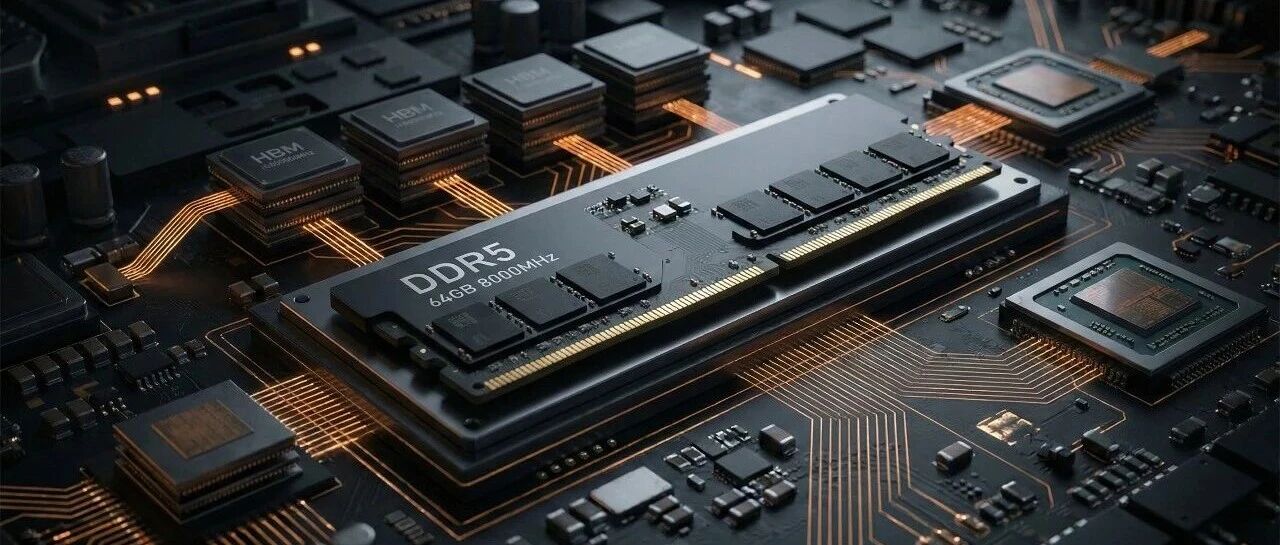
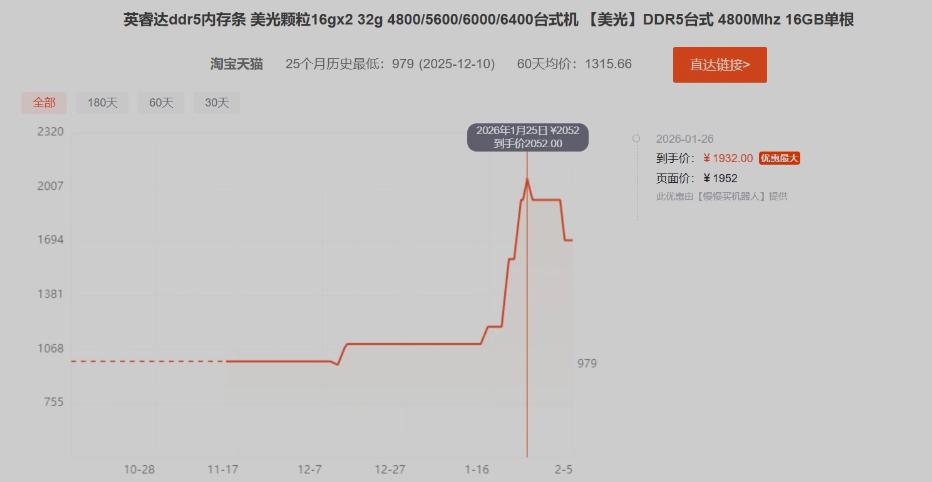
Core Insights - The recent surge in memory prices has stabilized, with major players like Samsung, SK Hynix, and Micron initiating a "real demand survey" to assess the market and signal increased production [1][10][15] - The price of memory products, such as DDR5 RAM, has shown a downward trend, with prices dropping from a peak of 2000 yuan to 1699 yuan [1][3] - The memory price increase has been attributed to panic buying and supply chain disruptions rather than genuine demand growth, leading to a disconnect between consumer demand and price hikes [4][9] Market Dynamics - The price of DDR4 memory increased from 138 yuan to 899 yuan within a year, representing a more than sixfold increase, while DDR5 prices have also surged significantly [4] - The price hikes have affected graphics card prices, with some models seeing a 20% increase due to rising memory costs [4] - The phenomenon of "bullwhip effect" is evident, where small fluctuations in consumer demand lead to exaggerated responses in the supply chain, causing significant price volatility [8] Company Responses - Samsung, SK Hynix, and Micron's joint initiative to investigate real demand is a rare move aimed at cooling the overheated market and addressing the role of distributors in inflating prices [10][15] - Despite record profits reported by these companies, the disparity between their revenue growth and the price increases in the market raises concerns about sustainability [10][11] Future Outlook - The memory market is expected to see a gradual price decline, but significant drops may take 3-6 months due to production ramp-up times [16] - The ongoing AI market dynamics and potential investment disputes may further influence memory demand and pricing strategies [16][17] - The current price levels are unlikely to return to pre-2023 lows, as new demand from AI applications is expected to support higher price floors [17]
11 Beaten-Down Tech Stocks Flashing Signs of a Near-Term Bounce
Investing· 2026-02-05 07:52
Market Analysis by covering: Nasdaq 100, NVIDIA Corporation, Micron Technology Inc, Advanced Micro Devices Inc. Read 's Market Analysis on Investing.com ...

半导体 - 传统存储器定价能力再度提升-Greater China Semiconductors-Old Memory Upping Pricing Power Again
2026-02-05 02:22
Summary of Conference Call on Greater China Semiconductors Industry Overview - The focus is on the semiconductor memory market, particularly old memory types such as NOR, MLC NAND, and DDR4 - The analysis indicates a significant shift in supply-demand dynamics, with expectations of reduced support from mainstream memory vendors for older memory types [1][3] Key Points Memory Supply-Demand Dynamics - The memory supercycle is expected to further squeeze support for old memory types, with expectations that commodity memory supply will be fully sold by 2026 [3] - Forecasts indicate a 26% undersupply for DDR4 in 2026, up from a previous estimate of 20%, driven by reduced support from Korean vendors [4] - MLC NAND is projected to face a 30%+ undersupply in 2026, with Samsung, Kioxia, and Micron potentially reducing supply [5] - NOR memory is expected to see an 8% undersupply in 2026, an increase from 5%, due to declining supply from US vendors [6] Pricing Power and Market Sentiment - There is a bullish sentiment on old memory, with analysts recommending buying on dips [1][3] - Pricing for DDR4 and MLC NAND is expected to rise, with significant price hikes noted for smartphone products (60-70% QoQ) and server DDR5 pricing increasing by 100% QoQ [59] - The pricing for consumer NAND is anticipated to increase by 30-40% QoQ, while eSSD pricing may rise by 50-70% QoQ [59] Company-Specific Insights - Price targets for several companies have been raised, including: - Nanya Technology Corp: NT$298.00 to NT$348.00 - Winbond Electronics Corp: NT$130.00 to NT$155.00 - Powerchip Semiconductor: NT$77.00 to NT$88.00 - Macronix International: NT$93.00 to NT$121.00 - GigaDevice Semiconductor: Rmb355.00 to Rmb414.00 [7] AI and Memory Demand - The shift towards AI, particularly Agentic AI, is driving massive demand for DRAM and NAND memory, necessitating higher memory capacity and performance [34][35] - The memory requirements for AI inference are increasing, with projections indicating that AI inference demand will account for significant portions of global memory supply in 2026 [49] Market Risks and Considerations - The potential for supply shortages poses risks, particularly for automotive applications [5] - The overall DRAM industry demand is expected to grow by 20% YoY in 2026, driven by strong order demand from cloud service providers [59] Additional Insights - The analysis highlights the importance of memory in AI development, noting that memory is becoming a critical bottleneck as AI systems evolve [29][33] - The report emphasizes the need for architectural and software-level memory efficiency to address the increasing memory demands of AI applications [29][33] This summary encapsulates the key insights and projections regarding the semiconductor memory market, highlighting the implications for pricing, supply-demand dynamics, and the impact of AI on memory requirements.