PepsiCo(PEP)

Search documents
Is PepsiCo's Innovation Pipeline Strong Enough to Reaccelerate Growth?
ZACKS· 2025-12-16 15:56
Core Insights - PepsiCo's innovation strategy is a key growth driver, focusing on health-oriented beverages and snacks, functional products, and clean-label reformulations [2][6] - The company is accelerating innovation in the protein segment, including the relaunch of Muscle Milk and protein-enhanced products [3][10] - New product development includes Propel for GLP-1 consumers and higher-fiber products, aligning with health and weight-management trends [4][10] - PepsiCo is introducing new oils in potato-based products and launching the Naked platform, emphasizing clean-label innovation [5][10] Innovation Strategy - The company is prioritizing health-led innovation and functional gains across its product lines [10] - Innovations include the relaunch of Muscle Milk and protein-enhanced Doritos and Quaker products [10] - The introduction of GLP-1-focused Propel and new oils supports the company's clean-label positioning [10] Competitive Landscape - Coca-Cola's innovation focuses on core brand strengthening and expansion into high-growth categories, with zero-sugar reformulations and flavor extensions [8] - Monster Beverage is heavily investing in new launches and has a solid innovation pipeline planned for 2026, with a focus on its Ultra brand [9] Financial Performance - PepsiCo shares have increased by 17% over the past six months, outperforming the industry growth of 4.2% [13] - The forward price-to-earnings ratio for PepsiCo is 17.74X, compared to the industry average of 18.42X [14] - The Zacks Consensus Estimate for PepsiCo's 2025 earnings per share (EPS) indicates a 0.6% year-over-year drop, while the 2026 EPS shows a 5.4% growth [15]


PepsiCo rejigs exec team to “accelerate growth”
Yahoo Finance· 2025-12-16 12:13
Core Viewpoint - PepsiCo is restructuring its senior executive team to enhance growth and performance in response to pressure from activist investor Elliott Investment Management [1][4]. Group 1: Executive Changes - Steven Williams has been appointed as vice chairman and global chief commercial officer, focusing on a unified selling organization and global growth strategy for the away-from-home business [2][3]. - Ram Krishnan has been promoted to CEO of the wider North American business, tasked with integrating food and drinks operations [3]. - Mike Del Pozzo has transitioned to president of PepsiCo's US beverage business from his previous role as president of PepsiCo North America [3]. - Athina Kanioura has been appointed CEO of the Latin America Foods business unit while retaining her role as chief strategy and transformation officer [3]. Group 2: Strategic Initiatives - PepsiCo's organizational changes aim to capture new growth opportunities and respond to Elliott Investment Management's engagement [4]. - The company plans to cut nearly 20% of its SKUs in the US early in the new year as part of its strategy [4]. - PepsiCo is aggressively reducing operating costs and improving operational excellence to support investments in advertising, marketing, and consumer value [5]. - The company intends to adopt a targeted approach on affordable price tiers by brand and channel to stimulate growth and enhance purchase frequency of mainstream brands [5].
FTC claimed Walmart got unfair pricing advantages from PepsiCo
Yahoo Finance· 2025-12-16 10:56
Core Insights - The FTC's lawsuit against PepsiCo, which was dismissed without prejudice, involved allegations of price rigging and preferential pricing practices that disadvantaged competing retailers [3][4][7] - The unsealed complaint revealed that Walmart was the retailer benefiting from PepsiCo's pricing strategies, raising concerns among independent grocers about anticompetitive practices [4][5][7] Group 1: Lawsuit Details - The lawsuit was filed in January and dismissed in May, with the FTC alleging that PepsiCo's pricing and promotions for Walmart harmed competition among retailers [3][4] - The complaint highlighted that PepsiCo provided Walmart with lower average retail prices and promotional benefits not available to its competitors, violating the Robinson-Patman Act [7] Group 2: Industry Reactions - The National Grocers Association expressed concerns about the implications of the complaint for independent grocers and reiterated calls for stronger antitrust enforcement [5][6] - Walmart responded to the allegations by emphasizing its commitment to negotiating for customer value and maintaining low prices, while not commenting on the specifics of the case [4]

2025饮料新品TOP100丨元气森林、农夫山泉、康师傅、统一激战新品、乳饮退潮谁来补位?
3 6 Ke· 2025-12-16 02:59
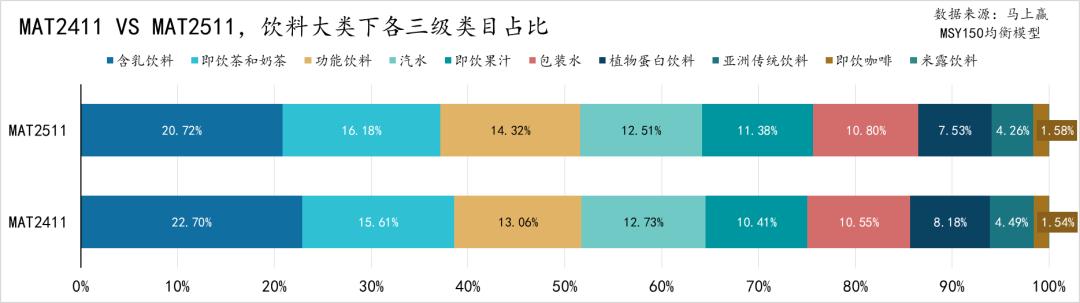
Core Insights - The article discusses the year-end review of the beverage market, focusing on the top 100 new products from December 2024 to November 2025, and compares them with the same period from the previous year to identify trends and shifts in the market [1][4]. Summary by Sections Overview of the Year-End Review - The year-end review will analyze the top 100 new beverage products and their market performance over the specified period, highlighting new trends and shifts in consumer preferences [1]. Data Collection and Methodology - The data for the top 100 products is sourced from the "马上赢" brand CT and various models, covering a wide range of retail channels across major cities in China [3]. - The selection criteria for the top 100 products exclude private label products and multi-pack items, focusing solely on individual SKUs based on sales revenue [1][2]. Market Performance Analysis - The beverage market is categorized into ten subcategories, including packaged water, functional drinks, dairy drinks, ready-to-drink tea, and more [4][5]. - The analysis reveals that dairy drinks are the only category exceeding 20% market share, while ready-to-drink tea, functional drinks, and carbonated beverages also hold significant shares [8]. Year-on-Year Comparison - A comparison between the two periods shows that the market share of dairy drinks has decreased by approximately 2%, with a sales growth decline of over 13% [13]. - Functional drinks and ready-to-drink juices have shown positive growth, while traditional categories like carbonated drinks and Asian traditional beverages have experienced declines [12][13]. New Product Trends - The top 100 new products for the current year show a significant increase in non-refrigerated ready-to-drink juices and sweetened ready-to-drink teas, while categories like sugar-free ready-to-drink tea and sports drinks have seen a reduction in new product entries [19][14]. - Notably, the top brands include "元气森林" and "康师傅," each with multiple products in the top rankings, indicating strong competition and innovation in the beverage sector [19][22]. Pricing and Specifications - The average price per 100ml for new products varies across categories, with non-refrigerated ready-to-drink juices and sweetened ready-to-drink teas generally priced higher [28]. - The distribution of product specifications indicates a growing preference for larger packaging sizes, reflecting changing consumer consumption patterns [25]. Launch Timing Insights - The timing of new product launches has shifted, with a noticeable increase in products launched in February and March compared to the previous year, suggesting a trend towards earlier market entry [31].




Is This 53-Year-Dividend-Streak Stock Due for a 20% Breakout?
The Motley Fool· 2025-12-15 20:05
Core Viewpoint - PepsiCo is collaborating with Elliott Investment Management, an activist investor, to enhance its profitability and potentially achieve a 20% price breakout despite facing current business challenges [2][7]. Company Overview - PepsiCo is the seventh-largest consumer staples company globally by market capitalization and the second-largest food-related corporation after Coca-Cola, with diversified operations in beverages, snacks, and packaged foods [3]. Financial Performance - PepsiCo's organic revenue growth for Q3 was only 1.3%, significantly lower than Coca-Cola's 6% growth during the same period [5]. - The stock has increased by approximately 15% over the past six months but remains about 25% below its 2023 highs [6]. Strategic Initiatives - PepsiCo is utilizing acquisitions and innovation to adapt to changing consumer preferences, which is a common strategy for strong brand managers during challenging times [6]. - The company is considering adopting a higher-margin approach similar to Coca-Cola's, which could lead to a significant stock price increase if implemented [8][10]. Investment Outlook - The current dividend yield for PepsiCo is 3.8%, which is on the higher end of its historical range, providing a reasonable return for investors while waiting for potential growth [9]. - If Elliott's recommendations are followed, a swift and substantial stock price increase is anticipated, making it advisable for potential investors to act sooner rather than later [11].
Take the Zacks Approach to Beat the Markets: Liquidia, Western Digital & Johnson & Johnson in Focus
ZACKS· 2025-12-15 15:11
Market Overview - The U.S. stock markets ended the week mostly lower, with the Nasdaq Composite and S&P 500 slipping by 1.49% and 0.28% respectively due to a sharp selloff in tech stocks [1] - The Dow Jones Industrial Average gained 1.51% as investors rotated toward value and traditional sectors [1] Federal Reserve Actions - The Federal Reserve cut its key overnight borrowing rate by a quarter-percentage-point, now in the range of 3.5% to 3.75% [2] - This decision was influenced by signs of gradually cooling inflation, aimed at supporting the labor market and stimulating economic growth [2] - The number of Americans filing new applications for unemployment benefits surged to a 4.5-year high of 236,000, indicating a sharp deterioration in the jobs market [2] Stock Performance and Recommendations - Liquidia Corporation (LQDA) shares gained 43.9% since being upgraded to Zacks Rank 2 (Buy) on October 13, outperforming the S&P 500's 4.4% increase [3][6] - The Bank of N.T. Butterfield & Son Limited (NTB) returned 22.7% since its upgrade to Zacks Rank 1 (Strong Buy) on October 7, compared to the S&P 500's 1.5% increase [4] - Western Digital Corporation (WDC) shares advanced 52.8% since its upgrade to Outperform on October 13, significantly beating the S&P 500's 4.4% increase [7] Portfolio Performance - A hypothetical portfolio of Zacks Rank 1 stocks returned +14.3% in 2025, slightly underperforming the S&P 500 index's +14.9% [11] - The Zacks Model Portfolio has outperformed the S&P index by more than 12 percentage points since 1988, with an annualized average return of +23.9% compared to +11.5% for the S&P 500 index [14] Sector-Specific Stocks - Cencora, Inc. (COR) and Fair Isaac Corporation (FICO) returned 18.7% and 18.6% respectively over the past 12 weeks [15] - Johnson & Johnson (JNJ) returned 19.3% over the past 12 weeks, benefiting from investor demand for quality dividend stocks [19]




Build a Stronger 2026 Portfolio With These 5 Dividend Aristocrats
ZACKS· 2025-12-15 14:25
Core Insights - Dividend aristocrat stocks are essential for investors aiming for stability and long-term wealth creation, as they have consistently increased dividends for at least 25 years, showcasing financial discipline and commitment to shareholders [1][2] Dividend Aristocrats Overview - Dividend aristocrats serve as a hedge against economic uncertainty, providing downside protection and consistent payout increases, making them suitable anchors in diversified portfolios [2] - Five highlighted dividend aristocrats for 2026 include Atmos Energy Corporation, Medtronic plc, PepsiCo, Inc., Caterpillar Inc., and S&P Global Inc., all of which exhibit robust dividend growth and steady returns [3][8] Atmos Energy Corporation (ATO) - ATO has raised its annual dividend for 42 consecutive years, with a current quarterly dividend of $1 per share and an annual dividend yield of 2.38% [3][4] - The new dividend for fiscal 2026 is $4 per share, reflecting a nearly 15% increase from fiscal 2025 [4] Medtronic plc (MDT) - MDT has increased its dividend for 48 consecutive years, with a current quarterly dividend of 71 cents and an annual dividend yield of 2.84% [5][6] - The company is expanding its global presence, particularly in the Cardiovascular business, despite facing near-term supply and tariff-related challenges [6] PepsiCo, Inc. (PEP) - PEP has raised its annualized dividend by 5% in 2025, reaching $5.69 per share, marking its 53rd consecutive annual dividend increase [7][9] - The company plans to return $8.6 billion to shareholders in 2025, including $7.6 billion in dividends and $1 billion in buybacks, with an annual dividend yield of 3.78% [9] Caterpillar Inc. (CAT) - CAT has a long history of dividend payments, having raised dividends for 32 consecutive years, with a recent quarterly dividend hike of 7% to $1.51 per share [10][11] - The company returned approximately $1.1 billion to shareholders in dividends and share repurchases in Q3 2025, with an annual dividend yield of 1.01% [11] S&P Global Inc. (SPGI) - SPGI has increased its dividend annually for over 50 years, with a current quarterly dividend of 96 cents and an annualized dividend of $3.84 per share [12][13] - The company reported a strong adjusted operating profit margin of 52.1% and generated free cash flow of $1.4 billion in the last quarter [14]



JPMorgan Chase Just Recommended Buying PepsiCo in 2026. Here Are the Tailwinds Buoying the Stock.
The Motley Fool· 2025-12-15 12:15
Core Viewpoint - PepsiCo is set to reduce its brand portfolio by nearly 20% by early 2026, indicating a strategic shift towards streamlining operations and enhancing shareholder value [1]. Group 1: Brand Portfolio Reduction - The company plans to eliminate approximately 12 brands from its current lineup of 60, which could lead to reduced operating expenses and improved operating margins [6]. - This decision aligns with the company's recognition that its portfolio has become too extensive, suggesting a focus on more profitable and innovative products [1][6]. Group 2: Analyst Support - J.P. Morgan analyst Andrea Teixeira upgraded PepsiCo's stock rating from neutral to overweight and raised the price target from $151 to $164, indicating a potential upside of 10.2% [3]. - Analyst upgrades can serve as short-term catalysts, and the stock is viewed as having multiple growth opportunities leading into 2026 [3]. Group 3: Engagement with Activist Investors - PepsiCo's decision to prune its brand lineup appears to be influenced by constructive dialogue with activist investor Elliott Investment Management, which has previously suggested divesting certain operations [4][5]. - The relationship between PepsiCo and Elliott is currently positive, which may facilitate further strategic changes that could benefit the company's stock performance [5]. Group 4: Market Trends and Growth Potential - The company is refreshing its value proposition, which is crucial for consumer engagement, and is seeing positive trends in snack sales as consumers respond to perceived value [9][10]. - PepsiCo aims for organic sales growth of 2% to 4% by 2026, with the potential for exceeding this target based on current market trends [10].
Should Passive-Income Investors Buy PepsiCo Stock Before 2026?
The Motley Fool· 2025-12-15 03:33
Core Insights - The article discusses the investment landscape and highlights the importance of understanding market dynamics and company fundamentals [1] Group 1 - The investment analyst emphasizes the need for thorough research before making investment decisions [1] - It is noted that market conditions can significantly impact stock performance, making it crucial for investors to stay informed [1] - The article suggests that diversification can help mitigate risks associated with market volatility [1]
Forget the 2.8% Social Security Increase. These Aristocrats Pay You 4% to 7% More Annually
247Wallst· 2025-12-14 14:51
Core Insights - The Social Security Administration announced a 2.8% cost-of-living adjustment (COLA) for 2026, following a 2.5% increase in 2025, impacting 71 million Americans [1][2] - Dividend growth stocks have historically provided higher annual increases compared to Social Security adjustments, with several blue-chip companies consistently outperforming these adjustments [1][2] Dividend Growth Companies - **Caterpillar**: Achieved a 10-year compound annual dividend growth rate of 7.2%, with a quarterly dividend increase of 7.1% to $1.51 in December 2025, marking 32 consecutive years of increases [3][4] - **Coca-Cola**: Raised its dividend for 62 consecutive years, with a 10-year compound annual growth rate of 4.5% and a quarterly dividend increase of 5.2% to $0.51 in 2025 [6][8] - **Johnson & Johnson**: Also increased its dividend for 62 consecutive years, with a 10-year compound annual growth rate of approximately 6.5% and a quarterly dividend increase of 4.8% to $1.30 in 2025 [9][10] - **PepsiCo**: Maintained a 52-year dividend increase streak, with a 10-year compound annual growth rate of 7.1% and a quarterly dividend increase to $1.4225 in 2025 [12][14] - **Procter & Gamble**: Holds the longest streak with 68 consecutive years of dividend increases, averaging annual growth of 5-7% [15][17] Financial Performance - **Caterpillar**: Projected annual dividend increase from $1.84 in 2012 to $6.04 in 2026, a 228% increase over 14 years, with Q3 2025 operating cash flow of $3.7 billion [4][5] - **Coca-Cola**: Quarterly dividend increased from $0.16 in 1999 to $0.51 in 2025, a 219% increase, with Q3 2025 dividends totaling $2.108 billion [7][8] - **Johnson & Johnson**: Quarterly dividend increased from $0.25 in 1999 to $1.30 in 2025, a 420% increase, with Q3 2025 dividends of $3.132 billion [10][11] - **PepsiCo**: Annual dividend growth from $2.15 in 2012 to $5.55 in 2025, a 158% increase, with Q3 2025 dividends of $1.949 billion [13][14] - **Procter & Gamble**: Paid $2.549 billion in dividends in Q1 2026, with a current dividend yield of 2.93% and a 60% payout ratio [16][17]