索尔维

Search documents
0226脱水研报
2026-03-01 17:23
PEEK材料,人形机器人轻量化的核心;低成本 +低能耗,近存计算将成为AI时代芯片性能提升的 主流方案——0226脱水研报 2025/02/26 19:43 1、PEEK材料:浙商证券研报指出,PEEK材料是"以塑代钢"的绝佳材料,预计2027年全球 PEEK产能仅能基本满足人形100万台需求,且国内产能仅占49%,未来如人形大批量量产, PEEK产能存在供需缺口快速放大,带来行业高景气。 2、存储:开源证券指出,HBM历经多次迭代,已成为高性能计算、数据中心主流近存计算架 构。未来随AI手机等AI端侧设备以及机器人等新型AI终端发展,CUBE有望成为端侧AI主流近 存计算架构。 3、铬:广发证券研报指出,谐波减速器更适用于人形机器人等领域,其由柔轮、刚轮、波发 生器三个基本构件组成。而铬元素具备高强度、耐腐蚀性及抗疲劳性,已验证广泛应用于谐 波减速器柔轮、刚轮、波发生器部位。行业扩产壁垒高,供给偏紧且集中。 4、军工AI:国盛证券指出,AI+军工已成为大势所趋,美国Palantir在AI浪潮下,市值破万亿 已超越洛马等传统军工巨头。国内军工产业也在加速进化,中游拥有稀缺数据资源和拥抱AI 技术的企业,和下游 ...
又一化工巨头,入局AI数据中心新材料
DT新材料· 2026-02-06 16:07
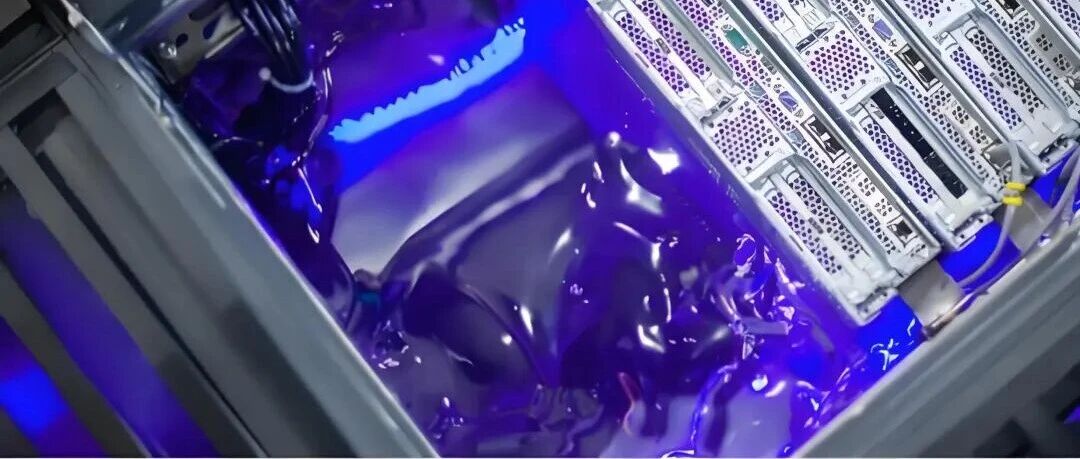
Core Viewpoint - The competition for computing power in AI large models has intensified, with chip cooling becoming a hidden bottleneck for industry development. New materials and cooling solutions are essential for addressing the increasing power density of high-performance chips [2][4]. Group 1: Company Developments - Xin'an Co., a leader in organic silicon, has partnered with Canxiang Technology to launch an immersion liquid cooling solution, applying self-developed high-performance silicon-based cooling liquid to commercial immersion cooling platforms [2]. - The newly introduced ICL series immersion silicon-based liquid cooling products demonstrate Xin'an's long-term technological foundation, featuring excellent insulation, low viscosity for rapid heat dissipation, and environmental friendliness [5]. - Xin'an's shift from a raw material supplier to a comprehensive solution provider marks a significant transformation in the context of increasing competition in the traditional organic silicon market [7]. Group 2: Market Insights - The liquid cooling market in China is projected to reach 29.3 billion yuan by 2025, with the edge computing market expected to exceed 100 billion yuan [7]. - The phenomenon of high power density in chips is becoming more pronounced across various applications, including electric vehicles, data centers, humanoid robots, and power semiconductors, necessitating advanced cooling solutions [7]. Group 3: Technical Innovations - The immersion cooling solution allows high-performance AI servers to be fully submerged in a special silicon-based cooling liquid, breaking the physical limits of traditional air cooling technology [4]. - The current heat power density on AI processors has reached 1 kW/cm², significantly exceeding the temperatures found in rocket nozzles, highlighting the urgent need for innovative thermal management solutions [5]. - Future chip thermal management will focus on shortening thermal paths and reducing interface thermal resistance, potentially through the introduction of high thermal conductivity materials [8][9].


金石资源:目前主流的氟化液主要包括全氟胺、全氟聚醚、全氟烯烃及氢氟醚类四种技术路线
Zheng Quan Ri Bao Wang· 2026-01-23 13:15
Core Viewpoint - Jinshi Resources (603505) highlights the four main technical routes of fluorinated liquids, which include perfluoroamines, perfluoropolyethers, perfluoroolefins, and hydrofluoroethers, each with distinct characteristics in terms of environmental impact, process costs, and applicable scenarios [1] Group 1: Technical Routes - Perfluoroamines, represented by 3M, have excellent heat dissipation performance but are associated with high pollution and energy consumption due to their electrochemical fluorination production process, resulting in a high global warming potential (GWP) and elevated costs [1] - Perfluoropolyethers, primarily produced by European companies like Solvay, offer good heat dissipation performance, but some products have a GWP even higher than perfluoroamines, along with relatively high costs [1] - Perfluoroolefins, proposed by companies like Noah, have the lowest GWP and outstanding environmental properties, along with good heat dissipation performance; their production process is advantageous, making them the most cost-effective among the products, currently mainly used in temperature control and cleaning in semiconductor and data center applications [1] - Hydrofluoroethers are suitable for non-contact liquid cooling scenarios, providing good heat dissipation performance, but they have a higher dielectric constant [1]

基础化工行业年度报告:周期成长双线轮动,持续看好成长赛道和反内卷大方向
Xin Lang Cai Jing· 2026-01-09 09:00
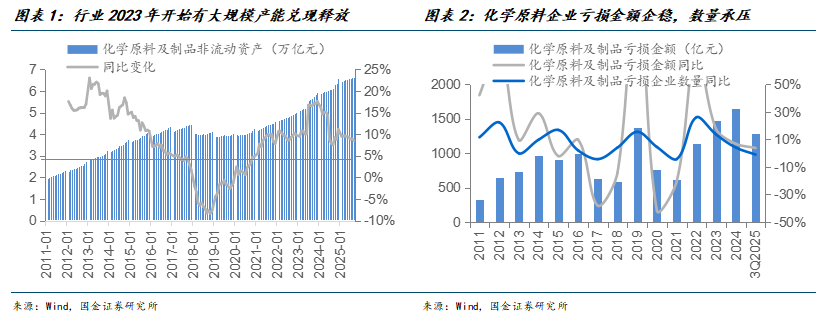
Group 1 - The chemical industry is at the bottom of its profitability cycle, with the chemical PPI showing signs of stabilization, indicating limited further downside risk [1][6][41] - The trend of "East rising, West falling" is evident, with Chinese companies expanding their product and capacity overseas to mitigate risks and enhance market presence [1][23][35] - There is a clear trend of polarization within the industry, where only companies above the industry median can realize profits, while marginal firms face significant challenges [1][36][39] Group 2 - Supply-side constraints are expected to improve industry sentiment, leading to price and profit recovery, particularly in sectors with limited new capacity [2][43][44] - The demand side remains weak, but structural opportunities may arise from new market segments and changes in demand patterns [3][47][48] - Emerging sectors such as AI, robotics, and solid-state batteries are anticipated to drive long-term investment opportunities due to their growth potential [2][48][49] Group 3 - The chemical industry is experiencing a significant shift in its competitive landscape, with European chemical competitiveness declining, allowing Chinese firms to capture more market share [23][25][29] - The export of chemical products from China has been increasing, with a net export value of $24.1 billion, indicating a positive trend in mitigating domestic supply pressures [15][31][33] - Companies are increasingly focusing on overseas resource acquisition, such as phosphate and potassium mines, to secure raw materials and enhance their competitive edge [1][35][36]
华谊集团(600623):综合性化工企业,广西基地大有可为
环球富盛理财· 2025-12-15 06:40
Investment Rating - The report assigns a positive investment rating to Shanghai Huayi Group Corporation, indicating a favorable outlook for the company [8]. Core Insights - Shanghai Huayi Group is a comprehensive chemical enterprise with five core business systems: energy chemicals, green tires, advanced materials, fine chemicals, and chemical services. The company achieved a total revenue of 36 billion yuan and a net profit of 395 million yuan in the first three quarters of 2025 [1]. - The acquisition of a 60% stake in San Aifu for 4.091 billion yuan enhances Huayi's position in the fluorochemical sector, with core products including high-end fluoropolymers and fourth-generation refrigerants, which are widely used in new energy, electronic information, and aerospace fields [1]. - The Guangxi Huayi Energy Chemical Company, a significant investment project, is the largest industrial project in Guangxi, with a total investment nearing 100 billion yuan [4]. Summary by Sections Company Overview - Shanghai Huayi Group operates in various sectors, including energy chemicals, green tires, advanced materials, fine chemicals, and chemical services, making it a leading player in the chemical industry [1]. Financial Performance - In the first three quarters of 2025, the company reported revenues of 36 billion yuan and a net profit of 395 million yuan [1]. Strategic Developments - The acquisition of San Aifu strengthens Huayi's fluorochemical capabilities, with San Aifu generating 4.62 billion yuan in revenue in 2024, albeit with a 13% year-on-year decline [1]. - The Guangxi base is a key component of Huayi's growth strategy, with significant investments aimed at enhancing production capabilities and market reach [4]. Competitive Advantages - The company has established itself as a preferred partner for global chemical firms entering the Chinese market, collaborating with major companies like BASF and Arkema [4]. - Huayi's extensive network of advanced chemical production bases supports its competitive positioning both domestically and internationally [4].

开门!自由贸易!欧盟:偏不偏不,我们要原材料独立自主!
Sou Hu Cai Jing· 2025-12-09 12:00
Core Points - The European Commission announced an emergency fund of €3 billion to support domestic mining, processing, and recycling of critical raw materials, marking a significant shift in Europe's approach to resource independence [1][3] - The funding is part of the Critical Raw Materials Act (CRMA), which mandates that by 2030, at least 10% of strategic raw materials consumed in the EU must be sourced domestically, 40% processed locally, and 25% recycled [1][3] - The Act also sets a limit on dependency on any single third-party country to no more than 65%, highlighting concerns over reliance on specific nations, particularly China [1][3] Historical Context - Europe's strategic error in relinquishing raw material autonomy has roots in the globalization trends of the past few decades, where the focus shifted to high-value sectors while outsourcing resource-intensive processes [3][5] - The belief in "comparative advantage" led to a systematic decline in domestic mining and processing capabilities, as seen in the case of Rhône-Poulenc, which abandoned its leadership in rare earth separation technology [5][6] - The 2010 crisis, triggered by China's export restrictions on rare earths, briefly prompted a reevaluation of Europe's raw material strategy, but the subsequent return to low-cost imports from China stifled further development [6][7] Current Challenges - The EU's current efforts to regain control over raw materials face significant obstacles, including lengthy development timelines and stringent environmental regulations that complicate new mining projects [14][16] - The economic viability of domestic mining is questioned, as demonstrated by the Storkwitz deposit in Germany, which was deemed economically unfeasible despite initial optimism [16][17] - The reliance on Chinese processing capabilities remains high, with estimates indicating that up to 90% of Europe's rare earth supply chain is dependent on China, exacerbating the vulnerability of European industries [14][19] Future Outlook - The establishment of a €10 billion raw materials fund in Germany aims to attract private investment in mining and processing, but bureaucratic inefficiencies and a lack of decisive action have hindered progress [17][18] - The EU's attempts to promote recycling and urban mining face challenges due to higher costs compared to cheap imports from China, leading to a paradox where Europe exports its electronic waste to Asia [18][19] - The geopolitical landscape adds further complexity, as potential export restrictions from key suppliers could lead to immediate supply chain disruptions, particularly in defense sectors reliant on rare earth elements [19]
欧洲稀土王炸背后:99%股民忽略的关键数据
Sou Hu Cai Jing· 2025-11-13 21:49
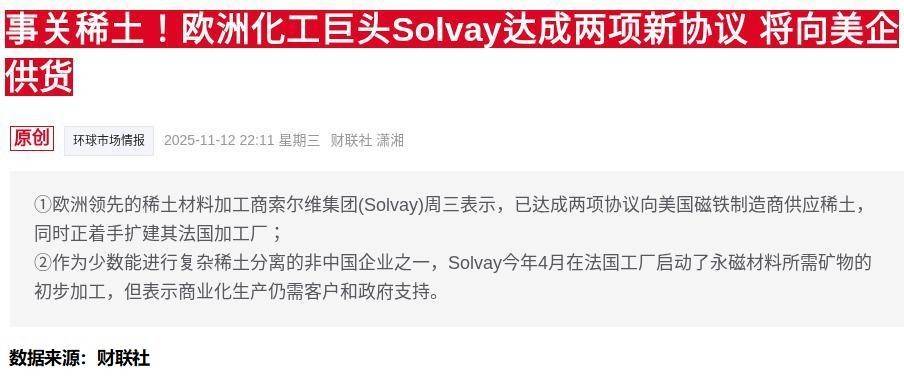
一、稀土巨头的阳谋与散户的困局 欧洲稀土巨头索尔维最近干了件大事。他们不仅跟美国两家磁铁制造商签了供应协议,还要扩建法国工厂。这事儿放在全球供应链重构的背景下,简直就是 一记重拳。但有意思的是,当我打开股吧论坛,发现大多数人还在争论明天大盘是涨是跌。 菲利普·凯伦这个老狐狸说得直白:"美国客户已经准备好签合同了。"言下之意就是钱到位了。可咱们的散户朋友呢?还在为要不要补仓纠结得睡不着觉。 这让我想起十八年前刚接触量化系统时的自己——盯着分时图上的每一根波动线,活像个赌场里数牌的菜鸟。 二、牛市幻觉与真实世界的鸿沟 都说牛市来了猪都能飞,但现实是多数人连猪都不如。为什么?因为大多数人根本分不清什么是"看得见的机会",什么是"抓得住的机会"。就像现在稀土概 念炒得火热,但真正能吃到肉的,早在一个月前就通过机构资金流向锁定了目标。 我见过太多人在牛市中赚过又吐回去的故事。上周还有个老友炫耀他抓到了涨停板,结果这周就哭诉"刚解套又套牢"。问题出在哪?他们总把K线图当圣 经,却不知道机构早就在量化数据里留下了蛛丝马迹。 | ∞ 机构库存 高度活跃: 增加 | LULL LLL LLL LLL P | | | " | | ...
行业聚焦:全球半导体用湿电子化学品市场头部企业份额调研(附Top 10 厂商名单)
QYResearch· 2025-10-30 02:40
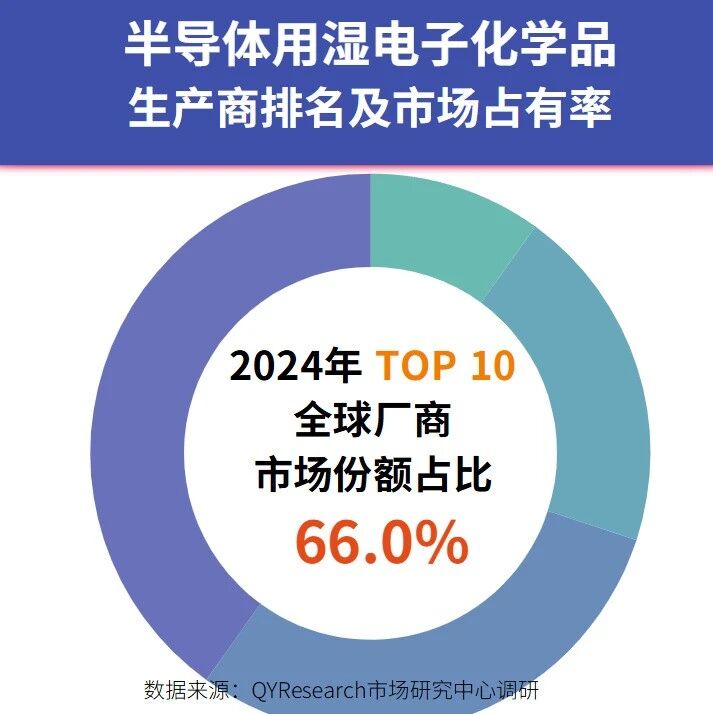
Core Viewpoint - The semiconductor wet electronic chemicals market is projected to reach $2.81 billion by 2031, with a compound annual growth rate (CAGR) of 7.4% in the coming years [2]. Market Overview - The global production of semiconductor wet electronic chemicals is expected to reach 1.2 million tons in 2024, with an average price of $1,300 per ton and a gross margin of approximately 30% [4]. - The top ten manufacturers are estimated to hold about 66.0% of the market share in 2024 [4]. Market Drivers and Opportunities - The rapid growth of the semiconductor industry is a key driver for the wet chemical market, fueled by the increasing demand for high-performance semiconductor chips due to the proliferation of electronic products like smartphones and computers [9]. - Technological advancements and innovations in semiconductor manufacturing processes are critical growth drivers, especially as device sizes shrink below 10 nanometers, necessitating ultra-pure chemicals and specialized formulations [9]. - Government policies supporting the domestic wet chemical industry, such as financial subsidies and tax incentives, positively impact market growth [9]. Market Trends - There is a rising demand for higher purity levels in wet chemicals as semiconductor nodes shrink to 7 nanometers and below, leading to the development of specialized formulations and purification processes [11]. - Approximately 70% of semiconductor manufacturers have adopted advanced cleaning steps using specialized wet chemicals like hydrogen peroxide to ensure the quality and performance of semiconductor chips [11]. - The use of AI-controlled quantitative feeding systems is increasing, with about 45% of semiconductor manufacturers implementing these systems to enhance accuracy and efficiency in chemical feeding [11].
杜邦、霍尼韦尔、3M,再拆分!
DT新材料· 2025-10-20 16:05
Core Insights - DuPont, Honeywell, and 3M are undergoing significant business restructuring, focusing on separating their high-growth segments from slower-growing ones to enhance operational efficiency and market competitiveness [2][3][5] DuPont - DuPont's board approved the spin-off of its electronic business into a standalone company named Qnity Electronics, which will focus on semiconductor technology and industrial solutions [2] - Qnity Electronics signed a long-term strategic agreement with SK Hynix for the supply of chemical mechanical polishing pads, indicating strong market demand in the semiconductor sector [2] - The restructuring aims to optimize resource allocation and improve valuation, as the electronic business is expected to grow rapidly compared to other segments like water services [3] Honeywell - Honeywell's board has approved the spin-off of its Solstice Advanced Materials division, which will focus on high-growth specialty materials benefiting from global energy transitions and AI computing demands [3] - The Solstice division will consist of two main business units: Refrigerants and Applications Solutions, projected to generate $2.7 billion in sales in 2024, and Electronics and Specialty Materials, expected to achieve $1 billion in sales [4] - The overall sales for Solstice in 2024 are anticipated to reach $3.8 billion, with a net profit of $600 million and an adjusted EBITDA of $1.1 billion [4] 3M - 3M is evaluating the divestiture of parts of its safety and industrial segment, aiming to streamline operations and focus on higher-growth areas [5] - The company has previously spun off its healthcare business, creating Solventum Corporation, and is now looking to optimize its business portfolio further [5] - 3M faces ongoing legal challenges related to PFAS contamination, which could impact cash flow, while its safety and industrial segment has shown low profitability and growth [5] Industry Trends - Major corporations are increasingly restructuring and optimizing their business models to focus on core competencies and high-growth areas, as seen with BASF, Evonik, and Solvay [5] - The trend reflects a broader industry shift towards enhancing resource utilization and cost efficiency in response to competitive market dynamics [5]



突发!欧盟拟强制中企转让电池技术!
起点锂电· 2025-10-16 10:12
Group 1 - The article discusses the upcoming CINE2025 Solid-State Battery Exhibition and Industry Annual Conference, scheduled for November 6-8, 2025, in Guangzhou, with over 200 exhibitors and 20,000 professional attendees expected [1] - The event will feature the 2025 Qidian Solid-State Battery Golden Ding Award Ceremony and the SSBA Solid-State Battery Industry Alliance Council [1] - A list of first batch exhibitors and sponsors includes companies like Jin Na Technology, Ru Tian Technology, and Ningde Times, among others [1] Group 2 - The European Union plans to introduce new regulations that impose multiple restrictive conditions on Chinese companies entering its key markets, particularly focusing on forced technology transfer [2][3] - The new regulations, part of the "Industrial Accelerator Act," aim to increase local content requirements and mandate joint ventures with local firms, directly targeting Chinese companies in the electric vehicle and battery sectors [4][6][7] - The EU's strategy reflects its concerns over declining industrial competitiveness and reliance on imports for critical raw materials like lithium, cobalt, and nickel [10][12] Group 3 - The EU's proposed regulations are seen as a response to its own challenges, including a lack of local battery manufacturing expertise and high energy costs compared to China [11][12] - The EU has announced significant investments, totaling €22.5 billion (approximately 1843.5 billion RMB), to enhance local raw material production and reduce dependency on external sources [13][14] - Despite the EU's push for local production, there are internal disagreements regarding the implementation of technology transfer requirements, with some companies warning against losing competitive advantages [15][16] Group 4 - Chinese battery companies are strategically positioning themselves in Europe, leveraging their manufacturing capabilities and local partnerships to navigate regulatory challenges [18][19] - The article highlights that major Chinese firms like CATL and EVE Energy are establishing production facilities in Europe, with significant projects expected to come online by 2026 [18][19] - The ongoing competition and regulatory landscape suggest that Chinese companies may need to accelerate the development of next-generation solid-state batteries to maintain their market leadership [19]