Ansys

Search documents
Synopsys forecasts muted quarter on China export restrictions, shares fall
Reuters· 2026-02-25 23:39
Synopsys forecasts muted quarter on China export restrictions, shares fall February 25, 202611:39 PM UTCUpdated ago By Reuters Synopsys logo is seen in this illustration taken September 9, 2025. REUTERS/Dado Ruvic/Illustration Purchase Licensing Rights, opens new tab Feb 25 (Reuters) - Synopsys' (SNPS.O), opens new tab second-quarter revenue forecast fell short of investor expectations on Wednesday, as the chip design software maker navigates export restrictions in China and broader economic uncertainty. Sh ...



Synopsys(SNPS) - 2026 Q1 - Earnings Call Transcript
2026-02-25 23:02
Synopsys (NasdaqGS:SNPS) Q1 2026 Earnings call February 25, 2026 05:00 PM ET Company ParticipantsGianmarco Conti - Director of Technology Equity ResearchJay Vleeschhouwer - Managing Director of Software ResearchJoshua Tilton - DirectorSassine Ghazi - President and CEOShelagh Glaser - CFOSiti Panigrahi - Managing DirectorTushar Jain - Head of Investor RelationsConference Call ParticipantsCharles Shi - Senior AnalystGary Mobley - Managing Director and Senior Equity AnalystJason Celino - Managing Director and ...
Synopsys(SNPS) - 2026 Q1 - Earnings Call Transcript
2026-02-25 23:02
Synopsys (NasdaqGS:SNPS) Q1 2026 Earnings call February 25, 2026 05:00 PM ET Company ParticipantsGianmarco Conti - Director of Technology Equity ResearchJay Vleeschhouwer - Managing Director of Software ResearchJoshua Tilton - DirectorSassine Ghazi - President and CEOShelagh Glaser - CFOSiti Panigrahi - Managing DirectorTushar Jain - Head of Investor RelationsConference Call ParticipantsCharles Shi - Senior AnalystGary Mobley - Managing Director and Senior Equity AnalystJason Celino - Managing Director and ...
Synopsys(SNPS) - 2026 Q1 - Earnings Call Transcript
2026-02-25 23:00
Financial Data and Key Metrics Changes - The company reported total revenue of $2.41 billion for Q1 2026, at the high end of guidance, primarily due to timing of Ansys deals [15] - Non-GAAP operating margin was 42.1%, and non-GAAP EPS was $3.77, exceeding expectations [13][16] - Backlog ended at $11.3 billion, indicating a strong and resilient business model [13] Business Line Data and Key Metrics Changes - Design Automation segment revenue was approximately $2 billion, with strong growth in hardware-assisted verification [16] - Design IP segment revenue was $407 million, down approximately 6% year-over-year, indicating a transitional year for the business [16] - Ansys revenue was approximately $886 million, reflecting strong demand for system-level digital engineering and multiphysics simulation [15][16] Market Data and Key Metrics Changes - China revenue grew approximately 21% year-over-year due to the inclusion of Ansys, although excluding Ansys, revenue declined slightly [15] - The company noted a robust design start activity for AI compute, while design starts in consumer, automotive, and industrial markets remained subdued [4][5] Company Strategy and Development Direction - The company is focused on delivering technology promises from the integration of Synopsys and Ansys, with a strong emphasis on AI-driven design capabilities [4][12] - The strategy includes advancing technology leadership and focusing on sustainable growth and margin expansion [11][12] - The planned sale of the processor IP solutions business to GlobalFoundries is aimed at sharpening focus on interconnect and foundation IP [10] Management's Comments on Operating Environment and Future Outlook - Management expressed confidence in the IP business driven by robust design starts, particularly in the AI segment [24] - The company anticipates continued demand for silicon-to-system solutions, particularly in industries like semiconductors, aerospace, and automotive [6][10] - Management acknowledged challenges in the Chinese market due to geopolitical factors but remains optimistic about the overall demand for their products [68] Other Important Information - The company has replenished its stock repurchase program with authorization to purchase up to $2 billion of common stock [18] - Free cash flow was approximately $822 million in Q1, with total debt at $10 billion [17] Q&A Session Summary Question: Insights on the IP segment and expected growth - Management highlighted confidence in the IP business due to robust design starts and evolving standards, with expectations for a pickup in the second half of the year [24][25] Question: Seasonal trends in bookings and renewal activity - Management noted that backlog is strong at $11.3 billion, and renewal timing can cause fluctuations, but overall confidence remains high [34] Question: AI's impact on the business - Management stated that AI is amplifying their strategic advantage rather than disrupting it, with ongoing developments in AI-driven design capabilities [5][42] Question: Ansys business forecastability - Management expressed confidence in Ansys's ability to service multiple market segments, indicating broad growth opportunities despite accounting variability [44][46] Question: Updates on the NVIDIA partnership - The partnership is focused on GPU acceleration and creating digital twins for physical AI opportunities, with expectations for product delivery in 2026 [90][92]
8 Most Promising Metaverse Stocks to Buy According to Hedge Funds
Insider Monkey· 2026-02-19 22:40
Industry Overview - The global metaverse market was valued at $105.40 billion in 2024 and is projected to grow at a compound annual growth rate (CAGR) of 46.4% from 2025 to 2030, reaching $936.57 billion by 2030 [2] - North America leads the VR and AR technologies market with a 42.8% share, driven by significant expenditures and widespread adoption [2] - Software accounts for 41.6% of the market revenue, with desktop platforms being the most frequently used [2] - The demand for cloud infrastructure, real-time rendering, and immersive applications is facilitating the scalable creation of interactive digital environments [2] Company Developments - Organizations are increasingly creating digital replicas of physical locations, which is driving demand for virtual land and customized spaces, especially in education and business [3] - Meta has purchased 350,000 NVIDIA H100 GPUs to support AGI and metaverse services, while Ansys launched SimAI to enhance engineering processes [4] - Cryptocurrencies and NFTs are transforming virtual business by enabling secure transactions and verifying ownership of digital assets, contributing to the development of a networked, immersive metaverse [4] Notable Collaborations - Meta and VictoryXR launched 130 digital twin university campuses in Europe, showcasing significant collaboration in the metaverse space [3] - Unity has partnered with Apple for spatial computing, while Vagon is enabling cloud-based 3D content streaming [3] - Capgemini is expanding Unity's digital twin development, further enhancing the metaverse ecosystem [3] Investment Insights - The article identifies metaverse-related stocks from ETFs like the iShares Future Metaverse Tech and Communications ETF, focusing on those with positive analyst upside [7] - The methodology ranks stocks based on the number of hedge fund holders as of Q3 2025, including both pure-play metaverse companies and those with significant exposure to the space [7] - Research indicates that imitating top stock picks from hedge funds can lead to market outperformance, with a reported return of 427.7% since May 2014 [8] Company Highlights - Snap Inc. (NYSE:SNAP) has 50 hedge fund holders and a price target upside of 69.13%, with a shift towards higher-margin subscription revenue expected to improve financial standing [10][11] - QUALCOMM Incorporated (NASDAQ:QCOM) has 63 hedge fund holders and a price target upside of 5.17%, with plans to invest up to $150 million in Indian firms focusing on deep technology and AI [15][17]



半导体IP市场,变了
3 6 Ke· 2026-01-30 03:02
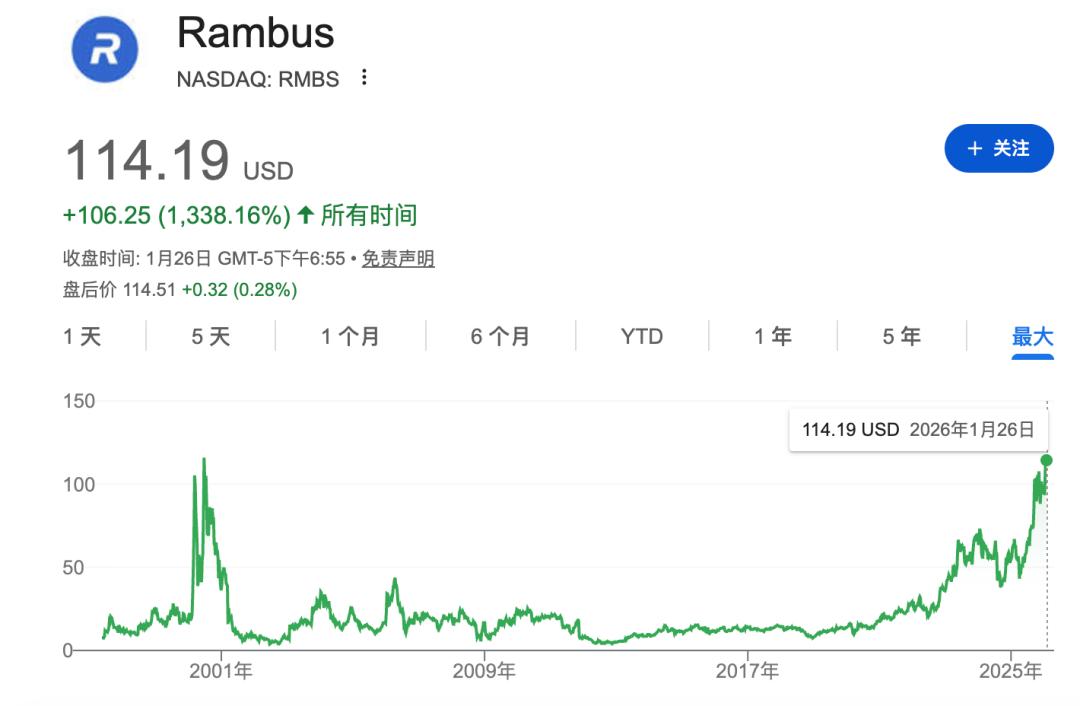
Core Insights - The semiconductor IP market is undergoing significant transformations driven by the rise of generative AI, with companies like Rambus, Synopsys, and Alphawave Semi experiencing drastic changes in their business models and market positions [1] Rambus' Transformation - Rambus has seen its stock price nearly double, reaching approximately $115–125, with a peak of $135, reflecting a nearly 100% increase over the past year due to heightened demand for its technology in the AI era [2][5] - Analysts have raised Rambus' target price to around $120–130, indicating a shift from a reliance on patent licensing to a more central role in AI and data center infrastructure [5] - Rambus has strategically adjusted its product line, selling some assets to focus on high-performance memory subsystems and security IP, which has contributed to its growth [5][6] Market Dynamics and Demand - The current challenge in AI computing is not the speed of GPUs but the data transfer capabilities, with Rambus' DDR5 RCD interface chips being essential for ensuring efficient data flow [6] - Rambus holds over 40% market share in the DDR5 RCD chip segment, which is critical as AI servers transition to DDR5 standards [6] - The company anticipates significant growth in the MRDIMM market, projecting to capture over 40% of this $600-700 million segment [7] Synopsys' Strategic Shift - Synopsys' decision to sell its ARC processor business reflects a shift towards AI-enhanced EDA tools and a focus on high-margin software solutions [8][9] - The sale allows Synopsys to concentrate on AI infrastructure, moving away from the competitive landscape of general-purpose CPU architectures [9][10] - The acquisition of Ansys strengthens Synopsys' capabilities in system-level simulation, positioning it to better serve clients like NVIDIA and Google [9] Alphawave Semi's Acquisition - Alphawave Semi, initially focused on IP supply, transitioned to a full SoC design capability and was acquired by Qualcomm, marking the end of its independent status [11][12] - The acquisition is strategic for Qualcomm as it seeks to enhance its position in high-performance computing and AI infrastructure, leveraging Alphawave's expertise in high-speed interconnect technology [12][13] - The disappearance of Alphawave as an independent entity highlights the increasing difficulty for mid-sized IP companies to survive in the competitive landscape dominated by larger players [13] Industry Trends - The semiconductor industry is witnessing a shift from a focus on CPU performance to the importance of data pathways and interconnect technologies, as AI systems require efficient data flow for optimal performance [14][15] - The market share of processor IP is declining, while interface IP is expected to grow significantly, potentially reaching over 25% of the IP market by 2026 [15][16] - The competitive focus is shifting towards interconnect and system-level capabilities, indicating a structural reorganization within the semiconductor IP market [16]
Synopsys (NasdaqGS:SNPS) FY Conference Transcript
2026-01-15 20:17
Synopsys FY Conference Summary Company Overview - **Company**: Synopsys (NasdaqGS:SNPS) - **Event**: 28th Annual Elon Growth Conference - **Date**: January 15, 2026 Key Points Industry Context - **Geopolitical Challenges**: The company faced significant headwinds in fiscal Q3 due to geopolitical tensions, particularly in China, affecting customer decision-making and contract sizes [5][7][41]. - **Market Segmentation**: The semiconductor market is characterized by a "tale of two markets," with AI-driven sectors growing rapidly while traditional sectors like automotive and industrial lag behind [31][22]. Financial Performance and Outlook - **Fiscal Q3 Challenges**: The IP business experienced delays and downsizing of contracts due to uncertainty in the Chinese market and challenges with foundry customers [5][6][7]. - **2026 Forecast**: The company anticipates persistent headwinds in China and does not expect significant changes in the business environment compared to 2025 [7][41]. - **Ansys Acquisition**: The integration of Ansys is progressing well, with expectations for significant operating margin improvements and cost synergies [14][15]. Business Segments - **Ansys Performance**: Ansys is expected to continue strong growth in 2026, driven by its leading portfolio in simulation and analysis tools, which are underpenetrated in R&D budgets [11][12]. - **IP Business Strategy**: Synopsys remains the leader in interface and essential IP, focusing on evolving business models to meet customer needs, particularly in the data center AI segment [19][20][21]. - **EDA Growth**: The company aims to drive EDA growth through joint solutions with Ansys, leveraging AI and GPU technologies to enhance design processes [33][34][36]. Strategic Initiatives - **Resource Allocation**: The company has shifted resources to high-demand areas, particularly in HPC titles, to better align with market needs [6][7]. - **Monetization Models**: Synopsys is exploring royalty-based monetization for IP, particularly in the data center AI segment, while maintaining traditional NRE and usage fee models [25][26][27]. Customer Engagement - **China Market**: The company is committed to maintaining strong customer relationships in China despite uncertainties, focusing on clarity to aid customer decision-making [41][43]. - **Investor Communication**: Synopsys emphasizes its leading position in digital design and IP, highlighting the unmatched strength of its combined portfolio with Ansys [44]. Additional Insights - **Joint Product Development**: The integration of EDA and Ansys tools aims to solve complex design problems earlier in the cycle, potentially leading to better pricing and customer satisfaction [38][39][40]. - **Long-term Vision**: The company is focused on evolving its business model to adapt to the rapid changes in the semiconductor industry, particularly in AI and smart technologies [28][44]. This summary encapsulates the key insights and strategic directions discussed during the Synopsys FY Conference, highlighting the company's resilience and forward-looking strategies in a challenging market environment.
Prediction: Synopsys Stock Will Soar Over the Next Decade. Here's 1 Nvidia-Related Reason Why.
Yahoo Finance· 2026-01-06 11:50
Group 1 - Synopsys is rapidly expanding its market presence through the acquisition of Ansys, which enhances its customer base and offerings in engineering simulation software [1][3] - The company's core competency lies in electronic design automation (EDA) and AI-powered solutions, primarily serving semiconductor companies, but now also targeting a broader range of industries including hyperscalers, automakers, and aerospace [2][3] - The partnership with Nvidia, involving a $2 billion investment, is expected to significantly enhance Synopsys' silicon-to-systems solution, which integrates chip design and engineering simulation [5][6] Group 2 - The acquisition of Ansys is pivotal for Synopsys as it allows for a comprehensive "silicon-to-systems" offering, facilitating the design and testing of semiconductors [3][6] - Nvidia's investment not only strengthens Synopsys financially but also enhances the computational capabilities of its offerings, which are crucial for the compute-intensive nature of EDA solutions [5][6] - The overall growth strategy of Synopsys, bolstered by the Nvidia deal, is anticipated to drive significant growth in the coming years [6]

Cadence's Free Cash Flow Continues to Power M&A, Buybacks
ZACKS· 2025-12-26 18:16
Core Insights - Cadence Design Systems Inc. (CDNS) is positioned to benefit from increasing demand for its AI-driven solutions amid strong design activity and customer spending on AI initiatives [1] Financial Performance - In Q3, CDNS reported revenues of $1.339 billion, reflecting a year-over-year increase of 10.2% [2][8] - The company generated operating cash flow of $311 million and free cash flow of $277 million [2] - As of September 30, 2025, CDNS had cash and cash equivalents of $2.753 billion and long-term debt of $2.479 billion [2] Growth Strategy - CDNS is pursuing a disciplined inorganic growth strategy, acquiring technologies that enhance organic growth [3] - Recent acquisitions include the Design & Engineering division of Hexagon AB, Artisan foundation IP from Arm Holdings, and Secure-IC [3] Shareholder Returns - CDNS repurchased shares worth $200 million in Q3 and plans to repurchase another $200 million in Q4 [4] - The company intends to use at least 50% of its free cash flow for share buybacks in 2025 [6][8] Future Outlook - The company expects revenues for 2025 to be between $5.262 billion and $5.292 billion, with operating cash flow projected between $1.65 billion and $1.75 billion [6][8] - Trends such as 5G, hyperscale computing, and autonomous driving are anticipated to drive design activity and sustain top-line growth [5]


Chiplet,还是软IP?
半导体行业观察· 2025-12-12 01:12
Core Viewpoint - The article discusses the differences between chiplets and soft IP, emphasizing that while both can accelerate time-to-market, they serve different needs and come with distinct challenges in design, integration, and testing [2][20]. Group 1: Chiplet vs Soft IP - Chiplets can be seen as a new type of semiconductor IP, but they differ significantly from the current IP licensing ecosystem, particularly in design integration and verification [2][20]. - Chiplets can be either custom-designed or off-the-shelf, with two camps emerging: one that designs its own chiplets and another that sources components externally [2][20]. - The market for chiplets will coexist with custom chips, with many IP modules becoming off-the-shelf chips that system vendors can mix and match [2][20]. Group 2: Customization and Functionality - The key difference between chiplets and soft IP lies in their customizability; soft IP offers high configurability, while chiplets have fixed functionalities [6][20]. - Chiplets require careful management of startup processes and debugging, which are less of a concern with soft IP [6][20]. - The physical integration of chiplets presents unique challenges, such as managing signal integrity and power distribution, which are not as critical in soft IP [24][20]. Group 3: Testing and Supply Chain - Testing chiplets is more complex than testing soft IP, as chiplets are typically tested independently by suppliers, requiring integration into the overall system testing process [20][20]. - The supply chain for chiplets is more traditional and complex, closely tied to manufacturing nodes and foundries, which increases dependency on suppliers [20][20]. - Built-in self-test (BiST) technology is expected to become more prevalent to address the transparency issues associated with chiplets [22][20]. Group 4: Security and Integration Challenges - Security considerations for chiplets are more challenging than for soft IP, as chiplets have a larger attack surface due to their interconnections and shared resources [20][20]. - Each chip in a multi-chip system must coordinate its security measures, which can lead to inefficiencies if not managed properly [20][20]. - The physical design of chiplets must account for thermal management and signal integrity, requiring advanced modeling tools that go beyond those used for soft IP [24][20].