Fincantieri

Search documents
Norwegian Cruise Line Holdings Enters Into Agreement With Fincantieri for Three New Cruise Ships
Globenewswire· 2026-02-16 15:20
Core Viewpoint - Norwegian Cruise Line Holdings Ltd. has entered into an agreement with Fincantieri for the design and construction of three new cruise ships, enhancing its long-term fleet growth strategy through 2037 [1][3] Fleet Development - The order includes one ship for each of the company's three brands: Norwegian Cruise Line, Oceania Cruises, and Regent Seven Seas Cruises, with deliveries scheduled between 2036 and 2037 [2][4] - Following this agreement, the company now has a total of 17 newbuilds on order, with eight for Norwegian Cruise Line, five for Oceania Cruises, and four for Regent Seven Seas Cruises [4][7] Financial Strategy - The agreement allows the company to secure valuable shipyard capacity while maintaining financial discipline and driving sustainable shareholder value [3] - The new ship order is expected to support a 4% compound annual growth rate (CAGR) from 2026 through 2037, aligning with the company's measured approach to fleet expansion [4] Ship Specifications - The new ships will include various classes with different gross tonnage and berth capacities, such as: - Norwegian Luna (~156,000 gross tons, ~3,565 berths) in Q1 2026 - Seven Seas Prestige (~77,000 gross tons, ~822 berths) in Q4 2026 - Norwegian Aura (~170,000 gross tons, ~3,880 berths) in 2027 [5][6] Market Position - The company operates a combined fleet of 34 ships with over 71,000 berths, offering itineraries to approximately 700 destinations worldwide [7]



Italian Shipbuilder Fincantieri Expects Sales to Double by 2035 on Defense Demand
WSJ· 2026-02-12 12:10
Core Viewpoint - The company anticipates that sales will approximately double to $21.37 billion by 2035, driven by increasing demand for submarines, warships, and icebreakers due to rising geopolitical tensions [1] Summary by Category - **Sales Growth**: The company expects sales to reach $21.37 billion by 2035, indicating a significant growth trajectory [1] - **Market Demand**: The anticipated growth is attributed to heightened demand for military vessels, including submarines and warships, as well as icebreakers [1] - **Geopolitical Factors**: The increase in sales is fueled by escalating geopolitical tensions, which are influencing defense spending and naval capabilities [1]


X @Bloomberg
Bloomberg· 2026-02-12 11:28
Italy's Fincantieri plans investments worth about €1.9 billion through 2030 https://t.co/YuTibmWzIR ...
Spanish grid operator's planning created risks on blackout day, Endesa CEO says
Reuters· 2026-02-12 10:33
Group 1 - The CEO of Endesa, Jose Bogas, stated that the Spanish power grid operator REE lacked sufficient conventional plants in its energy mix planning, which contributed to the nationwide blackout on April 28 last year [1] - Bogas emphasized that Endesa's power plants adhered to regulations and did not disconnect improperly during the blackout event, indicating that similar conditions could lead to another blackout in the future [1]


Leonardo chair rows back on Fincantieri merger comments
Reuters· 2026-01-20 10:00
Core Viewpoint - Leonardo's chairman clarified previous comments regarding a potential merger with Fincantieri, stating they were intended as a light-hearted remark rather than a serious proposal [1] Group 1 - The chairman's initial comments about a merger were perceived as significant but were later downplayed [1] - The relationship between Leonardo and Fincantieri remains a topic of interest in the industry, but no formal discussions are indicated [1]

Leonardo chair floats idea of future merger with Fincantieri
Reuters· 2026-01-19 14:33
Core Viewpoint - The chairman of Italy's Leonardo has proposed the idea of a potential merger between the defense and aerospace group and the state-controlled shipbuilder Fincantieri [1] Group 1 - Leonardo is a prominent player in the defense and aerospace sector in Italy [1] - Fincantieri is a state-controlled shipbuilder, indicating a significant government interest in the potential merger [1]
超4000亿新订单!意大利Fincantieri发布新五年规划
Xin Hua Wang· 2025-12-29 10:00
Core Viewpoint - Fincantieri has announced a long-term strategic plan focusing on expanding its business in defense, underwater equipment, and special vessels, with projected revenue growth and improved profitability by 2030 [1][2]. Group 1: Financial Projections - Fincantieri expects revenue to increase from an estimated €9 billion in 2025 to approximately €11 billion in 2028, reaching €12.5 billion by 2030 [2]. - The company anticipates a 90% increase in EBITDA by 2030, with net profit projected to reach €500 million (approximately $587 million) [1]. - The total order backlog is reported at €41 billion (approximately $48 billion), reflecting a 32% increase compared to the end of 2024 [1]. Group 2: Business Segments - The cruise business remains a key pillar for Fincantieri, holding over 49% market share, with 11 cruise orders secured in the first three quarters of the year [3]. - The defense shipbuilding sector is expected to become a major growth driver, with plans to double production capacity at Italian defense shipyards [3]. - Fincantieri has identified over €56 billion in potential business opportunities from 2026 to 2028, with approximately €23 billion assessed as medium to high probability [3]. Group 3: Strategic Initiatives - The company aims to enhance operational efficiency and optimize business structure to support revenue growth, particularly in the defense sector [2]. - Fincantieri plans to strengthen its global production system to capitalize on rapidly growing markets and maintain high order volumes [2]. - The newly established underwater equipment business segment is expected to double in size from €22 billion to €43 billion between 2026 and 2030 [3]. Group 4: Market Trends - The geopolitical environment is seen as a significant growth opportunity for defense shipbuilding, with global government ship orders projected to reach $2.93 trillion by 2030, an 18% increase from $2.47 trillion in 2025 [3]. - In the special marine engineering vessel sector, Fincantieri aims to maintain its global leadership, driven by demand for specialized vessels in energy and communication infrastructure [4].
2 No-Brainer Defense Stocks to Buy With $500 Right Now
The Motley Fool· 2025-12-27 10:05
Core Viewpoint - The current geopolitical climate has led to increased military budgets, making defense stocks attractive investments, with Textron and Huntington Ingalls identified as relatively undervalued options [1][2]. Company Overview: Textron - Textron, with a market capitalization of $15.8 billion, operates in various sectors including aviation and defense, producing well-known brands like Cessna and Bell Helicopter [5][7]. - The stock is priced at 19 times trailing earnings and has a price-to-sales ratio of just under 1.1, making it one of the cheapest defense stocks available [7]. - Textron's diverse product offerings include armored vehicles and hovercraft for military applications [6]. Company Overview: Huntington Ingalls - Huntington Ingalls, valued at over $13.2 billion, is a key player in U.S. naval shipbuilding, specializing in nuclear-powered aircraft carriers and submarines [9][10]. - The stock has seen significant appreciation since its spin-off from Northrop Grumman, rising eightfold despite only a modest increase in sales [9]. - Recently, Huntington Ingalls was awarded a contract to design a new class of warship, which is expected to enhance its revenue potential significantly [12][14]. Investment Preference - Both Textron and Huntington Ingalls are considered good investment opportunities, but Huntington Ingalls is favored due to its recent contract win and potential for revenue growth [15].


Why U.S. Shipbuilding Collapsed — And The Push To Rebuild It
CNBC· 2025-12-14 16:01
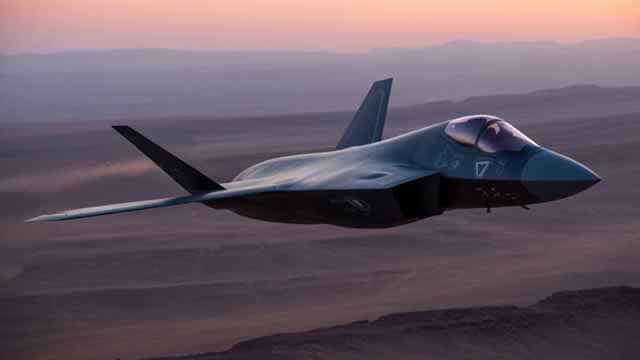
Industry Overview & Challenges - China dominates global commercial shipbuilding with 53% market share, while the U S accounts for only about 0 1% [2] - The U S shipbuilding industry faces challenges including talent shortages, antiquated operating procedures, and outdated facilities [3][15] - U S shipbuilders face challenges including building complicated ships like nuclear submarines and LNG vessels to inconsistent funding [29] - U S-flagged vessels cost six to eight times more to build and two to three times more to operate than foreign-flagged counterparts [17] Investment & Modernization - Hanwha invested $5 billion to modernize the Philly Shipyard, aiming to increase automation and expand production [1][9] - South Korea committed $150 billion towards U S shipbuilding [10] - Fincantieri has invested over $800 million in its four U S shipyards [26] Production & Capacity - Hanwha Philly Shipyard currently delivers about 1 to 1 5 ships a year, with aspirations to build 20 ships annually [8] - Hanwha shipyard in South Korea produces about 40 to 50 ships a year [9] - The U S Navy has a goal of building 381 ships over the next three decades, requiring up to $36 billion [37] Workforce & Training - U S shipbuilders employed more than 105,000 people in 2023, but face a shortage of skilled professionals and an aging workforce [20] - Shipbuilders will need an additional 174,000 workers over the next decade to meet the Navy's goals [21] - Hanwha is sending U S workers to South Korea for training to accelerate skills transfer [22] Technological Advancements - New technologies like automation, robotics, AR, and VR-training could help propel the shipbuilding industry [30][31] - Modular construction is another technique that could boost efficiency and help U S shipyards compete [32]
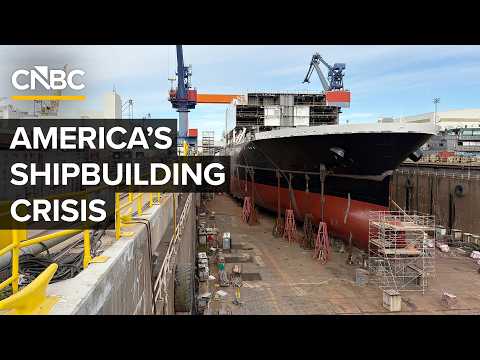
Trump wants the U.S. shipbuilding industry to be great again. Here's what it will take, and what's at stake
CNBC· 2025-12-14 13:25
Core Insights - The U.S. shipbuilding industry is undergoing a revival initiative led by the Trump administration, focusing on enhancing domestic capabilities while relying on foreign expertise and investment [2][6][7] Shipbuilding Industry Overview - The American shipbuilding industry has experienced two significant booms in the past 110 years, during World War I and World War II, but currently faces challenges due to limited domestic capacity compared to China, which has 232 times the shipbuilding capacity of the U.S. [3][5] - The U.S. has only eight active shipyards, while China boasts over 300, dominating the global market with a 53% share [3][5] Foreign Collaboration and Investment - The Trump administration's "Make American Shipyards Great Again" initiative includes partnerships with foreign shipbuilders, particularly South Korea's Hanwha Group, which is the third-largest shipbuilder globally [7][8] - A $350 billion investment deal between South Korea and the U.S. includes $150 billion allocated for maritime investment, highlighting the importance of international collaboration [8] Specific Projects and Developments - Hanwha Philly Shipyard, acquired by Hanwha Group, is set to expand its vessel-making capacity significantly, with plans to increase production from 1-1.5 vessels per year to 20 vessels [9][12] - The shipyard has received its first orders for LNG carriers, marking a significant milestone in U.S. shipbuilding, with deliveries expected around 2028 [10] Workforce and Training Challenges - The U.S. shipbuilding industry faces workforce challenges, with a need for skilled instructors to train new employees. Hanwha plans to rotate U.S. workers to South Korea for training [11] - The current workforce at Hanwha Philly Shipyard is 1,700, with aspirations to grow to over 10,000 to meet production goals [12] Strategic Defense Considerations - The U.S. aims to enhance its naval capabilities, including the construction of nuclear-powered submarines at Hanwha Philly Shipyard, emphasizing the need for self-sufficiency in national security [17][18] - The U.S. Coast Guard's icebreaker fleet is outdated, with plans to acquire 11 new icebreakers through a $6.1 billion agreement with Finnish shipyards, addressing the need for Arctic defense capabilities [29][30] Market Dynamics - The U.S. currently has a minimal share in the LNG tanker market, with only one U.S.-flagged LNG tanker, while the country exports nearly 30% of its crude oil production without significant issues related to tanker availability [15][16] - The Jones Act mandates that vessels transporting goods between U.S. ports must be U.S.-built, which impacts the domestic shipbuilding market [14]