
IMF

Search documents
X @Bloomberg
Bloomberg· 2026-02-19 12:04
The IMF has yet again called for China to rebalance its economy https://t.co/YMk3fQbz88 ...
X @Bloomberg
Bloomberg· 2026-02-19 07:10
South Africa’s upcoming budget must deliver on debt targets to preserve confidence in public finances, says the IMF https://t.co/LoA22T9G31 ...
X @Bloomberg
Bloomberg· 2026-02-14 06:50
The IMF said Thailand needs a “carefully calibrated” mix of policies to support a slowing economy, urging fiscal support and monetary easing. https://t.co/55TM2kHusS ...
X @Bloomberg
Bloomberg· 2026-02-11 10:19
Bolivian officials and IMF staff are discussing an Extended Fund Facility, which would allow the country to borrow between eight and 10 times its IMF quota https://t.co/OX8TAg6hBc ...
IMF's Georgieva on the Growing Influence of EM, Decline of US Dollar
Bloomberg Television· 2026-02-09 14:11
Here in Alula, which is also a beautiful landscape as well. I want to talk to you about something that you've been saying recently, which is uncertainty is the new normal. And one of the themes that has come up is despite robust growth and emerging market economies, these economies need to be conscious of external risks.How equipped do you think countries are really to navigate some of the shocks in the system right now. What we have seen over the last decade is emerging markets making huge progress in term ...


X @Bloomberg
Bloomberg· 2026-02-03 11:12
Ethiopia will return to double-digit economic growth this fiscal year after reforms backed by the IMF eased foreign exchange constraints and strengthened exports https://t.co/StPkePzKTt ...
Is A Stock Market Crash In Sight? Insiders Are Bailing At The Fastest Pace Since 2021 - Invesco QQQ Trust, Series 1 (NASDAQ:QQQ), State Street SPDR S&P 500 ETF Trust (ARCA:SPY)
Benzinga· 2026-02-02 13:46
Core Insights - The U.S. stock market has experienced significant growth over the past three years, but corporate insiders are now selling at a rate not seen since the last major market peak [1][2] - The sell-to-buy ratio for corporate insider selling has reached its highest level in five years, indicating a trend of profit-taking among executives [2] - Major institutions and analysts are expressing caution regarding the sustainability of the market rally, particularly in light of high valuations and concentration in AI-linked stocks [3][4] Corporate Insider Activity - Corporate insiders are capitalizing on high valuations, with the current sell-to-buy ratio being the highest in five years, reminiscent of the pre-bear market selling in 2021 [2] - The aggressive selling by insiders coincides with a significant rally in the S&P 500, which rose 23.3% in 2024, 16% in 2025, and 1.4% in January 2026, pushing the index above 7,000 for the first time [2] Market Valuation Concerns - The International Monetary Fund (IMF) has warned that elevated stock valuations are increasing the risk of disorderly corrections, particularly for U.S. equities linked to AI [3] - Fidelity International's January 2026 market outlook noted that high valuations and index concentration have led to profit-taking and increased volatility across various sectors [4] Overall Market Sentiment - The combination of aggressive insider selling and warnings from global institutions suggests a growing concern about stretched valuations and the potential for market corrections [5] - While the market rally may continue, the behavior of insiders indicates a cautious sentiment among those closest to the financial data [6]

X @Bloomberg
Bloomberg· 2026-02-01 22:16
Argentina bought $808 million in special drawing rights from the US Treasury to confront its latest interest payments at the IMF without tapping a swap line shared between both countries, according to the local newspaper La Nacion. https://t.co/MpjodT4j3a ...
美国强掳马杜罗、觊觎格陵兰,为美元霸权“续命”!
Mei Ri Jing Ji Xin Wen· 2026-01-10 09:23
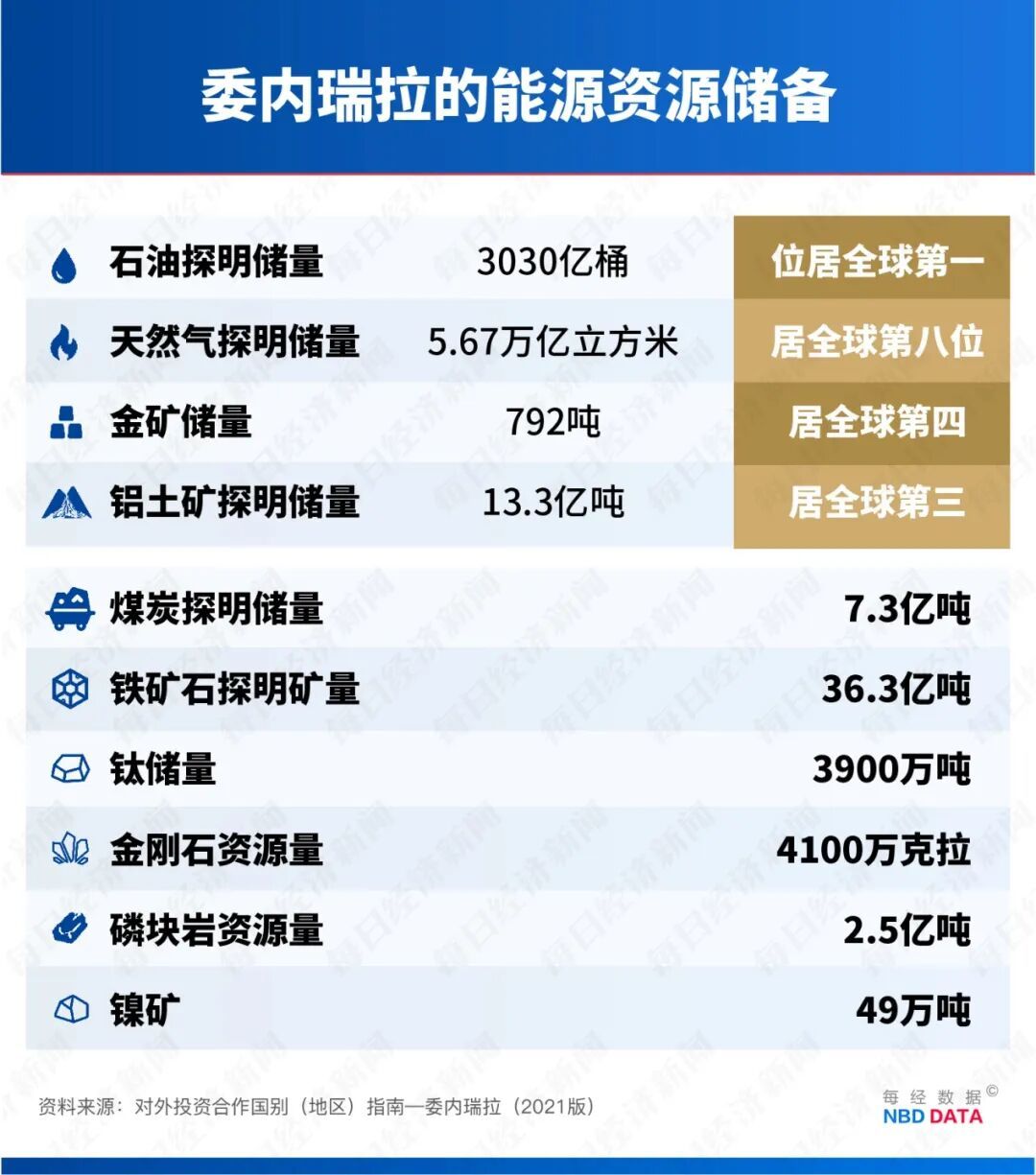
Group 1 - The U.S. government is attempting to exert control over Venezuela's oil resources and Greenland's rare earth minerals, with plans to invest $100 billion in Venezuela's oil industry [1][4][5] - Approximately 20% of global oil trade is now conducted without using the U.S. dollar, indicating a significant decline in the dollar's dominance in oil transactions [1][22] - The U.S. is facing a dual challenge of diminishing dollar hegemony and a national debt exceeding $38 trillion, prompting aggressive resource acquisition strategies [1][26] Group 2 - Venezuela has proven oil reserves of 303 billion barrels, making it the country with the largest oil reserves globally, which aligns with U.S. energy needs [6][9] - Greenland is home to 1.5 million tons of rare earth elements and various strategic minerals, making it a target for U.S. resource control efforts [10][12] - The U.S. aims to secure energy and resource dominance as a means to stabilize the dollar and U.S. Treasury bond attractiveness, which has been declining [25][28] Group 3 - The U.S. Secretary of State has prioritized energy and resource dominance in foreign policy, reflecting the strategic importance of these resources [3] - The U.S. plans to control the sale of Venezuelan oil and has stated that it will begin extracting and selling up to 50 million barrels of oil from Venezuela [5][19] - The U.S. is exploring various options to acquire Greenland, including financial purchase and military intervention, highlighting its strategic importance [10][18]
财政主导风险加大!耶伦警告低利率或让美国沦为“香蕉共和国”!
Sou Hu Cai Jing· 2026-01-08 06:56
Core Viewpoint - Janet Yellen warns of increasing risks associated with "fiscal dominance" in the U.S. economy, suggesting that the Federal Reserve's independence may be compromised, leading to potential capital flight, currency pressure, and rising long-term interest rates, which could result in the U.S. losing its dollar pricing power and becoming akin to a "banana republic" [1][10] Group 1: Fiscal Dominance Characteristics - Fiscal dominance occurs when fiscal policy overrides traditional boundaries, forcing monetary policy to serve fiscal objectives, which is a dangerous signal for Western economies but less problematic for Eastern models [1][3] - The U.S. is showing clear signs of fiscal dominance, with the government pressuring the Federal Reserve to lower interest rates to alleviate debt burdens, leading to a scenario where monetary policy is subordinated to fiscal needs [3][5] Group 2: Economic Implications of Fiscal Dominance - The formation of fiscal dominance relies on continuous fiscal deficits and debt expansion, which are often pursued without corresponding fiscal consolidation mechanisms, resulting in a growing debt burden [5][10] - The Congressional Budget Office projects that the federal deficit will reach $1.9 trillion by 2026, with total debt as a percentage of GDP rising to 100%, and potentially 118% over the next decade, which is a key driver forcing monetary policy to yield [3][5] Group 3: Monetary Policy and Inflation Risks - When central banks are compelled to finance fiscal deficits, it leads to increased money supply, which may mask inflation pressures in the short term but can result in long-term inflation spikes due to excessive money supply [7][8] - Yellen's warnings highlight the risk of rising inflation expectations as the Federal Reserve neglects its core responsibility to control inflation, with the IMF predicting global inflation to remain high at 4.2% in 2026, with the U.S. facing even greater inflation risks due to fiscal stimulus and compromised monetary policy independence [8][10] Group 4: Political Influence on Economic Policy - Fiscal dominance reflects a shift in economic logic driven by political demands, where short-term economic performance and public support take precedence over long-term debt sustainability [9][10] - The current U.S. situation exemplifies this trend, with political interference in monetary policy undermining the professional separation of macroeconomic management and leading to a closed loop of public demand, political action, and policy implementation [9][10]
