Oxford Nanopore Technologies

Search documents
Oxford Nanopore Technologies Tops Revenue Guidance With 24% Growth Despite NIH, China Headwinds
Yahoo Finance· 2026-01-15 18:27
Core Insights - Oxford Nanopore Technologies achieved a 24% constant currency revenue growth for the year, surpassing its initial guidance of 20%-23% [3][7][4] - The company experienced significant growth across various product segments, particularly in clinical and biopharma markets, despite facing challenges such as NIH funding uncertainty and geopolitical issues in China [2][4][8] Revenue Growth - Clinical revenue grew over 60%, biopharma revenue increased by 30%, applied industrial revenue rose by 27%, and research revenue grew by 15% [2][7] - The Americas region showed strong momentum in the second half of the year, contributing to overall growth [3][7] Regional Performance - The Americas now derive more than half of their revenue from non-research segments, contrasting with EMEA where research remains a larger share [1] - In EMEA, academic growth exceeded 20% and clinical growth surpassed 50% [10] - Asia-Pacific faced challenges due to the roll-off of a significant contract and competitive pressures from local players, with China representing about 8% of total revenue [8][10] Product Dynamics - Higher-throughput devices like PromethION and P2i are becoming central for whole-genome and scale use cases, as customers increasingly skip earlier devices [5][11] - The MinION flow cell is suitable for small genomes and targeted sequencing, while the PromethION flow cell supports whole human genome sequencing [9][11] Financial Position - The company ended the year with GBP 302 million in cash, ahead of market expectations, and improved cash flow by shifting to a CapEx sales model [6][17][18] - Inventory optimization contributed to cash improvement, with over GBP 100 million in inventory at year-end [19] Cost Management and Future Targets - The company reduced headcount by 5% and is targeting EBITDA breakeven by 2027 and cash flow breakeven by 2028 [20][21] - Controlled operating expense growth and gross margin improvement are emphasized as key components to achieving these targets [21]
Oxford Nanopore Technologies touts 24% 2025 revenue growth, CEO transition at JPM Healthcare Conference
Yahoo Finance· 2026-01-12 23:32
By end market, Sanghera said life science research tools remain the core of the business, representing 67% of revenue and growing 15% in 2025. He said applied markets now represent about one-third of revenue after increasing traction over the last two to three years, with clinical up 60% , biopharma up 30% , and applied industrial up 27% .He also pointed to the firm’s growth trajectory, stating that Oxford Nanopore has delivered 28% CAGR over the last five years and that growth in 2025 was supported by perf ...
Oxford Nanopore Receives Regulatory Approval for its First Diagnostic Device in the UK and Europe
Businesswire· 2026-01-12 06:30
OXFORD, England--(BUSINESS WIRE)-- #Nanopore--Oxford Nanopore Technologies today announces that the GridIONâ"¢ Dx is now both CE and UKCA marked, making it the company's first IVD device registered in the UK and Europe. The CE and UKCA certification confirms that GridIONâ"¢ Dx meets stringent international standards for quality, safety, and performance, positioning Oxford Nanopore for future adoption in regulated clinical markets and reflecting its long-term commitment to sequencing-based diagnostics. "Bein ...


Bio-Techne(TECH) - 2026 Q1 - Earnings Call Transcript
2025-11-05 15:00
Financial Data and Key Metrics Changes - Organic revenue declined 1% in Q1, primarily due to clinical stage timing from large customers in the cell therapy business and ongoing softness in biotech funding [4][19] - Adjusted EPS for the quarter was $0.42, flat year-over-year, while GAAP EPS increased to $0.24 from $0.21 in the prior year [18][19] - Total revenue for Q1 was $286.6 million, representing a 1% year-over-year decline on both an organic and reported basis [19] - Adjusted gross margin improved to 70.2%, up from 69.5% last year, driven by the exosome diagnostics divestiture and ongoing productivity initiatives [20] - Adjusted operating margin reached 29.9%, up 90 basis points year-over-year [20] Business Line Data and Key Metrics Changes - Protein sciences segment reported sales of $202.2 million, down 1% year-over-year, with organic revenue declining 3% [22] - Diagnostics and spatial biology segment sales were $79.5 million, down 4% year-over-year, but achieved 3% organic growth [22] - The protein analytical tools business showed notable strength from large pharma customers, contributing to organic growth [22] Market Data and Key Metrics Changes - Revenue from large pharma customers increased low double digits, while biotech spending continued to decline, resulting in high single-digit declines in Q1 [5][19] - North America experienced mid-single digit revenue decline, while Europe and Asia posted low single-digit growth [19][22] - China achieved its second consecutive quarter of growth, driven by strong performance in ProteinSimple analytical instruments and spatial biology portfolio [7][19] Company Strategy and Development Direction - The company is focused on productivity and cost management while investing in strategic growth pillars [5][17] - The acquisition of Wilson Wolf is expected to enhance the company's position in the cell therapy market, with plans to complete the acquisition by the end of calendar 2027 [9][10] - The company anticipates a return to positive organic growth in the second half of the fiscal year, driven by improving conditions in the biopharma sector and stabilization in U.S. academic markets [25][39] Management's Comments on Operating Environment and Future Outlook - Management noted that underlying market trends remain constructive, with early signs of stabilization in biotech activity levels [6][18] - The company expects Q2 organic growth to be consistent with Q1, reflecting continued strength in pharma and renewed growth in China [25] - Management expressed optimism about the recovery in biotech funding and the potential for lower interest rates to support investment levels in emerging biotech companies [6][35] Other Important Information - The company achieved an estimated 40% reduction in Scope 1 and 2 emissions during fiscal 2025, transitioning to 100% renewable electricity at its largest site [17] - The diagnostics business grew mid-single digits in Q1, supported by balanced performance across core diagnostic controls and kits [15] Q&A Session Summary Question: How long might the air pocket persist for GMP proteins? - Management indicated that the headwind from two large customers would be approximately 400 basis points in Q2, but they remain positive about the underlying recovery in the biotech markets [28][30] Question: Are growth plans for fiscal 2026 still low single-digit? - Management confirmed that plans remain unchanged, with a commitment to the cell therapy market and expectations for low single-digit growth for the year [30] Question: What is the outlook for the second half of the fiscal year? - Management expects a return to positive organic growth in the second half, driven by easing headwinds and improved market conditions [25][39] Question: Can you provide an update on Wilson Wolf? - Wilson Wolf had a flat quarter, but management remains optimistic about its potential to accelerate growth in the cell therapy market [43][44] Question: What are the assumptions for government shutdown impacts? - Management noted no significant changes in academic customer buying patterns due to the government shutdown, indicating stability in the academic market [52]

Oxford Nanopore Announces PromethION Plus Flow Cell and Human Genetics Updates at ASHG 2025
Businesswire· 2025-10-15 16:49
Core Insights - Oxford Nanopore Technologies will present its advancements in human genetics at the ASHG 2025 industry session, focusing on integrated analysis for better disease insights [1] Group 1: Company Developments - The presentation will showcase the unique capabilities of the PromethION platform in delivering comprehensive whole genomes and methylomes [1]

英国教授创业,存活率无与伦比
虎嗅APP· 2025-05-25 03:14
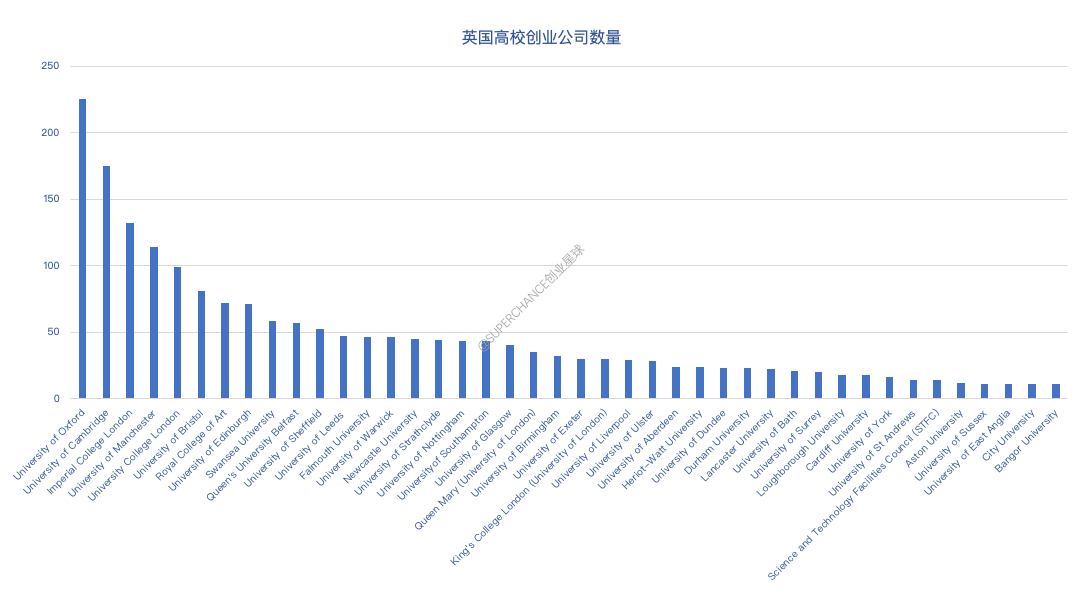
Core Viewpoint - The article highlights the significant role of UK universities in fostering entrepreneurship through the establishment of spinout companies, with a focus on various metrics such as company formation, funding events, and success rates, indicating a thriving ecosystem for innovation and commercialization of research [3][79]. Group 1: Company Formation - A total of 2064 spinout companies have been established by professors in UK universities, with 1337 still operational, resulting in an overall survival rate of nearly 65% [3]. - Among 42 universities, 1967 new companies were formed, with a median of 31 and an average of 47 companies per university [5]. - The top universities for new company formation include Oxford (225), Cambridge (175), Imperial College (132), and Manchester (114) [7]. Group 2: Funding - From 2015 to 2024, 3788 funding events were completed by these universities, with 6 universities exceeding 100 funding events, accounting for 40% of the total [10][11]. - The total funding amount reached £17 billion, with 4 universities raising over £1 billion and 9 universities accounting for 70% of the total funding [14][16]. - The average funding amount per event was approximately £4.5 million, with UCL leading at £9.4 million per event [19]. Group 3: Funding Success Rates - Seven universities achieved a funding success rate exceeding 50%, with Oxford at 79% and Strathclyde at 75% [20][21]. - Among 1337 active companies, 736 are in the seed stage (55%), 402 in venture capital (30%), and 125 in growth stages [23]. Group 4: QS World University Rankings - The 2025 QS World University Rankings for the 42 universities show a median rank of 108 and an average rank of 206, with 16 universities in the top 100 [32]. - There is a positive correlation between university rankings and the number of new companies formed, funding events, and funding amounts [34][36][38]. Group 5: Technology Transfer Centers - Technology transfer centers are crucial for commercializing research, with universities having an average of 72 dedicated staff members in high-performing institutions [42]. - More staff correlates with higher funding events and amounts, although no clear relationship exists between staff numbers and funding success rates [45][52]. Group 6: Incubation and Acceleration - Incubators provide an environment for applying knowledge practically, with notable examples including Imperial College's White City Incubator and Oxford's Startup Incubator [58][59]. - These programs offer tailored support and resources to help startups refine their concepts and scale operations [60][61]. Group 7: Funding Support - Adequate funding is vital for early-stage startups, with Oxford providing nearly 50 types of funding and raising £5 billion [65]. - UKRI has provided over £814 million in funding to university spinouts from 2015 to 2024, enhancing the entrepreneurial landscape [70]. Group 8: Ecosystem Development - Successful commercialization of technology requires a broad network of resources, with universities like Imperial College and Oxford fostering extensive entrepreneurial communities [75][76]. - Collaborative efforts between universities and external organizations enhance the support available to startups, contributing to high survival rates and funding success [78].

英国教授创业,存活率无与伦比
Hu Xiu· 2025-05-24 01:36
Core Insights - The report "Spotlight on Spinouts 2025" reveals that UK universities have established a total of 2064 spinout companies, with a survival rate of approximately 65% [1] Group 1: New Company Formation - A total of 1967 new companies were formed across 42 UK universities, representing about 95% of the total [2] - Four universities have established over 100 new companies, while seven have more than 50 [4] - The top universities by new company formation are: Oxford (225), Cambridge (175), Imperial College (132), and Manchester (114) [5][6] Group 2: Financing - Spinout companies from the 42 universities completed 3788 financing events from 2015 to 2024 [7] - Six universities had over 100 financing events, accounting for 40% of total events [8] - Oxford led with 577 financing events, followed by Cambridge (390) and Bristol (177) [9][10] - The total financing amount reached £17 billion, with four universities exceeding £1 billion in financing [12][15] - Oxford's financing amount was £4.69 billion, Cambridge's was £2.38 billion, and UCL's was £1.63 billion [16] - The average financing amount per event was nearly £4.5 million [19] Group 3: Financing Success Rate - Seven universities had a financing success rate exceeding 50% [21] - Oxford had the highest success rate at 79%, followed by University of Strathclyde (75%) and Cambridge (over 72%) [22][23] Group 4: Financing Rounds and Exits - Among the 1337 active companies, 736 are in the seed stage (55%), 402 in venture capital (30%), and 125 in growth stage [25] - A total of 201 companies achieved successful exits, with 26 IPOs and 175 mergers and acquisitions [27][28] - The top three companies by market capitalization post-IPO are Oxford Nanopore Technologies (£3.3 billion), Exscientia (£2.3 billion), and Darktrace (£1.7 billion) [29] Group 5: QS World University Rankings - The median QS World University ranking for the 42 universities is 108, with an average of 206 [35] - Sixteen universities are in the top 100, with Imperial College (2nd), Oxford (3rd), and Cambridge (5th) leading [36] Group 6: Technology Transfer Centers - Technology transfer centers are crucial for commercializing research, with an average of 72 dedicated staff in universities with over 100 financing events [48] - Cambridge has 150 staff, Oxford has 99, and UCL has 80 [49] Group 7: Incubation and Acceleration - Incubators provide essential environments for applying knowledge practically [64] - Notable programs include Imperial's White City Incubator, Oxford's Startup Incubator, and Cambridge's Deeptech Labs [65][66][67] Group 8: Funding Support - Adequate funding is vital for early-stage startups [68] - Oxford offers nearly 50 types of funding, while Cambridge provides 13 types [69][70] - UKRI has provided over £814 million in funding to university spinouts from 2015 to 2024 [74] Group 9: Ecosystem Development - Successful commercialization requires broad resource mobilization [86] - Universities like Imperial and Oxford have established extensive networks to support startups [87][88] Group 10: Conclusion - The UK aims to enhance its R&D intensity to 2.4% of GDP by 2027, with significant investments planned to support innovation and entrepreneurship [90][91] - Encouraging university professors to engage in entrepreneurship is a key initiative to achieve these goals [92]

关税风暴下,测序行业如何 “危” 中寻 “机”?
仪器信息网· 2025-04-18 05:52
导读: 本文欲探讨关税对测序设备、试剂、耗材及服务的影响,分析主要参与者的策略,窥探市场引发的连锁反应,跨国公司正积极寻求对策,本土制造商则有 机会筑建新的长城。 特别提示 微信公众号机制调整,请点击顶部"仪器信息网" → 右上方"…" → 设为 ★ 星标,否则很可能无法看到我们的推送。 导 读: 从研发角度,基于成本、技术以及国际合作方面分析,试图探索中美贸易摩擦持续升级下测序行业的机遇。 最近中美贸易摩擦持续升级,双方都对彼此的商品实施大幅度的关税增长,这些举措给我们测序行业带来了显著干扰和不确定,高额的关税阻 碍了设备、试剂以及耗材的进出口贸易,增加了研发和运营开销。 但往往不确定中就蕴含着机会,毕竟《孙子兵法·形篇》里面开篇就说"昔之 善战者,先为不可胜,以待敌之可胜",意思是会打仗的人都先保证自己不败,然后等待敌人犯错。 当下大环境骤变,竞争格局即将重塑。本 文欲探讨关税对测序设备、试剂、耗材及服务的影响,分析主要参与者的策略,窥探市场引发的连锁反应,跨国公司正积极寻求对策,本土制 造商则有机会筑建新的长城。 放眼全球,测序是一个充满活力的市场,目前该行业主要由NGS驱动,这些技术使大规模基因组分析 ...