Stability AI

Search documents
X @Tesla Owners Silicon Valley
Tesla Owners Silicon Valley· 2026-02-14 20:01
Ironic (or not so much) AI company names:- Midjourney: Elite, anything but "mid"- Stability AI: Chaos mode activated- OpenAI: Fully closed-source now- Anthropic: A little misanthropic?xAI: Actually building AI to understand the true nature of the universe 🚀 https://t.co/ItNSGsKWe9Elon Musk (@elonmusk):@ianmiles Anthropic will be Misanthropic.Fate is an irony maxxer. ...
字节又一AI产品刷屏 网红博主担忧“被训练”
Di Yi Cai Jing· 2026-02-09 09:08
2月9日,港股高开,恒生指数涨1.66%,恒生科技指数涨1.38%。港股大模型、AI应用方向午后拉升,智谱涨37.2%,MINIMAX涨12.04%。 记者搜索发现,Tim作为创始人的数码影视自媒体"影视飓风"在抖音已有1178.9万粉丝,已发布视频作品428条。 版权问题难解 目前视频模型或多模态模型训练,训练数据来源主要以互联网公开视频数据为主,由此导致的版权问题持续发生,涉及企业包括Anthropic、OpenAI、 Stability AI等。 消息面上,开源证券发布研报称,字节跳动上线Seedance2.0视频生成模型,引发AI产业界广泛测评与讨论,该模型支持文字、图片、视频、音频等各类素 材输入生成视频,在自运镜和分运镜、全方位多模态思考、音画同步生成、多镜头叙事能力等几个关键能力上实现突破。 行业内,多位AI创作者对Seedance2.0给予较高评价。但科技博主Tim(本名潘天鸿)在评测过程中发现,仅提供照片、未提供声音或视频等素材的前提下, Seedance2.0能够生成带有Tim个人音色的声音与公司大楼画面,人工智能领域持续遭受质疑的语料版权问题再次引发关注。 好用但"有点恐怖" 科技博主T ...


马斯克:向中国学习
投资界· 2026-02-09 07:19
Core Viewpoint - Space is predicted to become the preferred location for AI infrastructure within 30 to 36 months, with annual AI computing power in space expected to exceed the cumulative total on Earth within five years [1][12][20]. Group 1: AI and Space Infrastructure - The total intelligence of AI may surpass human intelligence within five to six years, with human intelligence potentially constituting less than 1% of all intelligence [2][25]. - Companies entirely composed of AI and robots are expected to outperform any company with human involvement [2][31]. - The energy supply is a critical factor for building data centers in space, as energy production outside of China is stagnating while chip production is rapidly increasing [3][6]. Group 2: Energy and Cost Efficiency - Solar panels in space can generate power at five times the efficiency of those on Earth, eliminating the need for batteries, thus reducing costs significantly [4][9]. - The cost of solar panels is currently around $0.25 to $0.30 per watt in China, and costs could decrease by up to tenfold when deployed in space [9][23]. - The average electricity consumption in the U.S. is about 500 GW, and achieving 1 TW of power generation in space would require significant advancements in energy production [5][20]. Group 3: Challenges in Energy Production - Building power plants is complex, requiring extensive infrastructure and facing regulatory hurdles, which slows down the process [6][10]. - The demand for electricity for data centers is underestimated, with actual needs being much higher due to cooling and maintenance requirements [10][21]. - The U.S. is facing a bottleneck in energy production, which could hinder the launch of large-scale AI chip operations [21]. Group 4: Manufacturing and Supply Chain - The manufacturing of chips is constrained by existing foundries, which are unable to meet the growing demand for AI chips [19][18]. - There is a significant backlog in turbine orders, which complicates the establishment of new power generation facilities [11][12]. - SpaceX and Tesla aim to produce 100 GW of solar panels annually, controlling the entire supply chain from raw materials to finished products [8][34]. Group 5: Competitive Landscape - Without breakthrough innovations in the U.S., China is poised to dominate the AI and manufacturing sectors [2][37]. - China's energy production is projected to exceed that of the U.S. by three times, indicating its industrial capabilities [37]. - The U.S. faces challenges in maintaining a competitive edge due to lower birth rates and a declining workforce, making advancements in robotics and AI crucial [36][37].


“公司终局是纯 AI、纯机器人!”马斯克酒后激进预言:让机器人造机器人,未来要靠AI留着人类智能
AI前线· 2026-02-07 05:33
Core Insights - The core argument presented is that relocating computational power to space is not primarily about cost savings on electricity, but rather about addressing the limitations of terrestrial energy production, which cannot keep pace with the exponential growth of chip computing power [2][5][6]. Group 1: Space Data Centers and Energy Challenges - Musk emphasizes that the main issue is energy supply, as global electricity generation outside of China is stagnating, while chip computing power is growing exponentially [6][10]. - He argues that building solar power plants on Earth faces significant regulatory hurdles, making space a more viable option for energy generation [8][10]. - In space, solar energy efficiency is projected to be five times greater than on Earth, eliminating the need for battery storage, thus making it a more cost-effective solution for AI deployment [8][9][16]. Group 2: AI Deployment and Future Predictions - Musk predicts that within five years, the amount of AI deployed and operational in space will exceed the cumulative total on Earth, with annual AI capacity in space potentially reaching hundreds of gigawatts [24][26]. - He asserts that the future of the strongest companies will be a closed loop of pure AI and robotics, minimizing human involvement in processes to enhance efficiency [3][24]. Group 3: Manufacturing and Supply Chain Bottlenecks - The discussion highlights that manufacturing capabilities, particularly for critical components like turbine blades, are significant bottlenecks in scaling energy production [12][13][20]. - Musk indicates that SpaceX and Tesla are working towards achieving a solar power capacity of 100 gigawatts, emphasizing the need for a complete supply chain from silicon to solar panels [14][15][16]. Group 4: SpaceX's Business Model and IPO Considerations - Musk discusses the potential for SpaceX to become a major supplier of computational power in space, likening it to a cloud service provider [25][29]. - He notes that the public market offers significantly more capital than private markets, which may necessitate an IPO to fund future expansions [31][32][36]. Group 5: AI and Human Interaction - Musk expresses concerns about the future relationship between humans and AI, suggesting that as AI intelligence surpasses human intelligence, the focus should be on ensuring AI values support the continuation of human civilization [54][55][61]. - He argues that the ultimate goal should be to maximize the range and longevity of consciousness and intelligence, which includes the preservation of human civilization [55][60].

2026前沿科技趋势:塑造自己的下一个版本
3 6 Ke· 2026-01-30 09:58
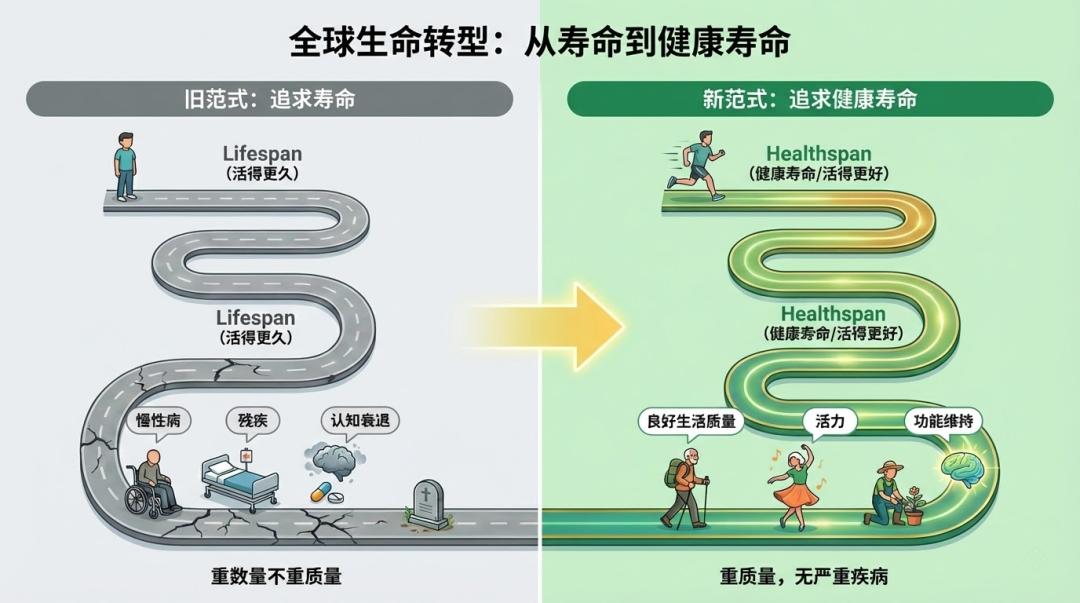
Group 1 - The rapid evolution and application of artificial intelligence and cutting-edge technologies are causing societal adaptation challenges, leading to feelings of uncertainty among people [1][2] - The focus of technological advancement should be human-centered, with an emphasis on shaping a better future through technology by 2030 [2] Group 2 - The "third transformation" of human life aims to extend healthy lifespan rather than just lifespan, with significant implications for global health and economy [3][5] - Human life expectancy has doubled over the past century, but the growth rate has significantly slowed down, with some regions experiencing stagnation or decline [4] - By 2030, the quality of life is projected to be a major focus, with non-communicable diseases potentially costing the global economy up to $47 trillion if not addressed [5] Group 3 - Advances in gene therapy and artificial intelligence are expected to play crucial roles in extending healthy lifespan, with technologies like CRISPR and AI enhancing medical capabilities [9][17] - Clinical breakthroughs in preventive gene therapy and RNA therapies are showing promise in treating chronic diseases effectively [10][12] - Epigenetic reprogramming is emerging as a potential method to reverse aging, with ongoing research aiming for clinical trials by 2026 [15] Group 4 - Artificial intelligence is set to enhance medical efficiency and understanding of human health, with applications in drug development, disease screening, and personal health management expected to yield significant results by 2030 [17][18] - AI is accelerating drug development processes, reducing timelines from years to months, and improving the success rates of new treatments [18][19] Group 5 - The development of exoskeleton technology is enhancing human physical capabilities, with applications in medical rehabilitation, industrial safety, and personal use expected to expand significantly [24][25] - Innovations in exoskeletons are making them more adaptable and user-friendly, with advancements in sensor technology and materials [28][30] Group 6 - The eVTOL market is projected to grow significantly, with advancements in battery technology and noise reduction strategies being critical for its acceptance and integration into urban transportation [31][32] - The evolution of drones into autonomous aerial robots is enhancing their capabilities for both consumer and industrial applications [34] Group 7 - The development of brain-computer interfaces (BCIs) is transforming the treatment of neurological conditions and enhancing human capabilities, with both invasive and non-invasive technologies showing promise [51][54] - BCIs are moving from experimental to standard treatment options for conditions like paralysis, with significant advancements in technology and regulatory approval processes [52][53]
2026前沿科技趋势:塑造自己的下一个版本
腾讯研究院· 2026-01-30 08:18
Core Insights - The article emphasizes the rapid evolution and application of artificial intelligence and cutting-edge technologies across various fields, urging a human-centered approach to technological advancement [3][4][5]. Group 1: Human Life's "Third Transformation" - Extending Healthy Lifespan - Human life expectancy has doubled over the past century, with significant improvements attributed to public health, antibiotics, and vaccines [7]. - Recent research indicates a dramatic slowdown in the growth rate of life expectancy, with the average increase dropping to below 0.25 years per decade in the last 30 years [8]. - A shift is occurring from merely extending lifespan to enhancing healthspan, which is the period of life spent in good health, with potential economic implications of up to $47 trillion in costs from non-communicable diseases by 2030 [9]. Group 2: Programmable Life - Gene Therapy - Gene therapy is moving towards optimizing the "life code," with advancements in CRISPR technology and delivery systems expected to mature by 2030 [11]. - Clinical breakthroughs in preventive gene therapy, such as Verve Therapeutics' treatment for cardiovascular disease, show promising results with significant reductions in LDL-C levels [12]. - The success of personalized CRISPR therapy in curing a fatal metabolic disease in a patient highlights the potential of gene therapy [14]. Group 3: Health Planning - AI Enhancing Medical Efficiency - AI is set to revolutionize drug development, disease screening, and personal health management by 2030, significantly reducing the time and cost associated with traditional drug development [21]. - AI combined with multi-omics technology is facilitating faster and more accurate disease screening, with notable advancements in cancer detection [23]. - Aging clock technology is evolving, enabling precise monitoring of aging processes and identifying underlying causes of aging [25]. Group 4: Enhancing Physical Capability - Exoskeleton Technology - Exoskeleton technology is advancing to enhance human physical capabilities, with applications in medical rehabilitation, industrial safety, and personal use [30]. - In the medical field, exoskeletons are evolving from mere mobility aids to intelligent devices that promote neurological recovery [31]. - Consumer-grade exoskeletons are expected to become popular for outdoor activities, significantly improving mobility for users [32]. Group 5: Flying Technology - eVTOL Development - The eVTOL market is projected to reach $41 billion in China by 2040, with significant advancements in battery technology expected to triple flight ranges [37]. - Noise reduction technologies are being explored to enhance social acceptance of eVTOLs, with strategies like "noise corridors" being implemented [38]. - The evolution of drones into aerial robots is enhancing capabilities in both consumer and industrial applications, with significant advancements in autonomous operations [40]. Group 6: Brain-Machine Interfaces - A New Era of Interaction - Brain-machine interfaces (BCIs) are transitioning from experimental therapies to standard treatment options for conditions like paralysis, with companies like Neuralink leading the way [61]. - Non-invasive BCIs are emerging, allowing for enhanced human-computer interaction, with applications in consumer technology [63]. - The integration of BCIs with AI could redefine human-AI collaboration, raising ethical considerations regarding privacy and data protection [64].

没博士没论文,这些人靠什么「野路子」杀进OpenAI等顶级AI大厂?
机器之心· 2026-01-25 04:01
Core Insights - The article emphasizes that individuals without traditional academic backgrounds can still secure opportunities in leading AI research labs like OpenAI through personal effort and strategic actions [2][25]. Group 1: Success Stories - Keller Jordan, who graduated from UC San Diego without any published papers, improved a research paper by a Google researcher, which led to a collaboration and a published paper [5][6]. - Keller's project, NanoGPT speed run, gained significant attention in the community, showcasing his ability to optimize a Transformer model and document his work thoroughly [6][7]. - Sholto Douglas transitioned from McKinsey to AI by engaging in independent research and asking insightful questions on GitHub, which caught the attention of a Google engineer and led to an interview opportunity [10][11]. - Andy L. Jones, a semi-retired quantitative trader, wrote a self-published paper that impressed xAI's Igor Babuschkin, leading to his recruitment at Anthropic [14][19]. - Kevin Wang, a student with a strong recommendation and a notable paper at NeurIPS, successfully joined OpenAI, highlighting the importance of mentorship in the recruitment process [21][23]. Group 2: Industry Trends - The article notes that AI research is becoming increasingly closed, with fewer public projects, but improving existing work remains a viable way to demonstrate capability [6]. - It highlights that many successful researchers in AI are not active on social media or traditional academic platforms, yet they contribute significantly to advancements in the field [13]. - The current era presents unique opportunities in AI research, where individuals can influence technology development while also receiving competitive compensation [26][28]. - The article concludes that a PhD is not a strict requirement for becoming a successful researcher or engineer; proactive engagement and impactful independent projects are key [28][29].

AI视频独角兽Higgsfield:靠“伺候”社媒营销人,9个月赚了2亿美元
3 6 Ke· 2026-01-22 12:49
Core Insights - In 2025, AI is rapidly producing videos, with Higgsfield emerging as a leading player in the AI video startup space, achieving a valuation of $1.3 billion after raising $80 million in funding [1][3][17] - Higgsfield's user base has grown to over 15 million within 9 months, generating 4.5 million videos daily and doubling its annual revenue to $200 million in just two months [1][16] - The company's success is attributed to its focus on social media marketers, with 85% of users utilizing the platform for brand content and marketing materials [1][14] Company Overview - Higgsfield is positioned as a full-stack AI video workflow tool aimed at creators and marketing teams, emphasizing collaboration and modular video production [4][10] - The platform features a central workspace called Canvas, where users can design scenes and manage visual styles, supported by a multi-agent collaboration system that mimics a virtual film crew [4][10][12] - Higgsfield's tools are designed to meet the needs of the advertising industry, offering over 50 preset camera movement modes and advanced editing capabilities [10][12] Business Model and Strategy - The company employs a "creator-first" strategy, focusing on monetizable content creation and providing tools that align with professional workflows [1][14] - Higgsfield incentivizes creators through a "creator bonus" program, offering up to $100,000 weekly to encourage content production [14][16] - The platform's revenue model is validated by its rapid growth, achieving an annual recurring revenue (ARR) of $200 million within 9 months [16] Industry Trends - The AI video generation market is experiencing significant investment, with multiple companies securing large funding rounds, indicating a competitive landscape [17][18] - Companies like Aishi Technology and Shengshu Technology are also gaining traction, with innovative products and substantial user bases [17][18] - The trend is shifting towards integrated multi-modal models that combine generation, distribution, and monetization, moving away from single-point tools [23]

168小时AI狂写300万行代码造出浏览器!Cursor公开数百个智能体自主协作方案
量子位· 2026-01-16 12:20
Core Insights - The article discusses a groundbreaking experiment by Cursor, where hundreds of AI agents collaboratively developed a usable web browser from scratch, producing over 3 million lines of code [2][3]. Group 1: Experiment Overview - The project, codenamed FastRender, resulted in a browser with a rendering engine written in Rust and a custom JavaScript virtual machine [2]. - The browser is described as "barely usable," with performance significantly lagging behind established browsers like Chrome, but it can render Google's homepage correctly [3][4]. Group 2: AI Model Utilization - The success of the experiment relied on OpenAI's GPT-5.2-Codex, which is designed for complex software engineering tasks and can autonomously plan and execute coding tasks [5][6]. - GPT-5.2-Codex incorporates a technique called "Context Compaction," enhancing its ability to maintain logical consistency while handling large codebases [8]. Group 3: Multi-Agent Collaboration - Cursor developed a multi-agent collaboration architecture to enable hundreds of AI agents to work simultaneously without conflicts [12][18]. - Initial attempts at a flat collaboration model led to significant inefficiencies, prompting a shift to a hierarchical structure with planners, workers, and judges to streamline the process [15][18]. Group 4: Insights and Challenges - The experiment revealed that the general GPT-5.2 model outperformed the specialized GPT-5.1-Codex in long-term autonomous tasks, while other models like Claude Opus 4.5 were better suited for interactive scenarios [21]. - The design of prompts was found to be more critical than the model itself, emphasizing the need for extensive trial and error to guide AI agents effectively [22]. Group 5: Future Implications - The experiment sparked significant industry discussion, with predictions that the marginal cost of software development could approach zero as token costs decline [25]. - Despite existing challenges, such as planning responsiveness and agent overactivity, the experiment demonstrated the feasibility of scaling autonomous coding capabilities through increased agent numbers [29].

好莱坞最“烧钱”导演,跻身福布斯亿万富豪行列
3 6 Ke· 2025-12-17 23:58
Core Insights - James Cameron, despite the low pre-sale performance of "Avatar: The Way of Water" in China, has become the world's richest director with an estimated net worth of $1 billion, primarily from his film earnings [2][4][5]. Group 1: Career Achievements - Over a 40-year career, Cameron's films have grossed nearly $9 billion globally, with significant contributions from "Titanic" and the "Avatar" series [2][12]. - Cameron is part of an elite group of Hollywood billionaires, including George Lucas and Steven Spielberg, achieving this wealth primarily through his film successes rather than external business ventures [4][5]. - His films have consistently pushed the boundaries of technology and storytelling, leading to high expectations for box office performance [8][17]. Group 2: Financial Insights - Forbes estimates that Cameron's earnings from the first "Avatar" film alone exceed $350 million, with additional income from merchandise and theme park rights [15]. - If "Avatar: The Way of Water" meets its box office expectations, Cameron could earn at least $200 million in the coming months [5]. - Cameron's financial strategy often involves taking risks, such as investing his own money to ensure high production quality, which has historically paid off with substantial box office returns [12][13]. Group 3: Future Prospects - Cameron has plans for a fourth and fifth "Avatar" film, contingent on the financial success of the third installment [17][18]. - His commitment to innovation in filmmaking continues, as seen in the development of new underwater filming technologies for the "Avatar" sequels [17].