
Tempus

Search documents
段永平又有大动作!减持苹果,英伟达持仓激增超1110%
Huan Qiu Wang· 2026-02-19 01:46
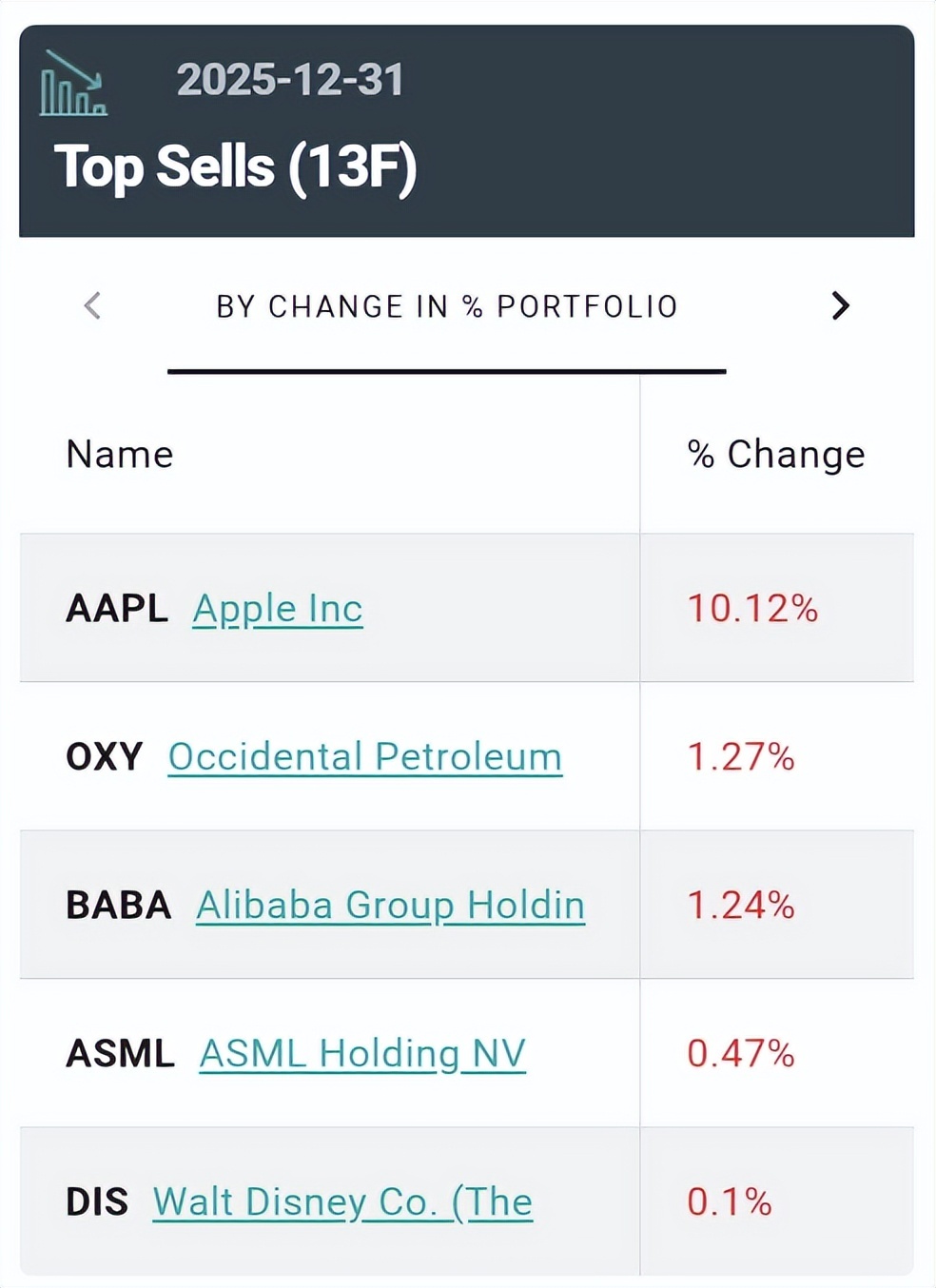
Core Insights - H&H International Investment, managed by investor Duan Yongping, has made significant adjustments to its portfolio in Q4 2025, notably reducing its stake in Apple while increasing investments in AI-related stocks [1][2]. Portfolio Adjustments - In Q4 2025, Duan Yongping reduced his holdings in several stocks, including Apple (AAPL) by 10.12%, Occidental Petroleum (OXY) by 1.27%, Alibaba (BABA) by 1.24%, ASML Holding (ASML) by 0.47%, and Walt Disney (DIS) by 0.1% [2]. - Despite the reduction, Apple remains the largest holding in Duan's portfolio, with a market value of $8.797 billion, accounting for 50.3% of the total portfolio, although he sold 2.4706 million shares [3]. Investment in AI - Duan Yongping significantly increased his position in NVIDIA, acquiring 6.6393 million shares, marking a 1110.62% increase, with a total market value of $1.35 billion, making it the third-largest holding at 7.72% of the portfolio [3]. - Additionally, Duan initiated positions in three AI-related companies: CoreWeave (299,900 shares), Credo (141,300 shares), and Tempus (110,000 shares), targeting key areas in the AI supply chain [3]. Strategic Outlook - In early January, Duan expressed a strong interest in learning about AI, indicating a belief that the technology will significantly transform the world in the coming years, potentially more than in the past decades [3].


华尔街见闻早餐FM-Radio | 2026年2月19日
Hua Er Jie Jian Wen· 2026-02-18 23:22
Market Overview - Technology stocks supported the U.S. market with two consecutive days of gains, while the Federal Reserve's meeting minutes revealed significant divisions among officials regarding interest rate policies [2][3] - The Dow Jones experienced a sharp drop at one point, while Nvidia rose by 1.6% and Amazon, boosted by Bill Ackman's fund, increased nearly 2% [2] - The chip index rose nearly 1%, and Micron, significantly increased by hedge fund Appaloosa, surged over 5% [2] - European stock indices achieved three consecutive days of gains, reaching historical highs, while the UK stock market also set new records [2] Oil and Commodities - Oil prices rebounded significantly, with U.S. crude rising over 4%, marking the largest increase in nearly four months, and Brent crude closing above $70 for the first time this month [2][3] - Gold and silver prices also saw rebounds, with gold rising nearly 3% and silver increasing by 6.5%, although gold later fell below $5,000 [2][7] Key News - The Federal Reserve's meeting minutes indicated a split among officials, with some supporting further rate cuts while others hinted at potential rate hikes [10][11] - The European Central Bank's President Lagarde may leave her position early, which could impact the continuity of monetary policy in the Eurozone [11] - Overseas investors net purchased $1.55 trillion in U.S. long-term financial assets last year, countering the narrative of "selling America" [11] - U.S. core capital goods orders exceeded expectations in December, with a 0.6% increase compared to the anticipated 0.3% [12] Company Developments - Tesla's first Cybercab, designed for fully autonomous driving without a steering wheel or pedals, has rolled off the production line [12] - Google launched the Pixel 10a smartphone ahead of Apple's iPhone 17e, maintaining a price of $499 with limited upgrades [13] - Notable investor Tepper increased his holdings in Micron by 200% and purchased a Korean ETF, betting on the storage sector [14] Investment Trends - Prominent investors are shifting strategies, with some selling Apple shares to increase positions in Nvidia and other AI-related companies [14] - The market is witnessing a trend of reallocating investments towards software stocks that have been undervalued due to recent sell-offs [15]

帮主快评:巴菲特、段永平同时减持苹果,这次他们看到了什么?
Sou Hu Cai Jing· 2026-02-18 08:44
Group 1 - Berkshire Hathaway, led by Warren Buffett, reduced its stake in Apple by over 10.29 million shares in the last quarter before Buffett's retirement [1] - Amazon also executed a significant reduction, completely divesting its position by 77% [1] - Investor Dong Yongping reduced his Apple holdings by 2.47 million shares while increasing his investment in Nvidia by over 11 times, bringing his total investment to $1.35 billion, making it his third-largest holding [1] Group 2 - The only new position taken by Berkshire Hathaway was in The New York Times, indicating a shift towards traditional media [3] - Dong Yongping's new investments include three companies—CoreWeave, Credo, and Tempus—all focused on the AI industry, covering areas from computing power leasing to high-speed connectivity and AI healthcare [3] - The contrasting strategies of Buffett and Dong Yongping suggest a divergence in investment philosophy, with Buffett seeking stability in traditional media while Dong Yongping aggressively pursues opportunities in the AI sector [3]

巴菲特大幅减持苹果,段永平大举押注AI
21世纪经济报道· 2026-02-18 04:41
Core Insights - Berkshire Hathaway made significant adjustments to its tech stock holdings in the last quarter under CEO Warren Buffett, notably reducing its stakes in Apple and Amazon while initiating a position in traditional media, The New York Times [1][5][8] Berkshire Hathaway Holdings - As of the end of Q4 2025, Berkshire's total portfolio value reached $274.1 billion, with the top ten holdings accounting for 88.26% of the portfolio [6] - The top ten holdings remained unchanged in terms of companies but saw slight ranking adjustments, including Apple, American Express, Bank of America, Coca-Cola, Chevron, Moody's, Occidental Petroleum, Swiss Re, Kraft Heinz, and Alphabet [1] Stock Reductions - Berkshire significantly reduced its stake in Amazon by 0.63 percentage points, dropping from 0.82% in Q3 2025 to 0.19% in Q4 2025, with the number of shares falling to approximately 2.3 million [6] - The company also sold over 10.29 million shares of Apple, reducing its holding by 4.3%, with the stock's portfolio share decreasing from 22.69% to 22.60% [6] - Bank of America saw a reduction of nearly 50% in shares held, decreasing from 1.03 billion shares to 517 million shares, with its portfolio share dropping to 10.38% [7] New Investments - The New York Times was the only new position added by Berkshire in Q4 2025, with an acquisition of 5.07 million shares valued at over $350 million, representing 0.13% of the portfolio [9] - Berkshire increased its holdings in Chevron by over 8.09 million shares, raising its portfolio share to 7.24%, and in Swiss Re by approximately 2.92 million shares, increasing its share to 3.90% [11] Other Notable Investors - Notable investor Duan Yongping also reduced his stake in Apple by 247.06 million shares, a decrease of 7.09% [2][12] - Duan significantly increased his investment in Nvidia by 663.93 million shares, marking a 1110.62% increase, making it his third-largest holding [12][13]

突然!巴菲特、段永平大幅减持!
Xin Lang Cai Jing· 2026-02-18 03:55
Group 1 - Berkshire Hathaway significantly reduced its holdings in Apple and Amazon in the fourth quarter of 2025, with a 77% reduction in Amazon and a sale of over 10.29 million shares of Apple, decreasing its stake from 22.69% to 22.60% [4][5][6] - The fourth quarter marked the last 13F filing under Warren Buffett's leadership, as Greg Abel officially took over as CEO on January 1, 2026 [4][6] - Despite the reductions, Apple remains Berkshire's largest holding, while Amazon's shares fell to approximately 2.3 million, representing a drastic decline in ownership [6][7] Group 2 - Notable investor Duan Yongping also reduced his Apple holdings by 247.06 million shares, a decrease of 7.09%, while significantly increasing his investment in Nvidia by 663.93 million shares, marking a 1110.62% increase [8][9] - Duan's investment strategy appears to focus on AI, as he also initiated positions in three AI-related companies: CoreWeave, Credo, and Tempus [9][10] - Duan increased his stake in Berkshire Hathaway by 198.5 million shares, a rise of 38.24%, making it his second-largest holding [9][10]
未知机构:中泰医药谢木青刘照芊乘通用AI之势建议关注AI医疗昨日-20260213
未知机构· 2026-02-13 02:35
Summary of Conference Call Notes Industry Focus - The focus is on the **AI healthcare sector**, particularly the integration of artificial intelligence in medical applications and services [1][2]. Core Insights and Arguments - The **Chinese government** emphasizes the need to promote large-scale commercial applications of AI, aiming to enhance the AI industry and expand high-value application scenarios [1]. - Recent advancements include **DeepSeek's version update** and the launch of **GLM-5**, indicating continuous breakthroughs in AI models [2]. - The **AI healthcare sector** is gaining traction due to supportive policies, technological advancements, and the gradual commercialization of pathology-assisted diagnostics [2]. - Clear application scenarios for AI in healthcare have been identified: - **B-end applications**: Involvement in medical imaging, surgical robots, in vitro diagnostics, and radiotherapy. - **C-end applications**: Empowering health management, chronic disease monitoring, personalized treatment suggestions, and academic research for doctors [2]. - Continuous policy support is evident through various documents that outline development directions and commercial pathways for AI in healthcare [2]. - The **first inclusion of "AI-assisted"** in the pricing project guidelines for pathology services marks a significant step towards commercialization [2]. - National-level AI application pilot platforms are being promoted in regions like **Beijing and Zhejiang**, enhancing industry conversion efficiency [2]. Additional Important Content - The **AI application market** is experiencing a surge in interest, driven by competition among major tech companies (ByteDance, Tencent, Alibaba, Baidu) in the general AI application field [3]. - Recent achievements, such as **ByteDance's Seedance 2.0**, demonstrate a shift from mere generation capabilities to commercial viability [3]. - The performance of companies like **Tempus** supports the feasibility of AI healthcare business models [3]. - Investment recommendations include companies such as **Dian Diagnostics, KingMed Diagnostics, and Meinian Health** [4]. - Risks highlighted include potential delays in policy implementation and slow commercialization of products or services [5].


未知机构:中泰医药谢木青刘照芊乘通用AI之势建议关注AI医疗昨日国-20260213
未知机构· 2026-02-13 02:35
Summary of Conference Call Records Industry: AI in Healthcare Key Points and Arguments - **Government Support for AI in Healthcare** The State Council emphasized the need to promote large-scale commercial applications of AI, enhance AI terminal and service consumption, and develop AI application pilot bases. This indicates strong governmental backing for the AI healthcare sector [1] - **Technological Advancements** Recent updates in AI models, such as DeepSeek's version update and the launch of GLM-5 by Zhizhu, demonstrate continuous breakthroughs in AI technology. This progress is crucial for the development of AI applications in healthcare [1] - **Commercialization Pathways** The introduction of guidelines like the "Pathology Medical Service Pricing Project" which includes "AI-assisted" services, paves the way for commercialization in the healthcare sector. This is a significant step towards integrating AI into medical services [2] - **Regional Initiatives** Various regions, including Beijing and Zhejiang, are advancing national-level AI application pilot platforms to enhance industrial transformation efficiency. This reflects a commitment to integrating AI with technological innovation [2] - **Market Dynamics and Competition** Major tech companies such as ByteDance, Tencent, Alibaba, and Baidu are competing in the general AI application space, which is driving the proliferation and iteration of AI technologies. For instance, ByteDance's Seedance 2.0 has achieved a breakthrough from "capable of generation" to "capable of commercialization" [2] - **Performance Validation** Companies like Tempus are demonstrating the viability of AI healthcare business models through their performance, further validating the potential of AI applications in the medical field [2] Investment Recommendations - **Growth Potential in AI Healthcare** Given the clear policy support, increasing market attention, and maturing technology, the AI healthcare sector is viewed as having significant growth potential. Recommended companies to watch include Dean Diagnostics, KingMed Diagnostics, and Meinian Health [3]
边加谷歌边减英伟达!百年巨头柏基披露去年四季度大动作
Ge Long Hui· 2026-02-10 03:42
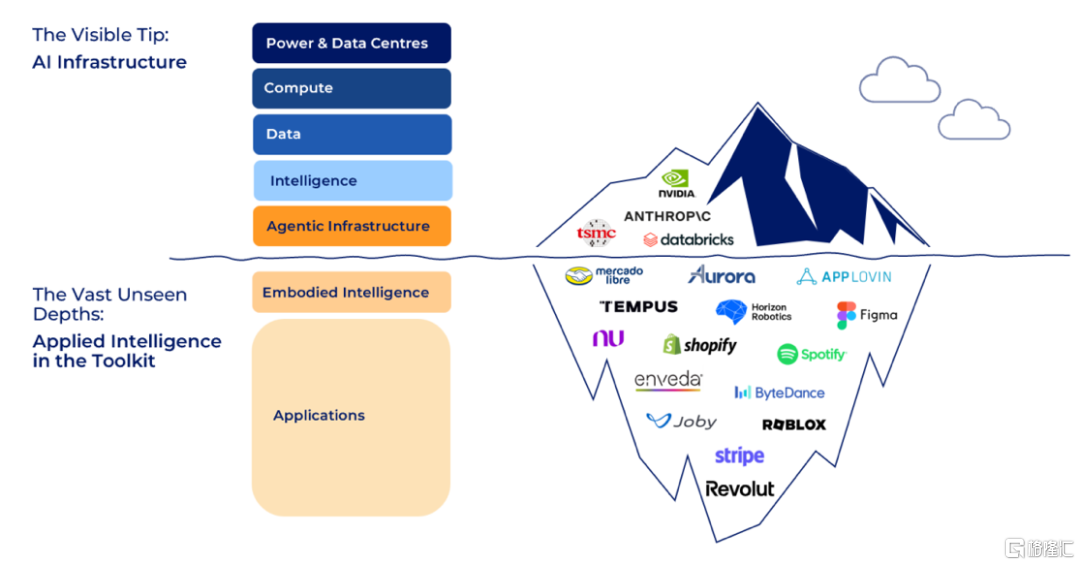
Summary of Key Points Core Viewpoint - Baillie Gifford's total holdings value decreased to $120.34 billion in Q4 2025, down approximately 10.8% from $135 billion in Q3 2025, primarily due to a net selling strategy and some growth stocks experiencing high-level corrections [1][2]. Group 1: Portfolio Adjustments - Nvidia remains the largest holding despite a 5.76% reduction in shares, accounting for 6.80% of the portfolio [3]. - Mercado Libre saw a 4.95% increase in holdings, raising its share to 5.83%, solidifying its position as a cornerstone of the portfolio [3]. - The top five holdings also include Amazon, Shopify, and Sea Ltd, with the top ten holdings comprising 43.4% of the total portfolio [4]. Group 2: Notable Transactions - Significant reductions were made in Amazon, Shopify, Meta, and Cloudflare, while Google saw a notable increase in holdings by 166%, reflecting a strategic shift towards AI capabilities [5][6]. - Baillie Gifford's investment in Google is valued at approximately $1.7 billion post-increase [6]. Group 3: Investment Philosophy and Trends - The investment team emphasizes the importance of adapting to the AI wave, suggesting that companies must pivot quickly to meet new market demands [9][10][12]. - The transition to AI is viewed as a new paradigm shift, with potential for significant growth opportunities as new companies emerge [14][15]. - The focus is on both "AI core" companies and those using AI as a tool to enhance existing services [21][24]. Group 4: Insights on China and Platform Companies - The sentiment in China has shifted, with a recognition of the country's potential to foster visionary entrepreneurs, particularly in the battery sector where CATL holds a significant market share [25][26]. - Platform companies are highlighted for their ability to create value through network effects and adaptability, requiring a long-term investment perspective [28]. Group 5: Non-Public Company Investments - Baillie Gifford has committed over £6 billion to non-public companies since 2012, recognizing the increasing duration of private company ownership before IPOs [31][32]. - The firm holds significant stakes in companies like SpaceX and ByteDance, which have shown substantial revenue growth compared to public market indices [33]. Group 6: Portfolio Construction Approach - The investment strategy is bottom-up, focusing on global transformations rather than specific trends or technologies [34]. - The portfolio includes a diverse range of companies across various sectors, with ongoing adjustments to capitalize on emerging growth opportunities [38].



摩根士丹利2026重磅信号:医疗估值密码已变,告别概念炒作,拥抱效率革命
GLP1减重宝典· 2026-02-08 14:20
Core Viewpoint - The article emphasizes a "silent revolution" in the healthcare sector driven by AI, where traditional medical giants are leveraging AI to enhance operational efficiency and cash flow, moving away from the hype surrounding pure AI startups [4][5]. Group 1: Capital Shift - Smart money is rapidly withdrawing from chasing "pure AI tools" and is instead investing heavily in traditional healthcare giants like Medtronic, Intuitive Surgical, GE Healthcare, and Boston Scientific that are systematically transforming themselves with AI [4][5]. - The underlying logic of this capital shift is a complete migration of valuation paradigms, favoring tangible operational improvements over mere technological advancements [5]. Group 2: Operational Alpha - The concept of "Operational Alpha," proposed by Bessemer Venture Partners, focuses on whether AI can enable a company to perform the work of ten people more efficiently and cost-effectively [7]. - Investors are now prioritizing quantifiable financial improvements, such as reducing clinical evaluation report preparation time from 400 hours to 140 hours, which can lead to significant early cash flow [7][10]. Group 3: Efficiency Revolution - The efficiency revolution is driven by three main arteries that enhance cash flow for healthcare giants: 1. **Accelerating Value Realization**: AI can reduce the time required for clinical evaluation reports, significantly speeding up product market entry and increasing net present value [10]. 2. **Optimizing Supply Chain and Inventory**: AI-driven predictive algorithms can release $400 million to $600 million in operational cash by optimizing inventory management [11]. 3. **Enhancing Customer Lifetime Value**: AI transforms products into long-term solutions, increasing customer reliance and stabilizing cash flow [12]. Group 4: Challenges for AI Startups - Pure AI medical startups are facing a capital winter due to three major hurdles: integration challenges with complex hospital IT systems, high compliance costs associated with new regulations, and data barriers that prevent access to high-quality training data [13][15]. - Investors are now more inclined to support established companies with stable cash flows and customer networks that are effectively using AI to enhance efficiency, rather than taking risks on startups that must overcome significant technological and regulatory obstacles [15]. Group 5: M&A Trends - The 2026 M&A landscape will focus on "efficiency enhancement" rather than mere scale expansion, with acquisitions aimed at integrating companies that can directly improve operational efficiency [16]. - Notable examples include Tempus acquiring Paige for its AI cancer detection software and extensive data set, and Stryker acquiring Inari Medical for its real-time surgical data processing capabilities [16]. Group 6: Future Industry Dynamics - The narrative of "disrupting giants" is shifting towards becoming indispensable components within the efficiency arsenal of larger companies, with startups needing to demonstrate quantifiable cash return improvements to attract investment [17][19]. - Investors must shift their due diligence focus from the allure of technology to the ability of businesses to accelerate cash returns, emphasizing the importance of free cash flow trends and cash turnover days [19].




讯飞医疗(02506)的增长逻辑:从科大讯飞70%利润增长看AI医疗的估值重构
智通财经网· 2026-01-30 07:15
Core Viewpoint - The announcement from Keda Xunfei regarding its 2025 profit forecast indicates a projected net profit growth of 40% to 70%, highlighting the resilience of its core business and signaling that AI-driven vertical commercialization has entered a harvest phase [1] Group 1: Company Performance - Keda Xunfei's growth is attributed to its "platform + scenario" strategy, with the medical sector being a significant contributor to this growth [2] - The medical business has achieved substantial market penetration, with over 77,000 grassroots medical institutions deploying its core product, the Intelligent Medical Assistant [2] - The download count for the personal health assistant app "Xunfei Xiaoyi" has surpassed 26 million, indicating strong user engagement and service capability [2] Group 2: Technological Advancements - The "Xunfei Spark" large model is the only mainstream model in China trained on domestically produced computing power, maintaining competitive technical indicators globally [3] - The medical deep reasoning model, based on the Spark model, has outperformed leading models like GPT-5 in various medical applications, achieving capabilities equivalent to senior hospital physicians [3] - In 2025, Keda Xunfei's large model projects won contracts worth 2.316 billion yuan, surpassing the combined total of the second to sixth competitors in the industry [3] Group 3: Market Dynamics - The global AI medical market is projected to exceed $100 billion by 2025, with a compound annual growth rate of over 25%, driven by the demand for AI applications in grassroots healthcare [5] - Keda Xunfei is positioned to leverage its domestic experience to address global healthcare challenges, particularly in emerging markets [6] - The company is actively exporting its successful grassroots medical AI solutions, aiming to capture growth opportunities in the global market [6] Group 4: Investment Implications - The profit growth forecast from Keda Xunfei signals to the capital market that medical AI has transitioned from concept to scalable profitability, with the company positioned as an industry leader [7] - Unlike many US competitors that remain unprofitable, Keda Xunfei has achieved profitability and continues to optimize its business model, suggesting significant valuation upside [7] - The sustainable technological barriers established by Keda Xunfei, through its comprehensive ecosystem of large models, data, and application scenarios, provide a strong foundation for long-term valuation support [7] Conclusion - Keda Xunfei's 2025 profit forecast reflects confidence in the commercialization of AI, indicating not only a spillover effect on the parent company's performance but also the independent commercial value of its medical technology [8] - The company is carving out a unique path in AI medical commercialization, deeply embedding itself in the transformation of China's healthcare system [8]
