
Tsinghua University

Search documents
Tsinghua University veröffentlicht das erste universitätsweite Rahmenwerk zur Regelung von KI in Lehre und Forschung
Prnewswire· 2025-12-02 04:33
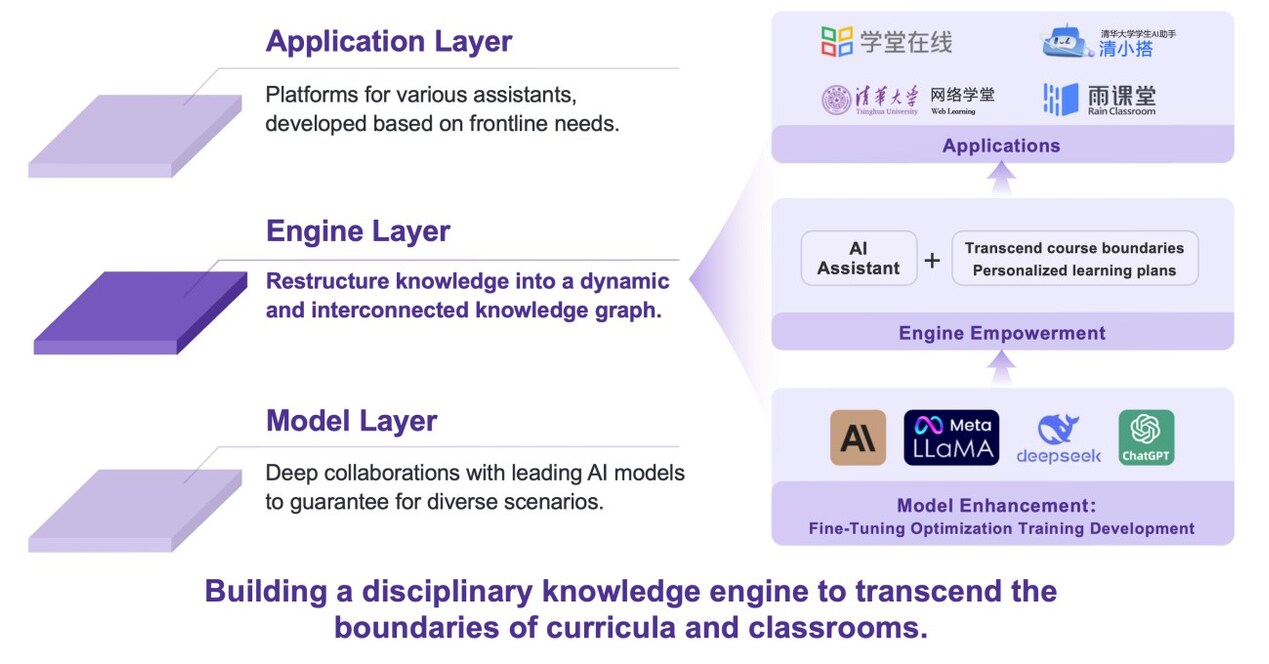
Core Viewpoint - Tsinghua University has released comprehensive guiding principles for the application of artificial intelligence (AI) in education, establishing a structured framework for its use across the campus [1][12]. Group 1: General Provisions - The guiding principles outline a proactive yet cautious approach to AI, emphasizing five core principles: responsibility, compliance and integrity, data security, prudence and critical thinking, and fairness and inclusivity [5]. - The framework mandates proper disclosure of AI usage, prohibits academic misconduct, and forbids the use of sensitive or unauthorized data in AI model training [5]. - It highlights the importance of vigilance against AI-generated errors and encourages cross-verification to prevent cognitive complacency due to over-reliance on technology [5]. Group 2: Teaching and Learning - Educators are advised to determine how AI should be utilized based on course objectives and to explain the guiding principles to students at the beginning of the semester [6]. - The guidelines encourage educators to help students develop a critical and comprehensive understanding of AI, while strictly prohibiting the use of AI-generated texts or codes in academic submissions [6]. Group 3: Theses, Dissertations, and Practical Work - The principles stress that AI should not replace academic training or independent intellectual work required from students [7]. - The use of AI for ghostwriting, plagiarism, or other forms of misconduct is strictly prohibited, with supervisors required to provide clear guidelines for appropriate AI usage [7]. Group 4: Future Developments - The principles are designed to foster innovation rather than hinder it, reflecting a thorough examination of AI's growing role in education [8]. - Tsinghua University plans to disseminate these principles through its AI competency platform, workshops for faculty, and interdisciplinary dialogues to promote responsible and informed AI usage [9].

X @Bloomberg
Bloomberg· 2025-11-19 03:59
RT Saritha Rai (@SarithaRai)BIG TAKEXi Jinping’s university drives China’s AI boom, filing more patents than Harvard or MIT!Tsinghua Univ, long a hub for top science & engineering talent, now leads the AI revolutionGift link: Free to read till Nov 26https://t.co/PSWimMVdXY#AI https://t.co/3EhteoLWtJ ...
X @Bloomberg
Bloomberg· 2025-11-18 22:06
Tsinghua University has educated China's top science and engineering students for decades. Now, it's at the forefront of the AI revolution, receiving more patents each year than MIT, Stanford, Princeton and Harvard combined https://t.co/VBf9Ppg1JX ...
港科广&清华联合提出Spatial Forcing:隐式空间对齐,超越主流2D/3D VLA模型性能
具身智能之心· 2025-10-18 16:03
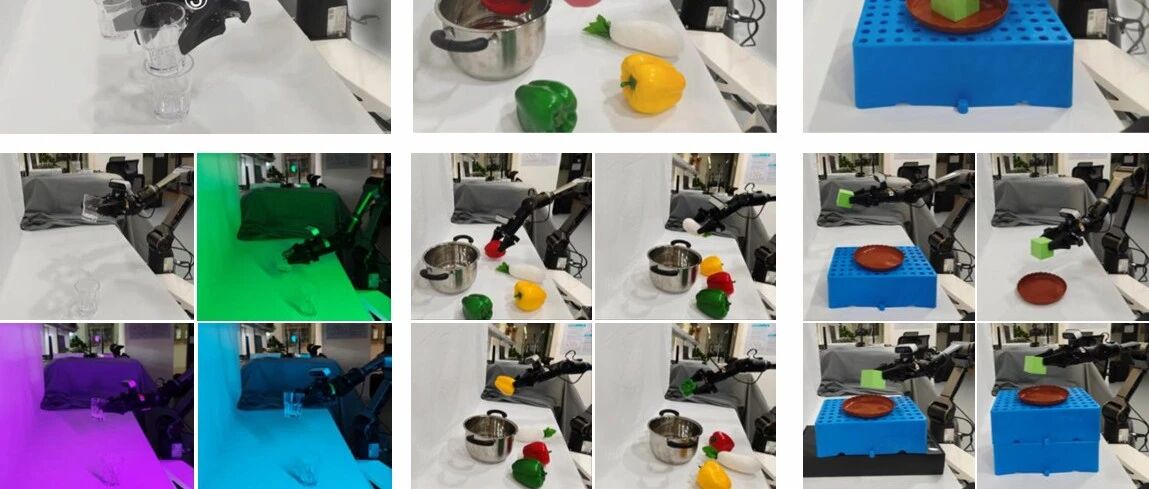
Core Insights - The article discusses the limitations of current Vision-Language-Action (VLA) models that primarily rely on 2D visual data, lacking a deep understanding of real 3D space, which hampers their ability to perform tasks in the physical world [2][4] - The proposed method, Spatial Forcing (SF), allows VLA models to develop spatial understanding without explicit 3D input by aligning visual features with a powerful 3D geometric representation generated by an external model [2][10] Methodology - The SF method employs an implicit spatial alignment strategy, enabling the model to autonomously acquire spatial understanding during training without the need for additional 3D sensors [2][13] - A depth probing experiment was conducted to verify the presence of 3D information in the original VLA's visual features, revealing that without 3D input, the model cannot form accurate spatial perceptions [11][13] - The training process involves aligning the VLA model's visual tokens with pixel-level spatial representations extracted from a pre-trained 3D model, optimizing both spatial alignment loss and action generation loss [16] Performance Results - The SF method significantly outperforms existing 2D and 3D VLA models in various tasks, achieving a training efficiency improvement of up to 3.8 times and a data utilization efficiency increase of up to 5.9 times [14] - In experiments, the Spatial Forcing model achieved a success rate of 99.4% in spatial tasks, 99.6% in object tasks, and 98.8% in goal tasks, demonstrating its superior performance compared to other models [18]
X @Balaji
Balaji· 2025-08-19 09:45
Don’t be surprised if China offers Terry Tao the chair of the mathematics department at Tsinghua University.And all the funding he wants.Because it is possible for the US to fumble the bag as the destination for global talent. And indeed it is fumbling that bag right now.Paul Graham (@paulg):The Trump administration has suspended the funding of Terence Tao and the Institute for Pure and Applied Mathematics at UCLA. https://t.co/jc4W57E4IT ...