
Display Panels

Search documents
CINNO Research:春节控产影响下 2月电视面板价格预计维持上涨
Zhi Tong Cai Jing· 2026-02-24 11:00
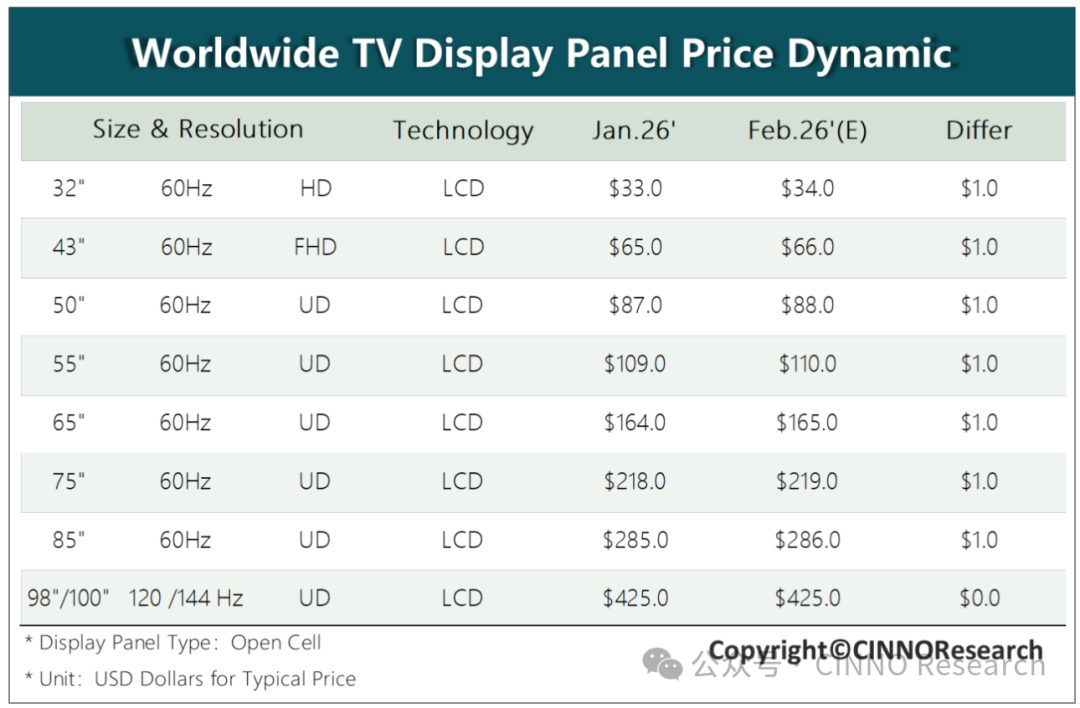
CINNO Research首席分析师周华表示,今年1月,受国外世界杯等国际赛事需求持续释放以及国内补贴政策延续影响,多数面板价格获得支撑,呈现上涨 趋势。进入2月,短期需求依然旺盛,同时面板厂在春节期间实施控产,导致市场供应阶段性收紧。在需求保持韧性、供给趋紧的共同作用下,预计2月面 板价格将维持温和上涨。 | Size & Resolution | | | Technology | Jan.26' | Feb.26'(E) | Differ | | --- | --- | --- | --- | --- | --- | --- | | 32" | 60Hz | HD | LCD | $33.0 | $34.0 | $1.0 | | 43" | 60Hz | FHD | LCD | $65.0 | $66.0 | $1.0 | | 50" | 60Hz | UD | LCD | $87.0 | $88.0 | $1.0 | | ਟ ਦੇ " | 60Hz | UD | LCD | $109.0 | $110.0 | $1.0 | | ୧୧... | 60Hz | UD | LCD | $164.0 | $1 ...

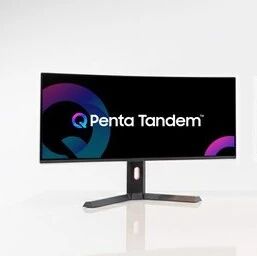
三星显示推出五层串联OLED面板
WitsView睿智显示· 2026-02-13 11:09
Core Viewpoint - Samsung Display has launched a high-end technology brand "QD-OLED Penta-Tandem," which utilizes a proprietary five-layer organic light-emitting structure to enhance energy efficiency, peak brightness, and picture quality [1]. Group 1: Technology Advancements - The term "Penta" refers to the number five in Greek, while "Tandem" indicates the stacked or series connection technology of OLED panels [1]. - Samsung Display has upgraded the blue light-emitting layer of QD-OLED from a four-layer to a five-layer structure, achieving a 1.3 times increase in luminous efficiency and doubling the lifespan compared to last year's four-layer panel [1]. - The new product can achieve a peak brightness of 4500 nits for TVs and 1300 nits for monitors based on a 3% OPR (On-Pixel Ratio) [1]. Group 2: Product Launch and Market Strategy - The 27-inch UHD (3840*2160) QD-OLED panel launched by Samsung Display last year is the first to feature the five-layer tandem technology, achieving a pixel density of 160 PPI [2]. - Samsung Display plans to extend the QD-OLED Penta-Tandem technology across its entire panel product line, including a future 49-inch dual QHD panel [2]. - The Penta Tandem technology has already been adopted in high-end self-emissive TV display product lines by major clients since last year [2].
群智咨询:2025年全球OLED手机面板整体出货8.9亿片 同比增长5.2%
智通财经网· 2026-02-09 10:51
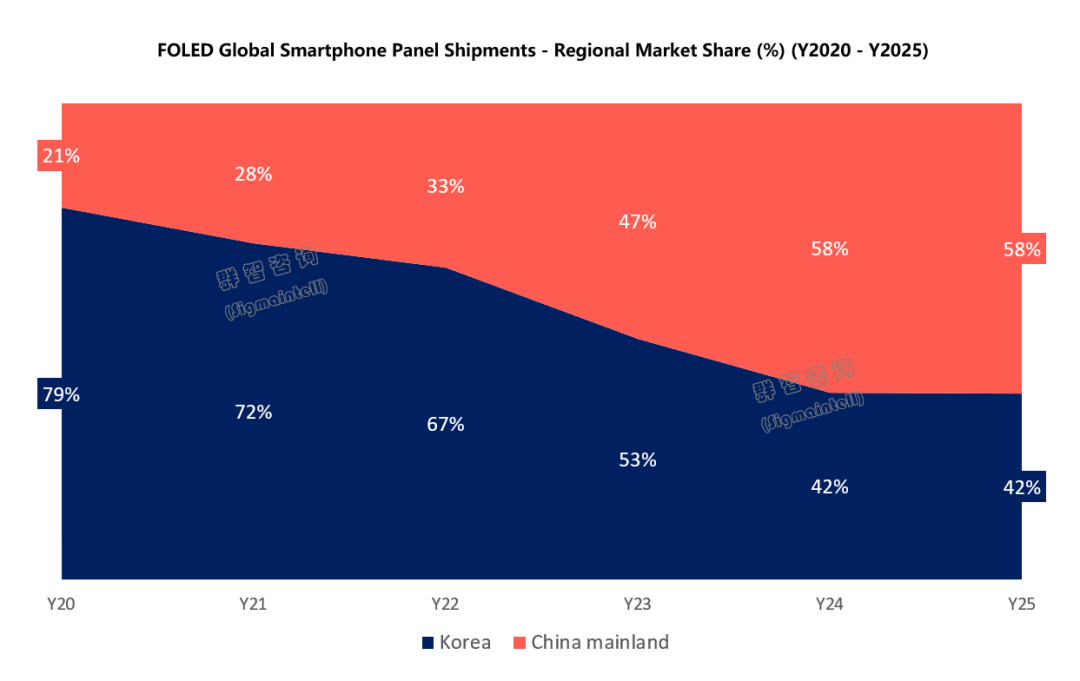
Core Insights - The global OLED smartphone panel shipment is projected to reach approximately 890 million units in 2025, marking a year-on-year growth of 5.2%, driven by product structure upgrades, capacity expansion, cost optimization, domestic policy support, and technological advancements [1] - Flexible OLED shipments are expected to be around 690 million units, with a year-on-year increase of approximately 9.6%, while rigid OLED shipments are forecasted to decline by 7.7% to about 200 million units [1] Market Dynamics - Korean manufacturers, being core suppliers to Apple and Samsung, are expected to maintain over 50% of the OLED market share in 2025, with flexible OLED market share remaining stable at approximately 42.1% [2] - Chinese manufacturers are gaining ground, with a total OLED panel shipment share of 49.3%, an increase of 1 percentage point year-on-year, and a flexible OLED market share of 57.9% in 2025 [2] Company Performance - Samsung Display (SDC) is projected to lead the global OLED panel market with shipments of about 380 million units, a slight increase of 1.5%, while rigid OLED shipments are expected to decline by 6.6% to approximately 160 million units [5] - BOE is anticipated to ship around 150 million units, achieving a market share of 21.1%, driven by penetration in the mid-range market and breakthroughs in the high-end market [5] - Tianma is expected to see the fastest growth among OLED manufacturers, with shipments of approximately 97 million units, a year-on-year increase of 19.4%, elevating its market share to 10.8% [6] Competitive Landscape - The OLED market is characterized by significant competition, with major players focusing on capacity expansion and technological advancements to enhance competitiveness [8] - The industry is facing challenges such as weakened demand in the smartphone market and increased price competition due to rising supply [8] - Long-term strategies are shifting towards collaborative innovation and system-level performance optimization, moving beyond traditional hardware supply roles [8]




大尺寸面板价格小幅上扬 市场供需格局持续向好
Zheng Quan Ri Bao Wang· 2026-02-07 02:17
Group 1 - The panel market is experiencing a "not dull off-season" with demand front-loading and supply-side adjustments, creating conditions for price increases [1][2] - The average price forecast for large-size panels in February 2026 shows an upward trend, with 65-inch TV panels expected to reach $171, a $2 increase from January, representing a 1.2% rise [1] - Major panel manufacturers are effectively stabilizing prices through capacity adjustments, which positively impacts profitability [1][2] Group 2 - The supply of medium and large-size panels is highly concentrated among leading companies, which are likely to adopt a unified pricing strategy, further reduced supply during the Chinese New Year [2] - The overall price trend for panels is expected to stabilize, with 65-inch TV panels projected to fluctuate between $168 and $177 throughout 2025, indicating reduced volatility [2] - Chinese panel manufacturers have increased their global market share to over 70% through continuous technological advancements and scale advantages, enhancing their pricing power [2][3] Group 3 - TCL Technology's subsidiary, TCL Huaxing, is maintaining competitive advantages in large-size products while rapidly growing in the small and medium-size segments, with a projected revenue exceeding 100 billion yuan and net profit over 8 billion yuan for 2025 [3] - BOE Technology Group is optimizing its product structure, with significant advancements in OLED technology, including the early activation of its 8.6-generation AMOLED production line, expected to enter mass production in the second half of 2026 [3] - The panel price is anticipated to remain moderately volatile in 2026, with major events like the World Cup expected to drive market demand [3]

2月电视面板价格预计将全面上涨
WitsView睿智显示· 2026-02-06 06:30
| | | | 应用别 | R4 | 分辨率 | 出货型态 | | | 液晶显示屏价格下旬预测 | | | | --- | --- | --- | --- | --- | --- | --- | --- | --- | | | | | | 保 | 흥 | 均价 | 与前月差异(%) | | | 电视 | es"W | 3840x2160 | Open-Cell | ਹਵੰ | 174 | 171 | 2.0 | 1.2% | | | 22"W | 3840x2160 | Open-Cell | 117 | 127 | 124 | 2.0 | 1.6% | | | 43"W | 1920x1080 | Open-Cell | ୧3 | 67 | ୧୧ | 1.0 | 1.6% | | | 32"W | 1366x768 | Open-Cell | 35.0 | 37.0 | 36.0 | 1.0 | 2.9% | | 桌上显示器 | 27"W (IPS) | 1920x1080 | LED | 57.6 | 65.8 | 63.0 | 0.0 | 0.0% | | | 23.8"W (IPS) | 1920x1 ...

东北证券:建筑装饰行AI推动CAPEX景气周期 洁净室充分受益
智通财经网· 2026-02-06 02:44
Group 1 - Cleanroom engineering serves as a foundational support for advanced manufacturing, with a high concentration in the high-end market [2] - The domestic cleanroom market is projected to reach 286.8 billion yuan in 2024, with over half allocated to electronics, and the unit area cost expected to rise to 0.66 million yuan per square meter [2] - The global semiconductor investment remains robust, with significant domestic space for localization, as China's integrated circuit self-sufficiency rate was only 18.3% as of 2022 [2][4] Group 2 - The HBM market is rapidly expanding, with a forecasted size of 30 billion USD by 2026 and a compound annual growth rate of approximately 100% from 2023 to 2026 [3] - Major players in the HBM industry, including SK Hynix, Samsung, and Micron, dominate the market, holding 54%, 39%, and 7% market shares respectively in 2024 [3] - Global semiconductor capital expenditure is expected to exceed 200 billion USD by 2026, with cleanroom size projected at 217.2 billion yuan [4] Group 3 - The demand for cleanrooms in the medical sector is expected to grow steadily, with the cleanroom market projected to increase from 6.78 billion yuan in 2013 to 23.5 billion yuan in 2024 [6] - The number of hospitals in China has grown from 24,709 in 2013 to 38,355 in 2023, driving the expansion of medical cleanroom facilities [6] - Investment opportunities are identified in companies such as Yaxing Integration, Shenghui Integration, Huakang Cleanroom, Bocheng Co., and Meiyu Technology [6]

维信诺:预计2025年全年净亏损20.00亿元—25.00亿元
2 1 Shi Ji Jing Ji Bao Dao· 2026-01-29 09:45
南财智讯1月29日电,维信诺发布年度业绩预告,预计2025年全年归属于上市公司股东的净利润 为-250,000万元—-200,000万元,即净亏损20.00亿元—25.00亿元;预计2025年全年归属于上市公司股东 的扣除非经常性损益的净利润为-270,000万元—-220,000万元。报告期内,公司实现营业收入区间为79 亿元至83亿元,同比持平至增长4.68%。归属于上市公司股东的净利润较上年同期有小幅增长。2025年 度业绩较上年同期有所增长,主要原因如下:报告期内,下游消费电子行业复苏,智能手机、智能穿戴 等AMOLED市场渗透率持续提升,OLED面板整体需求温和增长,产业发展趋势逐渐清晰,国产厂商出 货量和市场份额保持向上趋势。公司围绕整体发展战略和年度经营目标,持续技术创新,优化产品结 构,满足客户多元化需求;同时公司通过精益化管理,提升产线运营水平,以技术创新带动产业链发 展,不断丰富供应链体系,产品毛利率有所改善。 ...
LG Display四年来首度全年盈利,2025年营收25.81万亿韩元
Sou Hu Cai Jing· 2026-01-28 08:27
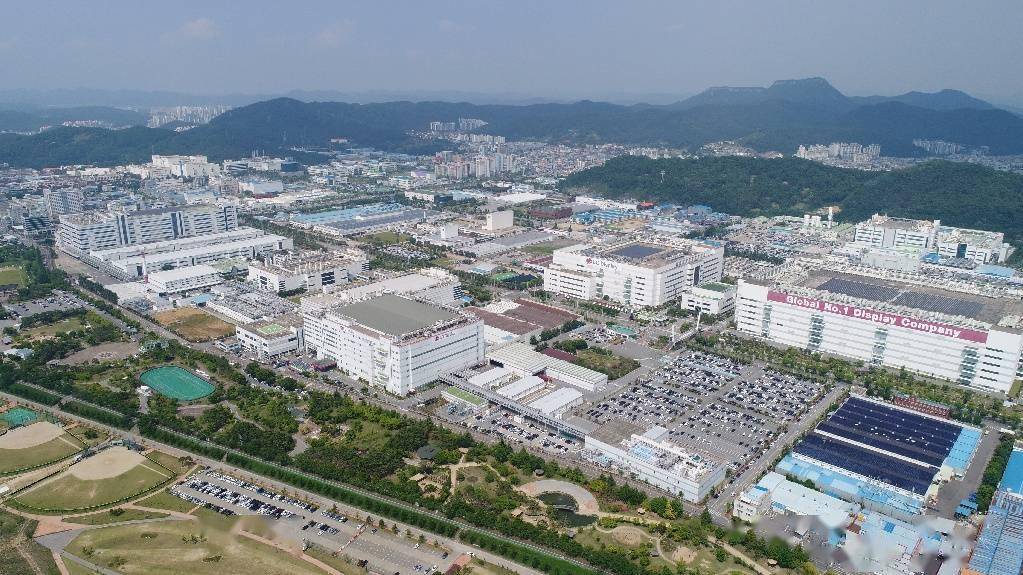
IT之家 1 月 28 日消息,LG Display 乐金显示今日公布了该企业的 2025 年财务数据。其去年实现 25.81 万亿韩元(IT之家注:现汇率约合 1241.98 亿元人民币)营业收入,同比下降 3%;营业利润 5170 亿韩元(现汇率约合 24.88 亿元人民币),四年来首度实现全年盈利。 相较 2024 年,LG Display 在 2025 年实现了超过 1 万亿韩元的营业损益改善,这是创新成本结构、提高运营效率、专注 OLED 三方面共同作用的 结果。去年 OLED 在 LG Display 整体营收中的占比达到 61%,较 2024 年进一步提升 6 个百分点。 ▲ LG Display 龟尾厂区 从收入构成来看,IT 面板、移动及其它面板分别贡献了 LG Display 2025 年营收的 37% 和 36%,电视面板和车用面板则分别占到 19% 和 8%。 ...
LG Display (LPL) - 2025 Q4 - Earnings Call Transcript
2026-01-28 06:02
Financial Data and Key Metrics Changes - Revenue for Q4 2025 rose slightly quarter-on-quarter (QOQ) to 7.2008 trillion KRW, driven by solid panel shipments for TVs and notebook PCs [10] - Operating profit declined QOQ to 168.5 billion KRW due to lower shipments of certain small and medium OLED models and one-off costs related to strengthening the company's profit structure [12][14] - Net loss was 351.2 billion KRW, primarily due to foreign currency translation losses [18] - EBITDA in Q4 was 1.162 trillion KRW, with an EBITDA margin of 16% [20] Business Line Data and Key Metrics Changes - Shipment area for TV and notebook PC panels grew QOQ, while shipments for monitor and tablet panels declined, resulting in a total shipment area increase to 4.0 million square meters [25] - ASP per square meter for OLED panels was $1,297, down 5% QOQ but up 49% year-on-year (YOY) [26] - OLED products accounted for 65% of total revenue in Q4, unchanged QOQ and up 5 percentage points YOY [38] Market Data and Key Metrics Changes - Revenue share from mobile and others accounted for 40% of total revenue, up 1 percentage point QOQ, while IT revenue share decreased to 36% [30][34] - TV revenue share rose slightly by 1 percentage point, while auto revenue share decreased to 7% [36] Company Strategy and Development Direction - The company aims to solidify its OLED-centric business structure, having terminated large LCD operations and focusing on high-margin products [61] - Future strategies include expanding panel shipments in small mobile, responding to high-end market demand in medium-sized OLED, and maintaining leadership in large panels through differentiated products [73][79] - The company plans to maintain a CAPEX policy focused on future readiness and structural upgrades, with 2026 CAPEX expected to be around 2 trillion KRW [81] Management's Comments on Operating Environment and Future Outlook - Management acknowledged ongoing external uncertainties and volatility in global markets but emphasized the importance of stabilizing business performance through OLED growth and operational efficiency [71] - The company aims to achieve profitability in all business segments to regain market trust and shareholder confidence [112] Other Important Information - Cash and cash equivalents at quarter end were 1.573 trillion KRW, with total debt decreasing to 12.664 trillion KRW [41][43] - The company expects a decrease in shipment area across all categories in Q1 due to seasonality, with ASP per square meter projected to remain above $1,200 [50][52] Q&A Session Summary Question: Outlook for each business and expected performance for the year - Management highlighted the need to continue improving operational efficiency and profitability while addressing external uncertainties [91][97] Question: Strategic priorities for the company moving forward - The focus will be on becoming a technology-centric company and ensuring profitability across all business segments [100][112] Question: Mobile OLED shipment numbers and market opportunities - The company aims for mid-70 million units in panel shipments for smartphones in 2025, with a focus on closing the gap between first and second half shipments [130][134] Question: Impact of rising memory semiconductor prices on profitability - Management noted potential pressures on display prices and demand but stated that current impacts remain limited [138][140] Question: Outlook for IT business and potential turnaround - The company anticipates continued improvement in profitability while closely monitoring market conditions before making significant investments [146][150] Question: Strategy for large OLED panels and maintaining profitability - The company plans to strengthen its white OLED lineup and target a panel shipment of over 7 million in 2026, aiming for a 10% growth YOY [162][164]

LG Display (LPL) - 2025 Q4 - Earnings Call Transcript
2026-01-28 06:02
Financial Data and Key Metrics Changes - Revenue for Q4 2025 rose slightly quarter-on-quarter (QOQ) to 7.2008 trillion KRW, driven by solid panel shipments for TVs and notebook PCs [12] - Operating profit declined QOQ to 168.5 billion KRW due to lower shipments of certain small and medium OLED models and one-off costs related to strengthening profit structure [14] - Net loss was 351.2 billion KRW, primarily due to foreign currency translation losses [20] - EBITDA in Q4 was 1.162 trillion KRW, with an EBITDA margin of 16% [23] - Cash and cash equivalents at quarter end were 1.573 trillion KRW, largely unchanged QOQ [46] - Total debt decreased to 12.664 trillion KRW, and net debt fell to 11.091 trillion KRW [48][51] Business Line Data and Key Metrics Changes - Shipment area for TV and notebook PC panels grew QOQ, while shipments for monitor and tablet panels declined, resulting in a total shipment area of 4.0 million square meters [29] - ASP per square meter was $1,297, down 5% QOQ but up 49% year-on-year, reflecting a shift towards OLED products [31][42] - OLED products accounted for 65% of total revenue in Q4, unchanged QOQ and up 5 percentage points year-on-year [42] Market Data and Key Metrics Changes - Revenue share from mobile and others accounted for 40% of total revenue, up 1 percentage point QOQ [35] - IT revenue share remained at 36%, down 1 percentage point QOQ [38] - TV revenue share rose slightly by 1 percentage point, while auto revenue share fell to 7%, down 1 percentage point QOQ [40] Company Strategy and Development Direction - The company aims to continue growing its OLED business and improve operational efficiency while addressing external uncertainties and market volatility [76] - Plans include expanding panel shipments in small mobile, responding to high-end market demand in medium-sized OLED, and focusing on high-end LCD in IT [78][81] - The company is committed to maintaining a CAPEX policy focused on future readiness and structural upgrades, with 2026 CAPEX expected to be around 2 trillion KRW [89] Management's Comments on Operating Environment and Future Outlook - Management acknowledged the ongoing external uncertainties and volatility in global markets but emphasized the importance of stabilizing business performance through OLED growth and cost innovation [76] - The company aims to become a technology-centric organization and improve competitiveness across various dimensions [111][125] Other Important Information - The company incurred one-off costs in Q4 related to voluntary retirement programs and incentive payments for employees, totaling in the high 300 billion KRW range [67][73] - The company expects total shipment area to decrease by low 20% in Q1 2026 due to seasonality, with ASP per square meter expected to remain above $1,200 [56] Q&A Session Summary Question: Outlook for each business and expected performance for the year - The company expects OLED share to continue growing, driving revenue, and aims to avoid losses in the first half of the year [97] Question: Strategic priorities for the mid to long term - The company emphasizes the need for continuous growth and profitability in every quarter, focusing on improving competitiveness [106][121] Question: Smartphone panel shipment numbers and market opportunities - The company achieved an annual panel shipment target of around mid-70 million units and aims to further close the gap between first and second half shipments [137] Question: Impact of memory semiconductor trends on business performance - The company is monitoring the impact of rising memory prices on display prices and demand, but currently, the impact remains limited [145] Question: Outlook for IT business and potential turnaround - The company anticipates continued improvement in profitability while focusing on high-end LCD and OLED products [154] Question: Strategy for large OLED panels and maintaining profitability - The company plans to strengthen its white OLED lineup and target a panel shipment of over 7 million units in 2026, aiming for a 10% growth [169]