XPENG(09868)

Search documents
胡润发布2025汽车品牌价值榜:特斯拉居首,问界进前三
Feng Huang Wang· 2026-02-04 02:43
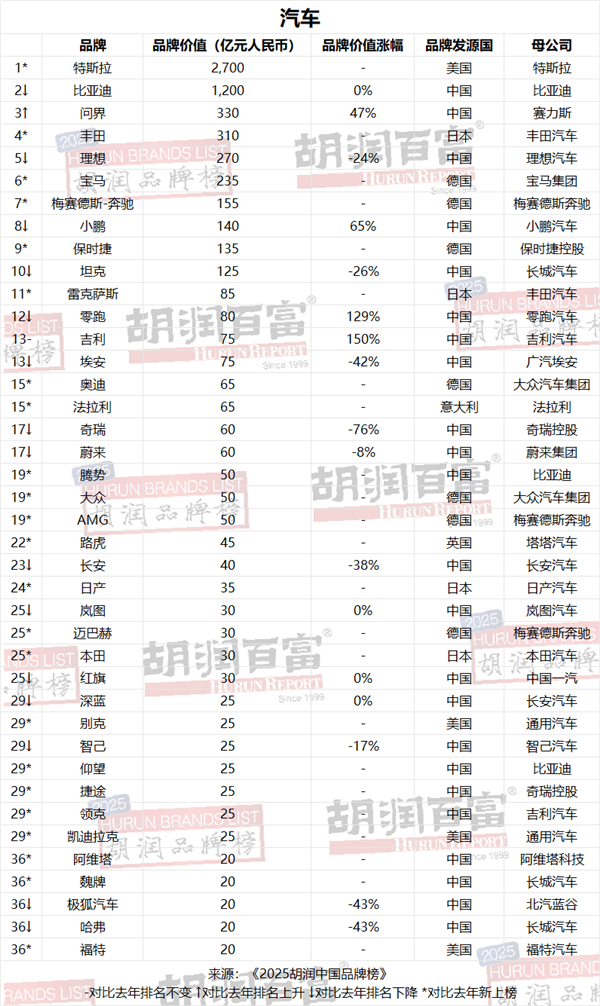
在本次榜单中,零跑汽车以129%的涨幅成为价值上升最快的品牌,其品牌价值为80亿元。奇瑞品牌价 值则出现76%的下降,为跌幅最显著品牌。 榜单第四、五位为丰田与理想,品牌价值分别为310亿元与270亿元。排名第六至十位的品牌依次是:宝 马、梅赛德斯-奔驰、小鹏汽车、保时捷以及坦克。其中,小鹏汽车品牌价值增长65%。 | | | | | 汽车 | | | | --- | --- | --- | --- | --- | --- | --- | | | 品牌 | | 品牌价值 (亿元人民币) | 品牌价值涨幅 | 品牌发源国 | 母公司 | | 1* | 特斯拉 | | 2,700 | | 美国 | 特斯拉 | | 21 | 比亚迪 | | 1,200 | 0% | 中国 | 比如⁄迪 | | 31 | 问界 | | 330 | 47% | 中国 | 塞力斯 | | 4* | 0 #田 | | 310 | | 日本 | 丰田汽车 | | ਟੀ | 一理想 N | RANDS | 270 | -24% | 中国 | 理想汽车 | | રિં | 宝马 王 | 52 128 | 1-235 | | 德国 | 宝马集团 ...





重仓新能源的车厂,1月大多数都很惨
3 6 Ke· 2026-02-04 01:48
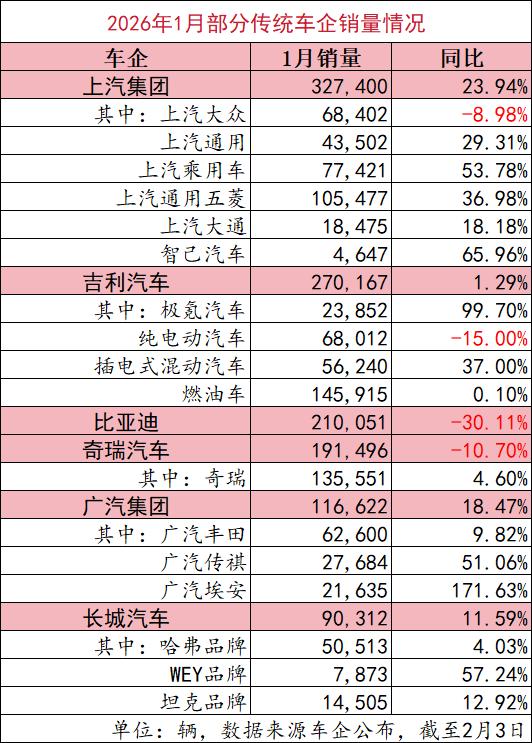
2026年开年1月的中国车市,用"冰火两重天"形容再贴切不过。 过去三天,不少车企都发布了1月份的销量业绩,可以说绝大多数车企都挂上了负增长的标签,特别是一些头部新能源车企,其1月销量波动更 为严峻。 乘联会数据显示,全月乘用车零售预计180万辆,环比下滑20.4%,同比仅微增;新能源零售销量可能达80万辆左右,渗透率降至44.4%,较 2025年底的峰值跌落近10个百分点。 在这场开年"寒流"中,车企阵营分化彻底拉满,拥有庞大燃油车基盘的大多数车企稳如泰山,而绝大多数单押新能源的品牌集体承压,新势力 内部更是有人狂欢有人落寞。 透过这份成绩单,我们似乎可以发现中国市场越来越明显的竞争逻辑,那就是即便新能源是未来发展的大趋势,但"双腿走路才稳"的路径愈加 清晰。 燃油车托底者稳,单押新能源者惨,出口是重要支撑 1月的销量数据,像一面放大镜,照出了不同车企战略选择的最终结果。核心分化点清晰明了,即是否拥有燃油车基本盘,直接决定了企业在市 场波动中的抗风险能力。 以吉利、上汽、广汽丰田为代表的传统车企,凭借"燃油+新能源"双线布局,在1月交出了最稳健的答卷。 上汽集团1月销量32.74万辆,同比增长23.94%, ...


销量环比下滑超20%,单车成本激增7000元:2026车市开局承压
Xin Hua Cai Jing· 2026-02-04 01:16
Core Viewpoint - The automotive market in China experienced a significant month-on-month decline in January 2026, influenced by changes in tax policies and early consumer demand, while year-on-year sales remained relatively stable [1]. Group 1: Market Performance - In January 2026, the retail sales of narrow passenger vehicles in China were approximately 1.8 million units, representing a month-on-month decrease of 20.4% and a slight year-on-year increase of 0.3% [1]. - The retail sales of new energy vehicles (NEVs) in January were around 800,000 units, showing a year-on-year decline of 40.2%, but a month-on-month growth of 7.5% [1]. - Major traditional automakers like SAIC and Geely surpassed BYD in sales, with SAIC selling 327,000 units (up 23.9% year-on-year) and Geely selling 270,200 units (up 1.3% year-on-year) [2]. Group 2: New Energy Vehicle Segment - In the new energy vehicle sector, brands like Xiaomi, Hongmeng Zhixing, and NIO saw significant year-on-year growth, with Xiaomi's sales increasing by 95% to over 39,000 units [3][4]. - NIO delivered 27,200 units in January, marking a 96% year-on-year increase, driven by the new ES8 model [4]. - Conversely, companies like XPeng and Li Auto experienced declines, with XPeng's deliveries down 47% month-on-month and 34% year-on-year [4]. Group 3: Cost Pressures - The automotive industry is facing rising costs, with single-vehicle costs increasing by 4,000 to 7,000 yuan due to surging prices of key materials like lithium, aluminum, and DRAM [5][6]. - The price of battery-grade lithium carbonate rose from 75,700 yuan per ton at the beginning of 2025 to 146,600 yuan per ton by February 3, 2026, a nearly 94% increase [5]. - UBS reported that the cost increases in metals and chips could compress profit margins significantly, with potential reductions of 33% to 93% for vehicles priced at 150,000 yuan [6]. Group 4: Strategic Directions - To counteract rising costs and stagnant market demand, automakers are focusing on international expansion, with Chery exporting 119,600 units in January, accounting for nearly 60% of its total sales [7]. - BYD's overseas sales exceeded 100,000 units, a year-on-year increase of 43.3%, while Geely's exports grew by over 120% [7]. - Companies are also targeting the high-end market, with Great Wall Motors launching the WEY brand's flagship V9X, indicating a competitive push in the premium segment [9]. Group 5: Market Outlook - The automotive consumption index for January 2026 was reported at 31.1, reflecting a cautious consumer sentiment influenced by various factors, including the upcoming Spring Festival and changes in tax policies [10]. - Industry experts suggest that the market may not see a clear recovery until March or the end of the first quarter [10].

京东:春节9天发超13亿元给一线员工;蜜雪冰城招聘多个乐园岗位;零跑董事长朱江明回应员工吐槽年会丨邦早报
创业邦· 2026-02-04 00:09
Group 1 - JD announced an investment of over 1.3 billion yuan in employee benefits during the Spring Festival, including overtime pay and bonuses for frontline workers [3] - OpenAI is shifting its focus towards the commercialization of ChatGPT, reallocating resources from long-term research, which has led to the departure of several executives [4] - Xpeng Motors has merged its autonomous driving and smart cockpit centers into a new General Intelligence Center, aimed at enhancing AI capabilities across various applications [7] Group 2 - Porsche's global deliveries are expected to decline by 10% in 2025, with a significant drop of 26% in the Chinese market, reflecting a strategic focus on maintaining brand value over sheer sales volume [11] - PepsiCo plans to reduce the prices of certain snack products by up to 15% in response to consumer feedback regarding high prices [12] - Douyin will stop the paid collection feature starting February 5, 2026, as part of a regular product iteration, which will not affect creators' monetization efforts [12] Group 3 - The AI Coding Plan service launched by Moore Thread aims to integrate domestic chips and models in the AI programming tool sector, offering various subscription plans [12] - The first AI percutaneous navigation robot in China has been approved for market release, enhancing the precision of minimally invasive surgeries [19] - QuestMobile reported that the monthly active user base reached 1.276 billion, with an average usage time of 186.2 hours, driven by the growth of AI applications [19]





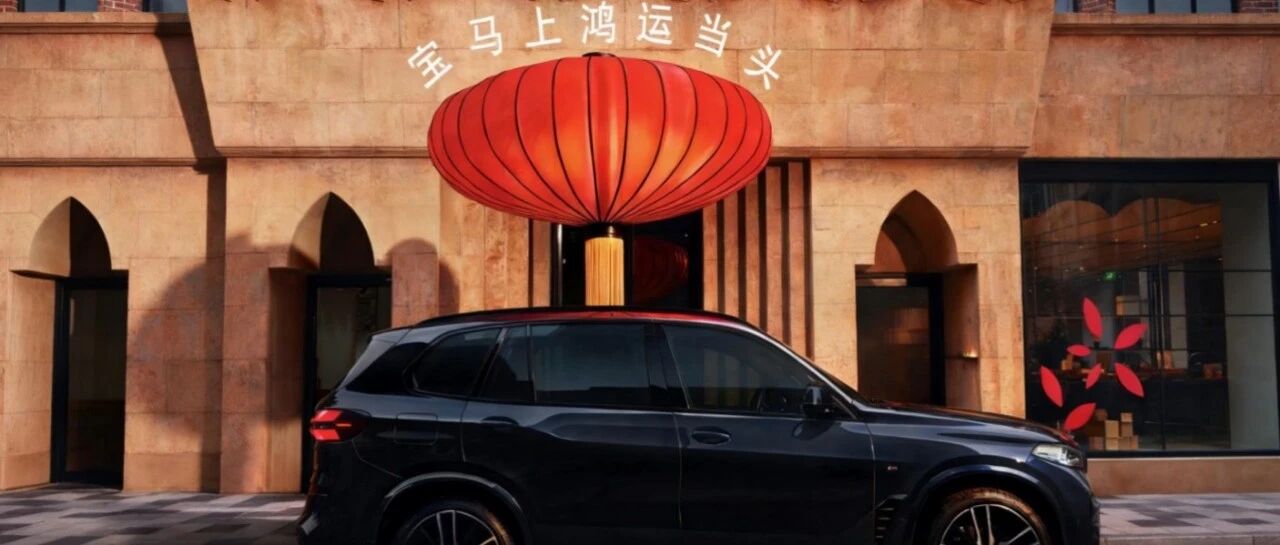
“宝,马上”,车企马年“邪修”营销
汽车商业评论· 2026-02-03 23:09
Core Viewpoint - The article discusses innovative marketing strategies adopted by automotive companies during the winter sales season in January 2026, highlighting how they engage consumers through unique experiences and cross-industry collaborations [3][4]. Group 1: Winter Marketing Strategies - January is a critical month for car companies, often referred to as the winter testing season, where numerous companies gather in regions like Inner Mongolia for vehicle testing [5]. - Traditional testing methods are becoming less effective in attracting attention, leading companies to create engaging winter experiences, such as Great Wall Motors' collaboration with Harbin Tourism Bureau for the "Harbin Ice and Snow Happy Week" [8][10]. - The "Long Spring First Ice Pot," a giant ice structure in Changchun, has become a popular destination, attracting over 1,000 vehicles for ice drifting experiences since its opening on January 10, 2026 [10][12]. Group 2: Cross-Industry Collaborations - Cross-industry marketing remains a popular strategy, with companies like Wangwang and Dong Mingzhu engaging in partnerships to attract consumer attention [15][20]. - Notable interactions include a humorous exchange between GAC Group's chairman and Gree Electric's chairman, which, despite being misinterpreted, enhanced the collaboration's visibility [22]. - BMW's playful marketing campaign during the New Year featured various humorous themes, effectively combining cultural elements with brand promotion [23][25]. Group 3: Community Engagement Initiatives - Xiaopeng Motors launched a "1000 Mobile Charging Stations" initiative, providing charging cables to 1,000 car owners, addressing the real needs of consumers during the Spring Festival [29][30]. - This initiative not only alleviates charging anxiety but also fosters a sense of community among car owners, enhancing brand warmth and consumer pride [33]. Group 4: Cultural and Brand Positioning - Volvo's innovative marketing approach involved a real-life simulation of a racing game, effectively engaging consumers by mimicking gaming experiences [34][37]. - GAC Aion capitalized on local cultural phenomena by creating a music video related to a trending song, thereby connecting emotionally with the audience [38][41]. - NIO's collaboration with the talk show "Thirteen Invitations" reflects a commitment to deeper values and long-term engagement rather than superficial marketing [42][45]. Group 5: Year-End Reflections and Celebrations - The automotive industry has seen a surge in year-end celebrations, with companies like Chasing and Mercedes-Benz using these events to enhance brand image and consumer engagement [49][51]. - The collective celebration of Mercedes-Benz's 140th anniversary showcased the industry's youthful spirit and creativity, with various brands participating in playful marketing campaigns [51].



小鹏汽车:向物理AI公司转型!
Xin Lang Cai Jing· 2026-02-03 12:47
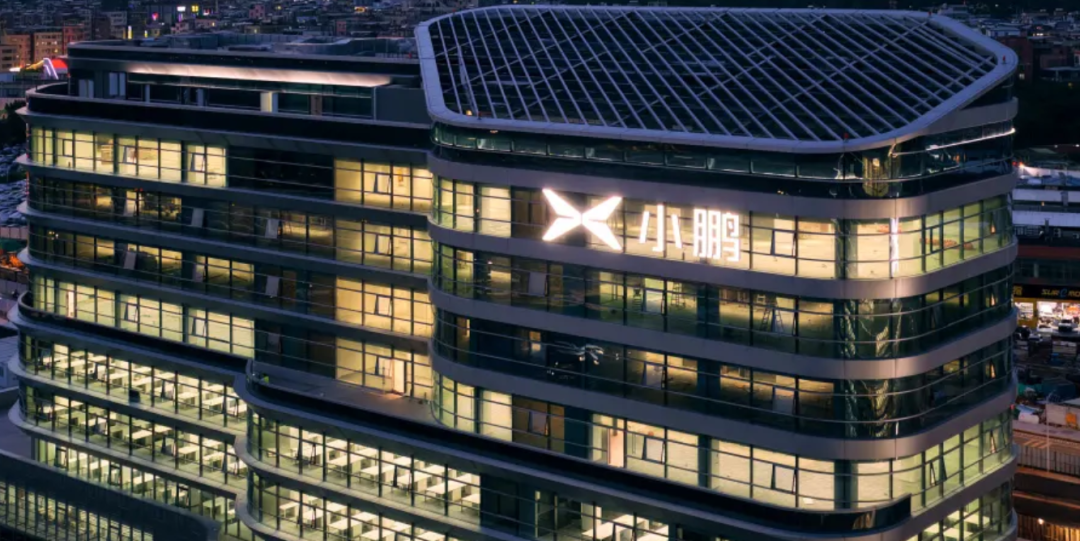
Group 1 - The company has made significant organizational adjustments by merging its autonomous driving center and smart cockpit center into a new General Intelligence Center, led by Liu Xianming, who reports directly to CEO He Xiaopeng [2][6] - This restructuring aligns with the company's strategic shift towards becoming a "physical AI company," emphasizing the integration of AI capabilities into its product offerings [7] - The company launched four new models at the 2026 global product launch, with the Ultra and Ultra SE versions featuring the self-developed second-generation VLA (physical world large model), which aims to unify various intelligent terminals such as cars, Robotaxis, robots, and flying cars [7] Group 2 - The company is actively preparing for street tests of autonomous driving taxis and plans to initiate mass production of humanoid robots later this year, with both vehicles and robots serving as core carriers of "physical AI" [3][7] - In terms of market performance, the company reported the delivery of 20,011 new vehicles in January 2026, with an internal sales target set between 550,000 and 600,000 units for the entire year [3][8] - This sales target is established against a backdrop of intensified competition in the Chinese automotive market and ongoing price wars affecting industry profits [8]
新势力格局生变:问界、小米、零跑成新第一梯队
Jing Ji Guan Cha Wang· 2026-02-03 12:42
据经济观察报-经济观察网 2026年1月,新势力车企销量格局发生显著变化。问界汽车、小米汽车和零 跑汽车以3万辆至4万辆的交付量,形成了新的"第一梯队"。具体来看,问界汽车1月交付约4万辆,同比 增长83%;小米汽车1月交付超3.9万辆,去年同期为超2万辆;零跑汽车1月全系交付达3.21万辆,同比 增长27%。与此同时,理想汽车、蔚来汽车和小鹏汽车1月销量在2万辆到3万辆之间,变为"第二梯 队"。蔚来1月交付新车2.72万辆,同比增长96.1%;理想汽车交付2.77万辆,同比下滑7.55%;小鹏汽车 交付2万辆,同比下滑34.07%。问界、小米与蔚来同比增幅显著。 ...


同比普涨、环比普跌,1月车企销量“开门红”成色不足
经济观察报· 2026-02-03 12:15
进入2026年1月后,新能源汽车购置税开始减半征收,车企购 置税兜底政策也随之结束。另外,1月各地具体的购车补贴细 则尚未全部出台,导致消费者存在观望情绪,影响了车市终端 销售情况。 作者:王帅国 封图:图虫创意 2月1日,各家车企相继发布了1月销量。从整体上看,汽车行业实现2026年"开门红",大多数车 企1月销量同比取得正增长,但这一同比增长是由于2025年春节在1月,去年同期的新车销售基数 较低。 环比数据上,大多数车企1月销量下滑明显,主要原因在于2025年12月新能源汽车还享受购置税 全额减免政策,同时车企为年底冲量,在12月出台了许多其他优惠政策。进入2026年1月后,新 能源汽车购置税开始减半征收,车企购置税兜底政策也随之结束。另外,1月各地具体的购车补贴 细则尚未全部出台,导致消费者存在观望情绪,影响了车市终端销售情况。 广汽集团1月销量为11.66万辆,同比增长18.47%,环比下滑37.79%。其中自主品牌销量超4.9 万辆,同比增长87.58%;海外销量同比增长68.59%。分品牌来看,昊铂+埃安销量2.16万辆, 同比大增171.63%;传祺品牌销量2.77万辆,同比增长51.06%; ...
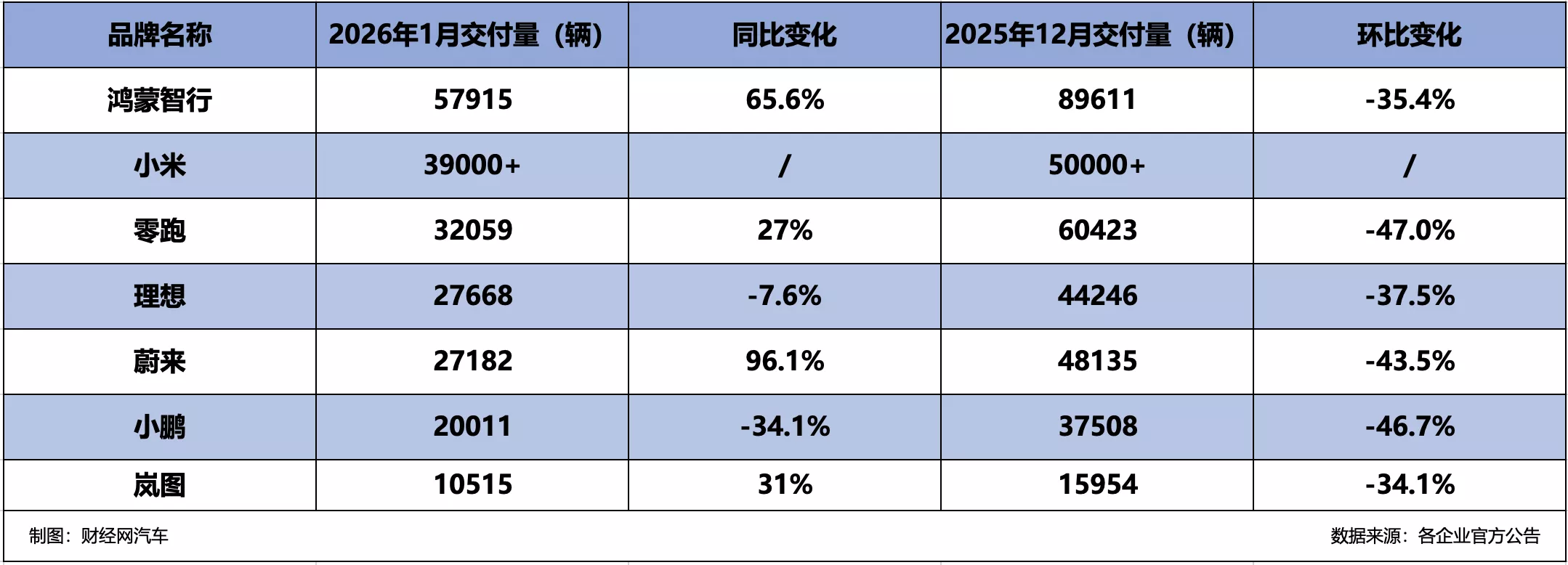
部分造车新势力1月交付数据丨鸿蒙智行57915台 小米、零跑超3万台
Cai Jing Wang· 2026-02-03 09:19
Core Insights - New energy vehicle companies in China reported mixed delivery results for January, with some experiencing significant growth while others faced declines in both year-over-year and month-over-month metrics [1][4]. Delivery Data Summary - Hongmeng Zhixing led the delivery rankings with 57,915 units, a year-over-year increase of 65.6% [5]. - Xiaomi delivered over 39,000 units, marking a 95% increase compared to January 2025 [5]. - Leap Motor delivered 32,059 units, a year-over-year increase of 27% but a month-over-month decline of 47% [5][6]. - Li Auto delivered 27,668 units, down 7.6% year-over-year and 37.5% month-over-month [7]. - NIO delivered 27,182 units, showing a 96.1% year-over-year increase but a 43.5% month-over-month decline [8]. - XPeng delivered 20,011 units, down 34.1% year-over-year and 46.7% month-over-month [10]. - Lantu delivered 10,515 units, a year-over-year increase of 31% [11]. Market Trends and Insights - The overall retail sales of passenger vehicles in China dropped by 28% year-over-year and 37% month-over-month, with new energy vehicles experiencing a notable decline [4]. - The penetration rate of new energy vehicles fell from 59.1% in December to 45.9% in January [4]. - A new energy vehicle company executive attributed the market downturn to the traditional off-peak season and the expiration of tax exemption policies, which led to demand being pulled forward [4][11].
1月车市环比多暴跌,出口成“救命稻草”
Xin Lang Cai Jing· 2026-02-03 04:12
Core Viewpoint - The automotive market in January 2026 showed a slight year-on-year increase but a significant month-on-month decline, primarily due to policy changes and demand exhaustion, with exports becoming a crucial growth driver for companies [1][22]. Group 1: Market Performance - The overall automotive market experienced a year-on-year increase but a month-on-month decline, with some companies facing drastic reductions in sales [1]. - The core reasons for the market's sluggish start include the reduction of the new energy vehicle purchase tax and a mismatch in demand due to the timing of the Spring Festival [1]. - Exports have emerged as a vital growth area for automotive companies, helping to offset domestic market fluctuations [1][6]. Group 2: Company Sales Data - BYD sold 210,100 vehicles in January, a year-on-year decline of 30.11% and a month-on-month decline of 50.04%, heavily impacted by the new energy vehicle tax policy [3][5]. - Geely's sales reached 270,200 units, showing a year-on-year increase of 1.29% and a month-on-month increase of 14.08%, with significant export growth [5][6]. - SAIC Group reported sales of 327,000 units, a year-on-year increase of 23.9%, with a notable increase in overseas sales [8]. Group 3: New Energy Vehicle Trends - The new energy vehicle market is facing challenges due to policy changes, leading to a cautious consumer sentiment [1][3]. - Companies are increasingly relying on exports to sustain growth in the new energy vehicle segment, as domestic competition intensifies [6][22]. Group 4: Competitive Strategies - Companies are engaging in aggressive promotional strategies, including long-term financing options and price reductions, to stimulate sales amid a cooling market [15][17]. - The automotive industry is shifting towards a more competitive landscape, focusing on comprehensive service offerings beyond just product pricing [17][22]. - Traditional luxury brands are facing pressure from the rise of domestic electric vehicle manufacturers, leading to significant price reductions to maintain market share [20][22].