Shuangliang Eco-Energy(600481)

Search documents
巨亏公司蹭“商业航天”热点,公司及董秘刚被监管警示!
Sou Hu Cai Jing· 2026-02-14 04:44
Core Viewpoint - The Shanghai Stock Exchange issued a regulatory warning to Shuangliang Energy due to misleading information regarding overseas orders related to commercial aerospace, which could mislead investors [1][2][5]. Group 1: Company Actions and Orders - On February 12, 2026, Shuangliang Energy announced via WeChat that it secured three overseas orders for a total of 12 high-efficiency heat exchangers for SpaceX's Starship launch base expansion [1][3]. - The total value of these orders is approximately RMB 13.923 million, representing about 0.11% of the company's audited revenue for the fiscal year 2024, indicating no significant impact on the company's financial performance [1][4]. - The company clarified that it is not a direct partner with SpaceX but rather a non-exclusive indirect supplier, and the acquisition of these orders is significantly influenced by the commercial aerospace project's construction and expansion plans, leading to uncertainty in future orders [1][4]. Group 2: Regulatory Response - The Shanghai Stock Exchange criticized the company for not providing sufficient details about the orders, including supply methods and the limited impact on overall operations, which could mislead investors [2][5]. - The former board secretary, Yang Likang, was held responsible for the company's failure to disclose accurate and complete information, violating several regulations [5][6]. - The exchange mandated that the company and its executives take corrective measures to address the identified compliance issues and submit a rectification report within one month [5][6].



双良节能“蹭”商业航天概念被上交所警示,股价跌停
Guo Ji Jin Rong Bao· 2026-02-13 15:20
Core Viewpoint - The stock of Shuangliang Energy (600481.SH) experienced a significant drop after the Shanghai Stock Exchange issued a regulatory warning due to inaccurate and incomplete information regarding its collaboration with SpaceX, which had previously led to a surge in stock price [1][2]. Group 1: Company Actions and Regulatory Response - The Shanghai Stock Exchange has mandated Shuangliang Energy and its executives to implement effective measures to rectify the identified violations and improve compliance in information disclosure and operational standards [2]. - Shuangliang Energy disclosed that the three overseas orders mentioned in their announcement were signed on October 25, 2025, and January 9, 2026, totaling approximately RMB 13.92 million, which represents about 0.11% of the company's audited revenue for 2024, indicating no significant impact on operational performance [2]. Group 2: Financial Performance - Shuangliang Energy has faced severe revenue decline from 2020 to 2024, with revenues of RMB 2.07 billion, 3.83 billion, 14.48 billion, 23.15 billion, and 13.04 billion respectively, while net profits fluctuated from RMB 136 million to a loss of RMB 2.14 billion in 2024 [3]. - The company is projected to continue its poor performance in 2025, with an expected annual loss between RMB 780 million and 1.06 billion, and reported a 41.3% year-on-year revenue decline in the first three quarters, amounting to RMB 6.076 billion, alongside a net loss of RMB 550 million and a debt ratio of 81.9% [3].
马斯克领跑太空光伏
Di Yi Cai Jing Zi Xun· 2026-02-13 14:20
Core Insights - The recent surge in the space photovoltaic sector, driven by Elon Musk's comments on the potential of solar energy for AI, has led to significant market fluctuations, with the Wind Space Photovoltaic Index rising nearly 40% in January before experiencing an over 8% decline from its peak due to clarifications from multiple companies [2][3] - The concept of space photovoltaics, while not new, is gaining traction as advancements in launch technology and cost reductions from companies like SpaceX make large-scale deployment more feasible [4][6] - Industry experts express skepticism about the immediate commercial viability of space photovoltaics, emphasizing that ground-based solar power will remain the primary energy source for the foreseeable future [2][5] Industry Trends - The potential market for space photovoltaics is vast, with estimates suggesting that launching 10,000 satellites annually could create a market worth 200 billion yuan for solar wings, and long-term projections estimate the market could reach 5.6 trillion yuan [3] - The rapid increase in SpaceX's launch frequency, from 31 launches in 2021 to a projected 167 in 2025, is expected to significantly lower launch costs, thereby facilitating the growth of the space photovoltaic sector [4] - Despite the optimism surrounding space photovoltaics, the industry remains cautious, with challenges such as high certification times for aerospace clients and the need for standardized supply chains and quality control systems [5][6] Technological Developments - The industry is focusing on developing new technologies such as P-type ultra-thin HJT batteries and perovskite-silicon tandem batteries, which are seen as potential solutions for the challenges faced in space photovoltaic applications [7] - Perovskite tandem batteries have shown laboratory efficiencies exceeding 35% and are significantly cheaper than traditional gallium arsenide batteries, making them a promising candidate for future space applications [7][8] - The integration of solar technology with aerospace initiatives is viewed as essential for Chinese companies to leverage their existing advantages in the photovoltaic supply chain and to participate in the global space race [9]


马斯克领跑太空光伏
第一财经· 2026-02-13 14:17
Core Viewpoint - The article discusses the impact of Elon Musk's vision for space photovoltaics on the Chinese solar industry, highlighting both the potential market opportunities and the challenges of commercialization in the near term [3][5]. Group 1: Market Dynamics - The Space Photovoltaic Index surged nearly 40% in January, driven by Musk's comments at the Davos Forum, but has since corrected by over 8% due to clarifications from several companies [3]. - If 10,000 satellites are launched annually, it could create a market space of 200 billion yuan for solar wings, with long-term projections estimating the space photovoltaic market could reach 5.6 trillion yuan [5][6]. Group 2: Technological Challenges - The high cost of launches and limited capacity have historically constrained the scalability of space photovoltaics, but advancements by SpaceX are expected to significantly reduce these costs [6]. - The unique environmental conditions in space present different operational challenges compared to ground-based solar systems, necessitating extensive testing and validation before large-scale deployment [7]. Group 3: Industry Participation - Chinese solar companies are encouraged to leverage their existing advantages in ground solar to collaborate with aerospace firms, aiming to capture early opportunities in the space photovoltaic sector [9][11]. - The article emphasizes the need for Chinese companies to accelerate the integration of solar and aerospace technologies, participate in international standard-setting, and innovate in global market solutions [11]. Group 4: Future Prospects - The development of new technologies such as P-type ultra-thin HJT batteries and perovskite-silicon tandem cells is seen as crucial for reducing costs and improving efficiency in space photovoltaics [10]. - The article suggests that while space photovoltaics are still in the early stages of commercialization, the industry is beginning to move faster in response to Musk's initiatives, with some companies already planning small-scale tests in space [9][10].

马斯克领跑太空光伏,中国何时产业化落地
Di Yi Cai Jing· 2026-02-13 13:52
Core Viewpoint - The emergence of space photovoltaic technology, driven by Elon Musk's vision, presents both opportunities and challenges for the Chinese photovoltaic industry, with a focus on collaboration with domestic aerospace companies and the need for technological advancements in the sector [1][2][6]. Group 1: Market Dynamics - The space photovoltaic sector is projected to have a market potential of 5.6 trillion yuan, driven by the deployment of satellites and the integration of solar energy with AI capabilities [2][3]. - The Wind Space Photovoltaic Index saw a nearly 40% increase in January, but has since corrected by over 8% due to clarifications from multiple companies [1][2]. - The capital frenzy surrounding space photovoltaics has been influenced by Musk's statements at the Davos Forum, highlighting the importance of solar energy for AI [1][2]. Group 2: Technological Challenges - The high cost of satellite launches and limited capacity have historically constrained the scalability of space photovoltaics, but advancements in reusable rocket technology by SpaceX are changing this landscape [3][7]. - The industry remains cautious about the large-scale commercialization of space photovoltaics, citing the need for extensive testing and validation of technologies in extreme space environments [3][4]. - Current space photovoltaic solutions are primarily custom-made in small batches, necessitating the establishment of standardized supply chains and quality control systems [3][4]. Group 3: Strategic Collaborations - Chinese photovoltaic companies are encouraged to leverage their existing advantages in ground solar energy to collaborate with aerospace firms, aiming to capture opportunities in the space photovoltaic market [6][8]. - The integration of advanced technologies such as perovskite and heterojunction (HJT) solar cells is seen as crucial for the future of space photovoltaics, with potential applications in satellite energy systems [7][8]. - Companies are actively pursuing partnerships to test new technologies, with plans to replace traditional gallium arsenide solar cells with more efficient alternatives in upcoming satellite missions [6][7]. Group 4: Future Outlook - The global race towards space energy systems is intensifying, with initiatives like China's "Sunshine Plan" and the EU's SOLARIS plan emphasizing the importance of space photovoltaic stations [7]. - The next few years are expected to yield significant technological advancements in the photovoltaic sector, particularly in the development of P-type ultra-thin HJT cells and perovskite tandem cells [7][8]. - The Chinese photovoltaic industry is positioned to play a pivotal role in the future of space energy, given its comprehensive supply chain and competitive cost structure [8].
证监会立案调查,这家公司为蹭热点“自问自答”
Zheng Quan Ri Bao Wang· 2026-02-13 13:31
Core Viewpoint - The China Securities Regulatory Commission (CSRC) has initiated an investigation into Shenzhen Yingjixin Technology Co., Ltd. for misleading statements related to information disclosure, particularly concerning their involvement in the brain-computer interface (BCI) chip sector [1][3]. Group 1: Investigation and Regulatory Actions - The CSRC has opened a case against Yingjixin for misleading disclosures made on January 6, where the company claimed to have launched a chip for BCI applications, which was later clarified to be in the market cultivation phase and not significantly impacting company performance [1][2]. - Other companies, including Ningbo Rongbai New Energy Technology Co., Ltd. and Shenzhen Yahui Long Biotechnology Co., Ltd., have also been investigated for similar misleading disclosures, with Rongbai facing a proposed fine of 9.5 million yuan [1][4]. Group 2: Misleading Information and Market Reactions - Yingjixin's January 6 response on the Shanghai Stock Exchange's E-interaction platform was deemed misleading as it did not accurately reflect the product's launch entity, sales scale, and the significant technical differences from international products [2][3]. - Following the misleading information, Yingjixin's stock price rose by 4.51% on the day of the announcement, despite the subsequent clarification that the product was not yet commercially viable [2][3]. Group 3: Broader Industry Implications - The regulatory actions against multiple companies signal a clear stance from authorities against "hype-driven" disclosures that mislead investors, emphasizing the need for accurate and complete information [4][7]. - Companies are reminded that voluntary disclosures are not exempt from regulations, and misleading statements can lead to significant penalties and regulatory scrutiny [7].


688599,遭监管警示,又是因为SpaceX
Zhong Guo Ji Jin Bao· 2026-02-13 11:52
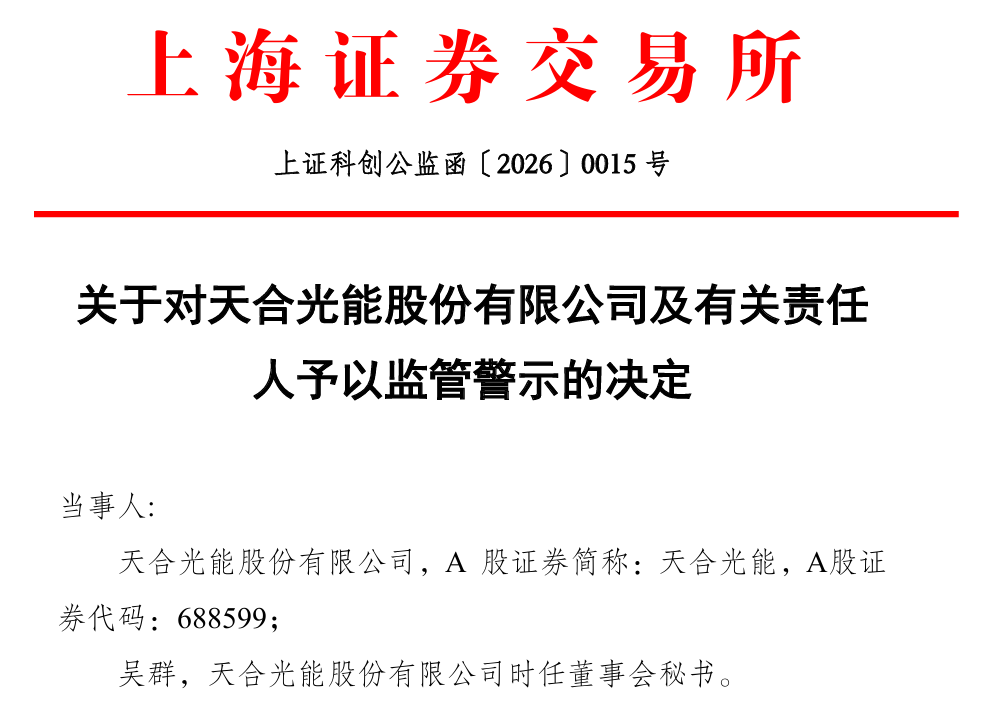
Core Viewpoint - Trina Solar has received a regulatory warning from the Shanghai Stock Exchange due to misleading information regarding its collaboration with SpaceX, which has raised concerns among investors [1]. Group 1: Regulatory Actions - On February 13, the Shanghai Stock Exchange issued a regulatory warning to Trina Solar and its Secretary of the Board for providing incomplete and inaccurate information regarding its business dealings [1]. - The company was specifically warned for its misleading response about a supposed collaboration with SpaceX, which was found to be untrue [8]. Group 2: Company Operations - Trina Solar confirmed that it had previously supplied 775 MW of components to Tesla Motors and its predecessor SolarCity between 2010 and 2018, but has not engaged in any business with SpaceX [4]. - The company stated that its photovoltaic products are primarily used in ground-mounted solar applications, and there have been no significant changes in its main product application scenarios [8]. - As of the announcement date, Trina Solar has not generated any revenue from "space photovoltaics," and its operational performance has not been affected [8]. Group 3: Market Context - The concept of "space photovoltaics" has gained popularity in the market since January, particularly following support from Elon Musk, leading to a surge in related stocks [9]. - However, the enthusiasm for "space photovoltaics" has started to wane, with some solar concept stocks experiencing noticeable corrections [9]. - The regulatory scrutiny is increasing for companies that have been speculating on market trends without substantial backing, as seen with Double Good Energy, which also received a warning for misleading statements regarding its relationship with SpaceX [9].

蹭商业航天热点信披违规,双良节能遭监管警示
Xin Lang Cai Jing· 2026-02-13 11:15
Core Viewpoint - The news highlights a misleading announcement by Shuangliang Energy regarding overseas orders, which led to a significant stock price increase, followed by regulatory intervention revealing the truth behind the orders [1][2]. Group 1: Misleading Announcement - On February 12, 2026, Shuangliang Energy announced via its official WeChat account that it had secured three overseas orders for 12 high-efficiency heat exchangers for SpaceX's fuel production system, causing the stock to hit a daily limit up [1][4]. - The stock price closed at 10.71 yuan per share, with a trading volume of 1.762 billion yuan on the same day [1][4]. Group 2: Regulatory Response - Following regulatory scrutiny, Shuangliang Energy issued a clarification stating that the orders were not recent but were signed in October 2025 and January 2026, with a total contract value of only 13.923 million yuan, representing just 0.11% of the company's audited revenue for 2024 [2][5]. - The company clarified that it did not have a direct contract with SpaceX and was merely a non-exclusive indirect supplier, emphasizing that the commercial aerospace sector is not its primary focus and that the orders would not significantly impact its performance [2][5]. - The Shanghai Stock Exchange pointed out that the company failed to disclose the order supply method, sales scale, and minimal impact on operations, which misled investors and violated stock listing rules [2][5]. Group 3: Investor Compensation - Investors affected by the misleading information can seek compensation if they purchased shares between 13:25 and the market close on February 12, 2026, and sold or held them at a loss after February 13, 2026 [3][6].
A股五张图:蜕鳞焕彩驭长缰,春风得意马蹄疾
Xuan Gu Bao· 2026-02-13 10:37
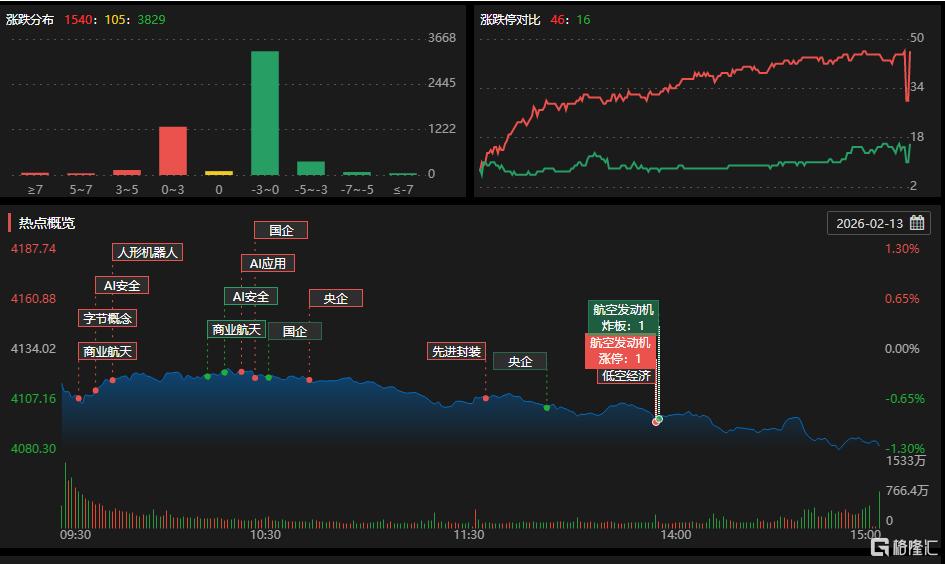
Market Overview - The market experienced a volume decline and a drop on the last trading day of the Year of the Snake, with the Shanghai Composite Index, Shenzhen Component Index, and ChiNext Index falling by 1.26%, 1.28%, and 1.57% respectively [3] - Over 3,800 stocks declined while more than 1,500 stocks rose, with total trading volume below 2 trillion [3] AI Security Sector - The AI security concept saw significant gains in early trading, with companies like People's Daily, Green Alliance Technology, and Hanbang High-Tech hitting the daily limit up [7] - The sector was catalyzed by a report from CCTV stating that the internet information department would maintain strict regulation against false information lacking AI identification [7] - Despite initial gains, many stocks in this sector faced a pullback due to overall market pressure, with only Hanbang High-Tech managing to recover [9] Japanese Related Concepts - The market saw limited themes, with Japanese-related concepts emerging as a notable focus, particularly in military, aquaculture, and photoresist sectors [15] - Companies like Yaxing Anchor Chain and Andavil achieved daily limit up, while others in the aquaculture sector also saw significant gains [15] Film and Entertainment Sector - After two days of significant adjustments, the film sector opened lower but managed to recover slightly, with notable performances from companies like Bona Film Group and Huayi Brothers [18] - The sector's performance is tied to expectations for the upcoming Spring Festival box office, with potential for continued speculation post-holiday [18] Dual Good Energy - Dual Good Energy faced scrutiny after disclosing information related to SpaceX, leading to a regulatory warning from the Shanghai Stock Exchange for insufficient clarity on the impact of the orders [21] - The company initially saw a price surge but ultimately closed at the daily limit down, reflecting market volatility and investor sentiment [21]
龙虎榜 | 深科技强势涨停,游资齐扎堆!深股通、机构抢筹光线传媒
Ge Long Hui A P P· 2026-02-13 10:13
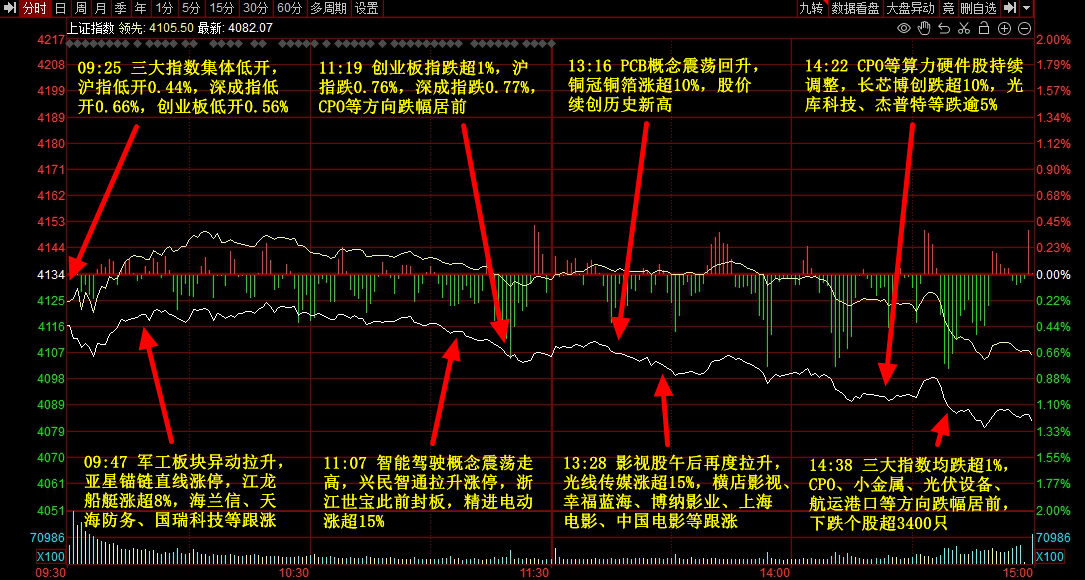
Market Overview - On the last trading day of the Year of the Snake, all three major A-share indices fell, with the Shanghai Composite Index down 1.26%, the Shenzhen Component Index down 1.28%, and the ChiNext Index down 1.57% [1] - The military equipment, film and television, and semiconductor sectors saw the highest gains, while the photovoltaic equipment, small metals, steel, port shipping, and oil and gas extraction and services sectors experienced declines [1] Individual Stock Performance - Zangyue Technology achieved a five-day consecutive limit-up, becoming a market highlight, while Fengyuzhu had three limit-ups in five days [3] - Yitian Co., Ltd. and Hanbang High-Tech both saw a 20% increase, with Yitian Co., Ltd. closing at 41.76 [2][3] - Construction Machinery and Qianli Technology both reached their limit-up, with Construction Machinery closing at 4.59, up 10.07% [4][3] Trading Volume and Net Inflows - The top three net inflows on the day were for Huasheng Tiancheng, Guangxian Media, and Dawi Technology, with net inflows of 5.02 billion, 3.46 billion, and 2.87 billion respectively [4][5] - The top three net outflows were for Bona Film Group, Capital Online, and Shuangliang Energy, with net outflows of 3.91 billion, 3.78 billion, and 1.64 billion respectively [6][7] Institutional Activity - Institutional net buying was significant for companies like TeFa Information, with a net buy of 1.93 billion, and Construction Machinery, with a net buy of 1.66 billion [7][8] - Conversely, institutional net selling was highest for Baichuan Co., Ltd., with a net sell of 1.40 billion, and Kori Technology, with a net sell of 1.20 billion [8][7] Sector Highlights - The AI and digital infrastructure sectors are gaining traction, with companies like Huasheng Tiancheng focusing on AI computing solutions and digital infrastructure [10] - Zhejiang Shibao is seeing increased interest due to its focus on automotive steering systems, aligning with the trend towards intelligent driving [14] Stock Specifics - Hanlan Co., Ltd. closed at 6.77, up 10.08%, with a trading volume of 18.30 billion [5] - Qianli Technology closed at 11.39, up 10.05%, with a trading volume of 12.49 billion [4][3] - Guangxian Media saw a significant increase of 15.39%, closing at 27.22 with a trading volume of 109.75 billion [18]