
VASTDATA(603138)

Search documents
行业周报:持续推荐国产化投资机会-20251019
KAIYUAN SECURITIES· 2025-10-19 01:47
Investment Rating - The industry investment rating is "Positive" (maintained) [1] Core Viewpoints - The report emphasizes the continuous recommendation of domestic investment opportunities due to increasing external technology controls and the ongoing promotion of domestic innovation policies, indicating a clear trend towards self-sufficiency in key technologies [6][13] - The performance of leading domestic computing companies is showing significant revenue growth, validating the trend of domestic industrial development [7][14] Summary by Sections Weekly Perspective - The report highlights the sustained recommendation of domestic investment opportunities, noting a decline in the CSI 300 index by 2.22% and a 5.61% drop in the computer index during the week of October 13-17, 2025 [5][12] Company Dynamics - Haiguang Information reported a revenue of 40.26 billion yuan for Q3 2025, marking a year-on-year growth of 69.60% and a net profit of 759.99 million yuan, up 13.04% [16] - Cambricon Technologies achieved a revenue of 1.727 billion yuan in Q3 2025, with a staggering year-on-year increase of 1332.52%, and a net profit of 567 million yuan, indicating a strong turnaround [14] Investment Recommendations - Key domestic software companies recommended include Kingsoft Office, Dameng Data, and others, while leading domestic computing companies such as Haiguang Information and Sugon are also highlighted for their growth potential [8][15]




计算机行业事件点评:国产核心软硬件当自强
Minsheng Securities· 2025-10-12 05:37
Investment Rating - The report maintains a "Recommended" rating for the industry [4] Core Insights - The report highlights the significant impact of U.S. tariffs and export controls on Chinese products, particularly in the software and hardware sectors, emphasizing the need for domestic innovation and self-reliance [1] - The Chinese government is actively promoting domestic products through favorable procurement policies, including a 20% price deduction for local products in competitive bidding [1] - The report indicates that the domestic chip industry is gaining traction, particularly in the financial sector, with major projects like the Industrial and Commercial Bank of China's procurement of Huaguang chip servers valued at approximately 3 billion yuan [1] - The report notes a substantial increase in domestic server procurement by China Unicom, with 90.1% of the servers being domestically produced, reflecting a strong trend towards localization [2] - The report anticipates a turning point for the domestic innovation industry (Xinchang) driven by supportive policies and improving performance of listed companies in the sector [2][3] Summary by Sections - **Policy Support**: The government emphasizes high-level technological self-reliance as a key development focus, aiming to enhance core technology research and innovation capabilities [2] - **Market Performance**: Several listed companies in the Xinchang sector have shown improved performance compared to the previous year, indicating a positive outlook for the industry [3] - **Investment Recommendations**: The report suggests focusing on key players in the Xinchang sector, including China Software, Dameng Data, and others, as well as leaders in specific sub-sectors like industrial software and the Harmony OS ecosystem [3]



【今跃教育】vivo 海量数据场景下的消息系统架构演进
Sou Hu Cai Jing· 2025-10-10 21:42
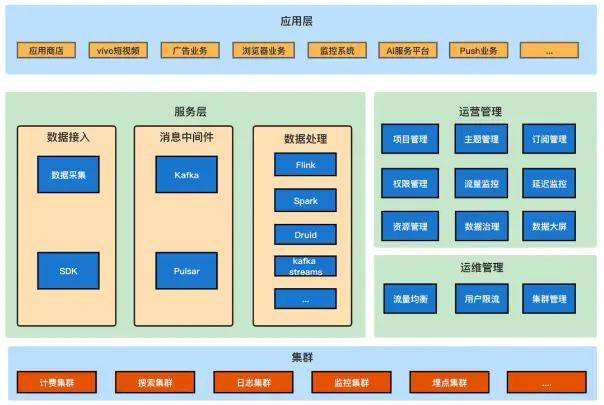
Group 1: Core Insights - Vivo's mobile internet business serves over 400 million users with applications, short videos, and advertising, processing daily data volumes in the range of hundreds of billions [1] - The transition from Kafka to Apache Pulsar addresses scalability and performance issues, enabling effective management of massive data traffic and improving operational efficiency [3][4] Group 2: Business Challenges - Vivo's original Kafka-based messaging system faced limitations due to increasing topic and partition numbers, leading to performance degradation and high operational costs [3] - The inability of Kafka to dynamically scale and the reliance on partition numbers for performance created significant challenges during traffic spikes [3] Group 3: Technical Selection - Apache Pulsar was chosen for its advantages, including a stateless broker architecture that supports rapid scaling and a unique bundle mechanism that manages large numbers of topics effectively [4] - Pulsar's support for multiple consumption modes enhances its ability to handle varying traffic demands and ensures message order [4] Group 4: Implementation and Optimization - Vivo optimized Pulsar's bundle management and data retention strategies, improving data distribution and monitoring capabilities [5][6] - Adjustments to load balancing and client performance parameters significantly enhanced the system's ability to handle high message volumes [6] Group 5: Didi's Big Data Operations - Didi's big data team adopted Apache Pulsar in 2021, replacing the DKafka system and resolving long-standing operational challenges [7][9] - The transition to Pulsar improved performance, cost efficiency, and reliability, addressing issues such as disk I/O bottlenecks and complex load balancing [8][9] Group 6: Didi's Implementation and Optimization - Didi optimized hardware configurations and utilized Pulsar's ensemble mechanism to ensure balanced data distribution and efficient resource utilization [10] - The system's design allows for quick scaling and fault recovery, ensuring continuous service during peak loads and failures [10][12]

智通A股限售解禁一览|10月9日


智通财经网· 2025-10-09 01:04
Core Viewpoint - On October 9, a total of 11 listed companies had their restricted shares unlocked, with a total market value of approximately 24.303 billion yuan [1] Summary by Category Restricted Share Unlocking - The companies involved in the unlocking of restricted shares include: - Guo Xin Health (000503) with 1.6798 million shares from equity incentive restrictions - Kang Yuan Pharmaceutical (600557) with 315,500 shares from equity incentive restrictions - Sen Te Co., Ltd. (603098) with 270,000 shares from equity incentive restrictions - San Ren Xing (605168) with 165,300 shares from equity incentive restrictions - Hai Liang Data (603138) with 5.6629 million shares from equity incentive restrictions - Tian Yi Medical (301097) with 40.6 million shares from extended lock-up period - Ming Li Da (301268) with 19 million shares from extended lock-up period - Heng Yu Xintong (300965) with 3.51045 million shares from extended lock-up period - Pu Yuan Jing Dian (688337) with 11.8 million shares unlocked - Zhong Fu Shen Ying (688295) with 29.8 million shares unlocked - Chang Guang Hua Xin (688048) with 7.007 million shares unlocked [1]
成都先导:“AI赋能的源头创新联合体”确立恶性肿瘤新靶点 跨学科协作加速AI驱动的新药研发
Zhong Zheng Wang· 2025-09-29 08:17
据了解,联合体构建了覆盖"靶点确认-分子设计-分子优化-临床前研究-IND申报"全链条的AI赋能研发 体系,深度融入跨学科协作与数据驱动决策。本次针对恶性肿瘤的靶点研究中,AI系统从海量数据 (603138)中筛选出三类高优先级临床需求,经跨学科专家委员会多轮论证后锁定最终研究方向;而多 组学数据与AI建模的交叉验证,则大幅提高了靶点生物学可信度。团队在立项阶段即同步评估靶点的 成药性、专利布局空间及商业转化可行性,将立项周期缩短至传统模式的1/3。 目前,联合体在快速推动该项目进展的同时,正在持续推进三方面的工作。一是建立"AI+专家"协作的 标准化靶点确立与验证流程,形成可复制的方法论体系;二是通过高质量湿实验数据持续训练优化生物 医药大模型,强化全生命周期赋能能力;三是吸引药企、同行和科研机构加入,共建开放创新生态,加 速商业转化与合作。 中证报中证网讯(王珞)成都先导9月29日消息,由成都先导、水木分子、嘉华药锐及英飞智药四家生 物医药企业组成的"AI赋能的源头创新联合体"(以下简称"联合体")发布了最新研究进展,通过整合人 工智能(AI)技术、多组学数据与专家经验反馈,联合体成功锁定一个针对恶性肿瘤 ...

未来已来,数贸会上的AI热潮
2 1 Shi Ji Jing Ji Bao Dao· 2025-09-25 12:47
Group 1: Event Overview - The fourth Global Digital Trade Expo was held from September 25 to 29 in Hangzhou, featuring an exhibition area of 155,000 square meters and 1,812 exhibitors, including 381 international exhibitors, accounting for 21% of the total [1][2] - The theme of this year's expo was "Seeing the Innovative Future at the Digital Trade Expo," highlighting the opportunities presented by AI and robotics in various sectors [1] Group 2: AI and Robotics Development - Wang Xingxing, founder of Yushu Technology, emphasized that AI and robotics represent significant opportunities for the younger generation, with humanoid robots increasingly penetrating entertainment and practical applications [1] - The AI exhibition area expanded to include over 300 companies showcasing applications of AI across agriculture, business, finance, technology, and emergency management [3] Group 3: Innovations and Products - The "Black Panther," a quadruped robot developed by Zhejiang University, can run over 10 meters per second and has undergone ten years of development with four iterations [4] - Companies like Kangbeijing (Hangzhou) Environmental Technology are innovating with products like the P05 device for high-cleanliness laboratories, while others are developing AI health assistants for personal health management [5] Group 4: Global Trade Cooperation - The expo has become a vital platform for promoting global trade cooperation, with 11,000 international merchants registered, a 64% increase from the previous year [6] - Indonesia, as the guest country, has expressed procurement intentions exceeding 5 billion yuan, with total expected procurement reaching 30 billion yuan [6] - The event aims to leverage AI to enhance e-commerce data utilization, enabling companies to better understand and penetrate overseas markets [7]

高德地图董事长刘振飞:用空间智能理解并预测真实世界复杂性
2 1 Shi Ji Jing Ji Bao Dao· 2025-09-25 08:13
Core Insights - The core focus of the news is on Gaode's transition towards "comprehensive AI integration and spatial intelligence," which aims to enhance the understanding and prediction of physical space through AI capabilities [1][3]. Group 1: Spatial Intelligence - Spatial intelligence allows AI to comprehend and predict physical time and space, moving from two-dimensional to three-dimensional understanding of the real world [1][3]. - Gaode is leveraging spatial intelligence by integrating visual, auditory, and locational data to create a three-dimensional geometric structure of the physical world, enabling a shift from passive perception to active prediction [3][4]. Group 2: Product Developments - Gaode has launched several products, including the AI assistant "Xiao Gao Teacher," which has achieved over 1.2 billion daily calls and more than 400 million active users within a month of its release [1][4]. - The "Gaode Street Ranking" has recorded over 1.5 billion kilometers of navigation service daily, with user numbers exceeding 40 million shortly after its launch [2][4]. Group 3: Industry Positioning - Gaode positions itself as a foundational service provider that simplifies the complexity of the world, aiming to make spatial intelligence a standard infrastructure similar to cloud computing across various industries [2][4]. - The company is collaborating with enterprises in sectors such as smart glasses, automotive, robotics, and low-altitude flight to integrate its spatial intelligence capabilities [2][4].
华为海思、华为昇腾概念午后拉升
Di Yi Cai Jing· 2025-09-18 06:00
Group 1 - The stock prices of companies such as 信安世纪 (Xinan Century) increased by over 14%, 星环科技 (Star Ring Technology) by over 13%, and 飞荣达 (Feirongda) by over 11% [1] - Other companies including 意华股份 (Yihua Co.), 烽火通信 (Fenghuo Communication), and 海量数据 (Mass Data) also saw their stocks hit the daily limit [1]




当AI大模型遇见人格权:海量数据训练下的侵权风险
Bei Jing Ri Bao Ke Hu Duan· 2025-09-06 00:54
Core Insights - Artificial intelligence is becoming a significant driving force behind a new wave of technological revolution and industrial transformation, fundamentally altering production methods, lifestyles, and social governance [1] - The development of large AI models requires vast amounts of data, which raises concerns about the protection of personal information rights and presents new challenges to the personal rights system [1] Group 1: Protection and Utilization of Publicly Available Personal Information - The protection of publicly available personal information is increasingly important in the training of AI models, as much of the training data comes from such sources [1] - The Personal Information Protection Law in China allows for the processing of publicly available personal information without consent, provided it meets certain conditions, including reasonable scope and significant impact on personal rights [1] - The challenge arises when AI models collect fragmented personal information, potentially leading to the reconstruction of sensitive personal data, which necessitates obtaining consent [1] Group 2: Safeguarding Sensitive Personal Information - The advancement of AI technology enhances data analysis capabilities, posing new threats to personal information security, particularly sensitive data [2] - During the training phase of generative AI, it is crucial to anonymize sensitive personal information to prevent severe consequences from potential leaks [2] - Historical incidents, such as vulnerabilities in ChatGPT, highlight the risks associated with sensitive information exposure and the need for ongoing regulatory measures [2] Group 3: Challenges in Generative AI Operations - Generative AI poses significant challenges to the protection of personal privacy and information, necessitating measures to prevent sensitive data from being included in generated content [3] - The risk of generative AI producing malicious or false content is a concern, as inaccuracies in training data can lead to harmful outputs that may relate to sensitive personal information [3] - The importance of protecting personal identifiers, such as voice, is increasingly recognized due to the potential for deepfake technology to exploit these identifiers [3] Group 4: Protection of Personal Identifiers - The rise of deepfake technology allows for the creation of fraudulent audio and visual content, posing significant risks to individuals [4] - High-profile cases, such as the exploitation of Scarlett Johansson's voice by OpenAI, underscore the urgent need for legal protections against the misuse of personal identifiers [4] - The necessity for stricter regulations to prevent the infringement of personal rights through deepfake technology is becoming more apparent [4] Group 5: Virtual Digital Humans and Personal Rights - The emergence of virtual digital humans presents new challenges to the personal rights system, particularly regarding the use of real individuals' likenesses in creating virtual representations [5] - The commercial viability of virtual digital humans is being explored, but their interaction with the real world raises questions about potential violations of personal rights [5] - The determination of whether a virtual digital human infringes on an individual's rights hinges on the recognizable similarity to the real person, necessitating legal standards for assessment [5] Group 6: New Types of Personal Rights - Virtual digital humans can act as "virtual avatars," extending beyond traditional rights to encompass new forms of personal rights [6] - Legal interpretations are evolving to recognize that the use of real personal information in training AI companions can infringe upon various personal rights, including name and likeness rights [6] - The concept of a "virtual avatar" represents a composite of an individual's identity, necessitating the establishment of new legal protections for these emerging personal rights [6]
记者观察:供给过剩、场景缺失,海量数据如何突破供需脱节困局?|一探
Di Yi Cai Jing· 2025-09-03 01:19
Group 1 - The core viewpoint is that the acceleration of marketization in the data element sector is supported by both policy and technological advancements, but the "lack of scenarios" remains a key bottleneck for industry development [1] - Industry experts at the 2025 China International Big Data Industry Expo emphasized that data itself is not an asset; it must be integrated into scenarios and solve real problems to be transformed into true value [1] - By creating replicable cases, promoting co-creation of technology and business, and building a secure and trustworthy environment, the value of existing data can be activated, leading to the emergence of new scenarios and business models [1] Group 2 - The future consensus is that "scenario-driven" approaches will transform data from "dormant resources" into "flowing value," which will genuinely support industrial upgrades and improve people's livelihoods [1]