ZTE(000063)

Search documents
豆包新机进入倒计时,智能体和App“战”到哪一步了?
2 1 Shi Ji Jing Ji Bao Dao· 2026-02-24 00:20
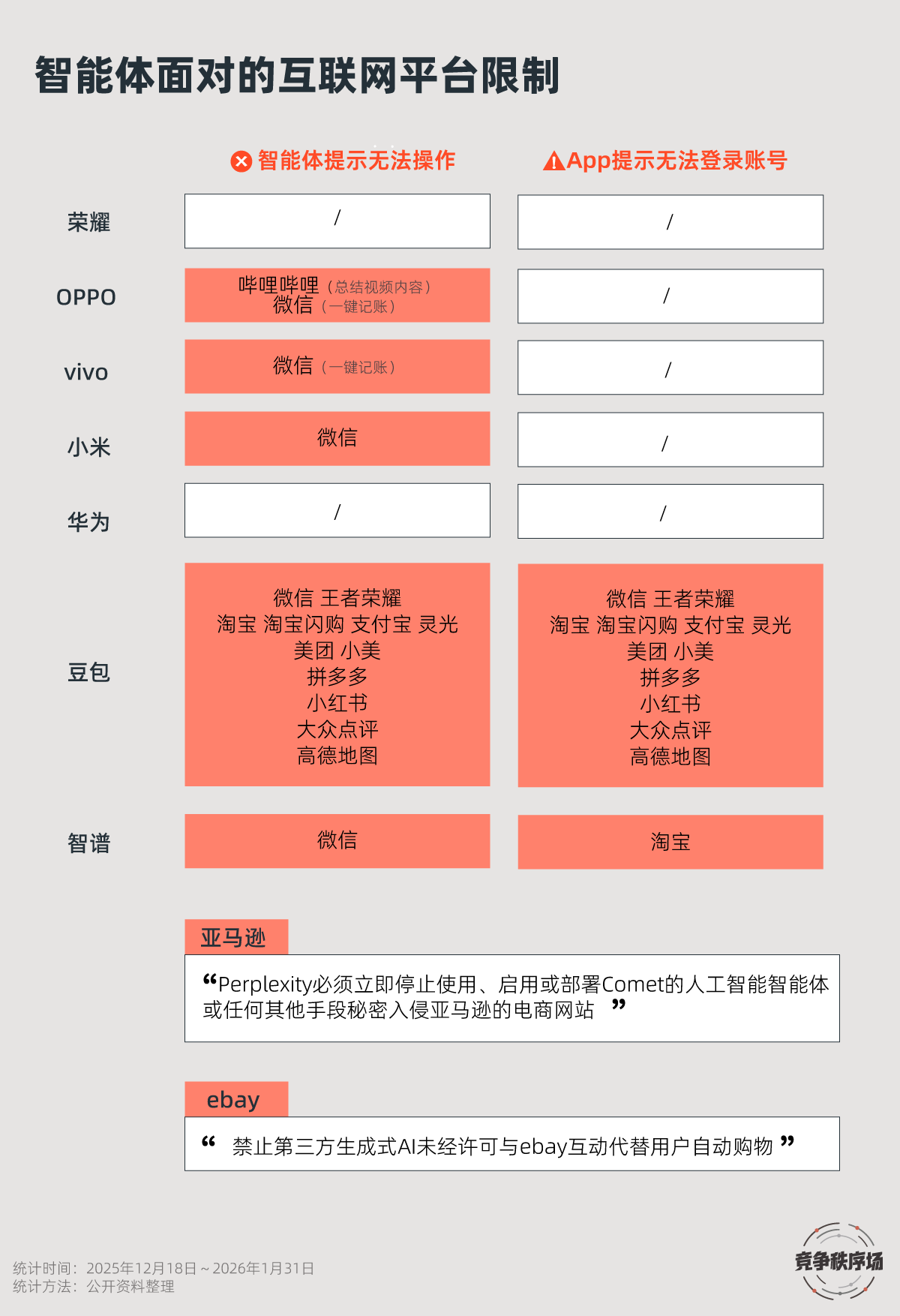
《21世纪经济报道》商业秩序工作室报道 没有哪款AI产品,像手机智能体这样,还在测试阶段就引发如此多争议。2025年年底,字节跳动和中兴努比亚发布搭载"豆包手机助手"的手机,这款3499元 的样机一夜售罄,但马上寸步难行——帮用户点外卖、发消息的智能体,被微信、支付宝、淘宝等App,用安全弹窗拦在门外。 "两方谁有问题?其实做法都有点问题。"在多家手机厂商和互联网公司都曾工作的业内人士说,App 不该彻底拒绝互联,但 Agent 也没有理由要求强制开 放。 事实上,字节对端侧AI的试探开始于更早。2024年,字节开始接触中兴等手机厂商,不只是提供基模,而是想让豆包完全承包手机AI助手和所有流量。置 换条件是免除托管费,自己承担 token 消耗成本。 谈判持续数轮,但最终只谈拢了国内市场份额不足 1% 的中兴手机。参与当时谈判的业内人士回忆道,成本减负固然诱人,但没有主流手机肯放弃自己的AI 战略。而且,"手机整个产线都是成本,没有办法拿整个身家赌一个AI的前途。" 直到豆包手机助手引起激烈讨论,态势有了变化。我们近期了解到,字节已于去2025年底开启豆包手机助手正式版项目,新机预计将于2026年Q2中晚期发 ...


万字详解智能体2.0:手机里的“互联互通”新战场
2 1 Shi Ji Jing Ji Bao Dao· 2026-02-24 00:10
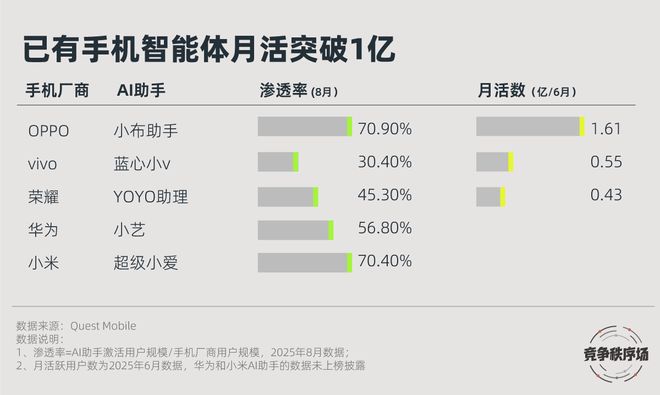
Core Insights - The AI industry is shifting focus towards edge-based intelligent agents, with significant developments in both domestic and international markets [1][2][3] - ByteDance's Doubao and other intelligent agents are gaining traction, operating across various personal devices and applications, but face challenges related to privacy and operational capabilities [2][3][5] - The industry consensus is that the future of intelligent agents will depend on their ability to connect multiple personal devices and services, reshaping the ecosystem [2][3] Group 1: Market Developments - OpenClaw has gained popularity in Silicon Valley, while Doubao is embedded in smartphones in China, with high demand reflected in the second-hand market [1] - The user base for intelligent agents among six major Chinese smartphone manufacturers grew by 65 million in one year, reaching a total of 535 million users [3] - OPPO, Vivo, and Honor are leading the charge in the domestic market, with OPPO's Xiaobu Assistant achieving 160 million monthly active users by June 2025 [3] Group 2: Technical Challenges - Current intelligent agents are struggling with task execution, often only able to perform basic functions like opening apps rather than completing complex tasks [7][8] - A recent evaluation of seven intelligent agents revealed a success rate of only 20% for completing tasks, with many tasks failing or being interrupted [5][7] - The technology behind these agents is still in its infancy, with most operating at a basic level and lacking the ability to handle complex, multi-step tasks effectively [8][10] Group 3: Privacy and Security Concerns - Intelligent agents require extensive permissions, often exceeding 100, raising concerns about privacy and potential misuse of sensitive data [17][18] - The use of high-sensitivity permissions, such as accessing location and reading messages, poses significant risks to user privacy [19][20] - The reliance on cloud processing for data handling introduces vulnerabilities, as sensitive information may be exposed during transmission [27][28] Group 4: Industry Dynamics - A ceasefire agreement has been reached between ByteDance and several app developers, allowing for normal login procedures while limiting AI operations [35] - The competitive landscape is marked by tensions between smartphone manufacturers and app developers, with concerns over the implications of intelligent agents on existing business models [30][31] - The future of intelligent agents hinges on establishing a viable revenue-sharing model and addressing the concerns of both hardware manufacturers and app developers [31][32]




中国AI“春节档”爆发,垂直生产力与Agent落地加速
HUAXI Securities· 2026-02-23 10:45
Investment Rating - Industry rating: Recommended [5] Core Insights - The recent surge in China's AI models during the "Spring Festival" has shifted the focus from general chat tools to vertical productivity tools and real agent implementations, particularly in industrial video generation and engineering-level programming [1][13] - Major players like ByteDance, Alibaba, and Zhipu AI are leading the market, with competition now centered on efficiency, cost control, and scene adaptation rather than just parameter scale [1][13] - The demand for computing power is expected to boost hardware and computing rental markets, benefiting companies involved in computing leasing and third-party data centers [2][14] Summary by Sections Section 1: AI Model Developments - Multiple flagship models were released during the Spring Festival, enhancing capabilities in video and programming applications, with significant improvements in quality and efficiency [7][13] - ByteDance's Seedance 2.0 model supports multi-modal input and has shown substantial advancements in generating complex interactions and maintaining physical accuracy [8][9] - Alibaba's Qwen3.5-Plus model has achieved breakthroughs in multi-modal capabilities and cost efficiency, making it competitive with leading models globally [10][11] Section 2: Market Outlook - The current market is experiencing liquidity concerns and changing capital expenditure expectations from overseas players like OpenAI, leading to a cautious outlook for the AI sector [3][15] - The AI development phase is seen as a critical acceleration period, with increasing demand for token usage and ongoing expansion of foundational computing infrastructure [3][15] Section 3: Recommended Investment Targets - Key investment opportunities include companies in computing and communication infrastructure, such as China Mobile, China Telecom, and third-party data center firms like Huohuan New Network and Data Port [15][17] - The report highlights the potential of low-orbit satellite components and chip suppliers in the commercial aerospace sector [3][15] - Recommendations also extend to edge computing firms and those involved in satellite internet and low-altitude economy sectors [17][19]





中兴通讯公布国际专利申请:“序列传输方法、装置、存储介质及程序产品”
Sou Hu Cai Jing· 2026-02-21 17:18
Group 1 - The core point of the article is that ZTE Corporation (000063) has filed an international patent application for a technology related to "sequence transmission methods, devices, storage media, and program products" with the application number PCT/CN2025/088776, published internationally on February 19, 2026 [1] - ZTE has announced a total of 200 international patent applications this year, which represents a decrease of 26.2% compared to the same period last year [1] - In the first half of 2025, ZTE invested 12.665 billion yuan in research and development, showing a slight decrease of 0.48% year-on-year [1]

断崖式专利差!6G技术美国占了35.2%,日本9.9%,中国是多少?
Sou Hu Cai Jing· 2026-02-21 15:23
Core Insights - The global mobile data volume is expected to exceed 5000EB by 2030, indicating that 5G bandwidth will be insufficient, necessitating the transition to 6G [2] - 6G is characterized by transmission speeds in terabits per second, microsecond-level latency, and integration with AI, making it a complex technological upgrade and a strategic asset for nations [4] Patent Landscape - The total number of global 6G patent applications has surpassed 38,000, covering the entire value chain from base stations to chips and applications [6][11] - The distribution of patents is crucial for establishing international technical standards, with the U.S. holding 35.2% of patents, Japan 9.9%, and China leading with 40.3% [4][25] U.S. Patent Advantages - The U.S. benefits from a strong patent position due to deep government and corporate collaboration, having allocated $450 million for 6G research [10] - However, the U.S. faces challenges with patent concentration among a few major companies, limiting participation from smaller firms [13] Japan's Focus - Japan concentrates its R&D resources on specific areas like terahertz communication and precision devices, aiming for specialized expertise [17] - Notable advancements include NTT Docomo's 280GHz terahertz device achieving a transmission rate of 100Gbps, significantly surpassing 5G capabilities [19] China's Leading Position - China holds the highest share of 6G patents at 40.3%, surpassing the U.S. and Japan, attributed to collaborative efforts across academia and industry [25] - Key players like Huawei and ZTE are making significant strides in core technologies, with Huawei holding 13,000 6G invention patents [26] Research and Development Achievements - Chinese research institutions have made critical breakthroughs in terahertz technology, with notable achievements in integrated communication systems [28] - China has completed the first phase of 6G technical trials and is advancing to the second phase, demonstrating a synchronized approach to technology development and application [30] Challenges Ahead - Despite leading in patent numbers, China still faces gaps in terminal chips and high-end precision devices compared to the U.S. and Japan, which are areas for future improvement [34] - The industry must address the cost of 6G base station construction and the conversion of laboratory technologies into affordable products for consumers [35]
中兴通讯公布国际专利申请:“多接入点协作中的NPCA配置信息的确定方法及确定装置、存储介质、电子装置、计算机程序产品”
Sou Hu Cai Jing· 2026-02-21 01:05
Core Viewpoint - ZTE Corporation has filed an international patent application for a method and device for determining NPCA configuration information in multi-access point collaboration, with the application number PCT/CN2025/084778 and an international publication date of February 19, 2026 [1] Group 1: Patent Application - The patent application is titled "Method and Device for Determining NPCA Configuration Information in Multi-Access Point Collaboration" [1] - The application number is PCT/CN2025/084778 [1] - The international publication date is set for February 19, 2026 [1] Group 2: Patent Statistics - ZTE Corporation has announced a total of 200 international patent applications this year, which represents a decrease of 26.2% compared to the same period last year [1] - The company invested 12.665 billion yuan in research and development in the first half of 2025, reflecting a year-on-year decrease of 0.48% [1]
中兴通讯公布国际专利申请:“数据传输方法、通信设备、存储介质和计算机程序产品”
Sou Hu Cai Jing· 2026-02-21 00:18
Group 1 - The core point of the article is that ZTE Corporation has filed an international patent application for a data transmission method, with a significant decrease in the number of international patent applications compared to the previous year [1] Group 2 - ZTE Corporation's international patent application is titled "Data Transmission Method, Communication Equipment, Storage Medium, and Computer Program Product," with the application number PCT/CN2025/088490 and an international publication date of February 19, 2026 [1] - In 2023, ZTE Corporation has published 200 international patent applications, which is a 26.2% decrease compared to the same period last year [1] - For the first half of 2025, ZTE Corporation invested 12.665 billion yuan in research and development, reflecting a slight decrease of 0.48% year-on-year [1]
春晚 21 芯,看懂中国半导体风向
是说芯语· 2026-02-20 01:00
Core Viewpoint - The 2026 CCTV Spring Festival Gala serves as a cultural feast and a showcase of the global chip industry, highlighting the advancements in China's chip technology from "usable" to "highly usable" [1][29] Group 1: Robotics Showcase - Four humanoid robots, MagicBot Z1, Galbot G1, Unitree H1, and "Little Bumi," showcased at the gala, demonstrating the capabilities of eight chip companies that support these "tech performers" [3][29] - MagicBot Z1 features 100% domestically produced core chips, with Allwinner Technology providing the main SoC chip for overall control and motion planning [4][5] - Galbot G1 relies on NVIDIA's AGX Orin 64GB chip, achieving 275 TOPS of computing power for AI interactions [6][7] - Unitree H1, the most commercially successful model, utilizes multiple chips including Intel's Core i7 for high-performance motion control and NVIDIA's Jetson Orin NX for edge AI inference [8][9][10][11] - "Little Bumi" targets the consumer market with a price under 10,000 yuan, using Rockchip's RK3588 SoC for approximately 6 TOPS of AI computing power [12][13][14] Group 2: Broadcasting Technology - The gala achieved 8K ultra-high-definition wireless broadcasting, supported by four chip companies that built the computational foundation [15][29] - Huawei's Hi3536DV400 chip enabled real-time compression of 8K video, while the Kunpeng 920S chip supported over 1 billion concurrent live requests [16][17] - AMD's EPYC 9004 series chips provided rendering power for real-time graphics during the event [18] Group 3: Communication Infrastructure - The seamless connection between the main venue and four sub-venues relied on three chip companies for communication technology [19][29] - Huawei's Tian Gang 02 base station chip facilitated low-latency transmission of 8K signals, marking the large-scale application of 5G-A technology [19] - ZTE and China Star Network contributed to the 5G-A network and satellite communication, ensuring stable signal transmission in remote areas [20][21] Group 4: Stage Control and Perception - The precise operation of stage lighting, robotic arms, and AR effects depended on three chip companies providing MCU, power chips, and perception chips [22][29] - GigaDevice's GD32H7 series MCU enabled rapid light switching and robotic movement control [23] - STMicroelectronics' IGBT power chips ensured stable operation of high-power stage equipment [24] - Orbbec provided depth perception chips for the Unitree H1 robot, enhancing spatial awareness and obstacle avoidance [25] Group 5: End-User Experience - The viewing experience for audiences was enhanced by three chip companies ensuring high-quality visuals and security [26][29] - Hisense's X9 image quality chip optimized 8K visuals for the gala [27] - Unisoc's financial-grade security chips safeguarded interactive data during the event [28] - BDU's BD960 positioning chip ensured synchronization of devices across different locations [29]



突发利好,24家公司受益股名单出炉!其中一家被社保独宠
Sou Hu Cai Jing· 2026-02-19 06:07
Core Insights - The 2026 Spring Festival Gala marked a significant shift with AI becoming the main attraction, integrating deeply into the event in unprecedented ways [1][11] Group 1: AI Application and Engagement - The core of this AI-driven event was the "Doubao" application from ByteDance, which played a crucial role as the exclusive AI cloud partner, contributing to both technical support and interactive segments [3][4] - "Doubao" launched a large-scale "Doubao New Year" campaign a week before the gala, featuring exciting lottery activities with over 100,000 high-tech prizes, including robots and electric vehicles, to engage the audience [3][4] Group 2: Technical Infrastructure - Behind the scenes, ByteDance's video generation model Seedance 2.0 was responsible for creating customized visual experiences for several performances, enhancing the overall viewer experience [6] - The AI server supply chain was led by Inspur Information, which provided high-performance servers equipped with NVIDIA H800 GPUs, crucial for supporting "Doubao" and the gala's high concurrency interactions [7] Group 3: Data and Content Supply - Hai Tian Rui Sheng, a leader in AI training data, supplied high-quality multimodal training data for "Doubao," while Visual China provided essential image and video content [9] - The marketing aspect was significantly supported by BlueFocus, which integrated "Doubao" into its marketing platform, facilitating AI-driven promotional activities for the gala [9] Group 4: Hardware and Software Collaboration - Zhongke Chuangda was designated as the sole system-level software partner for "Doubao," focusing on optimizing the AI's performance on various devices [8] - ZTE collaborated with "Doubao" to develop AI smartphones, while other companies provided essential components for AI-enabled devices, ensuring seamless integration of AI technology into consumer products [8]




这个春节,低空经济“忙坏了”
财联社· 2026-02-17 11:15
Core Viewpoint - The low-altitude economy is transitioning from a conceptual phase to large-scale commercial use, as evidenced by recent events and technological advancements in the sector [2][3][5]. Group 1: Low-altitude Economy Developments - The first eVTOL water airport, developed by Fengfei Aviation, was showcased during the Spring Festival, marking a significant milestone in low-altitude infrastructure [3][5]. - A record-breaking drone performance featured 22,580 drones, setting a Guinness World Record for the largest simultaneous drone flight, highlighting the technological capabilities within the low-altitude economy [5][13]. - The low-altitude flight network in the Yangtze River Delta is expanding, with routes connecting Shanghai to various locations, significantly reducing travel time for residents [6][7]. Group 2: Market Trends and Capital Involvement - In early 2026, WoFei ChangKong secured nearly 1 billion yuan in funding, marking the largest single financing round in the low-altitude economy sector this year [10][11]. - Financial institutions are shifting from being mere capital providers to strategic partners, actively engaging in the technological and industrial risks associated with low-altitude ventures [12]. - The low-altitude economy is projected to reach a market size of 1.5 trillion yuan by 2025, with significant growth in drone operations and eVTOL orders, indicating a robust demand for low-altitude services [13][15]. Group 3: Competitive Landscape - Companies are actively positioning themselves in the low-altitude economy, with established firms like WanFeng AoWei and ZhongShen Power making strategic acquisitions to enhance their product offerings [14]. - New entrants and established companies are collaborating to expand the industry, with firms like SF Express and ZTE entering the market, leveraging their existing capabilities to support low-altitude operations [14]. - The industry is expected to see five major trends in 2026, including refined airspace management and rapid development of low-altitude logistics, which will attract further investment [15].