IFLYTEK(002230)

Search documents
科大讯飞:2025年归母净利润预增40%-70%
Xin Lang Cai Jing· 2026-01-28 08:48
Core Viewpoint - The company expects a significant increase in net profit for the year 2025, driven by the large-scale application of artificial intelligence technology [1] Financial Performance - The projected net profit attributable to shareholders is estimated to be between 785 million to 950 million yuan, representing a year-on-year growth of 40% to 70% [1] - The net profit after deducting non-recurring gains and losses is expected to be between 245 million to 301 million yuan, with a year-on-year increase of 30% to 60% [1] Growth Drivers - The growth in performance is attributed to the large-scale implementation of artificial intelligence applications, with core operational indicators showing positive growth [1] - Research and development investment has increased by over 20% year-on-year, indicating a strong focus on innovation and technology advancement [1] - Sales expenses have risen by over 25% year-on-year, reflecting accelerated deployment of large model technology in the consumer sector and leading industry contract amounts [1]

代码生产的AI时代来了!B端刚需爆发,国产AI编程生态迎黄金风口,产业链核心企业解读
Xin Lang Cai Jing· 2026-01-27 12:24
Group 1: Large Model + Code Intelligence Core - iFlyCode by iFLYTEK is the first domestic intelligent programming tool with voice interaction features, supporting code generation, explanation, bug correction, unit test generation, and intelligent Q&A across major programming languages [1][18] - StarRing Technology focuses on AI code generation for big data development, achieving over 90% accuracy in code generation and serving over 200 paying enterprise clients by 2025 [1][19] - Tuya Technology integrates NLP capabilities with AI programming solutions for government and financial sectors, enhancing system development efficiency and reducing maintenance costs [2][20] Group 2: IDE + AI Programming Tools Core - ZTE Information has developed SnapDevelop, an AI-assisted programming tool that increases software development efficiency by 2-3 times and supports multiple programming languages [3][22] - Wanjing Technology targets lightweight development scenarios with AI programming tools, significantly lowering the development barrier for small and medium enterprises [4][23] - CaiXun Co. provides AI programming solutions tailored for the financial sector, enhancing software development efficiency and compliance risk management [5][24] Group 3: Low-Code + AI Programming Integration - Puyuan Information integrates AI programming capabilities into its low-code development platform, improving enterprise application development efficiency by over 40% [7][24] - Jinxianda focuses on the electric power industry, utilizing a proprietary model to enhance development efficiency and customer advantages in AI programming and low-code applications [8][26] - Zhiyuan Interconnect's low-code platform has served over 10,000 enterprise clients, reducing development cycles by over 50% through AI programming capabilities [9][27] Group 4: Industry Solutions + AI Programming - Hengsheng Electronics has developed a low-code platform that integrates AI programming for the financial sector, improving development efficiency by over 60% [11][28] - Saiyi Information focuses on the manufacturing sector, providing AI programming tools that enhance software development efficiency by over 50% [12][29] - Keda Guochuang integrates AI programming into its software development for the electric power and government sectors, reducing development costs by approximately 30% [13][30] Group 5: Enterprise-Level AI Programming Solutions - New Jue Network combines AI programming with intelligent operation and maintenance services, achieving a customer repurchase rate of 83% in 2024 [15][31] - Yonyou Network integrates AI programming into its ERP systems, enhancing development efficiency by over 50% for various enterprise scenarios [16][32]





马斯克量产倒计时!脑机接口进入潜伏期,脑机接口商业化前夜,近期国内布局加速!优质企业详细解读
Xin Lang Cai Jing· 2026-01-27 12:24
Group 1 - Tianqi Co., Ltd. has entered the brain-computer interface (BCI) sector by investing in Suzhou Huahui Chip, focusing on high-density flexible neural electrode technology, achieving animal testing stages, and becoming a key player in domestic BCI hardware localization. The developed flexible neural electrode has 1024 channels, with signal acquisition precision and anti-interference capabilities at an internationally advanced level. The company has also completed biocompatibility surface modification technology to reduce inflammation after electrode implantation, with core patents authorized by the National Intellectual Property Administration [1][2][3] - Innovation Medical, through its subsidiary Boling Brain Machine, is one of the first companies in China to commercialize BCI rehabilitation products. The core product, Cyberlink AC5, was officially launched in October 2025, generating sales revenue of 114,000 yuan in 2025. Another product, Cyberlink AM5, has completed multi-center clinical trials and is progressing through the approval process. The company plans to establish five additional clinical cooperation centers to accelerate the application of BCI technology in treating neurological diseases [4][5][6] - iFlytek is a leading company in the non-invasive BCI field, leveraging its artificial intelligence technology to develop BCI collaborative technology. The company has established long-term partnerships with universities for research and development. Its non-invasive BCI system has been piloted in 120 schools nationwide, improving student attention by 30%. In the medical field, a collaboration with Beijing Tiantan Hospital has achieved a 92% accuracy rate in identifying abnormal brain signals for epilepsy [7][8][9] Group 2 - Jiahe Intelligent focuses on the research and mass production of BCI hardware, particularly EEG acquisition devices and core components, serving both consumer and medical-grade markets. The company has achieved large-scale production of EEG acquisition headphones with a signal recognition accuracy of 92%, primarily used in sleep monitoring and attention training. It plans to expand into overseas BCI hardware markets by 2026 [10][11][12] - Tom Cat is the first company in China to apply BCI technology in consumer scenarios, focusing on interactive games and rehabilitation training products. The company launched a mind-controlled game product in 2025, which quickly gained over 500,000 users. It also collaborates with rehabilitation institutions to develop BCI rehabilitation training systems, showing a 35% average improvement in patient motor function scores [13][14][15] - Hanwei Technology, through its subsidiary Weisheng Technology, is a leading company in the EEG sensor field, with an annual shipment of over 2 million units. The company has developed an epilepsy early warning system with an 88% accuracy rate in clinical tests. It also focuses on flexible pressure sensors for invasive BCI electrodes, addressing industry pain points [16][17][18] Group 3 - StarNet Ruijie leverages its network communication technology to develop low-power, high-stability EEG signal transmission systems and data encryption modules, becoming a core supplier for BCI data links. The developed transmission system supports real-time transmission of 1024-channel EEG signals with a latency of less than 10ms and a stability of 99.9% [19][20][21] - Yijiahe focuses on the integration of BCI and embodied intelligent robots, exploring applications in smart healthcare. The company has signed a strategic cooperation agreement to develop real-time emotional companionship and brain-controlled robots, enhancing the emotional care capabilities of robots [22][23][24] - Lihua Technology is focused on incubating and investing in the BCI sector, successfully incubating three high-tech companies in the field. The company collaborates with the Shenzhen Institute of Advanced Technology to provide comprehensive services for incubated companies, addressing development pain points [25][26][27] Group 4 - Sanbo Neurosurgery is a leading private hospital in the neurosurgery field, focusing on the clinical application and research of BCI. The company has successfully conducted an interventional BCI surgery, accumulating valuable experience for clinical applications. It is also recruiting participants for ongoing clinical trials [28][29][30] - Shiyun Circuit is a core enterprise in the PCB field, providing customized PCB products for BCI devices. The company focuses on high-density, flexible PCB designs, achieving low signal loss rates below 2% [31][32][33] - Meihua Medical is a leading supplier of core components for BCI, having entered the core supply chain for invasive BCI products. The company has developed components that have passed biocompatibility tests, ensuring long-term stability and safety for implanted devices [34][35][36]


讯飞星辰智能体平台升级:Agent正式从“对话框”进化为“数字合伙人”
Xin Lang Cai Jing· 2026-01-26 11:09
Core Insights - The article discusses the evolution of intelligent agents from mere digital tools to physical entities capable of enhancing productivity through multi-modal interactions and real-world applications [1][28]. Group 1: Intelligent Agent Capabilities - The upgraded Xingchen intelligent agent platform allows agents to perceive the physical world, understand complex contexts, and communicate in a multi-modal manner, transforming them into "digital partners" with sensory and motor capabilities [1][28]. - The integration of voice, vision, motion, and execution enables agents to seamlessly connect with various smart hardware, facilitating applications in industrial, household, and consumer scenarios [7][32]. - The platform's AIUI integration allows for personalized interactions, enhancing user experience through quick command recognition and execution [6][32]. Group 2: Cost Efficiency and Effectiveness - The intelligent agents can significantly reduce labor and time costs while improving interaction efficiency and effectiveness [8][32]. - Demonstrations of the desktop robot "Xiao Fei" showcased its ability to accurately respond to commands and autonomously navigate environments, highlighting the practical benefits of the technology [8][34]. Group 3: Multi-modal Interaction and Emotional Engagement - The upgraded multi-modal interaction technology allows agents to engage in natural conversations, utilizing voice, facial recognition, and environmental cues to enhance user interaction [11][37]. - The emotional expressiveness of the agents has improved, enabling them to respond more naturally and empathetically, which is crucial for user retention and engagement [14][37]. Group 4: Automation and RPA Integration - The integration of intelligent agents with Robotic Process Automation (RPA) allows for the automation of repetitive tasks, enhancing productivity by enabling agents to perform physical actions [21][44]. - New capabilities such as intelligent components and data tables simplify the automation process, making it accessible to users without technical backgrounds [22][45]. Group 5: Global Expansion and Market Reach - The Xingchen intelligent agent platform is expanding its capabilities to international markets, particularly in the Middle East and Southeast Asia, to support global enterprises [26][47]. - The platform's applications span various sectors, including public services, transportation, and finance, driving innovation and efficiency in global business operations [26][49].


海南政协委员谈AI产业如何聚链成群:“链主”赋能 政企协同
Zhong Guo Xin Wen Wang· 2026-01-26 09:42
Core Insights - Artificial intelligence (AI) is identified as a core driver of global economic development and industrial transformation, with Hainan Free Trade Port aiming to leverage its unique policy advantages, geographical location, and ecological endowments to attract AI industry investments [1][2] Group 1: AI Industry Development Strategy - Hainan's AI industry has a foundational basis and aims to utilize the advantages of the Free Trade Port's closure policy to become a significant global connection point [1] - The strategy for attracting AI investments includes four key elements: attracting intelligent computing infrastructure service providers, core algorithm and platform service providers, high-quality data service providers, and providers with significant industry solutions [1] - The role of leading enterprises (chain leaders) is emphasized, suggesting they should establish their strategic direction and new business units in Hainan to enhance industry cohesion [1] Group 2: Collaborative Efforts and Ecosystem Building - Chain leaders are encouraged to open their core algorithm and technology platforms to empower small and medium-sized enterprises, with a focus on reducing technical usage fees for companies entering the Hainan Free Trade Port headquarters [2] - The importance of government and enterprise collaboration is highlighted, advocating for a joint development plan for "business-led investment" and the deepening of industry data and scenario openness [2] - A development mechanism combining government intervention and market dynamics is proposed, emphasizing that openness and innovation are essential for a thriving ecosystem [2]
2026年中国无障碍产业政策、产业链、市场规模、竞争企业及发展趋势研判:随着老龄化加速和残障群体需求升级,无障碍产业迎来前所未有的发展机遇[图]
Chan Ye Xin Xi Wang· 2026-01-26 01:40
Core Viewpoint - The accessibility industry is emerging as a significant economic growth point in China, transitioning from a welfare-focused sector to a market-driven one, driven by the aging population and the increasing needs of disabled groups [1][2]. Group 1: Industry Definition and Service Objects - The accessibility industry aims to improve, compensate, or replace human functions for groups such as the disabled, elderly, patients, and pregnant women, enhancing their quality of life and promoting social inclusion [1][2]. Group 2: Current Development Status - The market size of China's accessibility industry is projected to grow from 78 billion yuan in 2020 to 140 billion yuan by 2025, with an expected increase to 163 billion yuan by 2026 [2]. Group 3: Industry Chain - The upstream of the accessibility industry includes raw materials like metals, plastics, and electronic components, while the midstream consists of software systems and hardware products, and the downstream applications are found in homes, public buildings, and rehabilitation institutions [3]. Group 4: Development History - The accessibility industry in China has undergone four stages: the embryonic stage (2001-2007), the regulatory stage (2008-2014), the smart transformation stage (2015-2023), and the service ecosystem stage (2024-present) [3]. Group 5: Policy Environment - Recent national policies, such as the "Barrier-Free Environment Construction Law," have established a legal framework for the development of the accessibility industry, enhancing the construction of urban accessibility facilities [4]. Group 6: Competitive Landscape - Major companies in the accessibility software sector include iFlytek, SenseTime, and Tencent, while hardware companies include Yuyue Medical, Kefu Medical, and Shanghai Construction Group, among others [5][6]. - Kefu Medical reported a revenue of 1.496 billion yuan in the first half of 2025, with rehabilitation aids contributing 563 million yuan, accounting for 37.63% of total revenue [7][8]. - Yuyue Medical is a leading supplier of medical consumables, with a focus on rehabilitation care products, generating 234 million yuan in revenue from these products in the first half of 2025 [6]. Group 7: Future Development Trends - The accessibility industry is expected to expand significantly due to the aging population, with a shift from physical accessibility standards to digital, cultural, and social service areas, indicating a trend towards high-value software services and integrated solutions [9][10].




科学与健康丨AI时代,职业生态如何变化?
Xin Hua Wang· 2026-01-25 10:21
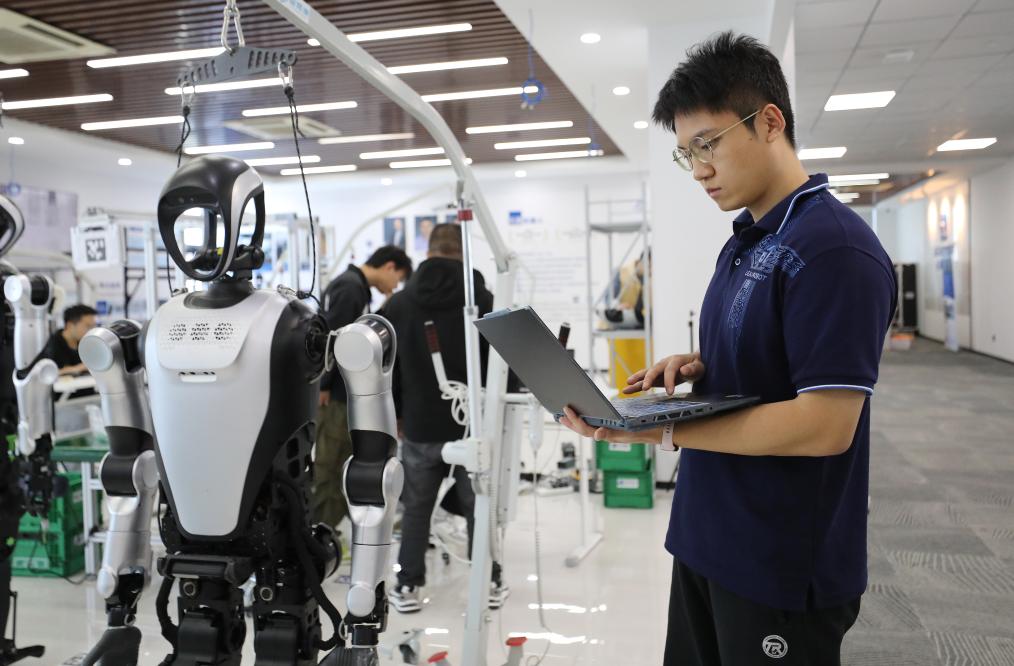
Core Insights - The article discusses how artificial intelligence (AI) is reshaping the job landscape, creating new professions and changing the skills required for workers to adapt to the AI era [1][3]. Group 1: New Job Opportunities - New professions such as AI trainers, AI product managers, and AI ethics reviewers are emerging as AI technology integrates into various industries [1][3]. - The demand for hybrid and application-oriented talent is increasing, with a significant rise in job openings related to AI applications [3]. - According to PwC, the average salary premium for workers with AI skills has reached 56%, doubling from the previous year [3]. Group 2: Impact on Traditional Industries - AI is becoming a crucial infrastructure for intelligent societies, enhancing traditional industries and creating new business models [4]. - In the robotics sector, advancements in embodied intelligence are leading to the development of humanoid robots with greater autonomy and human-machine collaboration capabilities, generating new job opportunities across various applications [5]. Group 3: Entrepreneurship and New Business Models - The rise of "one-person companies" (OPC) is facilitated by AI tools, allowing individuals to manage content production, product operations, and service delivery independently [7]. - This entrepreneurial model is gaining traction, with cities promoting OPC as a preferred startup model [7]. Group 4: Skills and Education for the Future - Experts emphasize the importance of human skills such as imagination, judgment, aesthetic ability, critical thinking, and emotional interaction in the context of human-AI collaboration [8]. - There is a call for educational systems to enhance interdisciplinary skills and develop training programs for new AI-related professions to support workforce transitions [8][10]. - The concept of "slash" careers, where individuals possess multiple skills, is predicted to become a prevalent lifestyle, necessitating a dynamic knowledge system and a focus on ethical guidance in AI [10].
科学与健康|AI时代,职业生态如何变化?
Xin Hua She· 2026-01-25 10:17
Core Insights - The rise of new professions such as AI trainers, AI product managers, and AI ethics reviewers is reshaping the job landscape, demanding new skills from workers [1][2] - The integration of AI across various industries is creating a significant demand for hybrid and application-oriented talent, with a notable increase in job opportunities related to AI [2][3] Group 1: Employment Opportunities - AI is driving the emergence of new job roles, including data annotators and AI content creators, leading to a growing need for professionals with AI skills [2][3] - According to PwC's 2025 global AI employment forecast, nearly all AI-related job positions are increasing, with average salaries for AI-skilled workers experiencing a 56% premium compared to the previous year [2] - A report from 58.com indicates the emergence of nearly 50 types of "human-machine collaboration" jobs and 40 new intelligent services [2] Group 2: Technological Transformation - AI is fundamentally transforming the employment ecosystem and skill structures, pushing labor towards higher value-added roles characterized by human-machine collaboration [3] - Advances in embodied intelligence and world modeling are enabling AI to move from language processing to understanding and modeling the physical world [3] - The robotics sector is seeing advancements in humanoid robots, which are expected to create numerous new job opportunities across various applications, including industrial and healthcare settings [3] Group 3: Entrepreneurship and New Business Models - The concept of "one-person companies" (OPC) is gaining traction, allowing individuals to leverage AI tools for content creation, product management, and service delivery [3][4] - Cities like Suzhou are positioning themselves as hubs for OPC entrepreneurship, supported by community initiatives and policies [3] Group 4: Skills and Education - Future talent development should emphasize interdisciplinary skills and comprehensive capabilities, alongside the establishment of training systems for new AI professions [6] - Experts suggest that a "slash" career approach may become prevalent, encouraging individuals to diversify their skills to enhance resilience against job market fluctuations [6] - Young people are advised to adopt an "AI mindset" to improve their ability to navigate AI technologies and to develop a dynamic knowledge system that integrates interdisciplinary learning and ethical considerations [6]
“广货行天下”走进华强北,消费电子专场促销活动正式启动!
Sou Hu Cai Jing· 2026-01-25 09:37
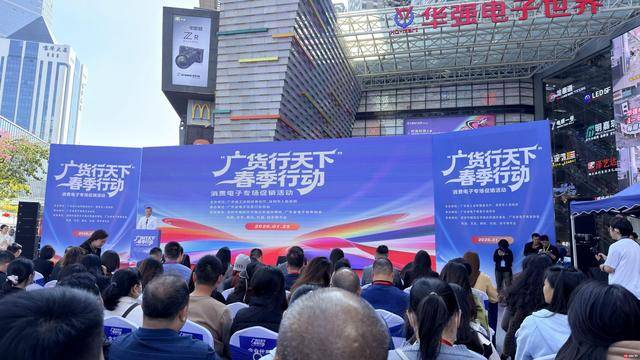
Group 1 - The "Guangdong Goods Going Global" Spring Action for consumer electronics was launched on January 25, organized by the Guangdong Provincial Department of Industry and Information Technology and the Shenzhen Municipal Government, featuring 50 leading consumer electronics companies [2] - The event showcased innovations from "Made in Guangdong" and "Created in Shenzhen" in the context of the AI technology wave, aiming to meet diverse and high-quality consumer demands [2] - The exhibition attracted a large number of foreign buyers from regions such as the Middle East, Southeast Asia, and Europe, highlighting the international appeal of the products [5] Group 2 - Exhibiting companies offered significant discounts, including a 15% national subsidy and additional store-specific promotions, with some mobile devices having store discounts up to 700 yuan [7] - The event included a special exhibition showcasing the entrepreneurial history and achievements of Huaqiangbei, emphasizing its unique entrepreneurial spirit and industrial strength [7] - Advanced technologies are rapidly being integrated into electronic products, wearable devices, and home products, transforming them into "New Year gifts" that are both innovative and emotionally engaging [7]

计算机行业研究:动态漫Agent,景气的极致
SINOLINK SECURITIES· 2026-01-25 07:50
Investment Rating - The report indicates a positive investment outlook for the industry, highlighting a "golden window period" for the short drama sector, with expectations for significant growth in the coming years [2][11]. Core Insights - The short drama industry has reached a scale of nearly 1 trillion yuan, surpassing both the film and long video sectors, with a projected compound annual growth rate (CAGR) of over 50% from 2023 to 2026 [11]. - The market for animated dramas is expected to exceed 22 billion yuan by 2026, contributing 50% of the incremental growth in the short drama industry [11]. - ByteDance is positioned as the absolute leader in the animated drama sector, leveraging its "traffic + IP + AI" integrated strategy to dominate the market [2][17]. - The application of AI technology is transforming the production paradigm of animated dramas, reducing production cycles from over 50 days to under 30 days and significantly lowering costs [3][21]. Summary by Sections Section 1: The Golden Window for Short Dramas - The short drama market has surpassed 1 trillion yuan, with user engagement increasing, and the average daily viewing time expected to exceed 100 minutes by 2025 [11]. - The market has entered a phase of rapid growth and commercialization, with significant increases in both supply and demand for animated dramas [11][12]. Section 2: AI Reshaping Production Paradigms - AI technologies are enabling a shift from manual production to industrialized generation, with production costs dropping to the thousand-yuan level [3][21]. - The integration of AI in production processes is expected to streamline workflows, reducing the number of steps from 11 to 5 and cutting costs by 60% [3][24]. Section 3: Trends in AI Applications - The report anticipates a significant uptick in AI applications by 2026, driven by the need for software to leverage substantial computational investments [4][31]. - Companies are increasingly integrating AI into their business models, with some reporting that AI-related revenues account for over 10% of total income [4][31]. Section 4: Related Investment Targets - Key investment targets include companies such as DeCai Co., Zhaochi Co., and Wanxing Technology, among others, which are positioned to benefit from the growth in the animated drama and AI sectors [5][40].