
AbbVie(ABBV)

Search documents
港股“子”曰 | 56亿美元利好
Mei Ri Jing Ji Xin Wen· 2026-01-13 07:44
Group 1 - The core point of the news is the significant licensing agreement between Rongchang Biopharma and AbbVie for the development and commercialization of RC148, a novel bispecific antibody targeting PD-1 and VEGF, which could lead to substantial financial benefits for Rongchang Biopharma [1] - Rongchang Biopharma will receive an upfront payment of $650 million and is eligible for up to $4.95 billion in milestone payments, along with double-digit royalties on net sales outside Greater China [1] - The deal exemplifies the "China innovation + global market" model in drug development, indicating a growing trend of collaboration between Chinese biotech firms and international pharmaceutical companies [1] Group 2 - In 2024, U.S. pharmaceutical companies significantly increased their acquisition of Chinese innovative drugs, with a year-on-year growth of 66%, leading to a total licensing transaction value of $41.5 billion [2] - Recently, five business development projects have been established in a short period, covering various fields such as small molecule inhibitors, monoclonal antibodies, bispecific antibodies, ADCs, and RDCs, indicating a flourishing environment for Chinese innovative drugs [2] - The Hong Kong innovation drug sector is showing signs of recovery, with the Hang Seng Innovation Drug Index having corrected approximately 25% since its peak in September 2025, but is now rebounding [3] Group 3 - The U.S. biotech sector, particularly the Nasdaq Biotechnology Index, has reached new highs, increasing by 23% since September of last year, highlighting a disparity in performance compared to the Hong Kong innovation drug sector [5] - The recent surge in business development projects serves as a catalyst that may reactivate the Hong Kong innovation drug sector, which is currently perceived to be at a relatively safe valuation compared to the Nasdaq [5]


荣昌生物:与艾伯维签署授权许可协议,最高可获49.5亿美元里程碑付款
Cai Jing Wang· 2026-01-13 04:20
Core Viewpoint - Rongchang Biopharma has signed an exclusive licensing agreement with AbbVie for RC148, granting AbbVie exclusive rights for development, production, and commercialization outside Greater China [1] Group 1: Financial Aspects - Upon the agreement's effectiveness, Rongchang Biopharma will receive an upfront payment of $650 million [1] - The company is eligible for up to $4.95 billion in milestone payments related to development, regulatory, and commercialization [1] - Additionally, the company will receive a tiered royalty on net sales outside Greater China [1] Group 2: Strategic Implications - This licensing deal is expected to accelerate the global development and commercialization of RC148 [1] - The agreement is anticipated to enhance the company's brand value and international influence [1] Group 3: Risks and Uncertainties - There is uncertainty regarding the final payment amounts due to the inherent risks associated with innovative pharmaceuticals [1]

荣昌生物拿下56亿美元大单,双抗技术缘何频获跨国巨头追捧?
2 1 Shi Ji Jing Ji Bao Dao· 2026-01-13 04:08
Core Viewpoint - The collaboration between AbbVie and Rongchang Biologics marks a significant shift in the global oncology treatment landscape, highlighting the trend of Chinese innovative drug companies partnering with multinational giants for drug development and commercialization [1][2]. Group 1: Collaboration Details - AbbVie and Rongchang Biologics signed an exclusive licensing agreement for the development, production, and commercialization of RC148, a bispecific antibody targeting PD-1 and VEGF [1]. - Rongchang Biologics will receive an upfront payment of $650 million and is eligible for up to $4.95 billion in milestone payments, along with a tiered royalty on net sales outside Greater China [1][2]. Group 2: Market Implications - This deal exemplifies the "China innovation + global market" model, allowing Rongchang Biologics to secure cash flow and accelerate clinical trials for RC148 while focusing on the Chinese market [2]. - AbbVie aims to enhance its product portfolio in immuno-oncology, particularly in the emerging PD-1/VEGF bispecific antibody space, which could synergize with existing antibody-drug conjugates (ADCs) and immuno-oncology (IO) drugs [2]. Group 3: Competitive Landscape - The PD-1/VEGF bispecific antibody represents a new class of cancer therapies that may overcome tumor resistance mechanisms by simultaneously blocking PD-1 and VEGF [3][5]. - Chinese companies are leading in this field, with notable products like Ak112/Ivonescimab and SSGJ707 entering clinical trials, indicating a competitive landscape for PD-1/VEGF bispecific antibodies [3][4]. Group 4: Industry Trends - The surge in business development (BD) transactions in the PD-1/VEGF bispecific antibody sector reflects increasing interest from multinational pharmaceutical companies in Chinese innovative drug assets [6]. - In 2025, the total value of Chinese innovative drug licensing transactions exceeded $130 billion, surpassing the U.S. for the first time, indicating a significant shift in the global pharmaceutical landscape [7][8]. Group 5: Future Outlook - The increasing recognition of Chinese innovative drugs is attributed to their rapid development and the ability to meet unmet clinical needs, enhancing their bargaining power in international collaborations [8][9]. - The industry is witnessing a transition from following to leading in drug innovation, with a clear direction for the future of Chinese pharmaceutical development [10].
艾伯维(ABBV.US)承诺在美投资千亿美元 以换取关税豁免
智通财经网· 2026-01-13 03:38
Core Viewpoint - AbbVie (ABBV.US) has signed an agreement with the U.S. government to lower certain drug prices and invest $100 billion in domestic operations in exchange for specific tariff exemptions [1] Group 1: Agreement Details - The agreement responds to four key demands from the Trump administration, including providing low-cost drugs for the Medicaid program, selling affordable drugs directly to patients, and ensuring that overseas drug prices do not fall below U.S. domestic prices [1] - AbbVie will invest the $100 billion over the next ten years in U.S. research and capital expenditure projects, including drug manufacturing [1] - The company has not yet provided details on the specific allocation of the $100 billion investment [1] Group 2: Pricing and Compliance - AbbVie will lower drug prices within the Medicaid program and supply certain drugs directly to patients through the "TrumpRx" website launched by the Trump administration [1] - In return for these commitments, AbbVie will receive tariff exemptions and will be exempt from future mandatory drug pricing policies [1]
AbbVie Strikes $100 Billion Investment Deal With Trump, Will Lower Medicaid Prices
WSJ· 2026-01-13 00:03
Group 1 - The Trump administration has exempted AbbVie from tariffs and future pricing mandates as part of a three-year deal [1]
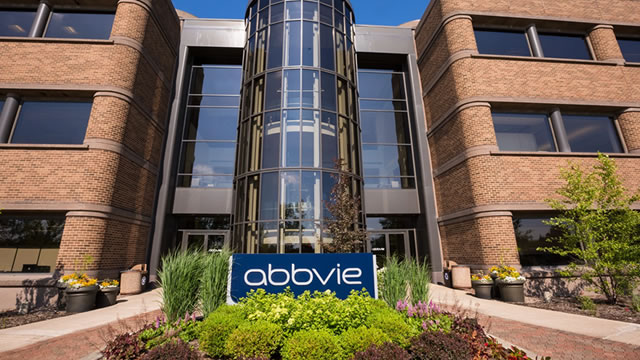
Abbvie, US reach agreement to cut drug prices
Reuters· 2026-01-12 23:57
Core Viewpoint - Abbvie has entered into a three-year agreement with the U.S. government to offer lower prices in Medicaid through the TrumpRx initiative, while committing $100 billion over the next decade for research and development [1] Group 1 - Abbvie's agreement with the Trump administration aims to provide low prices for Medicaid, indicating a strategic alignment with government healthcare initiatives [1] - The company has pledged a significant investment of $100 billion over the next ten years, highlighting its commitment to research and development in the pharmaceutical sector [1]
AbbVie and Trump Administration Reach Agreement to Improve Access and Affordability for Americans
Prnewswire· 2026-01-12 23:30
Core Insights - AbbVie has entered a voluntary agreement with the Trump administration to enhance access and affordability of medications for Americans while fostering U.S. pharmaceutical innovation [1][3] Group 1: Financial Commitments - AbbVie will invest $100 billion in U.S.-based research and development and capital investments, including manufacturing, over the next decade [2][6] - The agreement allows AbbVie to provide low prices in Medicaid and expand direct-to-patient offerings through TrumpRx for widely used medications [2][6] Group 2: Strategic Goals - AbbVie aims to address the complexities and access challenges in the U.S. healthcare system, serving approximately 16 million Americans annually with its products [3] - The agreement aligns with President Trump's drug pricing priorities and includes exemptions from tariffs and future price mandates [3][6] Group 3: Company Mission - AbbVie's mission focuses on discovering and delivering innovative medicines that address serious health issues and future medical challenges across key therapeutic areas [4]

AbbVie Down 3% in a Month: Why Holding the Stock Still Makes Sense
ZACKS· 2026-01-12 14:55
Core Viewpoint - AbbVie (ABBV) stock has recently declined by 3.2% following the denial of takeover talks with Revolution Medicines, which was rumored to be valued at around $20 billion [1][9]. Group 1: Financial Performance - AbbVie reported combined sales of Skyrizi and Rinvoq at $18.5 billion in the first nine months of 2025, with expectations to exceed $25 billion in 2025 and $31 billion by 2027 [5][6]. - The oncology segment generated revenues of $5.0 billion in the first nine months of 2025, reflecting a year-over-year increase of 2.7% [8]. - Neuroscience drug sales increased by 20.3% to nearly $7.8 billion in the first nine months of 2025, driven by products like Botox Therapeutic and Vraylar [10]. Group 2: Product Developments - AbbVie has successfully launched new immunology drugs, Skyrizi and Rinvoq, to offset the loss of exclusivity for Humira, which has seen a significant decline in sales [4][14]. - The company has settled patent litigation for Rinvoq, extending its exclusivity until 2037 [7]. - New product approvals and pipeline candidates, including tavapadon and pivekimab sunirine, are expected to drive long-term growth [12]. Group 3: Market Challenges - Humira sales have declined over 50% in the first nine months of 2025 due to biosimilar competition [14]. - The Aesthetics segment has faced a 7.4% decline in global sales, with Juvederm and Botox Cosmetics also experiencing significant drops [15][16]. - AbbVie has lowered its Aesthetics business expectations from $5.1 billion to $4.9 billion due to market softness [17]. Group 4: Strategic Initiatives - AbbVie has engaged in over 30 M&A transactions since early 2024 to enhance its early-stage pipeline, including the acquisition of Gilgamesh Pharmaceuticals [13]. - The company aims for mid-single-digit revenue growth in 2025, supported by strong performances from its new product launches [28]. - AbbVie is well-positioned for continued growth despite challenges, with a robust pipeline and a focus on R&D investments [26][29].
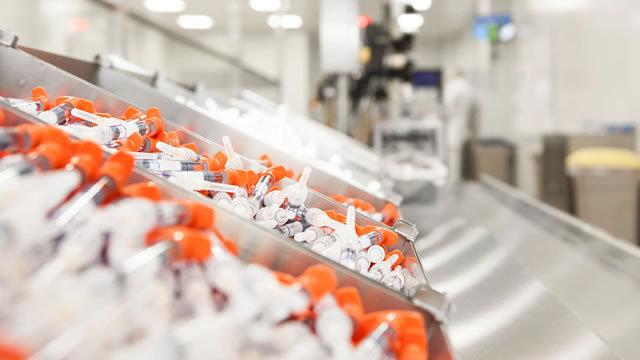
艾伯维与荣昌生物达成合作 共同开发实体瘤实验性疗法
Xin Lang Cai Jing· 2026-01-12 13:55
Group 1 - AbbVie announced a collaboration with Rongchang Biologics to jointly develop an experimental therapy for solid tumors [1] - The total value of the collaboration agreement could reach up to $4.95 billion, which includes milestone payments [1]
明天题材前瞻:贵金属暴涨打响避险战,全球巨头押注创新药
Sou Hu Cai Jing· 2026-01-12 13:26
Group 1 - The geopolitical risks and policy uncertainties are enhancing the safe-haven attributes of precious metals, with silver futures surging by 6.00% and gold prices rising significantly due to increased demand for safe-haven assets [1] - The European Commission is prepared to impose new and stricter sanctions on Iran, escalating geopolitical tensions, while the independence of the Federal Reserve's policies is under scrutiny, further reinforcing gold's role as a traditional risk hedge [1] - Precious metals like gold and silver are expected to maintain an upward price trajectory amid a complex macroeconomic environment [1] Group 2 - Rongchang Biopharmaceutical announced a significant exclusive licensing agreement with AbbVie for a novel bispecific antibody drug, RC148, which will yield an upfront payment of $650 million and potential milestone payments up to $4.95 billion [1] - This transaction highlights the growing recognition of competitive domestic innovative biopharmaceuticals by international pharmaceutical giants, showcasing the improved negotiation power of domestic companies [1] - The deal is expected to encourage more domestic innovative drug companies to deepen their efforts in cutting-edge treatment areas such as oncology and autoimmune diseases, accelerating their internationalization through licensing collaborations [1] Group 3 - The Guangzhou Futures Exchange has implemented strict regulations on lithium carbonate futures trading, limiting clients who exceed opening limits to prevent excessive speculation and maintain market order [2] - This regulatory action aims to ensure that lithium carbonate futures prices reflect true supply and demand dynamics, promoting compliance among industry players and investors [2] - The focus is shifting from supply pressure to consumer-driven demand, indicating a robust performance in the demand side of the lithium market [2] Group 4 - The commercial aerospace sector is experiencing heightened attention, with several companies issuing announcements to warn about risks associated with stock price volatility [2] - Platinum Technology noted that the commercial aerospace development stage is still early, contributing limited revenue to the company in the coming years [2] - Other companies, such as Zhongke Star Map, indicated that the current stock price surge is not aligned with the actual performance of their commercial aerospace business, highlighting significant risks of detachment from fundamentals [2]


