
AbbVie(ABBV)

Search documents
5 Big Drug Stocks That May Continue to Outperform in 2026
ZACKS· 2025-12-23 14:51
Industry Overview - The drug and biotech sector has shown recovery after a weak first half, with large drugmakers signing pricing agreements with the Trump administration [1] - Dealmaking activity surged in the second half, boosting investor confidence, with the Large Cap Pharmaceuticals industry outperforming the S&P 500 in the past three months [1][4] - Innovation is at its peak, particularly in areas like obesity, cell and gene therapy, and next-gen oncology treatments, attracting investor attention [2] - Despite headwinds such as pipeline setbacks and regulatory risks, the outlook for growth in 2026 remains favorable due to rapid innovation and increased use of AI in drug development [2] Eli Lilly - Eli Lilly has achieved significant success with its tirzepatide medicines, including diabetes drug Mounjaro and weight loss medicine Zepbound, which are key revenue drivers [6][7] - Strong sales growth in 2025 is attributed to international market launches and improved production, with continued demand expected in 2026 [7] - Lilly is investing in obesity treatments with new molecules in clinical development, including orforglipron and retatrutide, with regulatory applications filed for orforglipron [8][9] - Despite challenges like declining product prices and competition in the GLP-1 market, Lilly's stock has risen 39.3% year to date, with 2026 earnings estimates improving from $30.78 to $33.61 per share [10] Johnson & Johnson - J&J has shown strong operational performance in 2025, with double-digit revenue growth from key brands despite the loss of exclusivity for Stelara [11] - The Innovative Medicine segment is expected to accelerate growth in 2026, driven by key products and new launches [12] - J&J's MedTech business has improved, with growth driven by acquired cardiovascular businesses and new product launches expected to contribute to 2026 growth [13][14] - The company has advanced its pipeline significantly and is on an acquisition spree, with a Zacks Rank of 2 (Buy) and a stock rise of 43.3% year to date [17] AbbVie - AbbVie faces declining sales from Humira due to loss of exclusivity but has successfully launched new immunology medicines Skyrizi and Rinvoq, generating combined sales of $18.5 billion in the first nine months of 2025 [18][19] - Strong market growth and new indications for these drugs are expected to drive future growth, alongside contributions from newer drugs [20] - AbbVie anticipates a high single-digit CAGR through 2029, supported by robust performance from Skyrizi and Rinvoq, with a Zacks Rank of 3 and a stock rise of 28.2% year to date [21][22] Amgen - Amgen's revenue growth is driven by key medicines like Repatha and new biosimilars, compensating for declines from mature drugs [23][24] - The company is focusing on obesity treatments with its candidate MariTide, which differentiates itself with a convenient dosing method [24] - Amgen's stock has risen 27.3% year to date, with 2026 earnings estimates increasing from $21.43 to $21.62 per share [25] AstraZeneca - AstraZeneca has several blockbuster drugs exceeding $1 billion in sales, with newer products contributing to growth despite losses from mature brands [26][27] - The company expects to achieve industry-leading top-line growth through 2030, with plans to launch 20 new medicines and generate $80 billion in total revenues [28] - AstraZeneca faces challenges such as competition and regulatory impacts but maintains a stable earnings estimate of $5.15 per share for 2026, with a stock rise of 10.7% year to date [29][30]


Bet on These Top-Ranked Healthcare ETFs Before 2025 Ends
ZACKS· 2025-12-22 19:46
Key Takeaways U.S. healthcare challenged the S&P 500 in 2025, with biotech leading as the industry index rose 23.2%. GLP-1 drug breakthroughs, AI-driven efficiency and strong earnings beats fueled the sector's rally. ETF exposure offers diversified access as M&A activity and demographic tailwinds support 2026 growth. As we approach the final weeks of 2025, the U.S. healthcare sector has transitioned from a defensive stalwart to a primary market leader. Evidently, while the S&P 500 has delivered a solid ret ...


医药周报20251221:In Vivo CAR-T国内外进展大梳理
Xin Lang Cai Jing· 2025-12-22 01:20
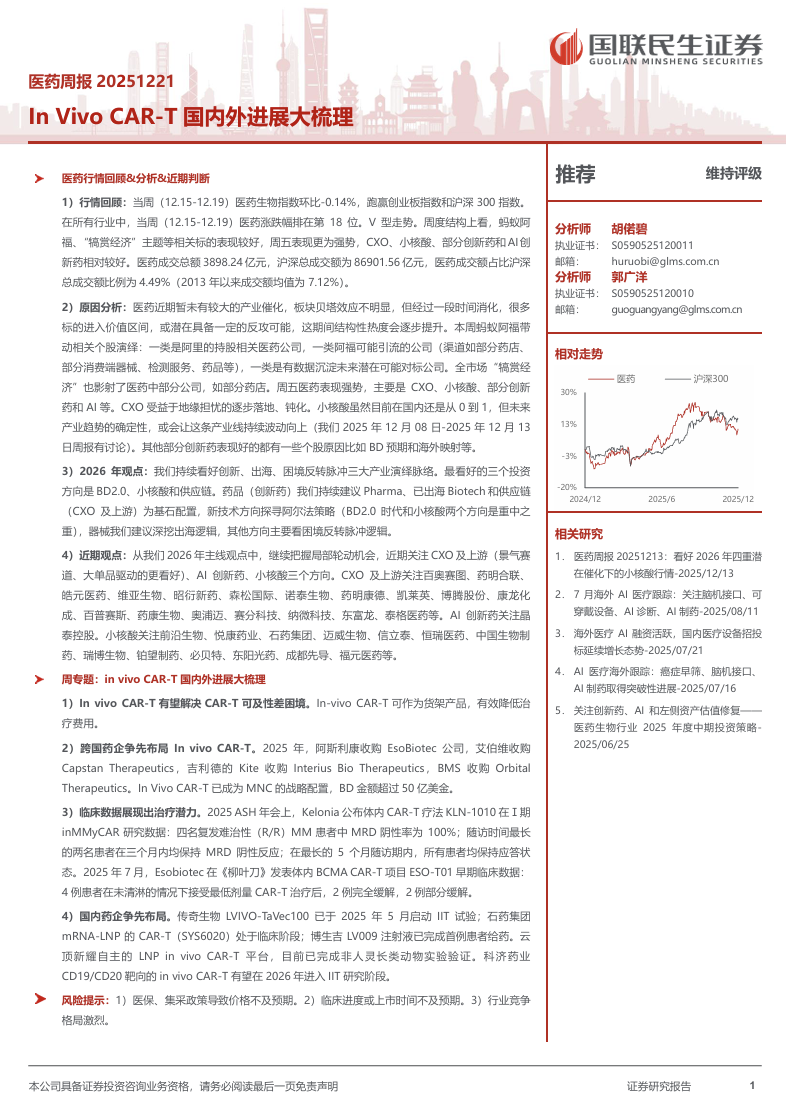
Group 1: Market Overview - The pharmaceutical and biotechnology index decreased by 0.14% from December 15 to December 19, outperforming the ChiNext and CSI 300 indices [1][23] - The total trading volume in the pharmaceutical sector was 389.82 billion yuan, accounting for 4.49% of the total trading volume in the Shanghai and Shenzhen markets, which is below the average of 7.12% since 2013 [1][38] - The pharmaceutical sector ranked 18th in terms of weekly performance among all industries during the same period [1][25] Group 2: Sector Analysis - The recent lack of significant industrial catalysts has led to a muted beta effect in the sector, but many stocks have entered a value range, indicating potential for a rebound [2][59] - The "reward economy" theme has positively influenced certain pharmaceutical companies, particularly those linked to Ant Group and related retail channels [2][59] - Strong performance was noted in CXO, small nucleic acids, and certain innovative drugs, driven by specific stock factors such as BD expectations and overseas mapping [2][59] Group 3: In Vivo CAR-T Developments - In vivo CAR-T technology is expected to address the accessibility issues of CAR-T therapies, potentially lowering treatment costs and making it available as a shelf product [4][12] - Major pharmaceutical companies are actively investing in in vivo CAR-T, with business development (BD) transactions exceeding 5 billion USD, indicating its strategic importance [4][16] - Clinical data presented at the 2025 ASH meeting showed promising results for in vivo CAR-T therapies, with high rates of minimal residual disease (MRD) negativity in patients [4][19] Group 4: Future Outlook - The company maintains a positive outlook on innovation, international expansion, and turnaround opportunities in the pharmaceutical sector, focusing on BD 2.0, small nucleic acids, and supply chains as key investment areas [3][22] - The upcoming 2026 potential catalysts include the publication of the commercial insurance innovation drug directory and the commercialization of targeted CAR-T therapies [21][22] - Domestic companies are rapidly advancing in the in vivo CAR-T space, with several candidates in early clinical stages, indicating a growing competitive landscape [22][22]


Our Top 10 High-Growth Dividend Stocks - December 2025
Seeking Alpha· 2025-12-20 13:00
Group 1 - The primary goal of the "High Income DIY Portfolios" service is to provide high income with low risk and capital preservation for DIY investors [1] - The service offers seven portfolios designed for income investors, including retirees, featuring three buy-and-hold portfolios, three rotational portfolios, and a conservative NPP strategy portfolio [1] - The portfolios aim to create stable, long-term passive income with sustainable yields, including two high-income portfolios and two dividend growth investment (DGI) portfolios [1] Group 2 - The "Financially Free Investor" focuses on investing in dividend-growing stocks with a long-term horizon and employs a unique 3-basket investment approach [2] - This approach aims for 30% lower drawdowns, 6% current income, and market-beating growth over the long term [2] - The service includes a total of 10 model portfolios with varying income targets, buy and sell alerts, and live chat for portfolio management and asset allocation [2]




Trump unveils major drug price deals with 9 Pharma giants, launches TrumpRx.gov to cut medicine costs in US
MINT· 2025-12-19 23:46
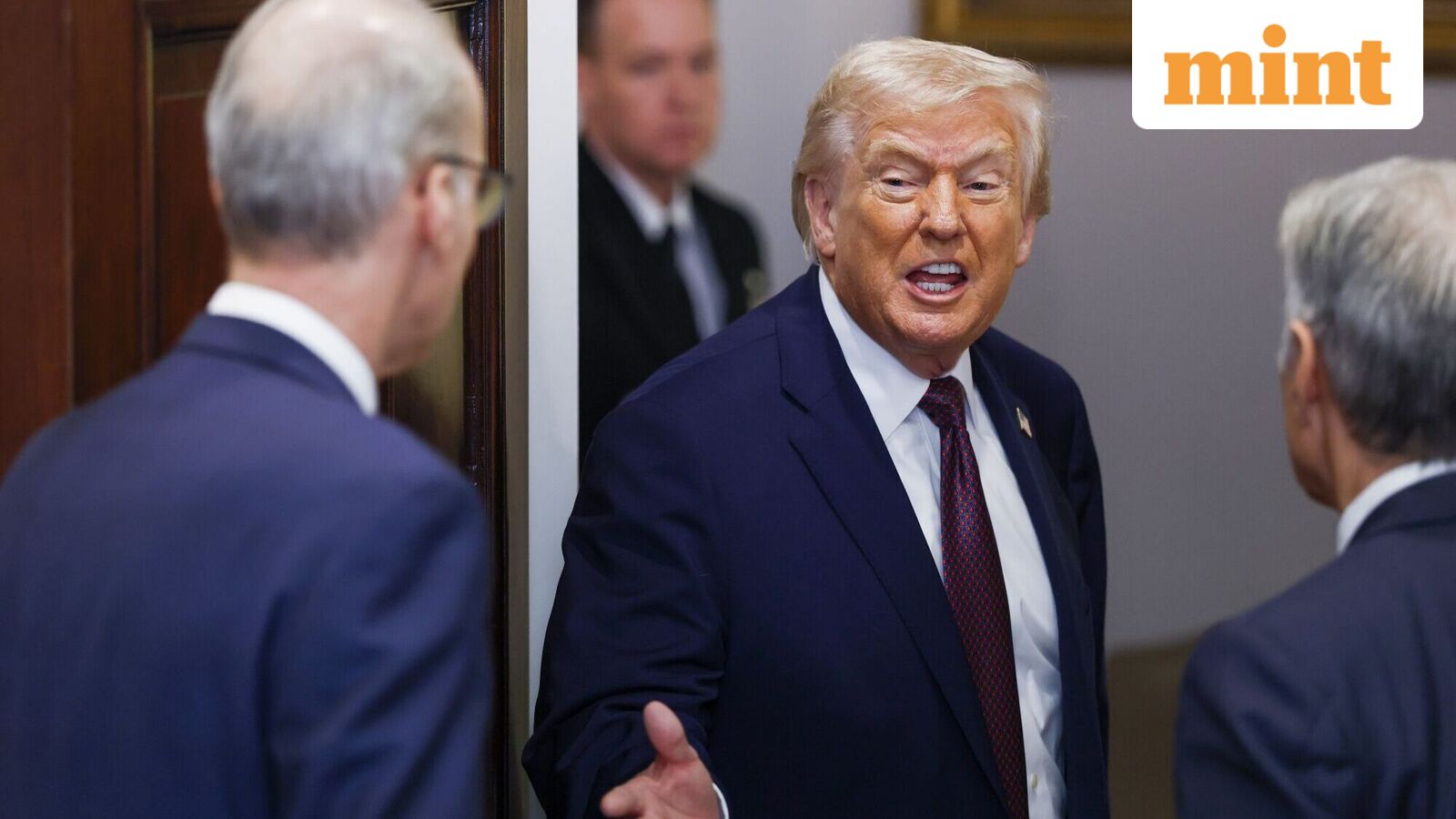
Core Insights - President Trump announced a set of drug-pricing agreements with nine major pharmaceutical companies, aiming to align U.S. medicine costs with those in Europe [1][2] - The initiative includes a new direct-to-consumer portal, TrumpRx.gov, allowing patients to purchase certain medicines directly from manufacturers [2][4] Group 1: Agreements and Participants - The agreements involve 14 out of 17 drugmakers that Trump previously urged to lower prices, including Amgen, GSK, and Merck [2][3] - Drug companies are motivated to negotiate to avoid potential regulatory measures that could impact their profits [3] Group 2: TrumpRx.gov Functionality - TrumpRx.gov will serve as a central directory for patients to access selected medicines directly from manufacturers' websites [4] - The portal is expected to be fully operational by January, following a promotional launch [4] Group 3: Pricing Details - Highlighted medicines include Amgen's Repatha at $239/month, GSK's Advair Diskus at $89/month, and Merck's Januvia at $100/month [6] - Gilead's Epclusa will be priced at $2,492/month, despite lower costs for insured patients [6] Group 4: Impact on Medicaid and Medicare - Companies committed to launching new medicines in the U.S. at prices comparable to those in other wealthy countries [8] - Medicaid programs are legally entitled to the lowest drug prices, with Bristol Myers Squibb offering Eliquis free to Medicaid [9] Group 5: Industry Response and Future Outlook - Health policy experts express skepticism about the agreements' impact on overall drug prices for most Americans [10] - The agreements do not impose mandatory price controls and leave many brand-name drug costs unchanged [15] - Ongoing discussions with additional manufacturers like AbbVie and Johnson & Johnson may lead to further agreements [14]


Trump strikes deal with US drugmakers to cut Medicaid medicine costs
The Guardian· 2025-12-19 20:14
Core Insights - Donald Trump and nine major pharmaceutical companies have reached agreements to significantly reduce drug prices for the Medicaid program and cash payers, aiming to align US costs with those in other wealthy nations [1][2] Group 1: Price Reductions and Agreements - Drugmakers will cut prices on most drugs sold to Medicaid, promising "massive savings" on commonly used medicines, although specific figures were not disclosed [2] - The deals include agreements to lower cash-pay prices for select drugs, launch drugs in the US at prices equal to those in other wealthy nations, and increase manufacturing [3] - Merck plans to sell its diabetes drugs at approximately 70% off list prices directly to US consumers, with potential for its experimental cholesterol drug to be offered through direct channels [4] Group 2: Previous and Current Deals - Five companies had previously made agreements with the administration to control prices, while three companies have yet to announce deals [6] - Drugmakers committed to "most-favored-nation" pricing for all new US drug launches across various markets, including Medicare [7] Group 3: Financial Commitments and Investments - Companies pledged to invest over $150 billion in US research and development and manufacturing, with Merck contributing $70 billion of that total [8] - A portion of revenues from foreign sales will be remitted to the US to help offset costs [8] Group 4: Medicaid and Market Impact - Medicaid, which represents about 10% of US drug spending, already benefits from significant price discounts, sometimes exceeding 80% [9] - Pfizer indicated that Medicaid discounts would lead to price and margin compression in the upcoming year [9]


Trump secures agreements with Merck, Amgen, Novartis and others to cut drug prices under Medicaid
MINT· 2025-12-19 20:04
Core Points - US President Donald Trump announced agreements with nine major pharmaceutical companies to reduce drug prices for Medicaid and cash-paying consumers, aiming to align US drug costs with those in other wealthy nations [1][4] - Trump emphasized that the US was previously subsidizing global drug costs and will no longer do so [2] Group 1: Drugmakers Involved - Participating companies include Bristol Myers Squibb, Gilead Sciences, Novartis, Amgen, Boehringer Ingelheim, Sanofi, GSK, Merck, and Roche's US unit Genentech [3] - Additional companies like Regeneron, Johnson & Johnson, and AbbVie are expected to join after the holidays [3] Group 2: Price Reductions and Commitments - Drugmakers will reduce prices on most medicines sold to Medicaid, promising "massive savings" on widely used drugs, although specific figures were not disclosed [4] - The agreements also include commitments to cut cash prices for select medicines and to launch new drugs in the US at prices equal to those in other wealthy countries [5] Group 3: Specific Drug Pricing - Merck plans to sell diabetes drugs Januvia, Janumet, and Janumet XR at discounts of about 70% off list prices [7] - Amgen will price its migraine drug Aimovig and arthritis treatment Amjevita at $299 per month, which is nearly 60% and 80% below current US list prices, respectively [7] Group 4: Investment and Revenue Sharing - Companies pledged to invest over $150 billion in US research, development, and manufacturing, with Merck alone committing $70 billion [8] - A portion of each company's overseas revenue will be remitted to the US to help offset domestic drug costs, and several companies agreed to donate drug ingredients to the US strategic reserve [9] Group 5: Industry Reaction - Five drugmakers, including Pfizer and Eli Lilly, had already struck similar deals with the administration, and AbbVie is expected to announce its agreement soon [10]

Trump to announce new drug-pricing deals later today
MarketWatch· 2025-12-19 15:45
Core Viewpoint - The White House is preparing to announce additional agreements with pharmaceutical companies aimed at reducing drug prices [1] Group 1 - The upcoming deals are part of a broader initiative to make medications more affordable for consumers [1] - The administration's focus on lowering drug prices reflects ongoing concerns about healthcare costs in the United States [1]

Trump to announce new deals with major drugmakers to lower US prescription drug prices
MINT· 2025-12-19 15:35
Group 1 - The US President is set to announce new agreements aimed at lowering prescription drug prices, with participation from major pharmaceutical companies including AbbVie, Bristol Myers Squibb, Gilead Sciences, and Merck [1] - Swiss drugmakers Novartis and Roche are also reportedly involved in the upcoming deals [1] - Previous agreements have been reached with five companies: Pfizer, Eli Lilly, AstraZeneca, Novo Nordisk, and EMD Serono [3] Group 2 - In July, the President directed 17 major pharmaceutical companies to offer most-favored-nation prices to the US Medicaid program and ensure new drugs are not priced higher than in other wealthy countries [2] - The remaining companies that have not yet reached agreements include Sanofi, Regeneron, Merck, Johnson & Johnson, AbbVie, Amgen, Gilead, Boehringer Ingelheim, Bristol Myers, GSK, Novartis, and Genentech [3] - AbbVie and Merck declined to comment on the new agreements, while Novartis expressed commitment to discussions and Roche supported the goal of reducing drug prices [4] Group 3 - The President has emphasized the significant disparity between US drug prices and those in other high-income countries, where government-run health systems negotiate for price discounts [5]
Worried About the Stock Market in 2026? These 3 Stocks Did Well During the Last Bear Market.
Yahoo Finance· 2025-12-18 19:05
Core Viewpoint - Concerns about potential market downturns in 2025 are prompting investors to consider safer investment options, particularly in blue chip stocks with strong fundamentals [1][2]. Group 1: Investment Strategies - Investors are advised to protect their portfolios by focusing on blue chip stocks that have good fundamentals and are likely to be resilient during market downturns [2]. - Diversifying investments into sectors that may perform better in a downturn is recommended [2]. Group 2: Company Analysis - AbbVie - AbbVie shares rose by 19% during the S&P 500 crash of over 19% in 2022, demonstrating stability and growth with a 3% increase in revenue and a profit margin exceeding 20% [5]. - The company is successfully replacing revenue lost from its top-selling drug Humira with new immunology drugs Skyrizi and Rinvoq, showcasing its innovation capabilities [6]. - AbbVie operates in multiple segments including oncology, aesthetics, and neuroscience, providing various growth avenues [7]. - The stock trades at 16 times estimated future earnings and offers a dividend yield of 3.1%, significantly higher than the S&P 500 average of 1.1%, making it a solid long-term investment [8]. Group 3: Company Analysis - Eli Lilly - Eli Lilly's shares increased by 32% in 2022, significantly outperforming the market, driven by the success of its GLP-1 drugs, Mounjaro for diabetes and Zepbound for weight loss [11].