AMD(AMD)

Search documents
AMD Quality Score Surges On 60% Annual Data Center Expansion Bet To Drive AI Dominance
Benzinga· 2026-02-13 13:10
Advanced Micro Devices Inc. (NASDAQ:AMD) has seen its financial health and operational efficiency ratings skyrocket following a landmark fourth-quarter performance.AMD’s Quality Score Rises After Q4 ResultsAccording to the latest Benzinga Edge Stock Rankings, AMD's Quality score—a composite metric evaluating a company’s historical profitability and fundamental strength relative to its peers—surged from 82.23 to 92.71 week-on-week.This jump places the chipmaker in the top percentile of all ranked stocks, dri ...


算力为王:AI数据中心万亿赛道的产业链争霸与投资风暴
QYResearch· 2026-02-13 09:30
Core Insights - The article emphasizes the accelerated global construction of AI-driven data centers, highlighting significant investments from major tech companies like Meta and Mistral AI, which reflect the strategic importance of AI computing power deployment [2][3] - Data centers are not only foundational for AI applications but also serve as critical support for profit growth and technological competition across the industry [4] Market Size and Policy Environment by Region - North America: Projected market size of approximately $95-100 billion by 2026 and $300-350 billion by 2030, with a CAGR of ~28%. The region benefits from supportive AI innovation policies and strict data privacy regulations [6] - Europe: Expected market size of around $40-45 billion by 2026 and $120-150 billion by 2030, with a CAGR of ~25%. The region faces strict GDPR compliance and has a strong demand for localized data centers [6] - China: Anticipated market size of about $50-55 billion by 2026 and $160-200 billion by 2030, with a CAGR of ~27%. The government encourages AI and computing infrastructure development [6] - South Korea: Estimated market size of $5-6 billion by 2026 and $20-25 billion by 2030, with a CAGR of ~30%. The government promotes AI strategies and local semiconductor advantages [6] - Japan: Projected market size of $6-7 billion by 2026 and $18-22 billion by 2030, with a CAGR of ~23%. The region's stable demand comes from high-end manufacturing and finance sectors [6] - India: Expected market size of $3-4 billion by 2026 and $12-15 billion by 2030, with a CAGR of ~28-30%. The region shows rapid growth in cloud computing and AI applications [6] Key Industry Chain and Leading Companies - AI Chips/Accelerators: Key players include NVIDIA, AMD, Intel, and Google, focusing on high-performance AI training and inference [8] - Data Center Infrastructure: Major operators like Equinix and Digital Realty, along with self-built centers from Meta, AWS, and Microsoft, dominate the market [8] - Cloud Services/AI Platforms: AWS, Microsoft Azure, and Google Cloud are leading providers of AI services and solutions [8] - Storage/Memory: Companies like Samsung and SK Hynix are crucial for high-speed storage demands [9] - Network Equipment: Cisco and Arista Networks are essential for data center connectivity [9] - Energy and Cooling: Schneider Electric and Vertiv lead in providing reliable power and cooling solutions [9] - Data Center Software: VMware and HashiCorp/Red Hat offer critical management tools for data centers [9] Investment Opportunities - Upstream Chips: Investment in GPU/TPU/accelerators offers high margins and long-term contracts [10] - Data Center Operations: Focus on self-built or managed centers in high-demand regions like North America, China, and South Korea for stable rental income [10] - Cloud Service Platforms: High-growth subscription revenue opportunities in AI SaaS/IaaS [10] - Storage/Memory: Long-term supply agreements with major operators for HBM/SSD [10] - Network Equipment: Targeting AI-optimized and low-latency products for mid to long-term replacement [10] - Energy/Cooling: Building green data centers to leverage policy benefits [10] - Software/Operations: Providing intelligent operation and monitoring services for high profit margins [10] Conclusion and Strategic Recommendations - AI data centers are positioned as the core hub of the global tech industry over the next decade, with understanding technology trends and market opportunities being crucial for competitive advantage and long-term returns [12][14] - Regional market differences indicate that North America and China have large, stable markets, while South Korea and Southeast Asia show rapid growth [14] - Investment strategies should focus on leveraging these regional insights for optimal positioning in the evolving landscape [14]






中国半导体行业展望
Zhong Cheng Xin Guo Ji· 2026-02-13 09:14
Investment Rating - The semiconductor industry is rated as "stable improvement" for the next 12 to 18 months, with potential for upward adjustments based on demand growth from automotive electronics and artificial intelligence [5][7]. Core Insights - The semiconductor industry in China is expected to benefit from effective industrial support policies, accelerating domestic substitution processes, and a stable upward trend in credit quality [5][8]. - The competition in the semiconductor industry remains a key national focus, with ongoing support for high-end breakthroughs and supply chain management [7][9]. - The recovery of the semiconductor industry is driven by the mild recovery in consumer electronics and rapid development in automotive electronics and artificial intelligence [19][24]. - The global semiconductor sales reached approximately $697.18 billion in 2025, with a year-on-year growth of 11.22%, indicating a new recovery cycle after a previous downturn [20][24]. - The domestic semiconductor market in China is projected to reach $210.88 billion in 2025, growing by 14.68% year-on-year, driven by AI and automotive electronics [24]. Industry Fundamentals Analysis - The semiconductor industry is supported by a comprehensive policy framework that includes national and local government initiatives aimed at enhancing self-sufficiency and technological breakthroughs [9][10]. - The production of integrated circuits in China reached 484.3 billion units in 2025, a year-on-year increase of 87.28%, with exports also showing significant growth [11][24]. - The industry is characterized by a high degree of concentration, with the top ten chip design companies holding over 65% of the market share globally, predominantly led by U.S. firms [30][31]. Credit Performance of Industry Enterprises - The overall financial performance of the semiconductor industry has improved, with revenue, profit, and operating cash flow showing growth, while debt levels remain manageable [29]. - The industry has not experienced any bond extensions or defaults, indicating a stable credit environment [29]. - The chip design sector has seen rapid growth, particularly in AI chip manufacturers, which have outperformed other segments [31].



超威半导体:下半年将出货MI450系列机架型产品,客户端市场份额持续增长
First Shanghai Securities· 2026-02-13 02:30
Investment Rating - The report assigns a "Buy" rating for Advanced Micro Devices (AMD) with a target price of $300.00, indicating a potential upside of 40.47% from the current price of $213.57 [1][4]. Core Insights - AMD is expected to see significant revenue growth driven by its AI GPU sales, with a projected compound annual growth rate (CAGR) of 82.3% from 2026 to 2028 [7]. - The company anticipates strong demand for its next-generation data center products, particularly in the AI sector, with a forecast of over 60% annual growth in data center revenue over the next 3-5 years [4]. - AMD's client product market share continues to grow, with a notable increase in desktop and laptop revenue, and plans to launch a more extensive AI PC product line [4]. - The gaming business has shown robust holiday revenue growth, and the embedded business is recovering, contributing positively to overall performance [4]. Financial Summary - For the fiscal year ending December 31, 2024, AMD's total revenue is projected to be $25.785 billion, increasing to $81.437 billion by 2028, reflecting a growth rate of 13.7% in 2024 and 22.3% in 2028 [3][9]. - Non-GAAP net profit is expected to rise from $5.420 billion in 2024 to $23.065 billion in 2028, with a significant increase in earnings per share (EPS) from $3.3 to $14.3 over the same period [3][9]. - The gross margin is projected to improve from 49.4% in 2024 to 56.6% in 2028, indicating enhanced profitability [9][10]. - The company’s operating expenses are expected to grow, but at a controlled rate, with R&D expenses as a percentage of revenue decreasing from 25.0% in 2024 to 20.5% in 2028 [9][10].
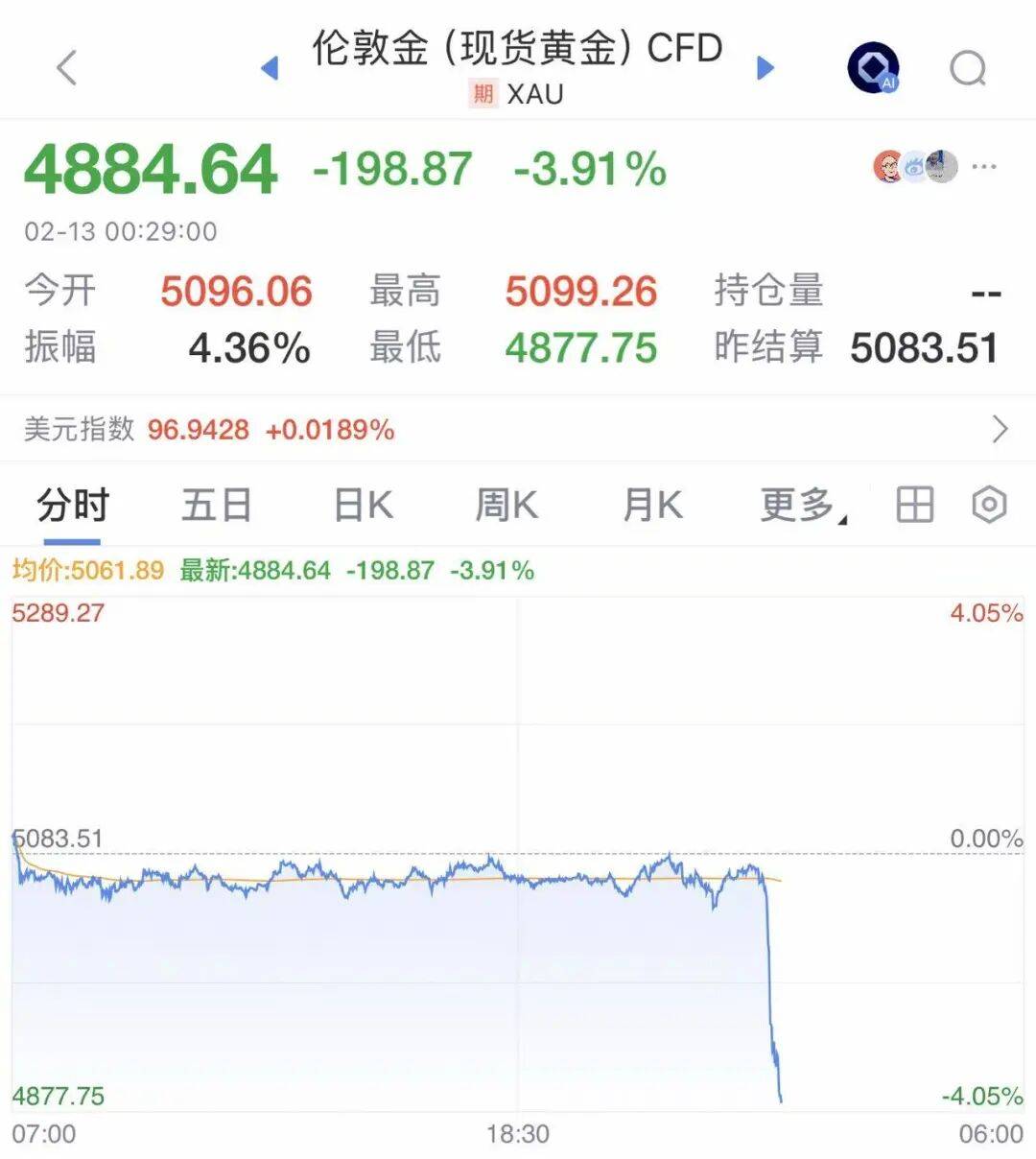
金价银价深夜跳水,白银猛跌超10%
Sou Hu Cai Jing· 2026-02-13 02:22
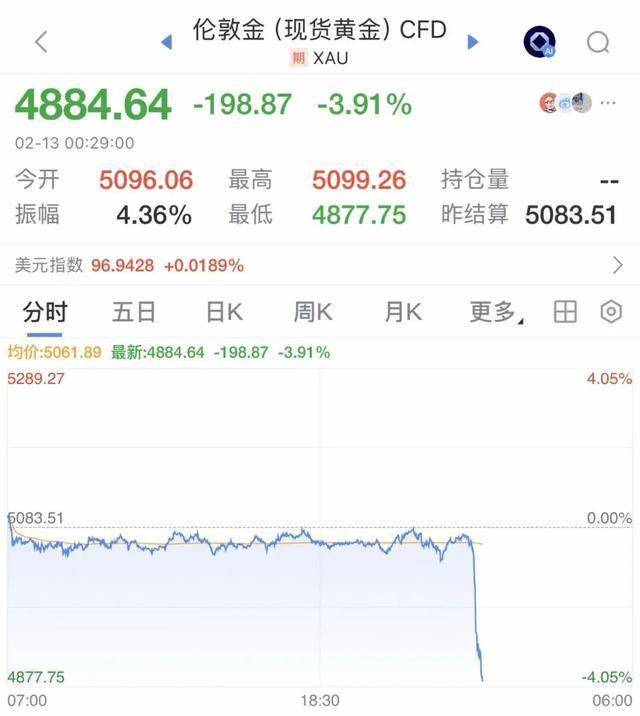
Group 1 - Gold prices experienced a sudden drop, with spot gold falling over 3% and nearly $200 during the day [1] - Silver prices also declined significantly, dropping over 8% [1] Group 2 - U.S. stock indices collectively fell, with the Nasdaq down over 1.5%, the Dow Jones down nearly 1%, and the S&P 500 down 1% [3] - Major tech stocks saw declines, with Apple dropping over 3% and losing more than $120 billion in market value (approximately 82 billion RMB) [5] - Other tech companies such as Microsoft, Amazon, Tesla, Meta, and Nvidia also experienced declines [5] Group 3 - Chinese concept stocks fell sharply, with the Nasdaq Golden Dragon China Index dropping nearly 3% [6]


AMD Just Announced a Huge Turnaround. Is It a Buy?
The Motley Fool· 2026-02-13 02:00
Core Viewpoint - AMD has shown significant stock performance since 2025, with a 60% increase, although it experienced a decline after its Q4 earnings announcement [1][2]. Group 1: Financial Performance - AMD's data center sales are accelerating, with Q4 2025 data center revenue increasing by 39% year-over-year, up from 22% growth in Q3 2025 [4][7]. - In Q4 2025, 52% of AMD's sales came from data center revenue, while 38% came from client and gaming divisions, and 9% from embedded processes [4]. - AMD's overall revenue growth is projected at a 35% compound annual growth rate (CAGR) through 2030, with a 60% CAGR expected in the data center division [8]. Group 2: Market Position and Valuation - AMD's stock was trading at nearly 40 times forward earnings before the sell-off, now reduced to about 31 times [9]. - Compared to Nvidia, which trades at 24 times forward earnings, AMD's valuation was considered high given its growth rate and market share [11]. - Analysts expect AMD to achieve 34% revenue growth in 2026 and 37% in 2027, aligning with the company's overall growth expectations [12]. Group 3: Strategic Outlook - AMD is starting to regain sales to China, which is expected to provide a boost throughout 2026 and beyond [7]. - Despite missing out on the initial stages of the AI boom, AMD is viewed as a worthy alternative investment in the AI space, with potential for impressive growth [13].
深夜突变!金价、银价闪崩
Sou Hu Cai Jing· 2026-02-13 01:53
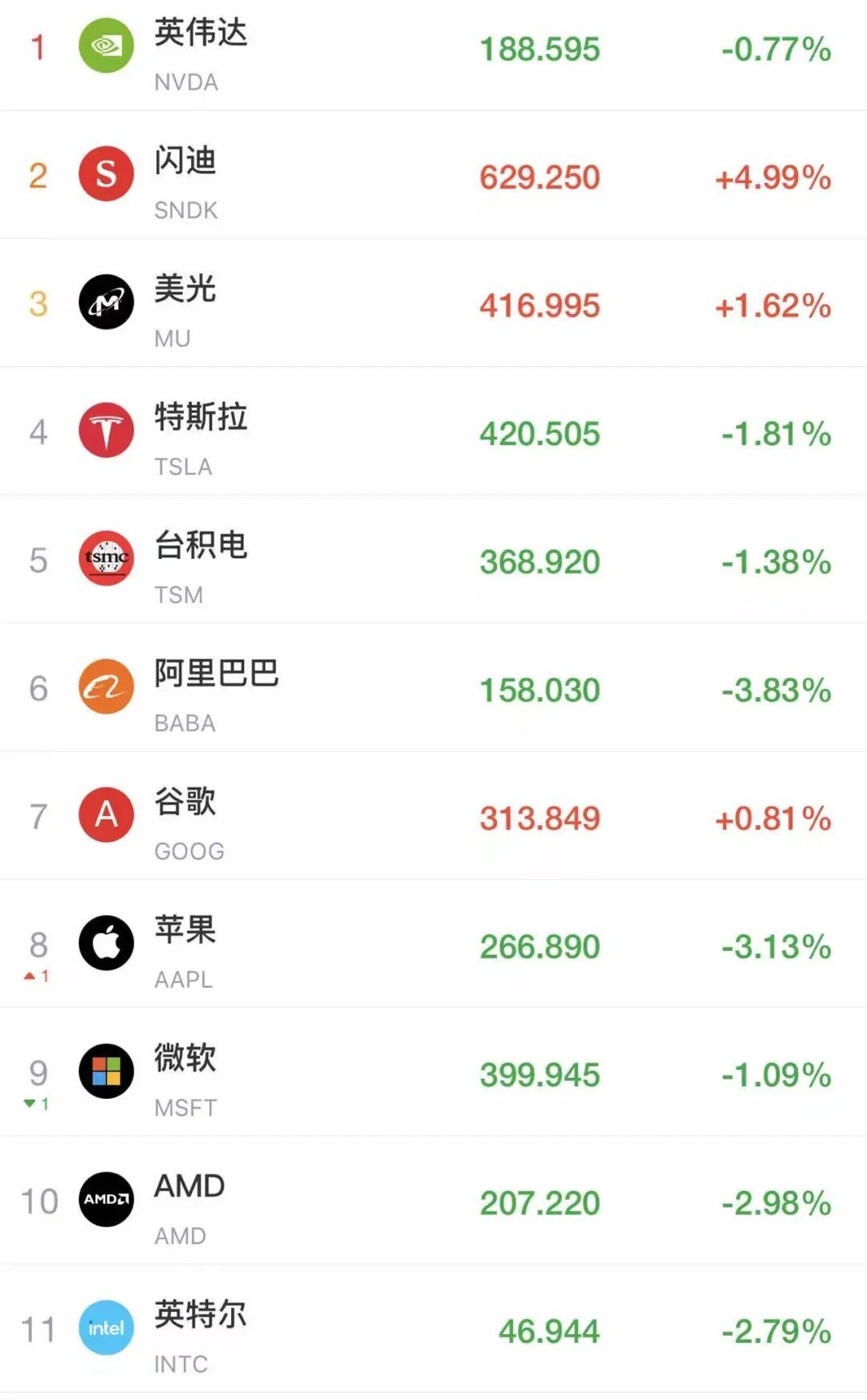
Group 1 - Gold prices experienced a sudden drop, with spot gold falling over 3% and nearly $200 during the day [1] - Silver prices also declined significantly, dropping over 8% [1] Group 2 - Major U.S. stock indices saw a collective plunge, with the Nasdaq down over 1.5%, the Dow Jones down nearly 1%, and the S&P 500 down 1% [2] - Apple shares fell over 3%, resulting in a market capitalization loss of over $120 billion (approximately 82 billion RMB) [2] - Other major tech stocks, including Microsoft, Amazon, Tesla, Meta, and Nvidia, also experienced declines [2] Group 3 - Specific stock movements included Tesla down 1.81%, TSMC down 1.38%, and Alibaba down 3.83% [3] - Google shares increased by 0.81%, while other tech stocks like Microsoft and Intel saw declines of 1.09% and 2.79%, respectively [3]

AMD CPU,市占飙升
半导体行业观察· 2026-02-13 01:09
Core Viewpoint - AMD achieved significant growth in CPU market share across all major segments by the end of 2025, with a record high x86 processor shipment share of 29.2% in Q4, capturing 35.4% of x86 CPU revenue, indicating a strong competitive position against Intel [2][19]. Client CPU - AMD's client CPU market share increased by 3.8% in a single quarter, driven by competitive desktop and mobile CPU product lines, while Intel struggled with supply issues [3][6]. - In Q4 2025, AMD's client CPU market share rose to 29.2%, with a year-over-year increase of 4.6%, reflecting strong sales in desktop and mobile products [6][19]. - Intel maintained a dominant position with 70.8% of client CPU shipments but faced significant declines, reallocating manufacturing capacity to server CPUs [6][19]. Desktop CPU - AMD's desktop CPU market share reached 36.4%, benefiting from strong demand for its Ryzen 9000 series, while Intel's share dropped by 9.5% compared to Q4 2024 [9]. - AMD's desktop CPU revenue share hit 42.6%, indicating robust sales of high-margin processors, while Intel held 57.4% of total revenue due to strong OEM relationships [9]. Mobile CPU - AMD achieved a record market share of 26% in the mobile CPU segment, with a quarter-over-quarter increase of 4.1%, while Intel retained 74% of the market [13]. - AMD's mobile CPU revenue share reached 24.9%, showing significant growth and indicating increased competitiveness in both high-volume and high-margin segments [13]. Server CPU - AMD's server CPU market share increased to 28.8%, with a quarter-over-quarter growth of 1%, as the adoption of EPYC processors accelerated in cloud and AI/HPC deployments [18]. - AMD's server CPU revenue share rose to a record 41.3%, highlighting its success in selling high-priced, high-margin processors, while Intel held 58.7% of total revenue [18]. Summary - AMD's performance in the CPU market in 2025 was characterized by increased shipment volumes and revenue shares across all segments, with a notable x86 processor shipment share of 29.2% and revenue share of 35.4% in Q4 [19]. - The company's success is attributed to a strong product portfolio, while Intel's decline is linked to a lack of competitive products in the high-end market and supply constraints in the low-end market [19].
The Next Semiconductor Winner Might Not Be Nvidia
Yahoo Finance· 2026-02-12 22:25
Core Insights - AMD is experiencing significant growth driven by high demand for its EPYC server processors and AI solutions, with a notable increase in data center revenue and overall company performance [2][9][10]. Group 1: Financial Performance - In Q4, AMD's revenue rose 34% year-over-year (YOY) to $10.3 billion, with diluted earnings increasing 40% YOY to $1.53 per share [2]. - For the full year, AMD's revenue grew 34% to $34.6 billion, with gross margin reaching 52% and EPS rising 26% YOY to $4.17 [9]. - The company expects Q1 2026 revenue of around $9.8 billion, representing roughly 32% YOY growth at the midpoint [10]. Group 2: Data Center and AI Growth - The data center segment became AMD's key growth engine, with Q4 data center revenue climbing 39% YOY to $5.4 billion, driven by strong demand for EPYC processors and MI350 GPU shipments [2][5]. - AMD anticipates data center revenue to grow more than 60% annually over the next three to five years, with AI revenue scaling to tens of billions of dollars annually by 2027 [5][11]. - The company launched over 230 new AMD-powered instances in the quarter, contributing to a 50% increase in overall EPYC cloud instances to nearly 1,600 [1]. Group 3: Product Development and Market Position - AMD is expanding its ROCm ecosystem for better performance across workloads and has a growing interest in its next-generation MI400 series and Helios platform [5]. - The company is developing the MI500 series using advanced technology, aiming for a significant boost in AI performance for next-generation models [6]. - AMD's expanding portfolio positions it as a strong contender against Nvidia in the AI compute stack [12]. Group 4: Analyst Consensus and Stock Outlook - The consensus for AMD stock has shifted to a "Strong Buy," with 31 out of 45 analysts recommending this rating [13]. - Analysts project a potential upside of about 40% over the next 12 months based on an average price target of $288.54, with a high target of $380 implying an 84% increase from current levels [13].
深夜突变!金价闪崩、白银跌超10%,美股全线跳水
Mei Ri Jing Ji Xin Wen· 2026-02-12 22:23
Group 1 - Gold prices experienced a sudden drop, with COMEX gold futures falling by 3.08% to $4941.4 per ounce, while COMEX silver futures decreased by 10.62% to $75.01 per ounce [1] - The U.S. stock market saw a significant decline, with all three major indices dropping over 1% by the end of trading [1] - Apple shares fell more than 3%, resulting in a market capitalization loss of over $120 billion (approximately 82 billion yuan) [1] Group 2 - Major technology stocks, including Microsoft, Amazon, Tesla, Meta, and Nvidia, all experienced declines [1] - Nvidia's stock price decreased by 0.77% to $188.595, while Tesla's stock fell by 1.81% to $420.505 [2] - The Nasdaq Golden Dragon China Index, which tracks Chinese stocks, dropped by 3.00% [3]