American Homes 4 Rent(AMH)

Search documents
The Microeconomics Of American Homes 4 Rent May Be Right For Some Investors
Seeking Alpha· 2026-01-20 14:00
Core Insights - The article discusses the perspective of individual landlords, often referred to as "mom-and-pop" landlords, who invest a portion of their net worth into rental properties, highlighting the dual requirement of capital and time investment for successful property management [1] Group 1 - The author operates a boutique law firm that specializes in investment transactions and disputes, indicating a focus on legal aspects of investment [1] - The goal is to identify potential high-return investments, specifically targeting small- and mid-cap companies through fundamental analysis of their business models, financials, and valuations [1] - The focus areas for investment include early-commercial-stage life sciences companies, insurers, homebuilders, and select consumer-facing businesses, suggesting a diverse investment strategy [1]



Invitation Homes And American Homes 4 Rent Just Got Interesting (NYSE:INVH)
Seeking Alpha· 2026-01-16 22:43
Core Viewpoint - The Single-Family Rental (SFR) REITs have experienced a significant decline due to potential regulatory changes regarding institutional investors' ability to purchase single-family homes, marking a challenging year for the sector [1][54]. Industry Overview - SFR REITs have shown strong fundamentals, with consistent growth in AFFO (Adjusted Funds from Operations) per share [4]. - The sector has historically achieved robust rental rate growth and high occupancy rates, particularly as renting became more economical compared to owning due to rising home prices and mortgage rates [16][19]. - The influx of new supply in 2022 and 2023 has created headwinds for rental rates, leading to increased competition for existing properties [20][23]. Company Analysis - Invitation Homes (INVH) and American Homes 4 Rent (AMH) are now considered to be in value territory after recent price drops, prompting the company to add them to active coverage [3]. - INVH and AMH own over 85,000 and 61,000 homes, respectively, allowing them to leverage scale for improved margins and customer satisfaction [13][14]. - AMH reported a rental operating margin of 55% and INVH at 56% for Q3 2025, showcasing their operational efficiency [14][15]. Valuation Metrics - The market price of SFR REITs has dropped significantly since late 2021, while AFFO has continued to rise, leading to lower trading multiples that align with the REIT index [40][44]. - INVH is trading at 16.0X AFFO and AMH at 17.8X AFFO, indicating a shift from their historically premium valuations [45]. - Both companies are trading at substantial discounts to their net asset values, with INVH at 68.7% and AMH at 75.7% of NAV [52]. Future Outlook - The near-term AFFO growth is expected to be subdued due to the supply wave, but demand remains healthy, suggesting a potential return to organic growth rates post-2025 [36][37]. - The proposed ban on institutional buying of homes could have mixed implications, potentially reducing new supply while benefiting existing properties [56][57].


Invitation Homes And American Homes 4 Rent Just Got Interesting
Seeking Alpha· 2026-01-16 22:43
Core Viewpoint - The Single-Family Rental (SFR) REITs have experienced a significant decline due to potential regulatory changes regarding institutional investors' ability to purchase single-family homes, marking a challenging year for the sector [1][54]. Industry Overview - SFR REITs have shown strong fundamentals, with consistent growth in AFFO (Adjusted Funds from Operations) per share [4][36]. - The sector has historically achieved robust rental rate growth and high occupancy rates, particularly as renting became more economical compared to owning due to rising home prices and mortgage rates [16][19]. Market Dynamics - The SFR market is highly fragmented, with many small operators struggling to compete with larger REITs like Invitation Homes (INVH) and American Homes 4 Rent (AMH), which own over 85,000 and 61,000 homes, respectively [9][13]. - The scale of larger REITs allows for improved margins and customer satisfaction, as they can employ experienced property managers and mechanics [14][19]. Recent Performance - AMH reported rental revenue of $478.5 million and NOI of $263.5 million, achieving a rental operating margin of 55% in Q3 2025 [15]. - INVH reported rental revenue of $666.2 million and NOI of $370.1 million, with a rental operating margin of 56% [15]. Supply and Demand Factors - A surge in new SFR developments in 2022 has created a competitive environment, leading to pressure on rental rates, particularly in markets like Phoenix and Atlanta [20][23]. - Same-store NOI growth for INVH has decreased to about 1% from an average of 4%, while AMH has maintained a ~4% growth rate due to its diversified property locations [29][32]. Valuation Insights - The recent decline in market prices has brought SFR REITs into value territory, with INVH and AMH trading at multiples of 16.0X and 17.8X AFFO, respectively, aligning them with the REIT index [44][45]. - Both companies are trading at significant discounts to their net asset values, with INVH at 68.7% and AMH at 75.7% of NAV [52]. Future Outlook - The near-term AFFO growth is expected to be subdued due to the supply wave, but demand remains healthy, suggesting a potential rebound in organic growth rates post-2025 [37][51]. - The proposed ban on institutional buying could negatively impact external growth but may enhance organic growth by reducing competition from new supply [56][57].

Why Trump's plan to shut out institutional investors could raise housing costs
Fortune· 2026-01-13 09:44
Core Viewpoint - The rising cost of housing in the U.S. has become a significant issue, with home prices increasing over 150% since 2019 and mortgage rates rising from approximately 3.7% to 6.2%, making home ownership unattainable for many Americans, particularly first-time buyers [2][3] Group 1: Housing Affordability Crisis - The affordability crisis is primarily driven by skyrocketing home prices and increasing mortgage rates, which have made home ownership an aspiration for three in four U.S. households [2][3] - President Trump has proposed banning institutional investors from purchasing single-family homes, which he believes are driving up prices and making home ownership less accessible [3][4] - The initiative has garnered bipartisan support, with various political figures acknowledging the negative impact of treating housing as a corporate strategy [3][4] Group 2: Institutional Investors' Role - Critics argue that institutional investors are reducing the inventory of homes available for sale, thereby driving up prices for regular buyers [4][5] - However, experts like Ed Pinto contend that institutional buyers are not the cause of rising prices but rather a symptom of deeper issues, such as restrictive zoning laws and a lack of new construction [5][14] - Institutional investors have historically played a role in stabilizing the housing market during downturns, such as the Great Financial Crisis and the post-pandemic recovery [7][13] Group 3: Market Dynamics and Misconceptions - Data shows that institutional investors account for only 1% of the total single-family housing stock, with small, mom-and-pop businesses dominating the market [9][14] - Recent trends indicate that large institutional investors have been net sellers rather than net buyers, contradicting claims that they are monopolizing the market [10][13] - Pinto's research highlights that there is no correlation between institutional ownership levels and housing price increases in various markets, suggesting that other factors are at play [13][14] Group 4: Potential Consequences of Policy Changes - Banning institutional investors from acquiring homes could have unintended negative consequences, such as reducing the availability of rental options for low-income families and hindering the repair and renovation of distressed properties [15] - The absence of institutional investors during economic downturns could exacerbate housing market volatility and limit options for aspiring homebuyers [15]

American Homes 4 Rent (NYSE:AMH) Downgraded by BMO Capital
Financial Modeling Prep· 2026-01-09 16:00
Core Viewpoint - American Homes 4 Rent (NYSE:AMH) is a significant player in the residential real estate investment trust (REIT) sector, focusing on single-family rental homes across the United States, catering to families seeking flexible living options [1] Group 1: Stock Performance and Ratings - On January 9, 2026, BMO Capital downgraded AMH to a "Market Perform" rating, with the stock priced at $31.63, indicating a neutral outlook [2] - Despite the downgrade, AMH's stock price has seen a slight increase of 2%, or $0.62, reflecting some investor confidence [2][5] - AMH's stock has shown volatility, with a daily range between $30.40 and $32.04, and over the past year, it has fluctuated from a low of $28.85 to a high of $39.49 [3] Group 2: Market Capitalization and Trading Volume - AMH's market capitalization stands at approximately $11.72 billion, with a trading volume of 7,084,921 shares on the NYSE, reflecting its significant presence in the residential REIT sector [4][5] - AMH's Zacks Rank of 3 (Hold) suggests a stable but less optimistic earnings outlook compared to competitors like Safehold, which holds a Zacks Rank of 2 (Buy) [3][4]

Wall Street Isn't The Housing Problem
Seeking Alpha· 2026-01-09 14:00
Core Viewpoint - The article discusses the investment landscape in the real estate sector, highlighting the performance and potential of various real estate investment trusts (REITs) and related securities. Group 1: Company Insights - Hoya Capital Research & Index Innovations is affiliated with Hoya Capital Real Estate, which provides investment advisory services focused on publicly traded securities in the real estate industry [2]. - The commentary provided by Hoya Capital is intended for informational and educational purposes, emphasizing that it does not constitute investment advice [2]. Group 2: Market Commentary - The article notes that past performance of investments is not indicative of future results, and it stresses the importance of consulting with investment, tax, or legal advisers before making investment decisions [3]. - It highlights that investments in real estate companies and housing industry firms carry unique risks, which should be considered by potential investors [2].

This GE Vernova Analyst Is No Longer Bullish; Here Are Top 4 Downgrades For Friday - American Homes 4 Rent (NYSE:AMH), Equity Residential (NYSE:EQR)
Benzinga· 2026-01-09 12:28
Group 1 - Top Wall Street analysts have changed their outlook on several key stocks, indicating a shift in market sentiment [1] - The article suggests that investors consider buying GEV stock based on analysts' opinions [1]

Trump calls to ban Wall Street from buying homes, but industry insiders say the business model has already moved on
Business Insider· 2026-01-09 10:54
Core Viewpoint - Trump's proposal to ban large institutional investors from purchasing single-family homes has raised concerns and skepticism within the real estate investment industry, with some industry leaders not overly worried about its potential impact [1][2]. Group 1: Industry Reactions - Todd Henderson, head of real estate for the Americas at DWS, believes that Trump's proposal may eventually exclude institutional buyers who focus on newly built homes, which are crucial to the single-family rental (SFR) market [2]. - Shares of major SFR companies, including Invitation Homes and American Homes 4 Rent, fell by approximately 7% and 9% respectively following Trump's announcement [4]. - Blackstone Real Estate Income Trust, which holds about $11 billion in SFR investments, also experienced a decline in share prices, but analysts suggest that the market reaction may be excessive and could present a buying opportunity [5]. Group 2: Market Dynamics - The SFR industry has shifted its business model away from competing with individual homebuyers, focusing instead on acquiring homes directly from builders [3]. - Investors currently own a small percentage of the total single-family homes in the U.S., with those owning 10 or more units holding about 3.4% and larger investors with at least 1,000 units controlling just 0.73% of the inventory [8]. - The SFR industry emphasizes its role in supporting renters and facilitating pathways to homeownership, indicating a commitment to the housing market [9]. Group 3: Legislative Uncertainty - Trump's call for congressional action to formalize the SFR ban introduces complexity and uncertainty, with reports suggesting that proposed legislation may not progress quickly [6][7]. - Henderson anticipates that any new rules would likely exempt builders and buyers of new SFR homes, allowing major investors to continue selling existing portfolios without significant changes to the industry [7].
5 ways Trump’s proposed institutional single-family homebuying ban could affect the housing market
Fastcompany· 2026-01-08 19:15
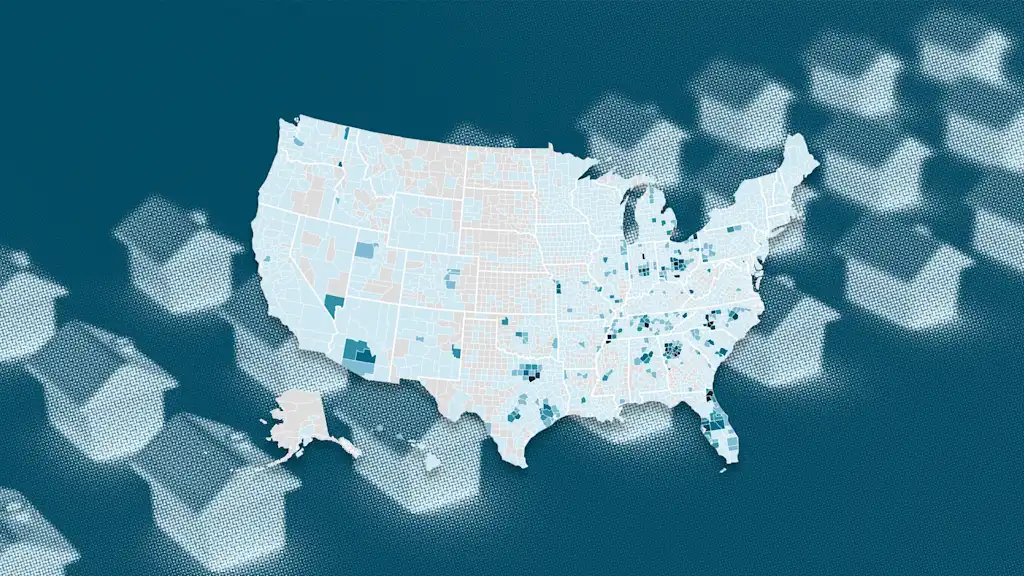
Core Viewpoint - President Trump's announcement to ban large institutional investors from purchasing single-family homes has sparked discussions about its potential implications and feasibility [2] Group 1: Institutional Investor Impact - Large institutional investors, defined as those owning at least 100 single-family homes, currently hold about 1% of the total single-family housing stock in the U.S. [3] - Certain regional markets, particularly in the Sun Belt, have a higher concentration of institutional ownership, which could lead to significant effects if a ban is enacted [6][4] - The institutional presence in markets like Phoenix and Atlanta has established a robust ecosystem for single-family rentals, making it easier for these firms to operate [5] Group 2: Home Prices and Market Dynamics - A forced sell-off of institutional holdings could lead to increased downward pressure on home prices in specific neighborhoods already experiencing corrections [7] - Institutional buying has decreased significantly since the Pandemic Housing Boom, dropping from 3.1% of home purchases in Q2 2022 to around 1% currently [10][11] - If a ban were to be enacted, it would reduce housing demand that currently accounts for about 1% of total U.S. homebuying activity [9] Group 3: Homebuilding and Development - The proposed ban could negatively impact U.S. homebuilding, especially if it includes restrictions on build-to-rent developments, which currently represent about 8% of total U.S. single-family housing starts [14][12] - Institutional landlords have shifted focus from purchasing existing homes to building new single-family rentals, with a significant portion of acquisitions coming from in-house homebuilding units [16] - The current rate of new single-family home completions is about 1 million annually, which is still below historical averages, indicating a supply issue rather than a demand problem [17] Group 4: Tenant Implications - Most institutionally owned homes are currently occupied, and a forced sell-off could displace thousands of tenants who may not be able to afford to buy their homes [18] - A significant percentage of tenants in institutional rentals, approximately 85%, would not qualify to purchase the homes they currently occupy [19] - The assertion that institutional ownership is the primary cause of housing unaffordability is challenged, with arguments suggesting that policy failures are the root cause of the housing crisis [19]
Trump Administration Plans to Prohibit Institutional Investors from Owning Single-Family Real Estate Properties
Crowdfund Insider· 2026-01-08 18:57
Core Viewpoint - The proposal by President Trump to restrict large institutional investors from purchasing single-family homes aims to improve housing affordability for individual Americans, particularly younger families [1][2]. Group 1: Proposal Details - The initiative seeks to bar major institutional investors, such as private equity firms, from acquiring additional single-family homes, which have been linked to rising property prices and rents [2][3]. - Trump plans to push for immediate action on this proposal and will discuss it further at the World Economic Forum in Davos [2]. Group 2: Market Reaction - The announcement led to a significant backlash in the stock market, with shares of firms involved in single-family rentals experiencing sharp declines [3]. - Blackstone's stock fell by as much as 9.3% intraday, closing down around 5-6%, while Invitation Homes saw a drop of up to 10%, ending approximately 6% lower [4]. Group 3: Industry Impact - Other related stocks, including American Homes 4 Rent and various homebuilders, also faced steep declines, indicating investor concerns over potential disruptions in the rental housing sector [5]. - Although institutional investors own only about 3-4% of single-family rental properties nationwide, their impact is more significant in certain markets, particularly in the Sun Belt [5]. Group 4: Expert Opinions - Some experts suggest that the overall impact on housing prices may be limited, as smaller investors might fill the gap left by institutional buyers, and broader issues like low housing supply remain unaddressed [6]. - The proposal aligns with criticisms from housing advocates and some bipartisan lawmakers who have previously suggested similar restrictions [6].