BHP(BHP)

Search documents
Wheaton Precious Metals Announces Acquisition of Additional Silver Stream on Antamina Through New Partnership with BHP
Prnewswire· 2026-02-16 21:40
Core Viewpoint - Wheaton Precious Metals Corp. has announced the acquisition of an additional silver stream from the Antamina Mine in Peru through a partnership with BHP, increasing its silver production significantly and enhancing its cash flow profile [1][2]. Transaction Overview - Wheaton's subsidiary, Wheaton Precious Metals International Ltd., has entered into a Precious Metals Purchase Agreement with BHP for their 33.75% share of silver production at Antamina, raising Wheaton's total silver stream to 67.5% [1]. - The acquisition is expected to add approximately 6.0 million ounces (Moz) of silver production per year for the first five years and 5.4 Moz per year for the first ten years [1]. - Total attributable silver production from Antamina is projected to average 12.0 Moz per year over the first five years and 10.8 Moz per year over the first ten years [1]. Financial Impact - The upfront payment for the acquisition is $4.3 billion, which represents only 6.5% of Wheaton's total market capitalization, indicating strong strategic fit and accretion potential [1]. - The transaction is expected to increase Wheaton's 2026 production by 11.3% on a pro forma basis [1]. - Wheaton anticipates generating over $3.2 billion in cash flows in 2026 and more than $10 billion through 2028, providing ample capacity to manage new debt and fund growth opportunities [2]. Asset and Production Profile - With the addition of Antamina, approximately 76% of Wheaton's 2026 production is forecasted to come from mines in the first quartile of their respective cost curves, enhancing overall portfolio diversification [1]. - Antamina is recognized as one of the lowest-cost copper mines globally and is a significant contributor to Peru's economy, accounting for approximately 2.9% of the country's GDP in 2024 [1][2]. Financing Structure - The acquisition will be financed through a combination of existing liquidity, including approximately $1.9 billion in cash on hand, a new $1.5 billion term loan, and a draw on the existing $2 billion revolving credit facility [1][2]. - The term loan is structured to be flexible and non-dilutive, allowing for repayment without penalty [1]. Strategic Importance - The partnership with BHP underscores the growing importance of streaming agreements in the mining sector, as major companies seek to unlock value from silver production [1]. - The acquisition is viewed as a transformative opportunity for Wheaton, reinforcing its position as one of the largest silver producers globally and enhancing its growth profile in the mining industry [1].




BHP(BHP) - 2026 H1 - Earnings Call Presentation
2026-02-16 21:00
Stability + Growth = Value Half year ended 31 December 2025 For personal use only Escondida Disclaimer The information in this presentation is current as at 17 February 2026. It is in summary form and is not necessarily complete. It should be read together with the BHP Results for the half year ended 31 December 2025. Forward-looking statements This presentation contains forward-looking statements, which involve risks and uncertainties. Forward-looking statements include all statements other than statements ...
春节周重磅前瞻:美联储最爱通胀指标,DeepSeek V4或发布
Hua Er Jie Jian Wen· 2026-02-15 03:04
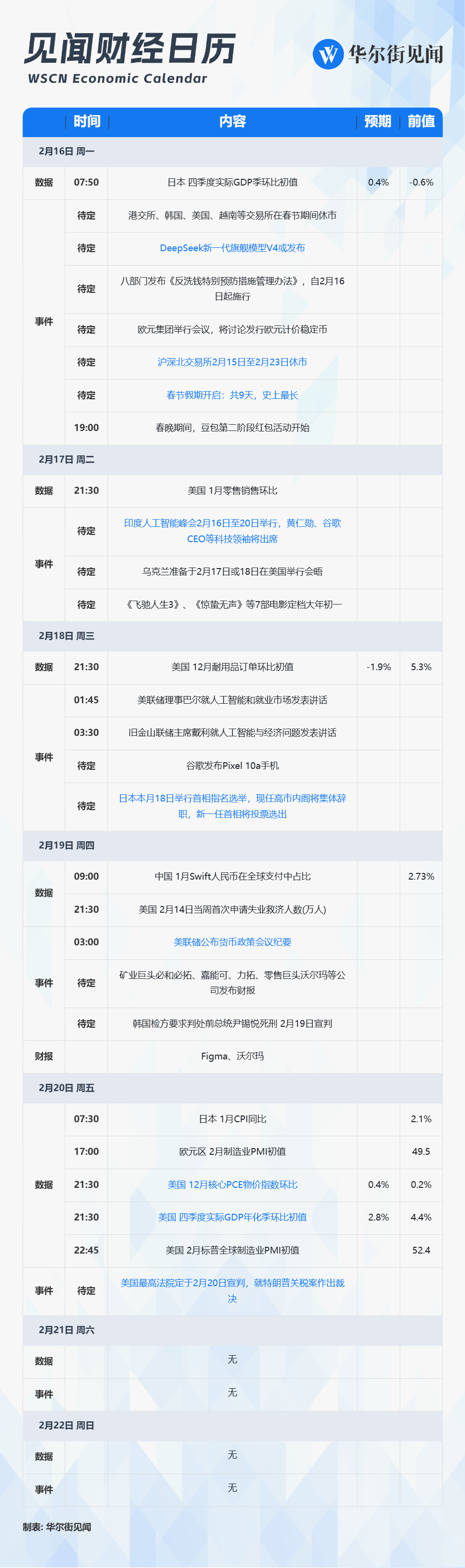
Group 1 - The core theme of the news revolves around the significant developments in the AI industry during the Spring Festival, including the anticipated release of flagship models and the first-ever AI summit in India featuring prominent tech leaders [4][6][8] - The macroeconomic landscape is highlighted by the upcoming release of key data such as the December PCE inflation and Q4 GDP, which are crucial for understanding the Federal Reserve's stance on interest rates and inflation risks [5][4] - The longest Spring Festival holiday in history, lasting nine days, is set to impact market activities, with various exchanges, including the Shanghai and Hong Kong stock exchanges, closing during this period [4][9] Group 2 - The DeepSeek V4 model is expected to be launched in mid-February, showcasing improvements in programming capabilities, potentially surpassing other leading models in the market [8][6] - The Indian AI summit from February 14 to 20 will feature key figures such as NVIDIA's CEO Jensen Huang and Google's CEO Sundar Pichai, indicating a strong focus on AI advancements [8][4] - The U.S. Supreme Court is scheduled to make a ruling on the Trump tariffs on February 20, which could have significant implications for trade policies and the economy [5][4]





Is BHP making wild accusations about “wild accusations”?
Michael West· 2026-02-14 21:26
Core Viewpoint - The legal battle between coal miner Simon Turner and BHP highlights significant disparities in resources, with Turner lacking legal representation and facing challenges in accessing court documents related to his wage theft allegations against BHP, which involve claims of over $2 billion in wage theft. Group 1: Legal Proceedings - Simon Turner is engaged in a court case against BHP, which has accused him of making "wild allegations" without specifying what those allegations are [1][4]. - The court proceedings have been heavily influenced by BHP's successful confidentiality orders, which suppress Turner's evidence [2]. - Turner faces financial barriers in accessing public court transcripts, which cost $1,952.53, making it difficult for him to obtain information about his own case [3][10]. Group 2: Allegations and Accusations - BHP's legal representatives, Minter Ellison, have claimed that Turner's allegations are "wild," but have not disclosed the specifics of these claims [5][6]. - There is a historical context where BHP and Chandler Macleod previously identified Ready Work Force as Turner's employer, but they have since shifted their stance, arguing that the enforceability of a deed is more important than the identity of the employer [13][15]. - A previous court ruling in 2017 established that Chandler Macleod was Turner's employer, contradicting BHP's current claims [14]. Group 3: Financial Implications - The costs associated with accessing court documents are seen as prohibitive not only for Turner but also for journalists and the public, raising concerns about transparency in the legal process [3][12]. - VIQ Solutions Australia, a foreign venture capital company, stands to profit from the fees charged for accessing public court information, highlighting potential issues within the justice system [11].

四大矿商的铜资源争夺战升级
Xin Lang Cai Jing· 2026-02-14 00:09
Core Viewpoint - Copper is becoming a critical resource for mining companies, especially in the fields of artificial intelligence, power grids, and renewable energy, leading to increased competition among major mining firms for strategic positioning in copper production [1]. Group 1: Major Mining Companies' Performance - BHP, the world's largest copper mining company, reported a copper production of 2.014 million tons in 2025, a year-on-year increase of approximately 2.9%. The company has raised its copper production guidance for the 2026 fiscal year to a range of 1.9 million to 2 million tons [2]. - Vale achieved a copper production of 382,400 tons in 2025, marking a 9.8% year-on-year increase, the highest level since 2018. The fourth quarter of 2025 saw a production of 108,100 tons, a 6% increase, attributed to strong performance from its Salobo and Sossego operations [5][6]. - Rio Tinto's copper production reached 883,000 tons in 2025, an 11% increase year-on-year, exceeding its guidance of 860,000 to 875,000 tons [7]. Group 2: Strategic Investments and Future Plans - BHP is making a strategic investment in the Vicuña project in Argentina, with plans to invest up to $800 million in two significant copper mining projects, which are expected to be among the most important copper development projects in history [5]. - Vale aims to become a copper producer with an annual output of 1 million tons, with plans to double its copper production to around 700,000 tons by 2035 [7]. - Fortescue is actively pursuing copper production, having signed a binding agreement to acquire a 64% stake in Alta Copper, which aligns with its strategic focus on key minerals [8]. Group 3: Market Trends and Price Projections - Since 2025, copper prices have shown a strong upward trend, with the London Metal Exchange (LME) copper price surpassing $14,500 per ton, reaching a historical high [9]. - Goldman Sachs predicts that copper prices will stabilize in 2026, with an average price of $11,400 per ton, while also noting a potential decrease in inventory levels outside the U.S. by approximately 450,000 tons [9]. - S&P forecasts that global copper demand will increase by 50% from 28 million tons at the end of 2025 to 42 million tons by 2040, while supply is expected to lag, potentially leading to a 10 million ton shortfall by 2040 [10].

BATT Charges Ahead as Storage Steals the Spotlight
Etftrends· 2026-02-13 21:39
Core Viewpoint - The Amplify Lithium & Battery Technology ETF (BATT) has outperformed other ETFs in the lithium and battery sector, driven by a diversified approach that captures broader industrial trends and demand for battery energy storage systems (BESS) [1] Performance Comparison - As of February 13, 2026, BATT has increased by 14.5% year-to-date, outperforming the Global X Lithium & Battery Tech ETF (LIT) which is up 10.94%, and other mining-focused ETFs like iShares Lithium Miners and Producers ETF (ILIT) at 9.7%, Sprott Lithium Miners ETF (LITP) at 4.65%, and Themes Lithium & Battery Metal Miners ETF (LIMI) at 3.77% [1] Reasons for BATT's Outperformance - BATT's total ecosystem approach includes exposure across the battery value chain, from diversified miners to cell manufacturers and grid storage leaders, unlike LIT which is heavily concentrated in lithium mining and refining [1] - Significant weights in copper and nickel have contributed to BATT's performance, with copper prices reaching new highs due to AI-driven grid modernization [1] - The launch of Project Vault, a $12 billion U.S. strategic mineral reserve, has provided a valuation floor for the sector, acting as a buyer of last resort for battery metals [1] - The demand for BESS has surged, driven by the growth of AI data centers, with companies in BATT's portfolio reporting record shipments for stationary storage [1] Key Holdings Contributing to BATT's Performance - BHP Group Ltd. (BHP) - 7.62% weight, benefiting from rising nickel prices and steady copper demand [1] - Contemporary Amperex Technology (CATL) - 5.71% weight, dominating the lithium iron phosphate market for utility-scale storage [1] - Freeport-McMoRan Inc. (FCX) - 5.24% weight, a primary copper producer benefiting from AI-driven grid upgrades [1] - Tesla, Inc. (TSLA) - 4.77% weight, with its Megapack business contributing significantly to margins [1] - BYD Co. Ltd. (BYD) - 4.17% weight, maintaining high margins through vertical integration [1] Key Themes to Watch - The stationary storage market is emerging as a major performance driver, with a shift towards grid-scale batteries providing a growth narrative alongside the competitive EV market [1] - Diversified mining is proving to be a safer investment compared to pure-play lithium, allowing BATT to achieve double-digit gains amid lithium price volatility [1] - The impact of U.S. industrial policy, particularly Project Vault and tax rebate adjustments in China, is front-loading global demand and intensifying the battery arms race [1]





必和必拓股东回报计划与战略项目进展引关注
Jing Ji Guan Cha Wang· 2026-02-12 16:24
Core Viewpoint - The future events worth monitoring for BHP's stock include shareholder return plans, strategic project progress, and industry dynamics [1] Group 1: Performance and Operational Situation - The company has announced a shareholder return plan for the fiscal year 2026, which includes a cash dividend of $190 million (to be paid in two installments, with the second expected to be completed by June 2026) and a stock buyback of $300 million (to be executed within the next 12 months) [2] - The company commits to maintaining a dividend payout ratio of no less than 65% of net profit annually from 2025 to 2027 [2] Group 2: Project Advancement - In terms of capital expenditure, BHP plans to invest approximately $11 billion annually over the next two fiscal years, with a focus on advancing the Jansen potash project in Canada, which is expected to commence production by mid-2027 [3] Group 3: Industry and Risk Analysis - BHP is closely monitoring the merger negotiations between Rio Tinto and Glencore, which could impact the competitive landscape of the industry [4]
Is BHP's Cheap Valuation Reason Enough to Bet on the Stock?
ZACKS· 2026-02-11 16:15
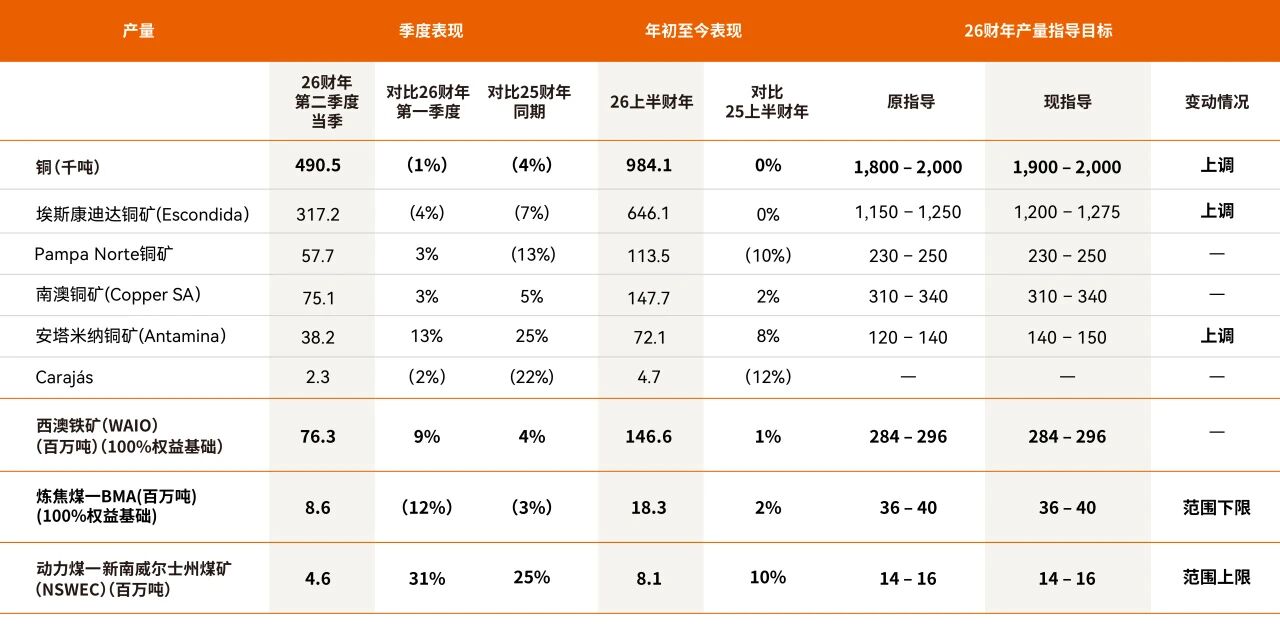
Core Viewpoint - BHP Group Limited is currently trading at a forward price-to-earnings multiple of 15.38X, which is below the industry average of 16.31X, indicating a potential investment opportunity [1]. Valuation and Performance - BHP's stock is trading at a premium compared to Rio Tinto Group and Vale S.A, which have price-to-earnings multiples of 12.84X and 7.92X, respectively [3]. - BHP shares have increased by 28.4% over the past six months, outperforming the industry's growth of 23.4% [3]. - The Basic Materials Sector and S&P 500 have seen gains of 21.0% and 2.4%, respectively, during the same period [3]. Production and Operational Strength - BHP produced 133.8 million tons (Mt) of iron ore in the first half of fiscal 2026, marking a 2% year-over-year increase [7]. - The Western Australia Iron Ore (WAIO) segment achieved record output of 129.8 Mt [7]. - For fiscal 2026, BHP anticipates iron ore production between 258-269 Mt, with WAIO contributing 251-262 Mt [10]. - Medium-term projections suggest WAIO production could exceed 305 Mt annually, supported by expanded rail operations [11]. Strategic Focus on Commodities - BHP is reallocating nearly 70% of its capital expenditure towards copper and potash, positioning itself to benefit from trends such as decarbonization and urbanization [12]. - Copper production reached 984,000 tons (kt) in the first half of fiscal 2026, with a target of 1,900-2,000 kt for the full fiscal year [13]. - The Jansen Stage 1 potash project is 75% complete and expected to produce 4.35 million tons annually once operational by mid-2027 [14][15]. Financial Health and Cash Flow - BHP has generated over $15 billion in net operating cash flow from fiscal 2010 to fiscal 2025, allowing for significant debt reduction [16]. - The company’s net debt stood at $12.9 billion at the end of fiscal 2025, within its target range [16]. - Capital and exploration spending is budgeted at $11 billion for fiscal 2026 and 2027 [16]. Earnings Estimates and Market Trends - The Zacks Consensus Estimate for BHP's fiscal 2026 earnings is $4.68 per share, reflecting a year-over-year growth of 28.6% [17]. - Iron ore prices are currently around $101 per ton, supported by strong demand and supply constraints in China [19]. - Copper futures have increased by 26% over the past year, currently priced at approximately $5.90 per pound, driven by high demand [20]. Dividend and Returns - BHP's current dividend yield is 3.28%, significantly higher than the industry average of 2.03% and the S&P 500's 1.06% [21]. - The company's return on equity stands at 17.7%, well above the industry average of 1.25% [21]. Overall Outlook - BHP combines strong iron ore operations with increasing exposure to copper and potash, supported by a favorable commodity price environment and rising earnings estimates [22]. - The company is positioned for growth with an industry-leading dividend yield and improving profitability, currently holding a Zacks Rank 1 (Strong Buy) [23].
广发期货:2025年四大矿山铁矿石产销表现分化
Qi Huo Ri Bao· 2026-02-10 00:48
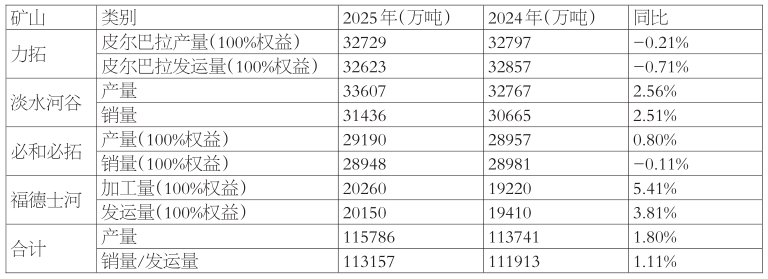
Core Viewpoint - The iron ore market in 2025 is characterized by a gradual easing of fundamentals and a deep adjustment in the supply structure, with significant differentiation in the performance of the four major mining companies [1] Group 1: Overall Market Performance - The total iron ore production of the four major mining companies in 2025 is projected to be 1.158 billion tons, an increase of 1.80% year-on-year, while total sales are expected to reach 1.133 billion tons, up 1.11% year-on-year [12] - Key events such as Australian cyclone disasters, the commissioning of the Guinea Simandou project, and negotiations over iron ore prices have significantly impacted the short-term supply adjustments and long-term capacity planning of these companies [1] Group 2: Rio Tinto Performance - In 2025, Rio Tinto's iron ore production and sales both declined, with Pilbara production at 327 million tons, down 0.21%, and sales at 326 million tons, down 0.71% [2] - The decline in production and sales was primarily due to extreme weather conditions in Western Australia during the first quarter, which led to significant disruptions [2][3] - Despite the challenges, production rebounded in subsequent quarters, with a record high of 896.7 million tons in the fourth quarter, reflecting strong operational health and favorable weather conditions [3][4] Group 3: Vale Performance - Vale's iron ore production in 2025 reached 336 million tons, a year-on-year increase of 2.56%, while sales were 314 million tons, up 2.51% [6] - The first quarter saw a significant drop in production due to various operational challenges, but production rebounded in the second quarter, driven by strong output from the Brucutu plant and record production from the S11D mine [7] - Vale has optimized its product mix to prioritize medium-grade products, while reducing sales of pelletized iron ore, aligning with market demand [8] Group 4: BHP Performance - BHP's iron ore production increased by 0.80% to 292 million tons in 2025, while sales slightly decreased by 0.11% to 289 million tons [9] - The company achieved record production and sales in the first half of the 2026 fiscal year, driven by improved supply chain efficiency and operational performance [9][10] - BHP is currently negotiating annual contract terms with China Mineral Resources Group, which significantly impacts its sales strategy, as China accounts for over 60% of its iron ore sales [11] Group 5: Fortescue Performance - Fortescue's iron ore production in 2025 was 203 million tons, a year-on-year increase of 5.41%, with sales reaching 202 million tons, up 3.81% [13] - The company attributed its strong performance to effective weather management and ongoing operational efficiency improvements [13] - Fortescue is actively exploring new iron ore resources and projects, including the Belinga iron ore project in Gabon, which is expected to have a production capacity of 30 million tons per year [15] Group 6: Future Outlook - The four major mining companies have raised their annual performance guidance for 2026, expecting continued steady growth in iron ore production and sales [16] - The supply landscape is expected to become more relaxed with the gradual release of capacities from new projects, while demand from China's steel sector is projected to decline [16][17] - The industry is undergoing significant structural adjustments, with companies diversifying their resource portfolios and optimizing product mixes to adapt to changing market dynamics [17]