BIDU(BIDU)

Search documents
“问豆包认孙子” AI春晚秀出新高潮 大厂打响新年跑“马”圈地第一战
智通财经网· 2026-02-16 23:41
Core Viewpoint - The 2026 Spring Festival Gala showcased significant AI marketing efforts from major tech companies, highlighting the integration of AI into entertainment and user interaction, with a focus on enhancing audience engagement through innovative technologies [1][3][10]. Group 1: AI Integration in Spring Festival Gala - The gala featured AI elements prominently, with the "Doubao" application playing a central role in various performances and interactions, demonstrating the capabilities of AI in enhancing live events [1][3]. - Doubao's technology supported multiple aspects of the gala, including stage art creation, intelligent robot interactions, and real-time audience engagement through features like live subtitles [3][5][10]. - The gala's use of AI technologies, such as the Seedance 2.0 model, allowed for high-quality visual presentations and complex artistic expressions, showcasing the potential of generative AI in creative fields [4][5]. Group 2: Major Tech Companies' Marketing Strategies - Major companies like ByteDance, Tencent, Alibaba, Baidu, Meituan, and JD.com engaged in extensive marketing campaigns during the Spring Festival, utilizing AI to enhance user experiences and drive engagement [1][6][10]. - Tencent initiated a significant marketing campaign with a 1 billion yuan red envelope giveaway, aiming to replicate the success of previous promotional strategies [6][10]. - Alibaba's "one sentence to order milk tea" campaign achieved rapid success, reflecting the effectiveness of AI in facilitating consumer transactions during the festive season [7][10]. Group 3: Future of AI Applications - The competition among tech giants in the AI space is expected to accelerate, with a focus on applications that deliver clear business value and enhance user experiences [10][11]. - Companies are exploring long-term value in their marketing strategies, aiming to integrate AI into daily life and consumer habits [10][11]. - The ongoing AI flow battle is seen as a critical first step in establishing a competitive landscape for AI applications leading up to 2026 [11].




互联网巨头AI超级入口的第一战场
Sou Hu Cai Jing· 2026-02-16 20:06
Core Viewpoint - The article discusses the intense competition among major internet companies during the Spring Festival, particularly focusing on the rise of AI applications and the strategic battles for user engagement and market share in the AI sector [3][4][37]. Group 1: AI Competition Landscape - The Spring Festival has become a battleground for internet giants to compete for traffic, with significant events like the 2015 payment war and the 2020 short video competition [3][4]. - In 2025, a new player, DeepSeek, emerged, surpassing existing applications in daily active users, indicating a shift in the AI market landscape [4]. - By 2026, the competition intensified, with major companies preparing extensively for the Spring Festival, marking it as a critical moment for AI applications [4][5]. Group 2: Model Updates and Innovations - Major companies like Baidu, Alibaba, and ByteDance have updated their AI models recently, with Baidu's Wenxin 5.0 featuring 2.4 trillion parameters and advanced multi-modal capabilities [6][8]. - Alibaba's Qwen3-Max-Thinking model, with over a trillion parameters and 36 trillion tokens of pre-training data, enhances its tool-calling capabilities [8][10]. - ByteDance launched several models, including Seedance 2.0 and Seedream 5.0 Lite, which significantly improved video and image generation capabilities [10][14][15]. Group 3: AI Super Entry Points - Companies are focusing on creating AI super entry points that integrate their core business models, such as Baidu's AI+search and Alibaba's AI+e-commerce [21][25]. - Alibaba's launch of the Qwen APP aims to enhance the e-commerce experience by integrating various services into a single platform [25][28]. - Tencent's Yuanbao group chat feature incorporates AI to enhance user interaction and engagement, including a cash red envelope feature during the Spring Festival [30][32]. Group 4: Cash Incentives and User Engagement - Major companies are investing heavily in cash incentives to attract users, with Tencent announcing a 1 billion yuan cash giveaway and Baidu offering 500 million yuan in red envelopes [35][37]. - The competition for user attention and brand recognition is driving these cash distribution strategies, as companies aim to establish their AI super entry points [37].


2025盐城推广代运营评测:效果与品牌如何兼得?
Sou Hu Cai Jing· 2026-02-16 18:38
智能匹配:降低"摸不准"的获客成本 传统广告投放常因目标人群不精准导致预算浪费。高级匹配功能通过图片智能识别与用户意图分析,确保广告内容与搜索需求高度相关。例如,当用户搜 索"盐城网络工程服务"时,系统会自动匹配企业提供的建站、运维等具体服务图片,显著提升点击率和转化率。这种基于百度AI技术的智能投放,使广告费 用更集中于真正有意向的客户群体。 线索转化:从"看到"到"联系"的无缝衔接 线索通功能将营销闭环完善到最后一公里。在搜索结果页面直接展示联系电话、预约表单等转化组件,减少了用户跳转流失的风险。据第三方测评,集成线 索通的落地页转化率平均提升40%,特别适合盐城地区需要直接获客的服务型企业。这种设计直击"客户找不到"的痛点,将流量高效转化为销售机会。 精准曝光:破解企业"看不见"的线上困局 线上存在感弱是盐城本地企业面临的普遍痛点。当潜在客户在百度搜索相关服务时,如果无法找到企业信息或品牌展示不显眼,就意味着错失商机。通过标 准推广在搜索结果多个显著位置获得展示,结合百度地图会员营销实现本地精准曝光,能够快速解决"搜索不到"的问题。2024年百度营销数据显示,合理设 置关键词的企业获得首屏展示的概率提升 ...

Analysts Raise Price Targets on Baidu (BIDU)
Yahoo Finance· 2026-02-16 12:41
Group 1 - Baidu, Inc. (NASDAQ:BIDU) is recognized as one of the 15 AI stocks experiencing significant growth, with Tiger Securities raising its price target from $135 to $150 while maintaining a Buy rating [1][5] - The company has confidentially filed for an initial public offering (IPO) for its AI chip unit, Kunlunxin, in Hong Kong, where Baidu currently holds approximately 59-60% ownership and intends to retain majority control post-IPO [2] - Baidu Cloud is positioned to benefit from the rapid adoption of AI in China, and the company's robotaxi business may see increased valuation as investor focus shifts from AI infrastructure to downstream applications [4][5] Group 2 - Despite some caution regarding Baidu's short-term revenue and earnings growth, the stock is increasingly driven by its long-term AI potential, with several catalysts anticipated in the robotaxi and AI cloud sectors [5] - Barclays also raised its price target on Baidu from $100 to $147, maintaining an Equal Weight rating on the stock [5] - Baidu specializes in internet services and AI, offering a comprehensive AI stack that includes cloud infrastructure, the PaddlePaddle deep learning framework, ERNIE foundation models, and various applications [6]
30亿元砸向春晚,AI巨头在抢什么?
Mei Ri Jing Ji Xin Wen· 2026-02-16 12:07
Core Insights - The 2026 Spring Festival Gala has become a battleground for AI companies, with significant investments from major players like Alibaba, ByteDance, Tencent, and Baidu [1][3][9] - Traditional brands are being challenged as AI companies leverage the high viewership of the gala to promote their services, aiming to integrate AI into everyday life [6][8] Group 1: AI Companies' Investments - Alibaba's Qianwen invested 3 billion yuan in the Spring Festival Gala, becoming the exclusive sponsor for four major regional TV stations [3][7] - ByteDance's Volcano Engine partnered with CCTV as the exclusive AI cloud partner for the gala, focusing on program creation and live interaction [3][4] - Tencent and Baidu launched 1 billion yuan and 500 million yuan red envelope campaigns, respectively, to enhance user engagement with their AI models [1][3] Group 2: AI Technology Applications - Local TV stations are exploring AI applications, with Shandong TV using AIGC technology for virtual stage backgrounds and Beijing TV showcasing service robots in family settings [4][8] - The integration of AI technologies is expected to improve production efficiency and reduce costs for the gala, with examples including the use of XR virtual stages [8][9] Group 3: User Engagement Strategies - AI companies are using the Spring Festival as an opportunity to change user habits, with Qianwen bundling its services with various applications like food delivery and movie ticket purchases [9][10] - The effectiveness of these strategies is evident, as Qianwen reported a 500% increase in orders for movie tickets through its platform during the festival [9][10] Group 4: Challenges and Future Outlook - Despite the high investments, there are concerns about retaining users post-festival, as the initial engagement may not translate into long-term usage [9][10] - The competition among AI models is likened to a marathon, where sustained user engagement and commercial conversion will determine success [10]
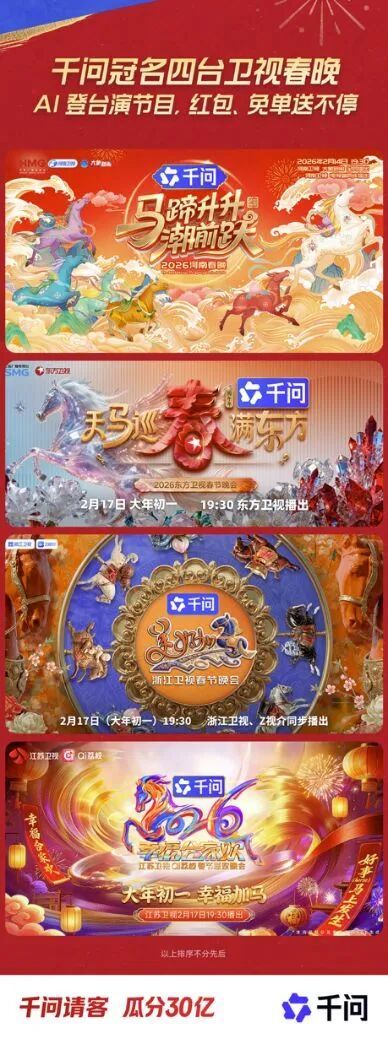
2026年春晚AI公司成主角,阿里30亿元投入,腾讯推红包计划,千问冠名四大卫视……当红包散尽、晚会落幕,你的手机里会剩下哪个AI?
Mei Ri Jing Ji Xin Wen· 2026-02-16 11:44
Core Insights - The 2026 Spring Festival Gala has become a battleground for AI companies, with significant investments from major players like Alibaba, ByteDance, Tencent, and Baidu, marking a shift in traditional marketing strategies [1][3][4] Group 1: AI Companies' Investments - Alibaba's Qianwen invested 3 billion yuan in the Spring Festival Gala, securing exclusive sponsorships with four major regional TV stations [4] - ByteDance's Volcano Engine became the technical partner for the CCTV Spring Festival Gala, providing core support for live streaming and interactive features [4] - Tencent and Baidu launched 1 billion yuan and 500 million yuan red envelope initiatives, respectively, to enhance user engagement through their platforms [1][4] Group 2: AI Technology Integration - AI technology is being integrated into various aspects of the Spring Festival Gala, with regional stations utilizing AIGC technology for virtual stage backgrounds and interactive performances [4][6] - The use of AI is expected to improve production efficiency and reduce costs, as seen in the implementation of XR virtual stages by Shandong TV [7] - The Spring Festival Gala is evolving from a cultural event to a platform for showcasing technology and driving commercial transformation [7] Group 3: User Engagement Strategies - AI companies are leveraging the Spring Festival to promote their services, aiming to change user habits through integrated experiences like booking meals and movie tickets [8] - Qianwen's strategy includes bundling subsidies with various services, resulting in a significant increase in user engagement, with a reported 500% rise in movie ticket orders [8] - The competition among AI models is not just about immediate user acquisition but also about sustaining user engagement post-festival [9]
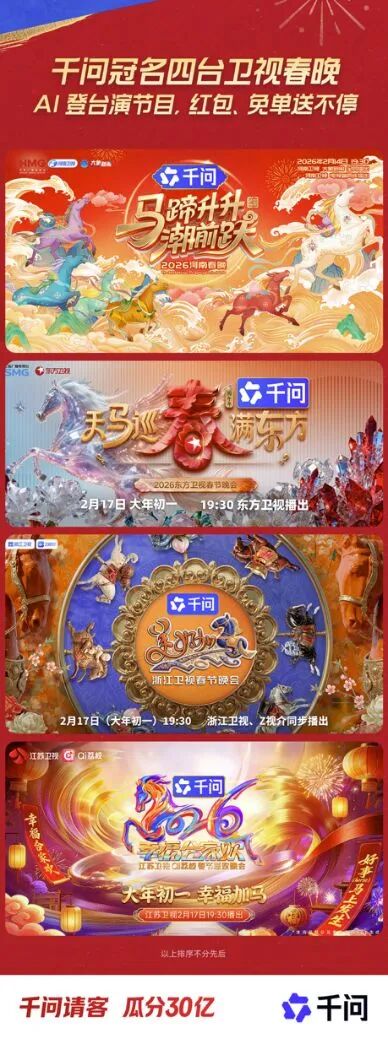
揭秘春节红包的算法门道:最后出手的人,更容易拿“手气最佳”?
新浪财经· 2026-02-16 09:34
Group 1 - The article discusses the phenomenon of "red envelope" distribution during the Spring Festival, highlighting it as a marketing strategy that combines fan engagement, drama promotion, and platform traffic generation [2][16]. - A total of over 7.5 billion yuan in red envelopes is expected to be distributed by major internet companies like Tencent, Baidu, Alibaba, and JD during the Spring Festival [16][18]. - The article explains the mathematical principles behind red envelope distribution, particularly the "double mean method," which aims to balance fairness and randomness in the allocation of red envelopes [10][14]. Group 2 - The "double mean method" sets a limit on the maximum amount a user can receive, ensuring that the average expectation remains stable regardless of how much the first person takes [11][12]. - Major companies are launching various promotional activities, such as Tencent's 10 billion yuan red envelope campaign and Alibaba's 3 billion yuan "Spring Festival Treat" initiative, to attract users to their platforms [18][19]. - The article notes that the competition among these companies not only involves cash distribution but also includes promotional events that encourage user interaction and engagement with their services [16][19].


超105亿红包,这份“马年羊毛”攻略请收好
Bei Jing Qing Nian Bao· 2026-02-16 07:10
Core Viewpoint - The 2026 Spring Festival is witnessing a significant shift in the traditional red envelope distribution, with major internet companies integrating AI into their interactive activities, leading to a total planned distribution of over 10.5 billion yuan in red envelopes and benefits during the holiday season [1][2]. Group 1: Company Initiatives - ByteDance's Doubao is the exclusive AI cloud partner for the Central Spring Festival Gala, offering interactive activities where users can participate in AI-generated blessings and quizzes to win cash prizes up to 8,888 yuan and over 100,000 tech gifts [2][3]. - Alibaba's Qianwen has launched a 3 billion yuan "Spring Festival Treat Plan," allowing users to issue commands for various services, including ordering food and travel, while also integrating AI-generated personalized blessings [3][4]. - Baidu's Wenxin Assistant is the chief AI partner for the Beijing Spring Festival Gala, providing users with opportunities to win cash prizes and engage in AI creative activities like writing couplets [3][5]. - Tencent is leveraging its WeChat ecosystem to distribute 1 billion yuan through its "Spring Festival 1 Billion Distribution" campaign, featuring multiple AI red envelope rain events on New Year's Eve [3][4]. Group 2: User Experience and Feedback - The AI red envelope activities have sparked widespread participation, with users experiencing innovative features such as AI-generated New Year photos and customized greetings, although some technical issues like loading delays were noted during peak times [4][5]. - Users reported a low but accessible return from participating in various activities, with an average cash reward of 56.89 yuan and multiple coupons for holiday shopping, indicating a user-friendly approach to engagement [5][6]. Group 3: Industry Insights - The AI red envelope campaign is seen as a new marketing strategy for internet companies, focusing on user engagement and education about AI services, with the potential to drive growth in a competitive landscape [6][7]. - Analysts suggest that the industry is transitioning from a "hundred model battle" to a "thousand model competition," emphasizing the importance of ecosystem integration and practical applications in AI development [6][7].
2025自媒体治理与发展创新案例公布:9家平台11个案例入选
Bei Ke Cai Jing· 2026-02-16 04:01
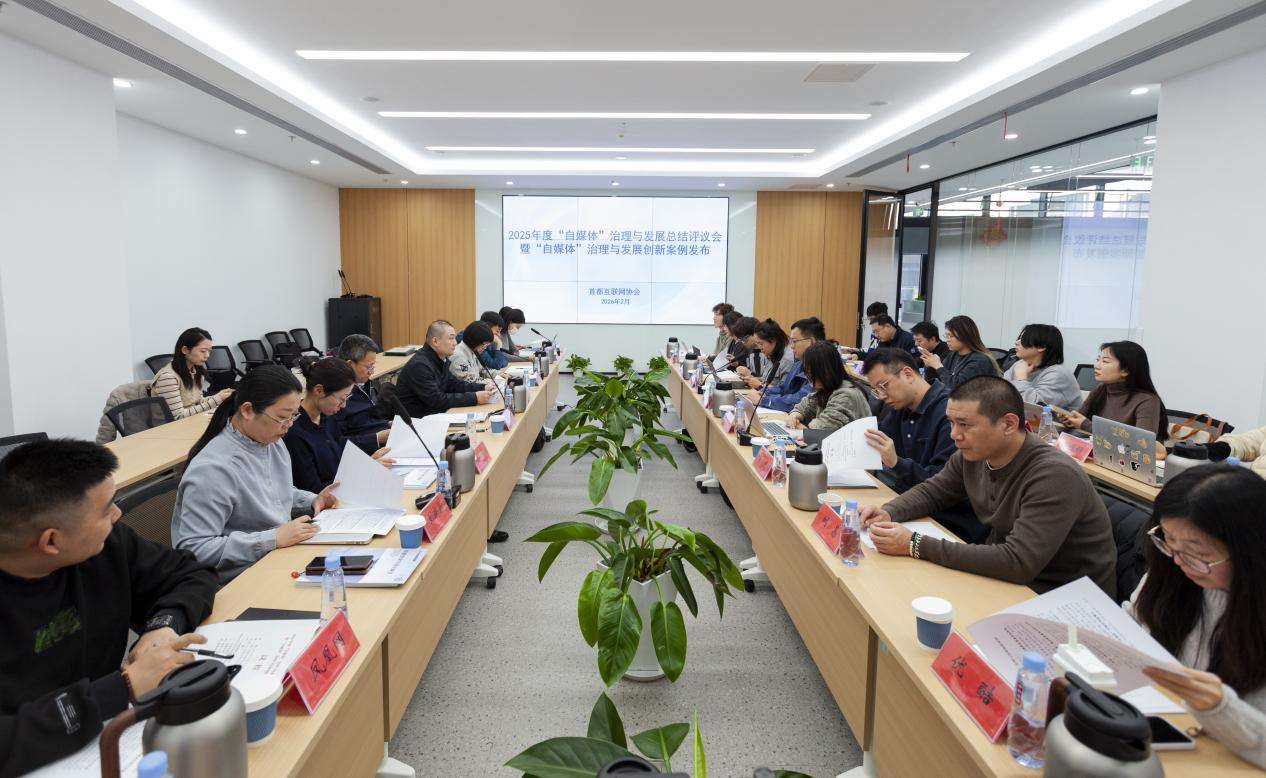
Core Insights - The 2025 Annual "Self-Media" Governance and Development Summary Evaluation Meeting was held in Beijing, focusing on industry self-regulation and exploring multi-party governance strategies for self-media [2][3]. Group 1: Governance and Development - The meeting introduced self-regulatory efforts in the self-media sector, including the establishment of specialized committees and organization of industry evaluations [3]. - Major platforms like Douyin, Weibo, Baidu, and Tencent News shared their innovative practices in self-media governance [3]. Group 2: Innovative Practices - Douyin built a governance system for misinformation through three dimensions: content production tracing, interception during dissemination, and proactive fact-checking [3]. - Weibo enhanced its governance technology with the "Intelligent Search Annotation" feature, promoting positive content in the financial sector through the "Finance Big V Alliance" [3]. - Baidu developed a "Deep Forgery Detection Model" to accurately identify and intercept forged images, audio, and video, addressing new risks from AIGC [3]. - Tencent News focused on compliance training for self-media creators and enriched quality content supply through collaborative positive topic creation [3]. Group 3: Case Studies and Trends - The association released 11 innovative case studies from 9 platforms, including Douyin's "AI Douyin Truth" feature and Weibo's "Finance Big V Alliance" [4]. - Compared to the previous year, the 2025 cases showed broader platform coverage, more diverse governance methods, and enhanced demonstration effects [6]. - New characteristics in self-media governance include a shift from case-based to scalable mechanisms, the use of AI for precise governance, and diverse incentives for quality content production [6]. Group 4: Future Directions - The Beijing Internet Information Office emphasized the need for political guidance, industry self-regulation, innovative governance, and a focus on high-quality development to stimulate the sector's internal dynamics [6]. - The association aims to foster a collaborative governance model that promotes policy discussion, problem-solving, and ecological co-construction in the self-media sector [6].

这个春节,AI开始进群了
经济观察报· 2026-02-16 03:07
Core Insights - Social media has become a key focus for AI companies both domestically and internationally, with significant investments being made in this area [4][9] - The integration of AI into social platforms is seen as a way to enhance user interaction and engagement, with companies like Tencent, Baidu, and Alibaba leading the charge [5][6][7] - The competitive landscape is evolving, with global tech giants like Meta and OpenAI also making strides in AI social applications, indicating a broader trend towards AI-driven social experiences [8][10] Group 1: Importance of Social Media for AI Companies - Social media is a high-frequency, emotionally dense, and network-effect-rich environment, making it an ideal space for AI integration [12][13] - The social platform serves as a foundational entry point for digital ecosystems, with user relationships being difficult to migrate, thus solidifying the importance of social networks [13][14] - Integrating AI into social platforms is viewed as a strategy to gain control over future digital landscapes [14] Group 2: AI's Role in Social Interaction - AI can significantly enhance communication efficiency and reshape interaction structures within social networks [26] - AI's involvement in social media can help organize information, maintain relationships, and expand identity expression capabilities [27][29][30] - The integration of AI into social platforms is not just about efficiency but also about fundamentally transforming how interactions occur [31] Group 3: Challenges of AI in Social Media - The introduction of AI can diminish the sense of authenticity and social presence in interactions, leading to a more strategic rather than natural communication style [34] - Continuous observation and data structuring by AI can lead to behavioral changes, reducing spontaneity and emotional expression in social interactions [35] - Users may resist AI interventions that seem to limit their autonomy and participation in social exchanges [36] Group 4: Viable Models for AI in Social Media - The first model involves invisible assistance at the personal level, where AI supports users in understanding and expressing themselves without overt participation [41] - The second model focuses on institutional mediation and collaborative infrastructure, where AI helps structure group interactions and streamline communication processes [42] - The third model emphasizes generative co-creation, allowing users to collaboratively create content with AI assistance, thus transforming the nature of social interaction [44]