BIDU(BIDU)

Search documents
都在等梁文锋:AI战事正酣梁文锋却静悄悄,有时候,越是平静,对手越是害怕
Xin Lang Cai Jing· 2026-02-14 07:13
Core Insights - The article discusses the intense competition among internet giants in the AI large model sector, highlighting the ambitions of companies to establish their AI applications as the primary traffic entry point [4][23] - DeepSeek, founded by Liang Wenfeng, emerged as a significant player in the AI landscape with its R1 model, which was launched at a surprisingly low cost, challenging the perception of high investment requirements for top-tier models [14][31] - Despite the competitive environment, DeepSeek has maintained a low profile, with recent updates suggesting a potential new model release, V4, but with no official confirmation [26][27] Industry Competition - Major companies are aggressively distributing cash incentives to attract users, with Tencent offering 1 billion yuan, Baidu 500 million yuan, and Alibaba 3 billion yuan, indicating a fierce battle for user engagement [25] - The launch of new models by ByteDance and Alibaba, including the 2.0 versions of their respective models, reflects a rapid evolution in AI capabilities and competition [8][25] - The article notes a peculiar competitive dynamic where companies are responding to each other's moves, creating a sense of mutual awareness in the market [8][25] DeepSeek's Position - DeepSeek's recent updates include an increase in context window length from 128K tokens to 1 million tokens, suggesting advancements in their technology [26] - The company continues to recruit talent despite a slowdown in hiring across the industry, indicating its commitment to innovation and development [27] - Liang Wenfeng's vision for DeepSeek is to lead in AI research and development, aiming to create a general-purpose AI that goes beyond existing models [31][32] User Engagement and Market Dynamics - The article emphasizes the importance of addressing user needs in the AI sector, with companies like DeepSeek beginning to focus on consumer-facing products [33] - The competition is framed as a quest to meet real user demands, which will determine the leading players in the AI landscape [36] - The article concludes that the current battle among internet giants is crucial for defining the next decade of internet order, highlighting the strategic significance of user engagement in AI applications [36]




都在等梁文锋
投资界· 2026-02-14 07:08
Core Viewpoint - The article discusses the intense competition among major internet companies in China to dominate the AI model application space, highlighting the strategic positioning of Deep Seek and its founder Liang Wenfeng as a significant player in this evolving landscape [2][4]. Group 1: AI Competition Landscape - Major internet giants are aggressively investing in user incentives, with Tencent distributing 1 billion yuan in cash red envelopes, Baidu offering 500 million yuan for promoting its Wenxin assistant, and Alibaba launching a 3 billion yuan campaign [4]. - The competition is characterized by rapid product releases, with ByteDance announcing its Doubao model 2.0 and Alibaba introducing its Qwen-Image 2.0 model, indicating a synchronized response among competitors [5][6]. Group 2: Deep Seek's Positioning - Deep Seek, founded by Liang Wenfeng, has maintained a low profile despite its significant achievements, including the release of the R1 model in early 2025, which matched top global models at a fraction of the cost [2][9]. - The company is rumored to be preparing to launch its next-generation model, V4, aimed at coding AI, but has remained silent on the exact timeline [6][10]. - Deep Seek's recent updates have increased its context window from 128K tokens to 1 million tokens, suggesting ongoing advancements in its technology [6]. Group 3: Liang Wenfeng's Background - Liang Wenfeng, born in 1985 in Guangdong, has a strong academic background in computer science and has been involved in AI and quantitative trading since his university days [7][8]. - He co-founded Hangzhou Huafang Technology, which became a significant player in quantitative trading, and later established Deep Seek to pursue general artificial intelligence [9]. Group 4: User-Centric Approach - Deep Seek is shifting its focus towards user experience and product innovation, as evidenced by its recent job postings aimed at enhancing C-end product functionality [10][11]. - The article emphasizes the importance of addressing real user needs in the AI sector, suggesting that the ability to solve genuine problems will determine the success of AI applications [11].

美国将3家中企指定为“涉军企业”后秒撤回
日经中文网· 2026-02-14 06:32
阿里巴巴集团(Reuters) 在美国总统特朗普4月访华之前,白宫或有意避免与中国产生摩擦…… 2月13日,美国国防部宣布将中国阿里巴巴集团、百度等至少3家企业列为与中国军方相关的"中国军事 企业",但随后又迅速撤销了该决定。在美国总统特朗普4月访华之前,白宫或有意避免与中国产生摩 擦。 美国政府的官方网站显示,美国国防部已撤销了中国军事企业的追加认定。美国国防部向日本经济新闻 表示:"目前暂无任何可发布信息"。 据路透社报道,美国国防部2月13日上午曾将阿里巴巴集团、百度以及比亚迪追加列入中国军事企业名 单。 美国国防部曾于2025年1月将腾讯控股、宁德时代新能源科技(CATL)追加列为中国军事企业。 日本经济新闻(中文版:日经中文网)飞田临太郎 华盛顿报道 版权声明:日本经济新闻社版权所有,未经授权不得转载或部分复制,违者必究。 日经中文网 https://cn.nikkei.com 美国政府对中国通过"军民融合"将民间尖端技术运用于军事领域以推进技术开发保持警惕。意在锁定与 军方存在融合的企业,限制美企与之开展交易。 美国企业与名单上的中国企业进行交易,也不会面临法律处罚。但美国国防部仍有可能与上榜中企 ...


美国防部1260H清单更新:78家中企被列入,12家被移除及影响解析
制裁名单· 2026-02-14 05:07
Group 1 - The U.S. Department of Defense released the latest "China Military Enterprises List" (1260H List) on February 13, 2026, including 78 Chinese companies while removing 12 others, marking the fifth update since its initial release in June 2021 [1] - The newly listed companies span critical sectors such as internet, new energy, semiconductors, aerospace, and telecommunications, including major firms like Alibaba, Baidu, Tencent, BYD, CATL, NIO, SMIC, Huawei, DJI, AVIC, and CASIC [1] - Alibaba has publicly stated that its inclusion is baseless, asserting it is not a military enterprise and may consider legal action in response [1] Group 2 - The 12 companies removed from the list include Changxin Storage (CXMT) and Yangtze Memory Technologies (YMTC), primarily involved in electronics, chemicals, and transportation [2] - Being listed does not trigger comprehensive sanctions directly, but it will significantly impact the operations of Chinese companies, particularly with the U.S. Department of Defense prohibiting new procurement contracts with listed companies starting June 30, 2026 [2] - The indirect effects include potential capital market volatility, restricted financing channels for Chinese companies, and challenges in global supply chains due to the risk of technology supply cuts and reduced cooperation from partners [2] Group 3 - Companies on the list may face further inclusion in more stringent U.S. sanctions lists, leading to stricter financial and technological restrictions [3] - The U.S. legislation requires consideration of including other companies from existing U.S. sanctions lists in future updates, potentially expanding the scope of sanctions [3] - The Chinese government has repeatedly opposed the U.S. approach, viewing the list as a continuation of efforts to curb China's technological and economic growth, while Chinese companies are actively seeking to mitigate the negative impacts through appeals and legal actions [3]




中概股全线走低、美股全线大跌,有色金属、半导体芯片、苹果重挫
Sou Hu Cai Jing· 2026-02-14 04:30
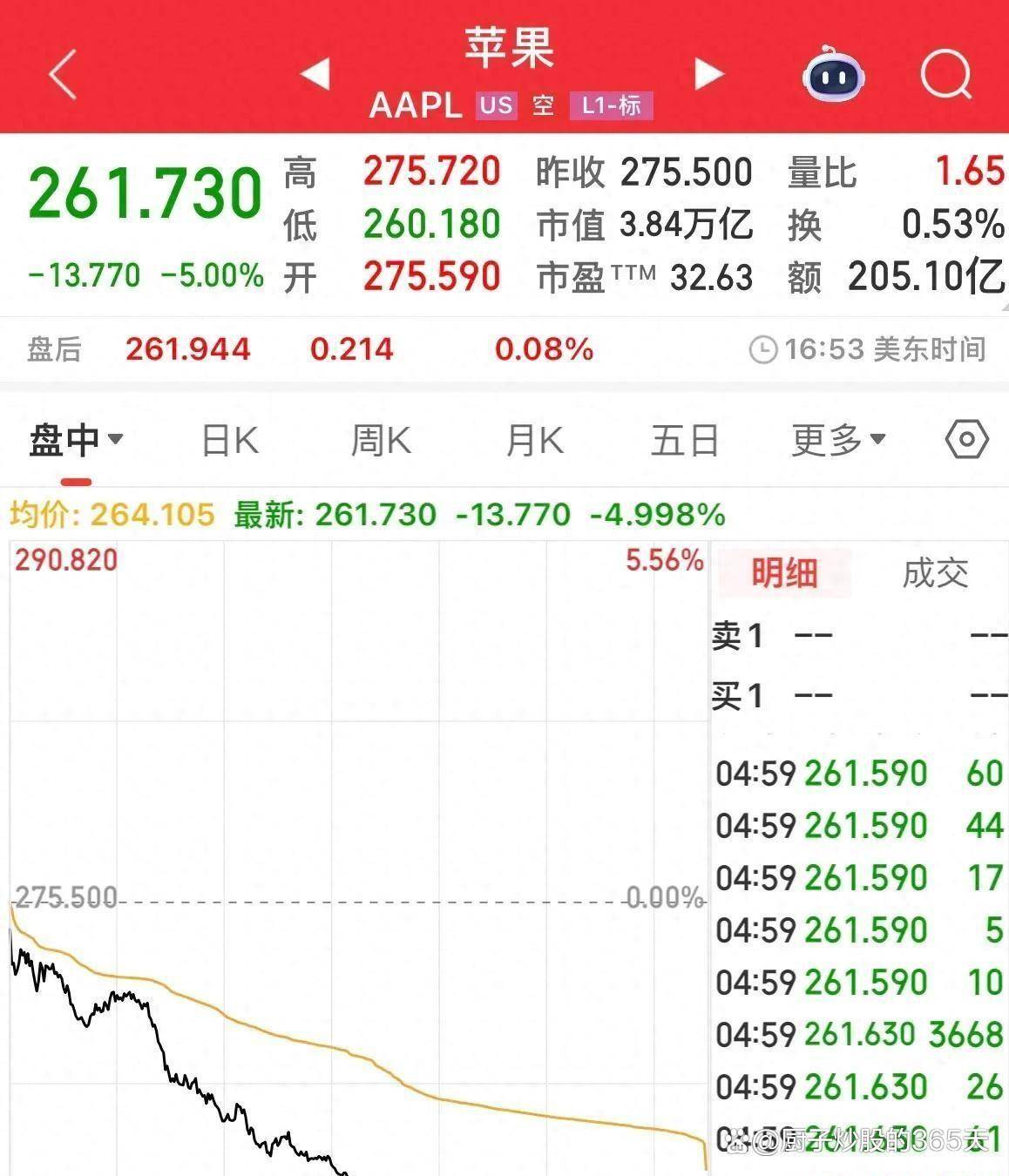
Market Overview - The US stock market experienced a significant decline, with the Dow Jones Industrial Average dropping 669.42 points (1.34%) to close at 49,451.98 points, the Nasdaq Composite falling 469.32 points (2.03%) to 22,597.15 points, and the S&P 500 decreasing by 108.71 points (1.57%) to 6,832.76 points [1][2][3] Market Sentiment - Over 4,100 stocks declined, indicating widespread market panic as investors rushed to sell assets, particularly in the tech and growth sectors. The VIX index surged, reflecting heightened risk aversion [2][3] Sector Performance - The sell-off affected nearly all sectors, with notable declines in precious metals and semiconductor stocks. The precious metals sector saw significant drops, with gold futures down 3.08% and silver futures plummeting 10.62% [4][5][6][8] - The Philadelphia Semiconductor Index fell by 2.5%, with individual stocks like AEHR Test Systems down 17.58% and Intel down over 3% [8][10] Major Companies - Apple Inc. experienced a substantial drop of 5.00%, resulting in a market cap loss of over $120 billion, attributed partly to regulatory concerns [12] - Other major tech companies also faced declines, with Tesla down 1.62%, Amazon down 2.20%, and Meta Platforms down nearly 3% [12] Financial Sector - Bank stocks fell across the board, with JPMorgan Chase down over 2%, Goldman Sachs down over 4%, and Citigroup down over 5%, driven by concerns over AI disrupting traditional wealth management [13][14] Economic Indicators - Recent economic data, including a drop in initial jobless claims and lower-than-expected existing home sales, contributed to market anxiety about potential economic overheating and prolonged high interest rates [24][25][26] Global Market Impact - The sell-off in the US markets had a ripple effect on global markets, with European indices also closing lower after initially opening higher, indicating a widespread sentiment of fear [18][19][20] AI Concerns - The market's decline was exacerbated by fears regarding the disruptive impact of AI technologies on various industries, leading to significant stock price drops in sectors perceived to be at risk [21][22][30] Storage Chip Sector - In contrast to the overall market trend, storage chip stocks saw gains, with companies like SanDisk and Seagate Technology rising significantly, reflecting a belief that AI's growth will increase demand for data storage [29]


晚间暴雷!黄金、白银、原油、美股全线崩盘,42只中概集体下跌
Sou Hu Cai Jing· 2026-02-14 04:22
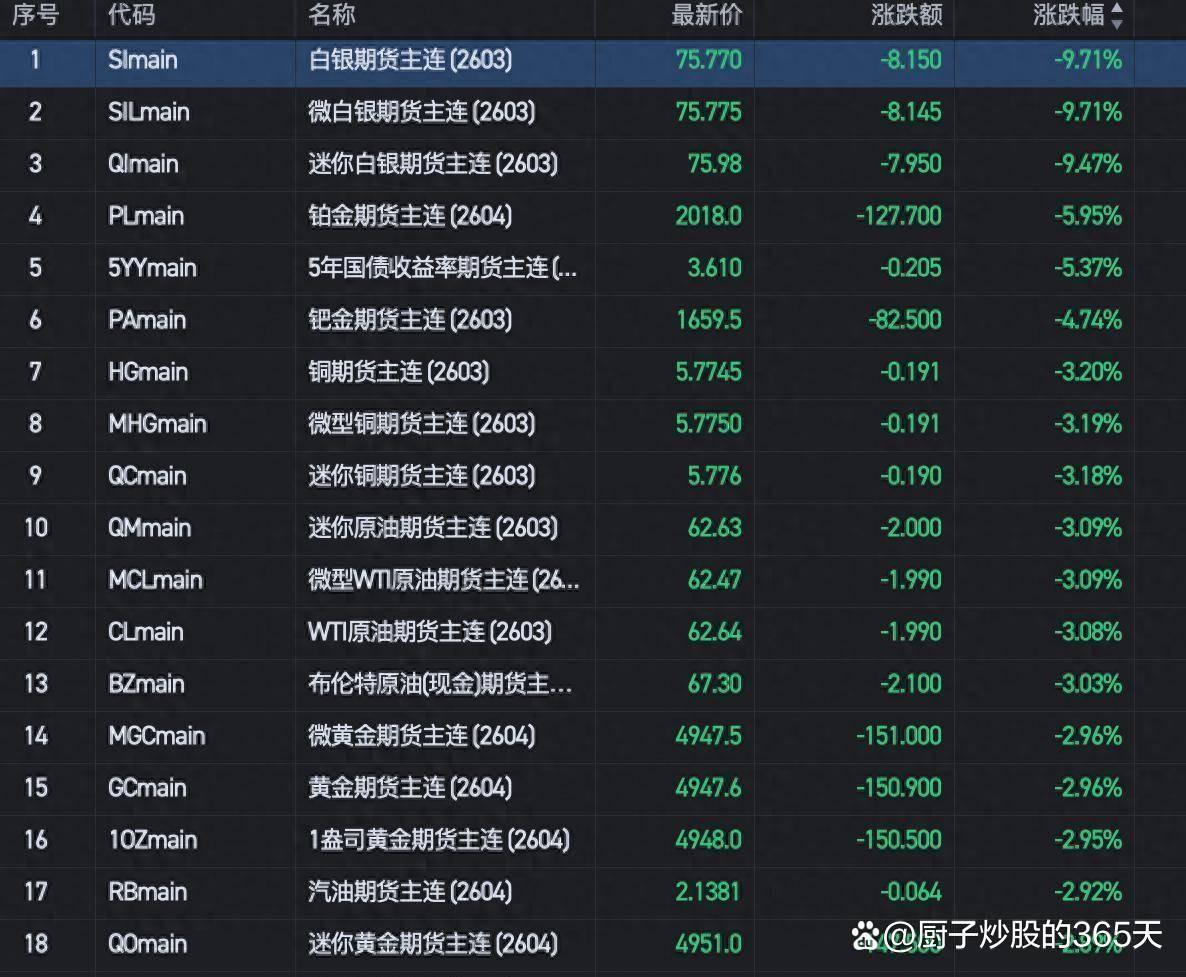
Market Overview - On February 13, 2026, a significant asset sell-off occurred in global financial markets, particularly impacting U.S. stock indices. The Dow Jones Industrial Average fell by 669.42 points (1.34%) to close at 49,451.98, while the Nasdaq Composite Index dropped 469.32 points (2.03%) to 22,597.15. The S&P 500 Index also declined by 108.71 points (1.57%) to 6,832.76 [1]. Commodity Market Impact - The sell-off extended to the commodity markets, with gold and silver experiencing substantial declines. COMEX gold futures fell by 3.08% to $4,941.4 per ounce, while COMEX silver futures plummeted by 10.62% to $75.01 per ounce [2][3]. Technology Sector Reaction - Major technology companies were severely affected, with Apple’s stock price dropping by 5%, resulting in a market value loss of over $120 billion (approximately 800 billion RMB). Other tech giants like Microsoft, Amazon, Tesla, Meta, and Nvidia also saw significant declines [3][4]. Chinese Concept Stocks - The Nasdaq Golden Dragon China Index, which includes many Chinese concept stocks, fell by 3% on the same day, indicating a collective sell-off in this sector. Over 40 Chinese concept stocks experienced substantial declines, with Tencent Music down 10.57% and Alibaba down 3.40% [3][4][6]. Employment Data Influence - The catalyst for this market turmoil was a strong U.S. employment report released on February 11, showing a non-farm payroll increase of 130,000 in January, significantly above the expected 70,000. This led to a shift in market expectations regarding Federal Reserve interest rate cuts, with the probability of a March rate cut dropping from 19.6% to 6% [5][6]. Capital Expenditure Concerns - Major tech companies announced aggressive capital expenditure plans for 2026, with Alphabet projecting $175 billion to $185 billion and Amazon estimating $200 billion, both nearly doubling their 2025 expenditures. This raised investor concerns about the return on such investments, especially as many companies reported record profits but saw stock price declines [10][11]. Market Sentiment and Volatility - The market's fear and volatility increased sharply, with the VIX index rising significantly. The sell-off was exacerbated by algorithm-driven trading, which triggered stop-loss orders and led to extreme price movements [15][16][17]. Global Market Impact - The financial turmoil that began in Wall Street quickly spread to global markets, with Asian and European stock markets opening lower in response to the U.S. declines [18].



Pentagon Adds Alibaba, BYD To Chinese Military List, Then Reportedly Pulls Filing As Trump-Xi Meet Looms
Benzinga· 2026-02-14 03:10
Core Insights - The addition of prominent Chinese companies, including Alibaba and BYD, to the "Chinese Military Companies" list is expected to heighten tensions between the United States and China ahead of the upcoming summit between Presidents Trump and Xi Jinping [1][3]. Group 1: Chinese Military Companies List - The "Chinese Military Companies" list, also known as the 1260H list, includes companies with alleged ties to the Chinese military or involvement in military civil fusion, which necessitates sharing technology with the military [2]. - Being placed on the list does not impose immediate legal consequences but creates reputational risks and suggests potential future punitive measures from the United States [2]. Group 2: Alibaba and BYD - Alibaba's inclusion on the list follows intelligence warnings regarding its potential threat to national security, with congressional scrutiny over its chip sales [3]. - BYD, recognized as the world's largest electric vehicle maker, has made significant advancements in battery technology and is currently engaged in a legal battle against the Trump administration over 100% tariffs on Chinese electric vehicles [4].
百度智能体生态再升级,全球爆火智能体OpenClaw接入百度App
Xin Lang Cai Jing· 2026-02-14 02:03
Core Viewpoint - Baidu App has integrated the OpenClaw intelligent assistant tool, enhancing its capabilities in AI development and providing users with a comprehensive personal assistant experience through both local and cloud deployment [2] Group 1: Product Integration - The integration of OpenClaw allows users to perform tasks such as scheduling, document organization, and code writing via the Baidu App [2] - This move signifies the completion of the 'Baidu ecosystem + local personal assistant' full chain, combining OpenClaw's existing capabilities with Baidu's various ecosystem products [2] Group 2: User Engagement - Since the launch of the Spring Festival red envelope activity, the monthly active users of Baidu's Wenxin assistant have surged fourfold, indicating a significant increase in user engagement and functionality usage [2] - The Baidu App, with over 700 million monthly active users, quickly adopted OpenClaw, validating Baidu's comprehensive AI cloud capabilities [2] Group 3: Strategic Vision - Baidu aims to leverage the advantages of ecosystem scenarios and cloud capabilities to lead industry development through innovation [2] - The company is committed to setting a benchmark for the popularization and application of AI technology [2]
凌晨重磅!黄金、白银,突然暴涨
Xin Lang Cai Jing· 2026-02-14 01:55
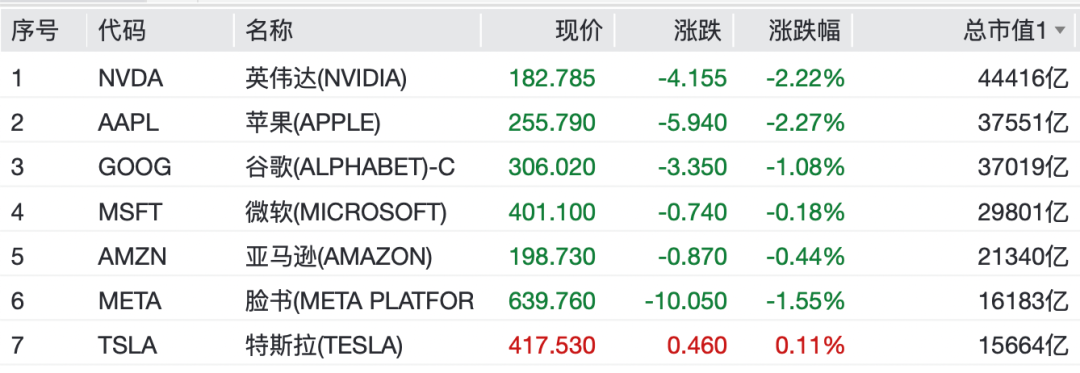
Market Performance - On February 13, the US stock market showed mixed results, with large tech stocks declining while Chinese concept stocks had varied performances [2] - The Dow Jones Industrial Average rose by 0.1% to close at 49,500.93 points, the S&P 500 increased by 0.05% to 6,836.17 points, and the Nasdaq Composite gained 0.22% to 22,546.67 points. However, all three indices experienced weekly declines, with the Nasdaq down 2.1%, the Dow down 1.23%, and the S&P 500 down 1.39% [3] Individual Stock Performance - Major tech stocks saw declines, with NVIDIA down 2.22% to $182.785, Apple down 2.27% to $255.790, and Google down 1.08% to $306.020. Microsoft fell slightly by 0.18% to $401.100, while Amazon decreased by 0.44% to $198.730. Meta Platforms dropped by 1.55% to $639.760, while Tesla saw a slight increase of 0.11% to $417.530 [4] - In the Chinese concept stock market, Tencent Music rose over 4%, while Alibaba fell over 2%, and JD Group, Baidu Group, Beike, and Li Auto all dropped by more than 1% [6] Commodity Market - Spot gold prices increased by 2.41% to a high of $5,046.261 per ounce, currently trading at $5,042.808 per ounce [8] - Spot silver prices also rose, breaking the $79 per ounce mark with a daily increase of 2.81% [8] - Gold futures contracts rose by 1.4% this week, marking an upward trend in 8 out of the last 10 weeks [9] - Silver futures contracts increased by 1.5% this week, ending a two-week decline and showing an upward trend in 11 out of the last 15 weeks [11] Market Insights - NVIDIA's CEO Jensen Huang addressed concerns about excessive spending in data centers, asserting that spending levels are reasonable and sustainable. He emphasized the growing utility and functionality of artificial intelligence, dismissing the recent sell-off in software stocks as "the most illogical thing in the world" [5] - Despite volatility in the precious metals market, demand for safe-haven assets continues to support rising gold and silver prices, according to a report by Antonio Di Giacomo from XS.com [10]