Celanese(CE)

Search documents
Celanese Announces Cash Tender Offers for up to $1,000,000,000 Aggregate Principal Amount of 6.665% Senior Notes due 2027 and 6.850% Senior Notes due 2028
Globenewswire· 2025-12-02 13:10
Core Viewpoint - Celanese Corporation has initiated cash tender offers to purchase up to $1 billion of its outstanding senior notes, specifically targeting the 6.665% Senior Notes due 2027 and the 6.850% Senior Notes due 2028, with specific caps on the amount of each series to be purchased [1][2][4]. Group 1: Tender Offer Details - The total principal amount targeted for purchase is $1,000,000,000, with a cap of $100,000,000 for the 2028 Notes [1][4]. - The tender offers will expire at 5:00 p.m. New York City time on December 31, 2025, unless extended or terminated earlier [4][5]. - Notes purchased will be retired and cancelled following the tender offers [2][4]. Group 2: Financial Terms - The early tender payment for the 2027 Notes is set at $987.50 per $1,000 principal amount, while the total consideration including accrued interest is $1,037.50 [3]. - For the 2028 Notes, the early tender payment is $1,005.00, with a total consideration of $1,055.00 [3]. - The interest rates on the 2027 and 2028 Notes have increased to 7.165% and 7.350%, respectively, reflecting a 0.50% rise from their original rates [4]. Group 3: Conditions and Procedures - The tender offers are subject to a "Financing Condition," which requires the completion of a concurrent offering of new debt securities [6]. - Holders must validly tender their notes by December 15, 2025, to be eligible for the early tender payment [5][6]. - Notes can be withdrawn prior to the withdrawal deadline of December 15, 2025 [6][10]. Group 4: Management and Contacts - BofA Securities is the Lead Dealer Manager for the tender offers, with Citigroup, Deutsche Bank Securities, and TD Securities serving as Co-Dealer Managers [12]. - D.F. King & Co., Inc. is the Information and Tender Agent for the offers [12][13].

Evercore ISI Remains Cautious on Celanese Corporation (CE) Post-Q3 Earnings, Despite Broader Chemical Stock Rallies
Yahoo Finance· 2025-11-25 13:07
Core Insights - Celanese Corporation is currently viewed as one of the most undervalued stocks on the NYSE, with a recent price target adjustment from Evercore ISI analyst Eric Boyes, lowering it to $45 from $75 while maintaining an In Line rating [1] - The Q3 2025 earnings report revealed a significant trading shift in the chemical sector, with approximately half of the tracked chemical stocks reducing their Q4 outlook, yet two-thirds experienced an average share price increase of 6% post-results [1] Financial Performance - In Q3, Celanese reported total revenue of $2.42 billion and earnings of $1.34 per share, focusing on enhancing cash flow, cost improvements, and top-line growth [2] - The company anticipates an EPS growth of $1 to $2 in 2026, with around half of this growth expected from cost savings and the remainder from success in the Engineered Materials pipeline, alongside a projected reduction in interest expense of $30 to $40 million [2] Strategic Initiatives - Celanese completed the sale of its Micromax business in Q3, contributing to its goal of achieving $1 billion in divestitures by 2027 [3] - The company is actively pursuing additional cost savings, expecting to realize net savings of $30 to $50 million within the Engineered Materials segment after accounting for inflation [3]
卡脖子:中国哪些新材料高度依赖日本进口及国外进口?




材料汇· 2025-11-24 15:58
Core Viewpoint - The article highlights the significant dependency of China's high-end manufacturing on Japan for critical strategic new materials, particularly in the semiconductor and advanced manufacturing sectors, emphasizing the risks posed by geopolitical tensions and supply chain vulnerabilities [2][4]. Group 1: Dependency on Japanese Core New Materials - Japan holds a monopolistic position in semiconductor materials, high-end polymers, and electronic chemicals, with China's dependency exceeding 50% in several key categories, and nearly 100% in some high-end areas [4][6]. - The complexity of semiconductor manufacturing processes means that Japan dominates the supply of critical materials like photoresists and silicon wafers, with global market shares consistently above 60% [6][9]. Group 2: Semiconductor Core Materials - **Photoresists**: China has an overall import dependency of about 90%, with high-end photoresists being 100% reliant on Japan. Major suppliers include JSR, Tokyo Ohka, Shin-Etsu Chemical, and Fujifilm, which control 92% of the high-end market [7]. - **12-inch Silicon Wafers**: The import dependency is around 90%, with Japan supplying 58%. Key players like Shin-Etsu Chemical and SUMCO dominate over 60% of the market [9]. - **High-Purity Ruthenium Targets**: The import dependency is 98%, with Japan's JX Metals and TOSOH holding a significant market share. Domestic production is limited to lower purity levels [12]. Group 3: High-End Polymer Materials - Japan leads the high-end market for electronic-grade polyimide films, with an import dependency of 85% for overall polyimide materials, and 90% for high-end applications [19]. - **Optical-grade PET Films**: The import dependency is 75%, with Japan supplying 100% of high-end films used in MLCCs [23]. Group 4: Other Key Materials in Electronics - **Sputtering Targets**: The import dependency is approximately 95%, with Japan's JX Metals and Nippon Mining controlling 60% of the market [27]. - **High-Purity Electronic Gases**: The import dependency is 70%, with Japan's Taiyo Nippon Sanso holding a 40% market share [31]. Group 5: Hydrogen Energy and Fuel Cell Key Materials - **High-End Carbon Carrier Materials**: The overall import dependency is 85%, with Japan's TOSOH dominating the market [35]. - **Fuel Cell Platinum-based Catalysts**: The import dependency is 78%, with significant reliance on European suppliers [107]. Group 6: Aerospace and High-End Manufacturing Key Materials - **High-Temperature Alloys**: The import dependency is 90%, with major suppliers from the US and Europe completely dominating the market [80]. - **Carbon Fiber**: The import dependency is 85%, with Japan and the US leading the high-end market [86]. Group 7: New Energy and Electronics Key Materials - **High-End Lithium-Ion Battery Separators**: The import dependency is 70%, with Japan's Asahi Kasei and Toray leading the market [94]. - **Ultra-Thin Copper Foils**: The import dependency is 80%, with Japan's JX Copper and Mitsui Mining dominating the supply [98].


Celanese: Getting Worse, Before Getting Better (NYSE:CE)
Seeking Alpha· 2025-11-20 23:21
Core Insights - Uncertainty continues to dominate the situation for Celanese Corporation, with shares declining approximately 33% to around $36 [1] Group 1: Company Performance - Celanese Corporation's stock has experienced a significant drop, reflecting ongoing uncertainty in the market [1] Group 2: Investment Opportunities - The investment group "Value In Corporate Events" focuses on identifying actionable ideas related to major corporate events, including earnings reports and M&A activities [1]
Celanese Corporation to Participate in Fireside Chat with J.P. Morgan
Businesswire· 2025-11-14 21:50
Core Points - Celanese Corporation will participate in a fireside chat with J.P. Morgan on November 18, 2025, at 12:00 PM Eastern Time [1] - A webcast of the discussion will be available on Celanese's Investor Relations Events Calendar page, with a replay accessible for one year [2] Company Overview - Celanese Corporation is a global leader in specialty materials and chemicals, producing solutions used across major industries and consumer applications [3] - The company emphasizes sustainability by responsibly managing materials and expanding its portfolio of sustainable products to meet customer and societal demands [3] - Celanese is a Fortune 500 company with over 11,000 employees and projected net sales of $10.3 billion for 2024 [3]

S&P 500 Gains and Losses Today: Palantir Pops Amid Hopes of End to Shutdown; Health Insurer Stocks Fall
Investopedia· 2025-11-10 22:35
Core Insights - Palantir Technologies was the best-performing stock in the S&P 500, with shares surging nearly 9% due to optimism surrounding a potential end to the U.S. government shutdown, which would benefit the company as it has significant contracts with federal agencies [4][8]. Company Performance - Palantir Technologies (PLTR) shares increased close to 9%, marking the top performance in the S&P 500 on that day [4]. - Western Digital (WDC) shares rose nearly 7% following a price-target increase and positive analyst comments, anticipating growing demand for hard disk drives [5]. - Nvidia (NVDA) shares gained about 6% after Citi raised its price target from $210 to $220, citing robust demand for its AI processors [6]. Market Reactions - Major U.S. equity indexes rose, with the Dow up 0.8%, the S&P 500 up 1.5%, and the Nasdaq climbing 2.3%, driven by optimism regarding a potential government shutdown resolution [3]. - Health insurance stocks, including Centene (CE), Molina Healthcare (MOH), Humana (HUM), and Elevance Health (ELV), experienced declines due to President Trump's comments on healthcare subsidies, with Centene dropping nearly 9% [7][9]. Industry Trends - The data analytics sector, particularly companies like Palantir, is poised for growth if the government resumes normal operations, as they rely heavily on federal contracts [4][8]. - The healthcare sector is facing challenges due to potential changes in subsidy distribution, which could impact the profitability of health insurers [7][9].



塞拉尼斯三季度现金流强劲,工程材料业务承压前行
Xin Lang Cai Jing· 2025-11-10 11:00
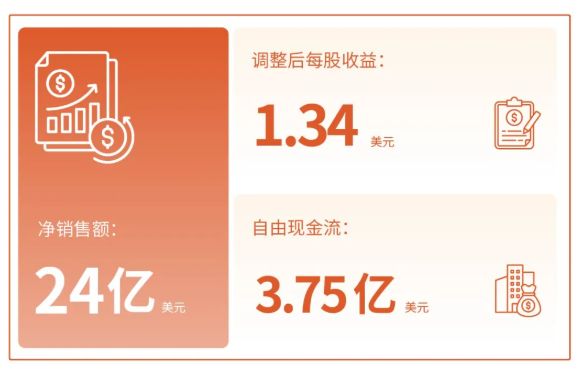
Core Insights - The company reported a net sales of $2.4 billion for Q3 2025, with an adjusted earnings per share of $1.34, demonstrating strong cash flow generation despite market demand challenges [1] - The engineering materials segment achieved net sales of $1.4 billion and an adjusted EBIT of $200 million, maintaining profitability through cost optimization and product mix adjustments [3] - The company signed an agreement to sell its Micromax® business for approximately $500 million and plans to close the Laarne plant in Belgium by the second half of 2026 to optimize its cost structure [5] - The company introduced an enhanced Chemille® digital assistant at the K fair, leveraging AI technology to accelerate customer material selection [5] - For Q4, the company expects adjusted earnings per share to be between $0.85 and $1.00, while maintaining its target of achieving $700 million to $800 million in free cash flow for 2025 [6] Financial Performance - Q3 2025 net sales: $2.4 billion [1] - Adjusted EPS for Q3 2025: $1.34 [1] - Operating cash flow: $447 million; Free cash flow: $375 million [1] - Engineering materials segment Q3 net sales: $1.4 billion; Adjusted EBIT: $200 million [3] Strategic Developments - Agreement to sell Micromax® business for approximately $500 million [5] - Planned closure of the Laarne plant in Belgium by H2 2026 [5] - Inventory reduction plan targeting a decrease of about $100 million by 2025 [3] Future Outlook - Expected adjusted EPS for Q4: $0.85 to $1.00 [6] - Target for free cash flow in 2025: $700 million to $800 million [6]
国内视角解析中国化工改革_向支撑消费转型演进-A Domestic Take On China‘s Chemical Reforms_ Evolving To Support Consumption
2025-11-10 03:35
Summary of the Conference Call on China's Chemical Sector Industry Overview - The conference focused on the transformation of China's chemical sector under the anti-involution policy, aiming for a domestic supply-demand balance by the end of the decade with over 90% of production consumed within China [1][2][3]. Key Points and Arguments 1. **Transformation and Upgrades**: China's chemical sector is undergoing significant changes driven by the anti-involution policy and the upcoming 15th Five Year Plan, focusing on upgrading existing assets and phasing out obsolete equipment to prioritize higher-value products [2][3]. 2. **Capacity Reductions**: Approximately 3 million tons per year (tpy) of capacity is being eliminated, particularly older naphtha cracking units, with impacts expected on supply-demand balances around 2028-2029 [3][4]. 3. **Producer Dynamics**: New ethylene and propylene capacities are concentrated among state-owned enterprises (SOEs) and large private players, focusing on higher-margin derivatives. Shutdowns for private producers occur when margin losses exceed approximately 1,000 RMB/t for 2-3 years [4][11]. 4. **Global Implications**: The global petrochemical market may face risks as mid-cycle conditions could shift lower due to efficiency gains at the higher end of the cost curve. Current policies are favorable for companies rated as Buy, such as ALB and LAC, while EMN and MEOH could benefit from more aggressive reforms [5][33]. 5. **Ethylene Capacity Growth**: China's ethylene capacity is projected to reach 98 million tpy by 2029, with a compound annual growth rate (CAGR) of 12% from 2024 and 9.8% from 2020. Domestic demand for ethylene is expected to grow by 64% by 2028 [7][8]. 6. **Propylene Market Dynamics**: China holds approximately 38% of the global propylene market, with domestic sufficiency at around 96%. The competition is more fragmented compared to ethylene, with the top five producers accounting for only about 15% of the market [11][12]. 7. **Policy Approach**: The government is adopting a more cautious policy approach towards new ethylene projects, emphasizing stability and gradual rationalization rather than abrupt cuts [9][10]. 8. **Strategic Risks**: Ethane sourcing remains a strategic risk, with most ethane for ethylene production still imported from the U.S., raising tariff concerns [17]. Additional Important Insights - The anticipated wave of new capacity additions in ethylene is expected to peak in 2026, with significant additions in derivatives like polyethylene (PE) and monoethylene glycol (MEG) through 2029 [8][12]. - The restructuring of the propylene sector is driven by policy measures and market forces, focusing on technology upgrades and consolidation rather than new entrants [14][15]. - The crude oil to chemicals (CTC) projects remain uncertain, with potential delays but expected to yield significant olefins and aromatics if realized [16]. This summary encapsulates the critical insights from the conference call regarding the evolving landscape of China's chemical industry, highlighting both opportunities and risks for investors.


Celanese(CE) - 2025 Q3 - Quarterly Report
2025-11-07 21:41
Financial Performance - Net sales decreased by $229 million, or 9%, for the three months ended September 30, 2025, compared to the same period in 2024[161]. - Operating profit decreased by $1.5 billion, or 620%, for the three months ended September 30, 2025, compared to the same period in 2024[163]. - Net sales decreased by $570 million, or 7%, for the nine months ended September 30, 2025, compared to the same period in 2024[167]. - Operating profit decreased by $1.6 billion, or 226%, for the nine months ended September 30, 2025, compared to the same period in 2024[167]. - For the nine months ended September 30, 2025, total net sales amounted to $1.728 billion, with a gross profit of $31 million and a net loss of $830 million[227]. Segment Performance - Engineered Materials segment net sales decreased by 7% for the three months ended September 30, 2025, driven by lower volume and pricing[162]. - Acetyl Chain segment net sales decreased by 11% for the three months ended September 30, 2025, primarily due to lower pricing and volume[162]. - Net sales in the Engineered Materials segment decreased by $97 million, or 6.5%, for the three months ended September 30, 2025, compared to the same period in 2024[172]. - Operating profit in the Acetyl Chain segment decreased by $103 million, or 43.3%, for the three months ended September 30, 2025, compared to the same period in 2024[180]. - Net sales in the Acetyl Chain segment decreased by $129 million, or 10.8%, for the three months ended September 30, 2025, compared to the same period in 2024[180]. Earnings and Expenses - Equity in net earnings of affiliates decreased by $12 million, or 24%, for the three months ended September 30, 2025, primarily due to lower earnings from the Ibn Sina strategic affiliate[163]. - Equity in net earnings (loss) of affiliates decreased by $67 million, or 43%, for the nine months ended September 30, 2025, compared to the same period in 2024[168]. - SG&A expenses as a percentage of net sales were 9.5% for the three months ended September 30, 2025, compared to 9.4% for the same period in 2024[161]. - An unfavorable impact of $1.4 billion to Other (charges) gains, net, primarily due to an impairment loss on goodwill of $1.1 billion in the Engineered Materials segment[169]. Cash and Debt Management - Cash and cash equivalents increased to $1.44 billion as of September 30, 2025, compared to $962 million as of December 31, 2024[161]. - Total debt increased to $12.854 billion as of September 30, 2025, compared to $12.579 billion as of December 31, 2024[161]. - Net cash provided by operating activities increased by $422 million to $894 million for the nine months ended September 30, 2025, primarily due to favorable trade working capital of $576 million[198]. - Net cash used in financing activities decreased by $935 million to $189 million for the nine months ended September 30, 2025, primarily due to a decrease in common stock dividends paid by $221 million[199]. Future Outlook and Strategic Actions - The company anticipates challenges in achieving planned cost reductions and maintaining production costs amid macroeconomic uncertainties[155]. - The company expects to incur exit and shutdown costs of approximately $70 million to $90 million due to the intended closure of its facility in Lanaken, Belgium, with costs expected to be incurred from 2026 to 2028[190]. - A purchase and sale agreement was entered into with Element Solutions Inc to divest the Micromax portfolio for approximately $500 million in cash, expected to close in Q1 2026[191]. - Total capital expenditures are expected to be approximately $300 million to $350 million in 2025, focusing on maintenance projects and productivity improvements[193]. - The company plans to reduce its quarterly dividend by approximately 95% beginning in Q1 2025 as part of its deleveraging efforts[191]. Market Conditions and Demand - Demand challenges were experienced in key end-markets such as automotive, paints, coatings, and construction due to tepid global macroeconomic conditions[234]. - The company anticipates impacts to demand from western hemisphere seasonality and greater than usual year-end destocking in Q4 2025[234]. - Lower volume in the Engineered Materials and Acetyl Chain segments was primarily driven by weaker global economic conditions and decreased global demand[169]. Tax and Compliance - The effective income tax rate for the nine months ended September 30, 2025, was 6%, compared to 24% for the same period in 2024, primarily due to a non-cash goodwill impairment loss[168]. - Ongoing tax audits are in progress in multiple countries, including Mexico, Canada, the U.S., and Germany, with no expected material impact on income tax expense from these audits[232]. - The company is in compliance with the covenants in its material financing arrangements as of September 30, 2025[220]. - As of September 30, 2025, the company believes an adequate provision for income taxes has been made for all open tax years related to governmental examinations[233]. Risk Management - Market risk has not changed materially from previously disclosed foreign exchange, interest rate, and commodity risks[238]. - The preparation of financial statements requires management to make estimates and assumptions that could differ from actual results[235].
Celanese Q3 Earnings Surpass Estimates Amid Lower Sales Volumes
ZACKS· 2025-11-07 15:06
Core Insights - Celanese Corporation reported a significant loss from continuing operations of $12.39 per share for Q3 2025, a stark contrast to earnings of $1.05 in the same quarter last year [1] - Adjusted earnings were $1.34 per share, reflecting a 44.4% decline from $2.41 a year ago, but exceeded the Zacks Consensus Estimate of $1.27 [1][9] Revenue Performance - Revenues for the quarter totaled $2,419 million, down approximately 8.6% year over year, missing the Zacks Consensus Estimate of $2,460.5 million [2] - The decline in net sales was attributed to an 8% decrease in volumes in the Engineered Material segment and a 4% decrease in the Acetyl Chain segment [2] Segment Analysis - The Engineered Materials unit reported net sales of $1,384 million, a decrease of around 6.5% year over year, but surpassed the estimate of $1,348.2 million [3] - This segment incurred an operating loss of $1,327 million, with an adjusted EBIT of $200 million for the quarter [3] - The Acetyl Chain segment had net sales of $1,061 million, down roughly 10.8% year over year, missing the estimate of $1,111.5 million [4] - The Acetyl Chain segment generated an operating profit of $135 million and an adjusted EBIT of $187 million [4] Financial Position - Celanese ended the quarter with cash and cash equivalents of $1,440 million, reflecting a sequential increase of approximately 22.8% [5] - Long-term debt decreased by 8.1% sequentially to $11,655 million [5] - Cash provided by operating activities was $447 million, with free cash flow amounting to $375 million for the quarter [5] Future Outlook - The company anticipates volume declines in Q4 due to seasonality in the Western Hemisphere, although these will be partially offset by ongoing cost reduction initiatives [6] - Adjusted earnings per share for Q4 are expected to be between $0.85 and $1.00 [6] - Management is focused on generating cash flow to accelerate deleveraging, improving costs, and driving top-line growth, reaffirming progress towards a 2025 free cash flow target of $700 to $800 million [7] Stock Performance - Celanese's shares have experienced a 57.4% decline over the past year, compared to a 12.3% decline in the industry [8]