GameStop(GME)

Search documents
GameStop store closures: List of doomed locations grows in 2026 as the retailer races to reduce costs
Fastcompany· 2026-01-06 20:09
Core Viewpoint - GameStop is closing stores in multiple states as part of its strategy to reduce costs and adapt to changing shopping habits [1] Group 1: Store Closures - GameStop has already closed 590 stores in the United States during the previous fiscal year as part of a "store portfolio optimization review" [1] - The retailer plans to close a "significant number of additional stores" during its 2025 fiscal year, which ends on January 31, 2026 [1]


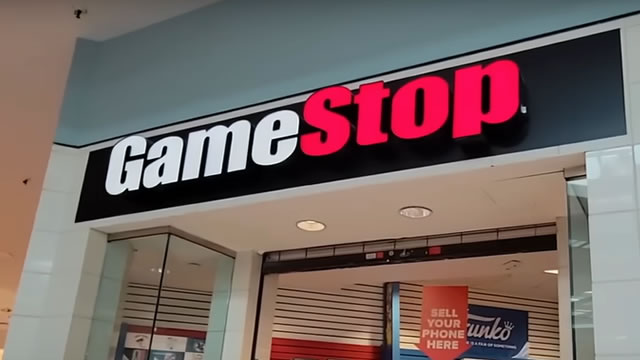
Electronics retail chain closing 100s more stores in survival fight
Yahoo Finance· 2026-01-06 17:33
Core Insights - The decline of physical video rental stores, exemplified by Blockbuster, is attributed to the rise of streaming services, which eliminated the need for in-store rentals [1] - Digital game sales have surged, accounting for over 75% of total video game revenue globally in 2023, a trend driven by faster internet speeds and cloud gaming [2] - GameStop's reliance on disc-based game sales is becoming increasingly unsustainable as fewer customers visit stores for physical copies [3] Company Overview - GameStop has been reducing its retail store portfolio since 2024, closing nearly half of its stores [7] - The company has a strong cash position and has returned to profitability, but sales continue to decline, raising questions about its long-term viability [4][5] - GameStop's hardware sales may recover, but software sales are expected to continue their downward trend [5] Store Closures and Optimization - GameStop closed 590 stores in the U.S. during fiscal 2024, along with additional closures in Europe, Australia, and Canada [13] - The company is conducting a comprehensive review of its store portfolio to identify locations for closure based on market conditions and performance [9] - By early 2025, GameStop's global store count had decreased to around 3,200 from a peak of over 6,000 in the mid-2010s [13] Analyst Perspectives - Analysts have mixed views on GameStop's future, with some believing the company is doomed due to declining physical software sales and a shift to digital [10] - Others highlight GameStop's effective cost-cutting measures and strong balance sheet as positive factors [11]
CES And Jobs Data To Dominate First Full Trading Week Of 2026
Seeking Alpha· 2026-01-03 16:00
Economic Data Release - The week will begin with ISM Manufacturing PMI and ISM Manufacturing Prices data for December on Monday [2] - S&P Global Services PMI and ISM Non-Manufacturing PMI for December will be released on Tuesday [2] - JOLTS Job Openings for November and ADP Nonfarm Employment numbers for December are scheduled for Wednesday [2] - Initial Jobless Claims data will be released on Thursday [2] - Nonfarm Payrolls and unemployment numbers for December are due on Friday [2] Earnings Reports - Constellation Brands, Marks & Spencer, Albertsons, and Applied Digital will report their earnings on Wednesday [3][4] - Tesco PLC is set to report earnings on Thursday [4] Market Events - The CES conference in Las Vegas will focus on AI, robotics, digital health, and mobility, featuring keynote speeches from Nvidia CEO Jensen Huang [5] - IREN Limited and GameStop are expected to experience volatility based on options volume [4] - The analyst quiet period will expire for Lumexa, Wealthfront, JM Group, and Cardinal Infrastructure, allowing analysts to post ratings [4]






Jim Cramer warns against meme stocks if you want a secure retirement. Here's why he thinks it's risky
Yahoo Finance· 2026-01-03 11:30
Core Viewpoint - The primary investment strategy that can jeopardize long-term financial security is chasing meme stocks, which are driven by social media hype rather than strong business fundamentals [1][2]. Group 1: Definition and Risks of Meme Stocks - A meme stock is characterized by a significant increase in share price due to viral online attention rather than actual business success [2]. - GameStop serves as a classic example, where retail traders drove the stock price up by 1,600% in two weeks during early 2021, but by April 2024, the price had fallen to around $10 per share, resulting in substantial losses for late investors [3]. - The "greater fool" theory underlines the risk of meme stocks, suggesting that investors may profit from overpriced stocks only if there is someone else willing to buy them later, likening it to a game of musical chairs [4]. Group 2: Behavioral Insights on Investment Strategies - Cramer's critique extends beyond meme stocks to investor behavior, warning that excessive allocation to speculative stocks can lead to overexposure when market sentiment changes [5]. - Investments that have a clear beginning and end are discouraged, as they often rise and fall rapidly, indicating a preference for long-term ownership over short-term trading [6].
GameStop Stock (GME) Or New Video Game: Which Christmas Gift Had Better Return In 2025?
Benzinga· 2025-12-24 00:03
Core Viewpoint - The comparison between purchasing video games and GameStop stock during the holiday season suggests that investing in GameStop stock has historically provided better returns than buying video games, despite recent declines in stock value [5][8]. Group 1: GameStop's Popularity and Stock Performance - GameStop is a favored retail destination for holiday video game gifts and has gained notoriety as a meme stock following a significant short squeeze in 2021 [2][5]. - The price of GameStop stock on December 24, 2022, was $31.59, allowing a $69.99 investment to purchase 2.22 shares, which would be worth $47.24 today, reflecting a decline of 32.5% [5][6]. - Over the past six Christmases, investing in GameStop stock instead of video games would have yielded a return of $1,490.88 from an investment of $419.94, representing a 255% increase [8]. Group 2: Historical Stock Performance Analysis - In 2019, a $69.99 investment in GameStop stock would have resulted in a value of $979.94 today, marking a 1,300.1% increase [9]. - In 2020, the same investment would have grown to $266.43, reflecting a 280.7% increase [9]. - In 2021, the investment would have decreased to $38.52, showing a decline of 45% [9]. - In 2022, the investment would have appreciated to $72.14, indicating a modest increase of 3.1% [9]. - In 2023, the investment would be worth $86.61, representing a 23.7% increase [9]. - The performance of GameStop stock in 2024, with a price of $31.59, would have resulted in a current value of $47.24, down 32.5% [9].
Gamestop Could Be Going to $0. Buy This Stock Instead.
The Motley Fool· 2025-12-19 06:31
Core Insights - GameStop is experiencing a significant decline, with its stock down 73% as of December 17, 2025, and analysts recommending underperformance with a price target 41% below current levels [2] - The shift towards digital gaming is rendering GameStop increasingly obsolete, as consumers prefer downloading games rather than purchasing physical copies [3] - Amazon is positioned as a clear winner in the gaming industry due to its cloud-based gaming service, digital game sales, and strong infrastructure support through AWS [5][8] GameStop's Decline - GameStop's stock peaked during the meme stock frenzy in early 2021 but has since plummeted, with a 73% loss noted by late 2025 [2] - The company faces a bleak future as the gaming retail model becomes less relevant in the digital age [3] Amazon's Competitive Advantage - Amazon benefits from the digital gaming trend through its cloud gaming service, Amazon Luna, which allows users to stream games without physical media [5] - The company offers digital game sales for major gaming platforms, providing a convenient alternative to traditional retail [5] - Amazon's AWS supports online gaming infrastructure, enhancing its profitability across various gaming platforms [5] Financial Performance of Amazon - Amazon has shown strong financial growth, with an annualized revenue growth of 11.5% over the last three years and a 13% year-over-year increase in the last two reports [7] - The company generated $10.6 billion in free cash flow from $691 billion in revenues, indicating robust financial health [7] - Amazon's strong financials and growth prospects make it an attractive investment opportunity, particularly in the context of the gaming industry [6][8]


Is Michael Burry Going to Supercharge GameStop Stock Again in 2026?
Yahoo Finance· 2025-12-18 18:47
Core Insights - Michael Burry, known for his role in The Big Short, sold his entire GameStop position in late 2020, missing a significant short squeeze in January 2021, which could have resulted in a billion-dollar gain [1][2] - Burry's recent analysis titled "GameStop, The Prequel" discusses a unique market phenomenon involving retail traders and a gamma squeeze [2] - GameStop currently has $8.8 billion in cash and a market cap of $9.9 billion, despite a 27% decline in stock value in 2025 [3] Financial Performance - In fiscal Q3 of 2026, GameStop reported an operating income of $41 million, a significant improvement from a $33 million loss in the previous year, with net income rising from $17 million to $77 million [5] - The company ended Q1 with nearly $9 billion in cash and marketable securities, up from $4.6 billion a year ago [5] - Cost-cutting measures led to a 21% reduction in selling, general, and administrative expenses, decreasing from $282 million to $221 million year-over-year [6] Strategic Changes - GameStop is exiting underperforming international markets, including Canada and France, following previous exits in Germany and Italy, which has improved profitability in remaining locations [7] - The company's business model has been revamped under Ryan Cohen's leadership, with Burry noting that the current situation is similar to his 2018 thesis but with significantly larger numbers [4]
'Big Short' investor Michael Burry sold GameStop weeks before it skyrocketed: 'I had no idea what was coming'
Business Insider· 2025-12-16 14:30
Core Insights - Michael Burry, known for his role in "The Big Short," expressed regrets about selling his GameStop shares before the stock surged dramatically [1][6] Group 1: Investment Timeline - Burry initially invested in GameStop in summer 2018, identifying it as undervalued with potential catalysts such as a console refresh and strong cash flows [2] - After exiting his position in Q2 2019 due to stagnant stock performance, he reinvested in July 2019, citing high short interest as a new catalyst [3] - Burry held a nearly 5% stake for over 16 months, benefiting from lending his shares at high rates [4] Group 2: Selling and Market Dynamics - Burry sold his shares by the end of November 2020 for an average price of $3.38, significantly higher than his purchase price of $0.83 [5] - Following his exit, GameStop's stock experienced a historic surge, reaching over $120 on January 28, 2021, which could have turned his investment of $12 million into $1 billion [5] Group 3: Reflections on Market Behavior - Burry acknowledged a lack of foresight regarding the meme-stock phenomenon and the role of retail investors, expressing mixed feelings about the events of early 2021 [7] - He warned that retail investors could face significant losses in the meme-stock environment, drawing parallels to his previous experiences during the housing market bubble [7] Group 4: Current Perspective on GameStop - Burry indicated that GameStop's current situation resembles his initial assessment in 2018, with a capital structure that has changed significantly and Ryan Cohen now at the helm [8]
X @Cassandra Unchained
Cassandra Unchained· 2025-12-16 14:03
Free article to everyone. The $GME Big Short Squeeze Prequel, play-by-play with the emails, filings. If one takes the time to read everything in here, including all the attachments, one will see it again through Beary Burry’s eyes. Enjoy! Again, my apologies for the delay, I hope it is worth the wait.https://t.co/wCipDlLbYD ...
Michael Burry Admits Missing The Biggest Short Squeeze In History— GameStop's 'Gamma Squeeze' That Broke Wall Street - GameStop (NYSE:GME)
Benzinga· 2025-12-16 11:08
Core Insights - Legendary investor Michael Burry sold his significant position in GameStop Corp. just weeks before the stock's historic rally in January 2021, missing a potential $1 billion profit [1][3]. Group 1: Investment Decisions - Burry's Scion Asset Management held approximately 3 million shares of GameStop with an average cost basis of about $3.32 (pre-split) but exited the position in the fourth quarter of 2020 as the stock reached the mid-teens [3]. - The decision to sell was influenced by skepticism regarding activist investor Ryan Cohen's plans, which Burry deemed to have "execution risk" [3]. - Burry preferred the immediate returns from share buybacks over uncertain digital transformation strategies and faced client withdrawals, prompting the exit [3]. Group 2: Market Dynamics - Burry described the GameStop event as the only "legal market corner" he has ever witnessed, where retail traders executed a "gamma squeeze" by buying large volumes of call options, forcing market makers to buy the underlying stock [4]. - He dismissed the theory that "naked short selling" was the main cause of the volatility, arguing that it was the breakdown of standard synthetic positions that led to panic unwinding by legal short sellers [5]. Group 3: Historical Context - The strategy applied to GameStop was similar to Burry's 2001 investment in Avanti, where he bought undervalued companies, but he admitted to being "blinded" by traditional valuation metrics and failed to anticipate the retail frenzy that transformed GameStop into a global phenomenon [6]. Group 4: Current Performance - GameStop shares have declined 27.95% year-to-date and 24.97% over the past year, with a recent closing price of $22.09, reflecting a 4.05% increase on Monday but a 0.32% decrease in premarket trading on Tuesday [7]. - Benzinga's Edge Stock Rankings indicate that GameStop maintains a weaker price trend across short, medium, and long terms, despite a solid growth ranking [7].