
IBM(IBM)

Search documents
2026 年五大趋势:自信把握稍纵即逝的转型机遇-IBM 商业价值研究院
Sou Hu Cai Jing· 2025-12-15 02:59
Core Insights - The article outlines five key business trends for 2026, emphasizing the need for companies to embrace AI as a core driver for transformation and competitive advantage in an uncertain environment [1][6]. Group 1: Embracing Uncertainty - Companies should actively embrace uncertainty and turn it into a strategic asset, with 74% of executives believing that economic and geopolitical fluctuations will create new business opportunities [1][33]. - Real-time operational capabilities are deemed critical for maintaining competitive advantage, with 90% of executives stating that a lack of such capabilities will hinder success [1][30]. - 84% of executives believe that AI agents can facilitate quicker decision-making and resource reallocation, with 70% planning to enable AI agents to independently execute tasks by the end of 2026 [1][36]. Group 2: Employee Expectations of AI - Employee acceptance of AI is on the rise, with acceptance rates being twice as high as resistance across all age groups, and 77% of employees comfortable with the current pace of technological updates [2][41]. - 61% of employees feel that AI takes over monotonous tasks, allowing them to focus on higher-value work, and 48% are willing to accept AI management [2][45]. - There is a strong demand for skill enhancement, with 56% of employees willing to change jobs for better training opportunities, and 42% willing to accept a pay cut for quality training [2][45]. Group 3: Customer Accountability for AI - 95% of executives believe that consumer trust in AI products will determine the success of new offerings, with 89% of consumers wanting to be informed about AI interactions [3][47]. - Transparency is a core demand, as 80% of consumers would significantly reduce their trust if brands conceal AI usage, and two-thirds would switch brands in such cases [3][52]. - Consumers are tolerant of AI imperfections but demand transparency in data usage and the right to delete their data [3][52]. Group 4: Local Resilience in Globalization - 93% of executives assert that AI sovereignty must be included in 2026 strategies, with 73% recognizing the importance of data physical location due to reliance on AI [4][49]. - 50% of executives express concern over excessive dependence on specific regional computing resources, and 75% of chip procurement companies view supplier concentration as a significant challenge [4][49]. - Companies need to build local AI capabilities across the entire chain, from data centers to model training, while ensuring seamless cross-regional switching capabilities [4][49]. Group 5: Collaborative Advantage for Quantum Computing - Quantum advantage is expected to be realized by the end of 2026, but it requires cross-organizational resource integration, as no single entity can bear the costs alone [5][50]. - Organizations engaged in quantum initiatives are three times more likely to participate in multiple ecosystems, with 89% of executives believing that ecosystem partners can buffer business impacts [5][50]. - Collaborative ecosystems provide multiple benefits, with 79% of executives stating that they accelerate technology adoption and 86% indicating that ecosystem data can enhance AI capabilities [5][50].


Confluent (CFLT) Soars 30% on $11-Billion IBM Merger
Yahoo Finance· 2025-12-14 19:42
Core Insights - Confluent, Inc. (NASDAQ:CFLT) has experienced a significant increase of 29.9% week-on-week due to news of its acquisition by IBM for $11 billion [1][2] - The acquisition agreement stipulates that IBM will purchase all outstanding common shares of Confluent at a price of $31 each [1][2] - The transaction has received approval from the boards of directors of both companies and from Confluent's largest shareholders, who collectively hold 62% of the company's stake [2] Transaction Details - The acquisition is expected to be finalized by mid-2026, pending customary closing conditions, including approval from minority shareholders and regulatory bodies [2] - IBM's CEO, Arvind Krishna, emphasized that the merger will enhance enterprises' ability to deploy generative and agentic AI by improving data communication and flow across various environments and applications [3] Strategic Implications - With the acquisition, IBM aims to establish a smart data platform tailored for enterprise IT and AI applications [4] - There is a belief within the investment community that while Confluent presents potential, other AI stocks may offer greater returns with lower risk [4]
Is IBM the Top Tech Stock to Buy for 2026?
Yahoo Finance· 2025-12-14 14:30
Core Insights - IBM's strategic shift towards software, cloud services, and AI has positively impacted investor sentiment, leading to earnings beats and stock price increases [1][5] - The stock has appreciated by 32.35% over the past 52 weeks and 39.83% year-to-date, reflecting strong investor confidence in IBM's transformation [2] - IBM's market capitalization is approximately $290.5 billion, and the company operates in over 170 countries, offering a diverse portfolio of technology and consulting services [3] Financial Performance - In Q3 2025, IBM reported revenue of $16.3 billion, a 9% year-over-year increase [10] - The software segment generated around $7.2 billion, up 10%, with hybrid cloud growing 14% and automation increasing 24% [11] - Adjusted non-GAAP EPS was $2.65, a 15% increase year-over-year, with gross margin expanding to 58.7% [12] Strategic Developments - IBM is advancing its quantum computing capabilities, aiming for quantum advantage by the end of 2026, with significant technological milestones achieved [4][7] - The introduction of the Quantum Nighthawk processor allows for more complex quantum circuits and improved error correction techniques [8] - IBM has begun deploying powerful quantum systems in research environments, enhancing its technological ecosystem [9] Analyst Expectations - Stifel raised its price target for IBM to $325, viewing the recent acquisition of Confluent as strategically beneficial [14] - Erste Group upgraded IBM from "Hold" to "Buy," anticipating stronger sales growth in the coming year [15] - Consensus among analysts is a "Moderate Buy," with a potential rally of up to 16.9% based on the highest target price of $360 [16]
Law Enforcement Software Market Set for Steady Growth to USD 40.82 Billion by 2033, Driven by Rising Digital Policing and Public Safety Needs | SNS Insider
Globenewswire· 2025-12-13 14:00
Market Overview - The Law Enforcement Software Market was valued at USD 18.86 billion in 2025 and is projected to reach USD 40.82 billion by 2033, growing at a CAGR of 10.13% from 2026 to 2033 [1]. Growth Drivers - The expanding use of digital tools for public safety management, crime prevention, and investigation is driving growth in the law enforcement software market [2]. - The adoption of automated platforms and digital technologies is enhancing operational efficiency in police and public safety organizations [4]. Market Segmentation By Component - The solutions segment dominated the market with over 68.25% market share in 2025, driven by the need for operational efficiency and advanced tools [5]. - The services segment is expected to grow at the highest CAGR of 10.57% during the forecast period due to the demand for continuous support and training [5]. By Deployment - The cloud segment represented more than 71.48% of the market share in 2025, favored for its scalability, cost-efficiency, and accessibility [7]. - The on-premises segment is anticipated to grow at a CAGR of over 10.63%, offering customizable solutions for agencies [7]. Regional Insights - North America accounted for more than 36.23% of the law enforcement software market in 2023, integrating advanced technologies like AI and Big Data analytics [8]. - The Asia Pacific region is experiencing the highest growth rate with a CAGR of over 12.25% from 2026 to 2033, driven by urbanization and demand for advanced public safety solutions [9]. Key Players and Developments - Notable companies in the market include Axon, Motorola Solutions, Tyler Technologies, IBM, and Oracle, among others [12]. - Recent developments include Axon's introduction of new AI-powered tools and Oracle's enhancements to its Public Safety Suite with officer-worn cameras and real-time analytics [12].






AIGC 行业专题报告:AI 技术演进视角下,智能内容生成的现在与未来
Sou Hu Cai Jing· 2025-12-12 23:09
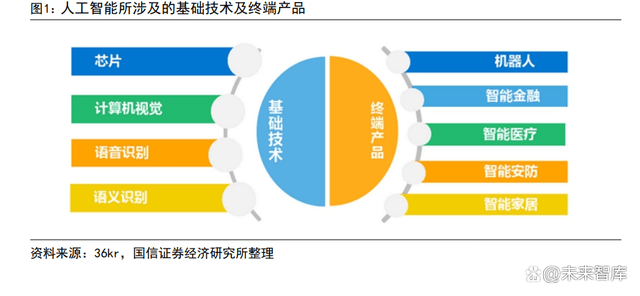
Core Insights - The article discusses the transformative potential of Artificial Intelligence (AI) as the fourth industrial revolution, emphasizing its role in enhancing productivity and reducing costs across various sectors [1][5]. Group 1: AI Development Drivers - AI is driven by the need to improve efficiency and reduce costs, addressing pain points in consumer-related scenarios such as entertainment, travel, and health [3]. - The application of AI in consumer sectors includes labor replacement and productivity enhancement through technologies like voice recognition and intelligent customer service [3]. - In the business sector, AI is widely adopted in finance, public safety, and healthcare, reflecting a strong demand for efficiency improvements [3]. Group 2: Historical Context and Evolution - AI is positioned as the fourth productivity revolution, following the steam, electrical, and information technology revolutions, with significant historical milestones marking its development [5]. - The evolution of AI has seen three major waves of growth, each driven by breakthroughs in underlying algorithms, with the current wave characterized by deep learning advancements [8][12]. - The first wave of AI in the 1950s was limited by computational performance, while the second wave in the 1980s faced challenges due to the high costs of expert systems [9][11]. Group 3: AI Industry Structure - The AI industry can be segmented into three layers: foundational support (hardware and data), technology (algorithm development), and application (commercial solutions) [6][7]. - Major players in the foundational layer include international tech giants like Nvidia and Intel, while the technology layer features companies like Google and IBM focusing on specific AI applications [6][7]. - The application layer is where AI technologies are commercialized, with a relatively low entry barrier due to the global open-source community [6]. Group 4: Current AI Landscape - The current state of AI is classified as "weak AI," focusing on specific tasks such as speech and image recognition, with significant performance exceeding human capabilities in certain areas [30][33]. - AI's impact on global GDP is projected to be substantial, with estimates suggesting a 14% increase, translating to approximately $15.7 trillion in growth [37]. - The rapid advancement of deep learning algorithms and the availability of vast datasets are expected to drive widespread AI application across various industries [38][39]. Group 5: Future Opportunities - The article highlights the potential for AI to revolutionize content generation and distribution, particularly through platforms like TikTok and Douyin, which utilize AI-driven recommendation systems [46][52]. - The emergence of generative AI (AIGC) is seen as a significant opportunity, with advancements enabling the creation of diverse content types, including text, images, and videos [54][61]. - The integration of AI into various sectors is anticipated to accelerate, driven by technological advancements and supportive policies from governments [44][45].





IBM Makes a Big Acquisition (and Buys My Favorite SaaS Stock): What Investors Need to Know

The Motley Fool· 2025-12-12 13:49
Core Insights - IBM has reached an agreement to acquire Confluent for $31 per share, indicating a significant valuation for Confluent shareholders [1] Group 1: Acquisition Details - The acquisition price of $31 per share reflects a sizable upside for Confluent, which is now being realized by IBM [1] - The deal was announced on December 8, 2025, with stock prices referenced from that afternoon [1] Group 2: Impact on Shareholders - Confluent shareholders will benefit from the acquisition, as the deal provides a premium over the current market price [1] - The acquisition by IBM suggests a strategic move to enhance IBM's capabilities in the data streaming market [1]

Reddit’s Top AI Stocks: Why Traders Are Backing IBM and ASML Over other AI Plays
Yahoo Finance· 2025-12-11 21:17
Core Insights - Retail trader enthusiasm is driving strong bullish sentiment for ASML and IBM, with ASML up 58% year to date and IBM climbing 49% from its 52-week low [2][3] IBM's Strategic Moves - IBM's $11 billion acquisition of Confluent at a 34% premium positions the company to dominate real-time data streaming for AI applications, generating significant retail trader activity [3][5] - IBM's AI book of business reached $9.5 billion in Q3, with infrastructure revenue increasing 17% year over year, reflecting strong growth in AI-related services [6] ASML's Market Position - ASML holds a monopoly in extreme ultraviolet lithography technology, crucial for advanced AI chip manufacturing, reporting $7.52 billion in Q3 revenue with a 29.4% profit margin [4][5] - Retail traders view ASML's 58% year-to-date gain as justified due to its essential role in AI chip production, with analyst targets averaging $1,064 [4]

Reddit's Top AI Stocks: Why Traders Are Backing IBM and ASML Over other AI Plays
247Wallst· 2025-12-11 20:17
Core Insights - ASML and IBM stocks are experiencing significant bullish sentiment among retail traders, particularly on platforms like Reddit [1] Company Summary - ASML shares are gaining traction due to increased interest from retail investors [1] - IBM is also benefiting from a similar trend, with strong retail trader enthusiasm [1]

IBM Rides on Strength in Software Segment: Will the Uptrend Continue?
ZACKS· 2025-12-11 18:51
Core Insights - IBM is experiencing significant growth in its Software segment, with Q3 revenues reaching $7.21 billion, a 10.6% increase from $6.52 billion year-over-year. Net income rose to $2.37 billion from $1.97 billion, with margins improving to 32.9% from 30% [1][9]. Software Segment Performance - The growth in the Software segment is primarily driven by Automation, which saw a 22% increase during the quarter. This growth is attributed to the rising demand for digital transformation and AI integration across various sectors [2]. - IBM's Automation portfolio provides comprehensive solutions aimed at optimizing operations and enhancing cost efficiency [2]. Hybrid Cloud Growth - Hybrid Cloud continues to be a key growth driver for IBM, reporting a 12% year-over-year revenue increase in Q3. All major subscription offerings gained market share, reflecting the effectiveness of IBM's hybrid approach [3]. - The company anticipates generating $7.67 billion in revenues from the Hybrid Cloud segment, indicating an 18.2% year-over-year growth [4]. Strategic Acquisitions - IBM is set to acquire Confluent, a leading data infrastructure company specializing in real-time data streaming. This acquisition aims to enhance the integration of applications, analytics, data systems, and AI agents, thereby improving resilience in hybrid cloud environments [5]. Competitive Landscape - IBM faces competition from Microsoft and Oracle. Oracle reported cloud revenues of $7.97 billion, a 34% increase year-over-year, while Microsoft's Productivity & Business Processes segment generated $33.02 billion, up 17% year-over-year [6][7]. Valuation and Earnings Estimates - IBM shares have increased by 35.6% over the past year, compared to the industry's growth of 73% [8]. - The company trades at a forward price-to-earnings ratio of 25.67, which is higher than the industry average [11]. - Earnings estimates for 2025 have risen by 2.43% to $11.39, and for 2026, they have increased by 2.34% to $12.23 [12].

IBM Strengthens AI Platform With Confluent Buyout; Analyst Hikes PT to $325
Yahoo Finance· 2025-12-11 13:36
Group 1 - IBM is recognized as a prominent AI stock, with Stifel analyst David Grossman raising the price target from $295 to $325 while maintaining a "Buy" rating [1] - IBM's acquisition of Confluent for $11 billion is aimed at enhancing its AI platform and aligning with its hybrid cloud strategy, with the deal expected to close by mid-2026 [2][4] - The acquisition is valued at approximately 7 times the expected revenue for 2027, which is consistent with comparable software companies, and represents a 34% premium over Confluent's stock price prior to the announcement [2] Group 2 - Confluent operates the Apache Kafka open-source data streaming platform, which is crucial for real-time data transportation, and has a presence in 40% of Fortune 500 companies [2][3] - The acquisition is expected to be slightly dilutive to IBM's free cash flow in 2026 but neutral or accretive thereafter, with estimated EPS dilution of less than 3% in 2026/2027 [4] - IBM has a history of successfully leveraging acquisitions that face challenges in penetrating large enterprises, indicating potential for cost synergies [4]