MongoDB(MDB)

Search documents
上一次“软件要亡”论发生在10年前,后续如何了?
Hua Er Jie Jian Wen· 2026-02-15 07:39
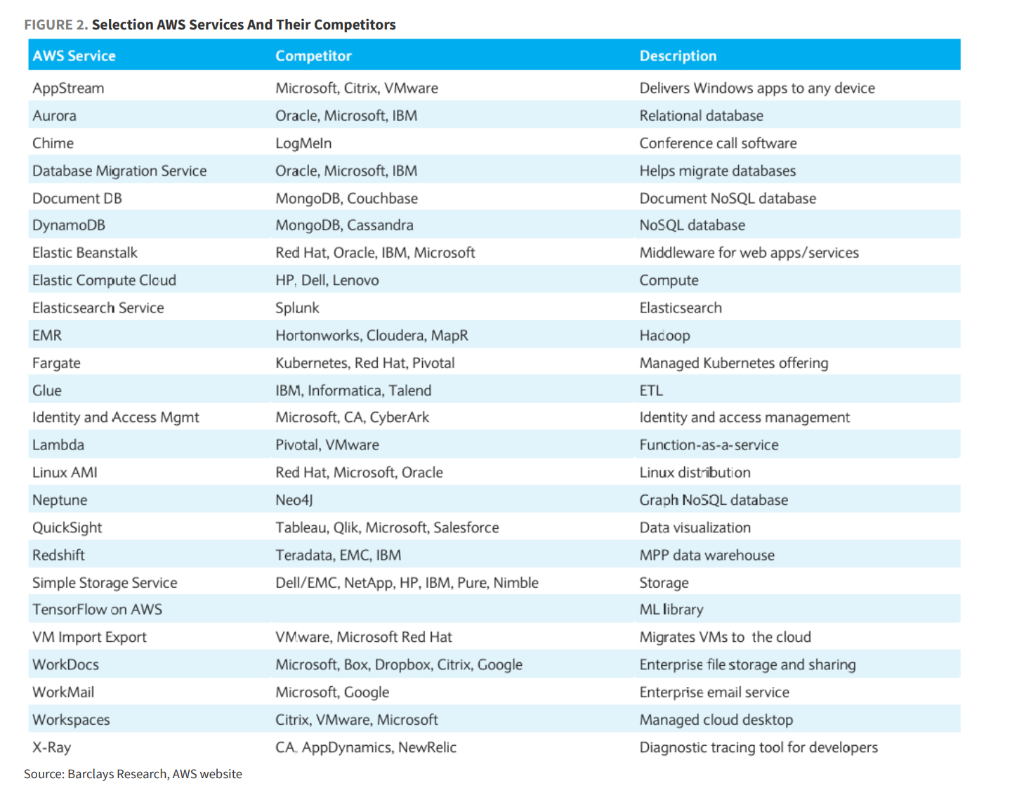
Core Viewpoint - Barclays believes that the current market panic regarding generative AI (GenAI) is based on a "worst-case scenario" assumption, predicting the extinction of traditional software companies, which mirrors the panic seen a decade ago with the rise of Amazon AWS [1][2] Historical Context - The current investor sentiment in the software sector is extremely negative, with a simplistic investment logic of buying AI newcomers and shorting traditional software [2] - This situation is reminiscent of the panic surrounding AWS's growth, where established software companies faced similar doomsday predictions, yet none went bankrupt due to AWS competition [4][5] Market Dynamics - Historical data shows that while AWS gained significant market share, it did not lead to the extinction of mature software companies; instead, these companies evolved and thrived [4][5] - The market's current indiscriminate sell-off of software stocks, with the IGV (software ETF) down approximately 24% year-to-date, is viewed as irrational [6] Mispricing Opportunities - Barclays identifies significant mispricing opportunities in the current market, particularly for companies with strong core record systems and specific domain moats that are being undervalued [1][6] - The panic selling creates an opportunity for investors to identify industry leaders that have been unfairly punished [7] Defensive Sectors - Two defensive sectors highlighted are: 1. Owners of record systems, such as Salesforce and SAP, which hold core enterprise data and are difficult to replace [9] 2. Vertical SaaS companies, like Veeva Systems and Tyler Technologies, which possess deep domain-specific data moats [9] Company Performance - Notable company performances include: - CyberArk's market cap surged from $885 million to $22.516 billion, a 2443% increase [8] - Microsoft and Google also saw significant market cap growth, with increases of 1048% and 871%, respectively [8] - Traditional companies like Teradata experienced a 73% decline, while others like Tableau and Splunk were acquired at high premiums [8]





MongoDB vs. Datadog: Which Cloud Software Stock is a Better Buy Now?
ZACKS· 2026-02-12 16:41
Core Insights - MongoDB (MDB) and Datadog (DDOG) are key players in the cloud software sector, with MongoDB focusing on flexible database solutions and Datadog on observability and monitoring tools [1][8] - The global cloud infrastructure services market is expected to grow from $254.59 billion in 2026 to $545.03 billion by 2031, driven by cloud migration and AI workloads [2] MongoDB (MDB) Insights - MongoDB's growth is fueled by its Atlas offering, which accounts for 75% of total revenues, reflecting a shift towards consumption-based models [4][6] - The platform's document-oriented architecture allows for better handling of unstructured data, making it suitable for AI applications [5] - MongoDB serves over 70% of the Fortune 100 and has a customer base exceeding 62,500, indicating strong market penetration [6] - The Zacks Consensus Estimate for MDB's fiscal 2027 EPS is $5.61, suggesting a year-over-year growth of 17.23% [7] Datadog (DDOG) Insights - Datadog provides a unified platform for observability but faces challenges due to market commoditization and limited differentiation in AI workloads [8][10] - The company serves over 32,700 customers and has over 1,000 integrations, but its AI capabilities are more about enhancing existing processes rather than creating new applications [11] - The Zacks Consensus Estimate for DDOG's 2027 EPS is $2.74, indicating a year-over-year growth of 20.93% [12] Price Performance and Valuation - Over the past six months, MongoDB shares have increased by 75.7%, while Datadog shares have decreased by 1.1%, highlighting MongoDB's stronger market performance [13] - MongoDB trades at a forward price-to-sales ratio of 10.27x, compared to Datadog's 10.75x, suggesting a relative discount for the faster-growing MongoDB [16] - The valuation premium for Datadog is difficult to justify given the commoditization of the observability market [16] Conclusion - MongoDB's growth trajectory and its role as an operational database for AI applications position it favorably against Datadog, which is facing challenges in a commoditized market [18] - Investors looking for high-growth cloud software opportunities with AI potential may find MongoDB to be the superior investment choice [18]



Best Software Stocks to Buy That AI Can’t Disrupt
Investing· 2026-02-11 19:50
Group 1: MongoDB - MongoDB has shown significant growth in its cloud database services, with a reported revenue increase of 50% year-over-year, reaching $300 million in the last quarter [1] - The company continues to expand its customer base, adding over 1,000 new customers in the last quarter, bringing the total to over 40,000 [1] - MongoDB's focus on enhancing its product offerings, including new features for data analytics and machine learning, is expected to drive further adoption [1] Group 2: Cloudflare Inc - Cloudflare Inc reported a revenue increase of 47% year-over-year, totaling $250 million for the last quarter [1] - The company has successfully expanded its global network, now serving over 30 million internet properties, which enhances its market position [1] - Cloudflare's investment in security features has attracted a diverse range of clients, contributing to its strong growth trajectory [1] Group 3: Applovin Corp - Applovin Corp experienced a revenue growth of 35% year-over-year, reaching $200 million in the last quarter [1] - The company is focusing on expanding its advertising platform, which has seen increased demand from mobile app developers [1] - Applovin's strategic partnerships with major gaming companies are expected to enhance its market share and revenue potential [1]


3 Internet Software Stocks to Buy From a Challenging Industry
ZACKS· 2026-02-11 17:50
Core Insights - The Zacks Internet Software industry is experiencing volatility due to fears of AI disrupting the traditional SaaS space, alongside heightened geopolitical risks and tariff uncertainties. However, companies like MongoDB, Digital Turbine, and 8x8 are benefiting from increased demand for digital transformation and cloud solutions driven by the need for remote working and AI-powered applications [1] Industry Overview - The Zacks Internet Software industry includes companies that provide application performance monitoring, infrastructure and application software, DevOps deployment, and security software. The primary revenue sources are subscription and advertising, targeting various end markets such as banking, education, and healthcare [2] Trends Shaping the Industry - **Adoption of SaaS Grows**: The industry benefits from the demand for digital transformation, with SaaS providing a flexible and cost-effective delivery method for applications, enhancing customer satisfaction and retention [3] - **Pay-As-You-Go Model Gains Traction**: The customer-centric approach allows users to scale offerings according to needs, with the subscription model ensuring recurring revenues and affordability for small and medium-sized businesses [4] - **Ongoing Transition to Cloud Creates Opportunities**: The need for secure cloud platforms amid rising cyberattacks drives demand for web-based cybersecurity software and performance management tools [5] Industry Performance - The Zacks Internet Software industry holds a Zacks Industry Rank of 139, placing it in the bottom 43% of over 250 Zacks industries, indicating dull near-term prospects [6][7] - The industry has underperformed the S&P 500 and the broader Computer and Technology sector, returning 16.9% over the past year compared to the S&P 500's 17.2% and the sector's 23.1% [10] Current Valuation - The industry is currently trading at a forward 12-month price-to-sales (P/S) ratio of 4.09X, lower than the S&P 500's 5.30X and the sector's 6.8X, with historical trading ranging from 4.09X to 5.99X over the past five years [13] Company Highlights - **MongoDB**: This company has seen a 29% year-over-year revenue increase in Q2 of fiscal 2026, adding over 5,000 customers in the past two quarters. Its shares have appreciated 29% in the past year, with a consensus estimate for fiscal 2027 earnings at $5.61 per share [17][18][19] - **Digital Turbine**: Expected revenues for fiscal 2026 are projected between $553 million and $558 million, with shares dropping 24% in the past year. The consensus estimate for fiscal 2026 earnings is 36 cents per share [22][23] - **8x8**: This company has experienced nearly 60% year-over-year growth in usage-based offerings, with shares down 19% over the past year. The consensus estimate for fiscal 2026 earnings is also 36 cents per share [26][27]



软件领域- 中小盘股覆盖范围内,应对人工智能颠覆的争议-Americas Technology_ Software_ Addressing AI Disruption Debate Across SMID Coverage
2026-02-10 03:24
Summary of Key Points from the Conference Call Industry Overview - The software industry is experiencing a reset in valuations due to concerns over AI disruption, which has become a central topic in investment discussions [1][2] - The analysis focuses on four companies: MongoDB, Rubrik, Nutanix, and Procore, using an AI Impact Framework to assess risks and opportunities related to AI [1] Core Insights and Arguments AI Impact Framework - The framework evaluates companies across six dimensions: orchestration risk, monetization exposure, system-of-record ownership, data and integration moat, AI execution, and budget alignment [11] - Companies with strong data management and operational roles are expected to benefit from AI rather than be undermined by it [1][10] Company-Specific Analysis 1. **MongoDB** - Down 18% YTD, but viewed as a long-term AI beneficiary due to its insulated position from seat disruption fears [15][16] - Expected to see significant growth in AI workloads by FY27, with a stable core business supporting larger deployments [16][21] - MongoDB's architecture is well-suited for AI applications, enhancing its relevance in the AI stack [21][22] 2. **Rubrik** - Down 33% YTD, but has shown strong ARR growth and profitability [23] - Positioned as a primary consolidator in backup and recovery, with a focus on data security in the AI era [27][29] - The monetization model based on data under management aligns well with the growth of AI-driven activity [29][32] 3. **Procore** - Down 30% YTD, facing concerns over workflow exposure to AI disruption [31] - Operates as a primary data aggregation layer for construction workflows, maintaining structural relevance [31][37] - The pricing model based on construction volume limits exposure to seat compression risks [38][39] 4. **Nutanix** - Down 22% YTD, facing challenges related to demand elasticity and AI disruption fears [41] - Positioned at the infrastructure layer, which is insulated from AI-driven automation risks [44] - The company is focusing on hybrid multi-cloud opportunities, which remain relevant despite near-term uncertainties [50] Additional Important Insights - The recent selloff in software stocks is attributed more to shifts in investor sentiment rather than fundamental deterioration [2][4] - AI innovation is accelerating, with new developments indicating that AI will reinforce long-term growth for many companies [1] - The analysis suggests that the market is applying a broad risk premium, creating potential opportunities in software businesses with intact fundamentals [4][10] Valuation and Risks - MongoDB's price target is set at $475, with key risks including competition from relational database incumbents and potential slowing in cloud migration [48][49] - Rubrik's price target is lowered to $80, with risks including competition and elevated product development costs [50][52] - Procore's price target is set at $75, with risks related to competition and execution challenges in international markets [53][54] - Nutanix maintains a price target of $60, with risks tied to public cloud adoption and competition in the hybrid multi-cloud space [55][56] This summary encapsulates the key points discussed in the conference call, highlighting the industry context, company-specific insights, and valuation considerations.


Here's Why MongoDB (MDB) Is a Great 'Buy the Bottom' Stock Now
ZACKS· 2026-02-09 15:56
Core Viewpoint - MongoDB (MDB) has experienced a bearish trend recently, losing 7.3% over the past week, but the formation of a hammer chart pattern suggests a potential trend reversal as buying interest may be increasing [1] Technical Analysis - The hammer chart pattern indicates a possible bottoming out with reduced selling pressure, signaling a potential bullish reversal [2] - A hammer pattern forms when there is a small difference between opening and closing prices, with a long lower wick, suggesting that bears may be losing control [4][5] - The effectiveness of the hammer pattern is enhanced when used alongside other bullish indicators due to its limitations [6] Fundamental Analysis - There has been a notable upward trend in earnings estimate revisions for MDB, which is a bullish indicator suggesting potential price appreciation [7] - Over the last 30 days, the consensus EPS estimate for MDB has increased by 41.4%, indicating strong agreement among analysts for better-than-expected earnings [8] - MDB holds a Zacks Rank 1 (Strong Buy), placing it in the top 5% of over 4,000 ranked stocks, which typically outperform the market [9][10]

3000亿美元因Agent一夜蒸发,纳德拉、MongoDB CEO等宣告:传统SaaS已走到拐点
3 6 Ke· 2026-02-09 05:19
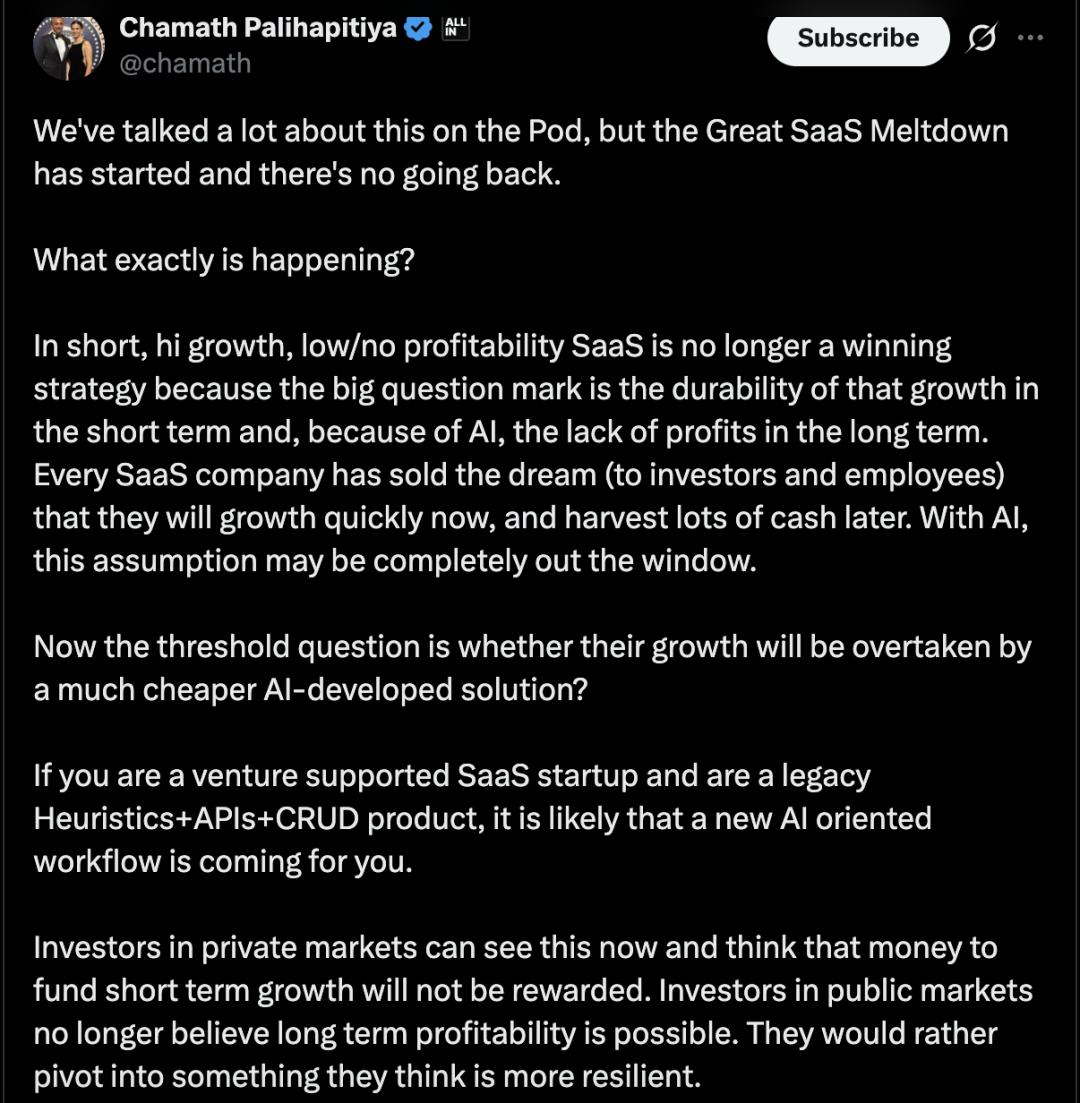
Core Insights - The market capitalization of SaaS, data, and software investment companies has evaporated by approximately $300 billion due to the release of an AI product, rather than disappointing earnings or macroeconomic shocks [1] - The IGV software index has dropped about 30% from its peak in late September, with significant declines in stock prices for major companies like Salesforce, ServiceNow, Adobe, and Workday, which fell around 7%, and Intuit, which plummeted nearly 11% [2] - The average expected price-to-earnings ratio for software companies has sharply decreased from about 39 times to approximately 21 times in just a few months [2] Group 1: Market Dynamics - The crisis in the SaaS sector has been ongoing for several months, with a recent acceleration in the speed of market reactions [2] - Short sellers have profited over $20 billion by betting against traditional SaaS businesses, indicating a significant loss of confidence in the sector [2] - The core assumption being challenged is the sustainability of traditional SaaS growth models, which have been supported by predictable recurring revenues and high switching costs [3][4] Group 2: AI Impact - AI is fundamentally testing the logic behind traditional SaaS models, as modern AI systems can replace many human workflows across various applications [6] - Investors are increasingly concerned that the growth of many SaaS companies may be rapidly supplanted by lower-cost, AI-driven solutions [8] - The emergence of AI-driven workflows is seen as a significant threat to the high-growth, low-profit SaaS development path, leading to a loss of market trust [7] Group 3: Future Outlook - High-profile figures like Chamath Palihapitiya and Microsoft CEO Satya Nadella have expressed that the SaaS model is becoming obsolete, predicting a shift towards AI-driven platforms [12][9] - Goldman Sachs predicts that by the end of the decade, AI agents will capture a disproportionate share of profits in the software market, with over 60% of software economic benefits potentially realized through agent systems rather than traditional SaaS services [15][18] - The transition from static applications to adaptive systems is expected to weaken the economic benefits of traditional software, although overall market growth is anticipated [18][19] Group 4: Investment Sentiment - The private equity and credit markets are reacting to the changing landscape, with investors recognizing that continued funding for short-term growth may not yield returns [8][20] - The prevailing investment logic in the software industry, based on predictable revenues and low customer churn, is being recalibrated in light of AI advancements [20] - MongoDB's CEO emphasizes that true platforms, rather than mere products, will endure in the evolving software landscape, highlighting the importance of adaptability and speed in technology transitions [21][26]


3000亿美元因Agent一夜蒸发!纳德拉、MongoDB CEO等宣告:传统SaaS已走到拐点
Sou Hu Cai Jing· 2026-02-07 04:18
Core Insights - The market capitalization of SaaS, data, and software companies has evaporated by approximately $300 billion due to the release of an AI product, rather than poor earnings or macroeconomic shocks [1] - The IGV software index has dropped about 30% from its peak in late September, with significant declines in stock prices for major companies like Salesforce, ServiceNow, Adobe, and Intuit [2] - The average expected price-to-earnings ratio for software companies has plummeted from around 39 times to approximately 21 times in just a few months [2] Group 1: Market Dynamics - The crisis in the SaaS sector has been ongoing for months, with a recent acceleration in the speed of market reactions [2] - Short sellers have profited over $20 billion by betting against traditional SaaS businesses, indicating a loss of confidence in the sustainability of their growth models [2] - The core assumption that has been challenged is the sustainability of traditional SaaS growth models in the face of AI advancements [4] Group 2: AI Impact - AI is fundamentally testing the logic behind traditional SaaS models, as modern AI systems can replace many human workflows across various applications [6] - Investors are increasingly concerned that the growth of many SaaS companies may be rapidly supplanted by lower-cost, AI-driven solutions [8] - The shift towards AI-driven workflows is seen as a significant threat to the traditional SaaS business model, which relied on high growth with low or no profitability [7] Group 3: Industry Perspectives - Notable figures like Chamath Palihapitiya and Microsoft CEO Satya Nadella have expressed that the era of SaaS is over, emphasizing a shift towards AI-driven platforms [11][7] - The software industry's profit pool is expected to shift towards AI agents, with predictions that by 2030, over 60% of software economic benefits may come from agent systems rather than traditional SaaS services [15] - The transition is not indicative of a shrinking market but rather a reallocation of economic benefits from static applications to adaptive systems [18] Group 4: Future Outlook - Companies must embrace AI agents and integrate them into their business models to remain competitive in the evolving landscape [14] - The historical reliance on predictable revenue and low customer churn in the software industry is being reassessed as AI changes the dynamics of customer engagement and product value [20] - The future of software will likely focus on platforms rather than individual products, as platforms can offer greater integration and customer stickiness [22][27]
5 Growth Stocks to Buy in February to Enhance Your Portfolio Returns
ZACKS· 2026-02-06 14:40
Market Overview - U.S. stock markets have started 2026 positively, with all three major stock indexes trading in positive territory, supported by strong domestic economic fundamentals, solid fourth-quarter 2025 earnings, accommodative Fed policies, and resolution of trade issues [1] Investment Recommendations - Investing in growth stocks is recommended for February, focusing on stocks with aggressive earnings or revenue growth to enhance portfolio performance [2] Growth Stock Picks - Five recommended growth stocks include Micron Technology Inc. (MU), MongoDB Inc. (MDB), Amphenol Corp. (APH), Ciena Corp. (CIEN), and Seagate Technology Holdings plc (STX), all with a Zacks Rank 1 (Strong Buy) and a Growth Score of A [3] Micron Technology Inc. (MU) - Micron is a leader in AI infrastructure, driven by strong demand for high-bandwidth memory (HBM) solutions, with record sales in the data center market and increasing HBM adoption boosting DRAM revenues [6][10] - The growing adoption of AI servers is reshaping the DRAM market, increasing demand for high-capacity DIMMs and low-power server DRAM, with Micron capitalizing on this trend through a strong product roadmap, including HBM4 set for production in 2026 [7] - Micron's diversification strategy has stabilized its revenue base by shifting focus from volatile consumer electronics to more resilient sectors like automotive and enterprise IT [8] - Expected revenue and earnings growth rates for Micron are 96.1% and over 100%, respectively, for the current year ending August 2026, with a recent earnings estimate improvement of 0.1% [10] MongoDB Inc. (MDB) - MongoDB has expanded its Atlas platform beyond database management into analytics, targeting agile development and modern workloads to leverage the generative AI trend [11] - The company has seen continued platform adoption across enterprises and startups, with a focus on larger enterprises enhancing deal sizes and sales efficiency [12] - Recent product initiatives include new AI embedding models and integrations with tools like GitHub Copilot, strengthening its position in AI-driven applications [13] - Expected revenue and earnings growth rates for MongoDB are 17.8% and 17.2%, respectively, for the current year ending January 2027, with a recent earnings estimate improvement of 0.2% [14] Amphenol Corp. (APH) - Amphenol benefits from a diversified business model, with a strong portfolio in high-technology interconnect products, commanding an estimated 33% market share in AI-powered data center interconnects [15] - Increased spending on defense technologies and strong demand across Commercial Air, Industrial, and IT Datacom sectors support top-line growth [16] - Rising AI workloads and cloud infrastructure upgrades are driving demand for high-speed interconnects, with steady growth expected in the Interconnect and Sensor Systems segment [17] - Expected revenue and earnings growth rates for Amphenol are 34.9% and 29.3%, respectively, for the current year, with a recent earnings estimate improvement of 6.4% [18] Ciena Corp. (CIEN) - Ciena's fiscal fourth-quarter showed a 20% year-over-year revenue increase and 69.5% EPS growth, driven by AI-led demand from cloud and service provider customers [19] - Networking Platforms revenues rose 22% to $1.05 billion, with strong growth in Optical and Routing and Switching segments [20] - Ciena has raised its fiscal 2026 revenue outlook to $5.7-$6.1 billion, reflecting nearly 24% growth at the midpoint, driven by demand from cloud and AI infrastructure [21] - Expected revenue and earnings growth rates for Ciena are 24.1% and over 100%, respectively, for the current year ending October 2026, with a recent earnings estimate improvement of 20.2% [23] Seagate Technology Holdings plc (STX) - Seagate is experiencing strong execution amid rising cloud and AI demand, with a focus on balancing performance and cost efficiency in modern data centers [24] - High-capacity nearline production is booked through 2026, with long-term contracts providing strong demand visibility through 2027 [25] - Seagate's aerial density roadmap offers a competitive advantage in hard drives, aligning with the growing demand for AI-driven data storage solutions [26] - Expected revenue and earnings growth rates for Seagate are 24.6% and 55.9%, respectively, for the current year ending June 2026, with a recent earnings estimate improvement of 11.8% [28]



深度|MongoDB CEO:平台化才是企业软件唯一的护城河,单点工具必将被AI颠覆
Sou Hu Cai Jing· 2026-02-05 04:15
Core Insights - The discussion centers around the transformation of software value in the AI era, particularly focusing on the concept of "moats" in SaaS companies and the importance of platforms over single-point products [3][4][5]. Group 1: Software Value and Moats - The core question raised is about the true value of software in an era where software generation is abundant, prompting a reevaluation of what constitutes a competitive advantage or "moat" [3][4]. - Speed of adaptation to technological changes is emphasized as a critical factor for companies to maintain their competitive edge, rather than relying solely on customer relationships or distribution capabilities [4][5]. - The notion that single-point products are easily replaceable is highlighted, contrasting with the stickiness of platforms that offer integrated solutions [6][7]. Group 2: Platform vs. Single-Point Products - Platforms are described as having inherent stickiness due to the thoughtful decision-making process involved from the customer's perspective, while single-point products lack this depth [6][7]. - The importance of having a "killer use case" for initial market entry is discussed, but it is noted that reliance on a single disruptive solution can lead to vulnerability if customers do not build around the product [8][9]. - The rarity of software companies achieving over $10 billion in revenue is pointed out, emphasizing the need for companies to evolve into platforms to achieve significant scale [9]. Group 3: Enterprise Class Applications - The challenges of developing enterprise-class applications that meet stringent requirements from large organizations, such as banks, are discussed, highlighting the need for robust go-to-market strategies [10][11]. - The conversation touches on the necessity for applications to not only be innovative but also to integrate seamlessly with existing systems within large enterprises [11][12]. Group 4: Leadership and Innovation - The importance of continuous customer engagement for product development and innovation is stressed, with a focus on understanding customer pain points and needs [26][28]. - The discussion reflects on the need for leaders to embrace change and manage transformations effectively, particularly in the context of AI and cloud transitions [30][31]. - The role of leadership in fostering a culture of innovation and responsiveness to market changes is emphasized as crucial for long-term success [30][31].