Oracle(ORCL)

Search documents
甲骨文劲升9.6%,标普逼近7000点,白银暴涨8%
Di Yi Cai Jing Zi Xun· 2026-02-11 08:45
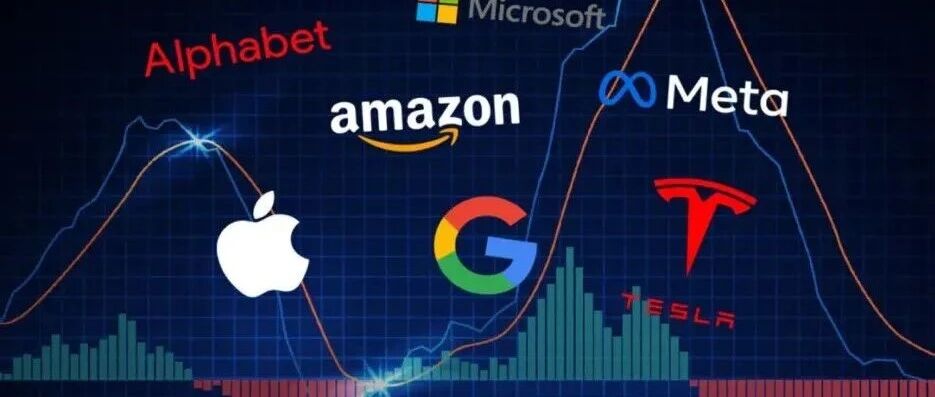
Market Overview - US stock market experienced a broad rally on Monday, with the Dow Jones Industrial Average closing at 50,135.87, up 20.20 points or 0.04%, the Nasdaq Composite rising 0.90% to 23,238.67, and the S&P 500 increasing by 0.47% to 6,964.82 [2][3] - The software sector rebounded with the S&P 500 Software Services Index up 1.07% after a significant decline the previous week due to concerns over AI's impact on competition and profit margins [2] Stock Performance - Major tech stocks showed mixed results: Microsoft rose 3.13%, Meta increased by 2.41%, Tesla gained 1.51%, Google was up 0.40%, while Amazon fell 0.76% and Apple dropped 1.17% [4][5] - The Philadelphia Semiconductor Index increased by 1.42%, with Nvidia's stock rising 2.50% ahead of its upcoming earnings report, which is highly anticipated by investors [4] Corporate Developments - Oracle's stock surged by 9.64%, marking its largest intraday gain since December, following an upgrade from Davidson Investment Bank from "Neutral" to "Buy" [5] - Kroger's stock rose 3.85% after appointing former Walmart executive Greg Foran as CEO [6] Investor Sentiment - Investors remain cautious despite the recent rally, particularly regarding the ambitious capital expenditure plans of major tech companies, which total approximately $650 billion aimed at dominating the AI sector [7] - Concerns persist about the sustainability of the market rebound, with tech stock valuations shifting from a 17% premium to an 8% discount compared to the past five-year average [7] Economic Indicators - Investors are awaiting the delayed January non-farm payroll report and the January Consumer Price Index, both of which are expected to provide insights into the economic outlook [8] - The New York Federal Reserve's survey indicated a slight improvement in consumer expectations regarding inflation and the job market, with the median inflation expectation for the next year dropping to 3.1% from 3.4% in December [8] Commodity Market - International oil prices saw a late rally, with WTI crude oil rising by 1.27% to $64.36 per barrel and Brent crude increasing by 1.45% to $69.04 per barrel [9] - Precious metals experienced a strong rebound, with COMEX gold futures rising by 2.01% to $5,050.90 per ounce and silver futures increasing by 6.95% to $82.065 per ounce [9]


甲骨文们的指引一个比一个炸裂,但历史泼了一盆冷水
Hua Er Jie Jian Wen· 2026-02-11 08:42
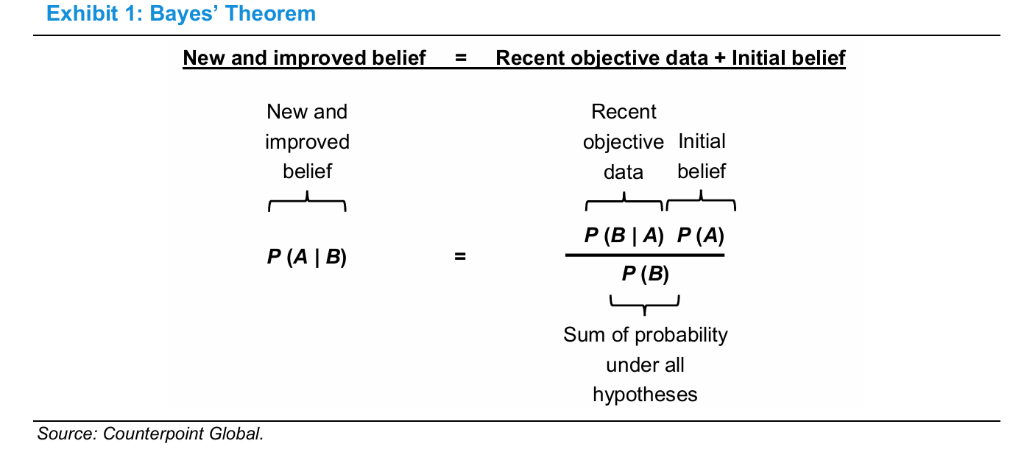
ChatGPT在2022年底把生成式AI推到大众视野后,投资端的变化更快:企业在AI硬件、数据中心上的投入力度,已经接近美国历史上几次最大的 投资浪潮。市场随之抛出一堆漂亮的收入曲线,但问题也变得尖锐——这些预测到底有多大概率能实现,值不值得为此付出资本和时间成本? 据追风交易台消息,摩根士丹利投资管理旗下Counterpoint Global的Michael J. Mauboussin在10日的报告中直截了当地给出方法论:评估这类前瞻 判断,应该"starting with an initial belief and updating that belief as new results appear",也就是"贝叶斯公式":"新结论 = 初始判断(先验概率) × 新 证据带来的调整系数(似然比)"。 | New and improved belief | Recent objective data + Initial belief | ll | | | --- | --- | --- | --- | | Recent | New and | improved | objective Initial | | ...
Which Big Tech Stocks Have the Most Debt, and Why It Matters
The Motley Fool· 2026-02-11 06:05
Core Viewpoint - The competition among Big Tech firms in the AI sector is driving significant borrowing, raising concerns about the sustainability of their debt levels and the potential risks associated with their investments in AI technology [1][2]. Debt Levels and Financial Metrics - Morgan Stanley estimates that hyperscalers will raise approximately $400 billion in corporate bonds by 2026 to support AI scaling efforts [2]. - AI and data center firms constitute 14.5% of JPMorgan's $10 trillion investment-grade bond index, equating to nearly $1.5 trillion in existing debt [2]. - Key hyperscalers include Nvidia, Oracle, Alphabet, Apple, Microsoft, Meta, and Amazon, all of which are heavily investing in AI and related infrastructure [5]. Debt-to-Equity and Debt-to-Capital Ratios - Oracle has a debt-to-equity (D/E) ratio of 519.6% and a debt-to-capital (D/C) ratio of 83.9%, indicating high leverage [6]. - Apple follows with a D/E ratio of 152.4% and a D/C ratio of 60.4%, also reflecting significant debt levels [6]. - Other firms like Amazon, Microsoft, Meta, Alphabet, and Nvidia maintain lower D/E and D/C ratios, suggesting healthier balance sheets [6]. Cash Reserves and Long-Term Debt - Alphabet has total cash and short-term investments of $98.5 billion against long-term debt of $21.6 billion [7]. - Nvidia holds $60.6 billion in cash with $7.5 billion in long-term debt, while Microsoft has $89.5 billion in cash and $35.4 billion in long-term debt [7]. - Apple and Oracle are the only firms with long-term debt exceeding their cash reserves, with Apple at $78.3 billion in debt against $54.7 billion in cash, and Oracle at $100 billion in debt against $19.8 billion in cash [7]. Credit Ratings - All analyzed firms maintain investment-grade ratings from S&P and Moody's, with Oracle being the only one rated in the B range (BBB by S&P and Baa2 by Moody's) [11]. - Oracle's debt is under negative watch, indicating a potential downgrade risk, while other firms have A ratings or higher [11]. Conclusion - The analysis highlights the significant spending and debt accumulation by Big Tech firms to scale AI operations, with particular concern regarding Oracle's high debt levels, although it may still benefit from the growing demand for AI solutions [12].





AI 超大规模企业应付款项-Global Valuation, Accounting & Tax -AI Hyperscaling Payables
2026-02-11 05:57
Summary of Key Points from the Conference Call Industry Overview - The focus of the conference call is on the hyperscaler industry, particularly regarding the financial implications of AI-related capital expenditures (capex) and accounts payable. Core Insights - **Growth in Accounts Payable**: Accounts payable at hyperscalers have increased significantly, outpacing their legacy business activities. The unpaid capex embedded in accounts payable and accrued expenses totals approximately **$86 billion**, which is a substantial increase compared to two years ago [3][14][7]. - **Days Payable Outstanding (DPO)**: DPO for several companies has risen dramatically, with Oracle (ORCL) at nearly **4 times** its historical average, while Meta Platforms (META) and Microsoft (MSFT) have seen increases of approximately **70%** [19][7][3]. - **Timing Mismatch**: There is a notable timing mismatch between cash outflows for AI infrastructure purchases and cash inflows from monetization, as these assets are typically monetized over a **5 to 6 year** period. Suppliers require payment within months, creating an incremental liquidity need [4][23][3]. - **Debt Market Activity**: Oracle has tapped the debt market twice in the past six months to address its liquidity needs due to rising AI infrastructure payables and limited near-term revenue monetization [4][28]. Financial Metrics - **Unpaid Capex**: The total unpaid capex across hyperscalers is approximately **$86 billion**, with significant contributions from companies like Amazon (AMZN), Google (GOOGL), and Oracle (ORCL) [7][14][9]. - **DPO Comparison**: The DPO for hyperscalers is well above historical norms, with specific figures indicating a **+370%** increase for Oracle compared to its historical average [11][19]. - **Nvidia's Collection Period**: Nvidia (NVDA) has a historical average collection period of **52 days**, which highlights the liquidity gap faced by hyperscalers as they manage their payables [23][24]. Additional Insights - **Billing Practices**: There is a shift in billing practices for AI cloud compute services, which may lead to billing in arrears rather than in advance, further widening the cash flow gap [32][28]. - **Vendor Financing**: The lack of vendor financing from Nvidia means hyperscaler customers are seeking alternative methods to manage their cash flow gaps [26][28]. - **Declining Advance Billing**: There has been a gradual decline in advance billing practices, with Microsoft and Oracle seeing decreases of **14%** and **22%** in deferred revenue days, respectively [32][34]. Conclusion - The hyperscaler industry is experiencing significant financial pressures due to the rapid growth in accounts payable driven by AI infrastructure investments. The timing mismatch between cash outflows and inflows necessitates strategic adjustments in cash management and funding strategies for companies like Oracle and others in the sector.
瑞银警告AI基础设施已接近峰值 谷歌发行罕见“世纪债券”
Di Yi Cai Jing· 2026-02-11 04:08
上周,甲骨文也发行了价值250亿美元的债券,并成为2026年首家试水债务市场的大型科技公司。此外,据市场消 息,Meta也计划在今年进行大规模债券发行,以期加速推进在美国境内建设数据中心的计划。 最新的财报则预计,微软、谷歌、亚马逊、Meta和甲骨文等公司今年在AI基础设施方面支出的投入可能高达7000亿 美元。 当地时间2月10日,瑞银警告称,AI基础设施支出可能已接近峰值。瑞银首席投资办公室当天下调了美国科技板块评 级至中性。 在瑞银发出最新警告后,当天美股收盘,科技板块股价普遍下跌。谷歌股价下跌近1.8%,Meta、亚马逊等公司股价 均下跌近1%。 瑞银下调评级的举措发生在美国软件股经历了一周惨重的暴跌之后。投行杰富瑞分析师也在近期的一份报告中指 出,AI资本支出将面临放缓,这是目前科技行业投资面临最大的不利因素。 不过科技公司扩大AI资本支出的野心并未受到影响。谷歌已于周一发行了罕见的100年期的"世纪债券",以支持AI基 础设施的扩张。根据IFR的数据,谷歌百年债券的认购额几乎是目标金额的十倍,收益率为 6.05%。 相关统计数据显示,过去3年里,科技巨头在AI基础设施方面的支出增长了超过4倍。而最 ...



“AI之战”输不得!如果美股Mag 7今年就把现金流“烧成负数”,这对市场意味着什么?
美股IPO· 2026-02-11 04:01
Core Viewpoint - The AI capital expenditure is projected to reach $740 billion by 2026, representing a year-on-year growth of approximately 70%, which is consuming the operating cash flow of major US tech companies, with the exception of Microsoft, whose free cash flow may turn negative for others [1][6][12]. Group 1: AI Capital Expenditure - The combined capital expenditure guidance for major cloud providers, including Google, Amazon, Microsoft, and Meta, is approximately $650 billion for 2026 [4]. - Including Oracle and CoreWeave, the total capital expenditure rises to $740 billion, which is significantly higher than market expectations and represents a doubling of the anticipated growth rate [5][6]. - This $740 billion figure is close to the total annual operating cash flow of the entire large-scale cloud provider ecosystem [6]. Group 2: Cash Flow and Debt Implications - Goldman Sachs analysts indicate that if capital expenditures reach $700 billion in 2026, it would nearly equal the total operating cash flow of large-scale cloud providers [11]. - Only Microsoft is expected to maintain operating cash flow sufficient to cover capital expenditures by 2026, while other companies may exhaust their free cash flow even if stock buybacks are halted [12][16]. - AI-related debt constitutes about 14% of the US investment-grade bond market, indicating a significant shift of funds from the equity market to the debt market [18][23]. Group 3: Market Reactions and Risks - Major tech companies are increasingly turning to the debt market to finance their AI expenditures, with Oracle issuing a record $25 billion bond and Google following with a $20 billion bond issuance [19][20]. - The demand for bonds remains strong, but signs of strain are beginning to appear, with widening spreads in investment-grade corporate bonds [26]. - The software industry is facing valuation challenges as AI tools threaten to render traditional software products obsolete, leading to a decline in software company bond prices [30][31]. Group 4: Strategic Dilemmas and Future Scenarios - Tech giants are caught in a "prisoner's dilemma," where the rational choice is to continue investing heavily in AI despite the risks of financial strain and potential market share loss [37][39]. - The outcome of this investment strategy hinges on the return on investment (ROI), with a significant gap between projected profits and required returns [40][41]. - Two potential scenarios are outlined: a bullish scenario where AI adoption mirrors cloud computing success, and a bearish scenario reminiscent of past tech failures, indicating that not all giants may achieve sufficient long-term profitability [44].
法巴银行解析软件股抛售:Adobe(ADBE.US)需跨越“免费转付费”鸿沟
Xin Lang Cai Jing· 2026-02-11 03:56
Group 1: Adobe Insights - The stock of Adobe is under pressure due to concerns about the disruptive impact of AI, and the company may need time to stabilize before accelerating growth [1] - The analyst notes that new users can start with free products, leading to a longer monetization period, with 70 million active monthly users currently [1] - Adobe's upcoming summit in April may focus on product data affected by AI rather than an "AI-first" approach, with new AI-driven factors expected to include shifts to third-party models and increased demand for higher resolution [1] Group 2: Oracle Developments - Oracle announced a capital plan for 2026, aiming to raise up to $50 billion through debt and equity financing, which includes an unexpected equity issuance [2] - The market's initial reaction suggests that the financing arrangement has somewhat eased market sentiment, despite the focus on credit discussions since last October [2] - Oracle remains confident in achieving its 2030 goals, with data center construction and delivery on track, and anticipates more orders from existing AI clients as the AI arms race continues [2]

法巴银行解析软件股抛售:Adobe(ADBE.US)需跨越“免费转付费”鸿沟,甲骨文(ORCL.US)股权融资意外平息市场焦虑
智通财经网· 2026-02-11 03:49
Group 1: Oracle (ORCL.US) - Oracle has announced a capital plan for 2026, aiming to raise up to $50 billion through debt and equity financing [3] - The issuance of equity was somewhat unexpected, as market discussions had primarily focused on credit financing since last October [3] - Initial market reactions suggest that the financing arrangement has somewhat eased market sentiment [3] - Oracle remains confident in achieving its 2030 goals, with data center construction and delivery targets progressing as planned [3] - The company anticipates that existing AI customers will generate more orders amid the ongoing AI arms race [3] Group 2: Adobe (ADBE.US) - Adobe is facing pressure on its stock price due to concerns related to the disruptive impact of AI [2] - The monetization cycle for Adobe's AI features may take longer than expected, as new users can start with free products, leading to a longer time frame for customer monetization [2] - Despite confidence in the value of its products, Adobe's business model may require time to achieve accelerated growth [2] - Adobe plans to focus on "AI-affected" product data rather than "AI-first" messaging at its upcoming Adobe Summit in April [2] - New AI-driven factors expected this year include a shift to third-party model usage, demand for higher resolution, and growth in video consumption [2]
Oracle: Shares A Hold Even As Upside Potential Exists (NYSE:ORCL)
Seeking Alpha· 2026-02-11 03:22
Shares in Oracle ( ORCL ) received a much-needed bounce at the start of the new trading week on Monday following a brutal start to February for the overall tech sphere.Analyst’s Disclosure: I/we have no stock, option or similar derivative position in any of the companies mentioned, and no plans to initiate any such positions within the next 72 hours. I wrote this article myself, and it expresses my own opinions. I am not receiving compensation for it (other than from Seeking Alpha). I have no business relat ...
越秀证券每日晨报-20260211
越秀证券· 2026-02-11 02:59
Market Performance - The Hang Seng Index closed at 27,027, up 1.76% with a year-to-date increase of 5.45% [1] - The Hang Seng Technology Index rose by 1.34% to 5,417, but is down 1.78% year-to-date [1] - The Shanghai Composite Index increased by 1.41% to 4,123, with a year-to-date rise of 3.89% [4] - The Dow Jones Index reached a new high, closing at 50,135, up 0.04% year-to-date [4] Currency Trends - The Renminbi Index is at 98.340, up 0.36% over the last month and 1.44% over the last six months [2] - The Euro to USD exchange rate is at 1.187, increasing by 1.98% in one month and 2.17% in six months [2] Commodity Prices - Brent crude oil is priced at $67.63 per barrel, up 7.71% in one month and 4.01% in six months [3] - Gold is priced at $5,022.91 per ounce, with an increase of 11.38% in one month and 50.27% in six months [3] - Silver has seen a significant rise of 117.60% over the last six months, currently priced at $81.85 per ounce [3] Company Financials - Hong Kong Telecom (06823) reported a 4% increase in EBITDA for the year ending December 31, 2025, with total revenue rising by 5% to HKD 36.553 billion [9] - The number of 5G plan users in Hong Kong Telecom's postpaid customer base exceeded 2 million, representing 60% of the total postpaid customers [10] - Local data service revenue grew by 6% to HKD 14.31 billion, contributing to a 3% increase in overall local telecom service revenue [10] Mortgage Insurance Trends - In January, new mortgage insurance applications in Hong Kong fell by 8.7% to 460 cases, the lowest since November 2018 [11] - The total amount of new mortgage insurance also decreased by 7.1% to HKD 2.36 billion [11] - The usage ratio of mortgage insurance has dropped to 12.1%, the lowest level since November 2019 [12] Economic Indicators - The New York Federal Reserve reported a decrease in one-year inflation expectations to 3.1% in January, down from 3.4% in December [13][14] - The Federal Reserve's outlook on the U.S. fiscal situation and economic growth remains optimistic, with expectations of a significant GDP growth boost due to tax policy changes [15]