
Starbucks(SBUX)

Search documents
Should You Buy, Sell or Hold SBUX Stock Before Q1 Earnings Release?
ZACKS· 2026-01-23 14:50
Core Insights - Starbucks Corporation (SBUX) is set to release its first-quarter fiscal 2026 results on January 28, with an expected earnings per share (EPS) of 58 cents, reflecting a 15.9% decline from 69 cents in the same quarter last year [1] - The consensus estimate for revenues in the first quarter of fiscal 2026 is $9.65 billion, indicating a 2.7% increase from the previous year's figure [4] Earnings Performance - SBUX has missed the Zacks Consensus Estimate in three out of the last four quarters, with an average miss of 10.1% [2] - The reported earnings for the last four quarters were 0.52, 0.50, 0.41, and 0.69, with an average surprise of -10.08% [3] Factors Influencing Q1 Results - Improved customer traffic and operational resets are expected to positively impact revenues, with U.S. comparable sales turning positive in September and remaining so into October [7] - Menu innovations, including new protein-based beverages and cold foam options, are likely to attract less-frequent customers and encourage customization, contributing to revenue growth [8] - International operations, particularly in markets like China, Japan, the UK, and Mexico, are expected to bolster consolidated revenue growth [10] Cost Pressures - Despite revenue growth, earnings are under pressure from elevated labor and commodity costs, including high coffee prices and tariff impacts [11] - The company is experiencing increased labor expenses due to staffing under the Green Apron Service model, which is expected to continue affecting margins [11] Stock Performance and Valuation - SBUX shares have declined by 3% over the past year, while the industry has seen a decline of 1.9% [12] - The stock trades at a forward price-to-earnings (P/E) multiple of 37.88, significantly above the industry average of 24.79 [16]


Options Corner: SBUX Upgrade & Price Target Hikes
Youtube· 2026-01-23 14:06
Core Viewpoint - Starbucks is experiencing renewed optimism following an upgrade to outperform by William Blair, with expectations for its first domestic comparable sales gain in two years, potentially leading to a positive full-year outlook for comparable sales [1] Financial Performance - Starbucks is set to report earnings on Wednesday, with analysts anticipating a turnaround in performance based on recent positive metrics from both China and domestic markets [11] - The company has seen a 14% increase in stock price in January, indicating a potential recovery after a prolonged decline [10] Market Position - Starbucks has underperformed compared to its consumer discretionary sector and broader markets, with a decline of over 2% year-to-date [3] - The stock is currently trading around $96, with notable trading levels identified at $90, $94, and $97, which may serve as key resistance or support levels [4][5] Technical Analysis - Short-term moving averages are diverging from longer-term averages, suggesting potential improvement in momentum, although caution is advised due to the sensitivity of these indicators [7] - The Relative Strength Index (RSI) is just above 70, indicating a potential risk of a pullback if the stock does not maintain its upward momentum [8] Options Strategy - A covered call strategy is suggested for investors looking to capitalize on the stock's dividend yield of approximately 2.5%, allowing for income generation while holding shares [12] - The strategy involves selling out-of-the-money calls against owned shares, with a specific example of selling a January 30th 100 strike call, which could provide additional premium income [13][14]
为什么奶茶店只有中杯、大杯,小杯被谁“偷”走了?
东京烘焙职业人· 2026-01-23 08:33
Core Viewpoint - The evolution of cup sizes in the milk tea industry reflects various issues, including production capabilities, consumer demand changes, and operational management costs. The absence of small cups is attributed to historical trends and the influence of brands like Starbucks [5][6][17]. Group 1: Historical Context and Influences - The initial presence of small cups at Starbucks was primarily for espresso-based drinks, but as these products were phased out, the perception shifted to only medium, large, and extra-large options [6]. - The milk tea industry's early days saw smaller cup sizes due to the high cost of ice machines, leading to larger standard sizes as production capabilities improved [9]. - Starbucks has served as a model for many brands in the milk tea sector, influencing product offerings and service styles, which contributed to the trend of omitting small cup sizes [6][9]. Group 2: Current Trends and Consumer Preferences - Brands like Baozhugong and 1DianDian still offer small cup options, labeled as "children's cup" and "mini cup," respectively, indicating a niche market for smaller sizes [13]. - Major brands such as Heytea and Chayan Yuesheng have eliminated cup size options, focusing instead on customizing temperature, packaging, and sweetness levels, reflecting a shift in consumer preferences towards quality over quantity [15]. - The changes in cup sizes encapsulate the evolution of consumer economics, highlighting a transition in focus from volume to the quality and standardization of beverages [17].

Starbucks Corporation (NASDAQ:SBUX) Sees Positive Outlook from William Blair
Financial Modeling Prep· 2026-01-23 05:08
Core Insights - Starbucks Corporation is a leading global coffee company and coffeehouse chain, recognized for its premium coffee and customer experience, competing with major players like Dunkin' and McDonald's in the coffee and fast-food industry [1] Group 1: Stock Performance and Ratings - On January 22, 2026, William Blair upgraded Starbucks from a Market Perform to an Outperform rating, with the stock priced at $95.83, indicating confidence in the company's future performance [2] - The stock has experienced a decrease of 0.6%, trading between $94.89 and $97.8, with a yearly high of $117.46 and a low of $75.5 [2] Group 2: Strategic Developments - Starbucks plans to unveil its long-term growth strategy during its 2026 Investor Day on January 29, 2026, which may influence investor sentiment and stock performance [3] - Key executives, including CEO Brian Niccol and CFO Cathy Smith, will participate in presentations and a Q&A session during the event [3] Group 3: Market Presence - The company's market capitalization is approximately $108.97 billion, reflecting its significant presence in the market [4] - Starbucks has a trading volume of 14,131,896 shares on the NASDAQ exchange, indicating strong investor interest and activity [4][5]
Starbucks Huge 2026 Rally
247Wallst· 2026-01-22 14:15
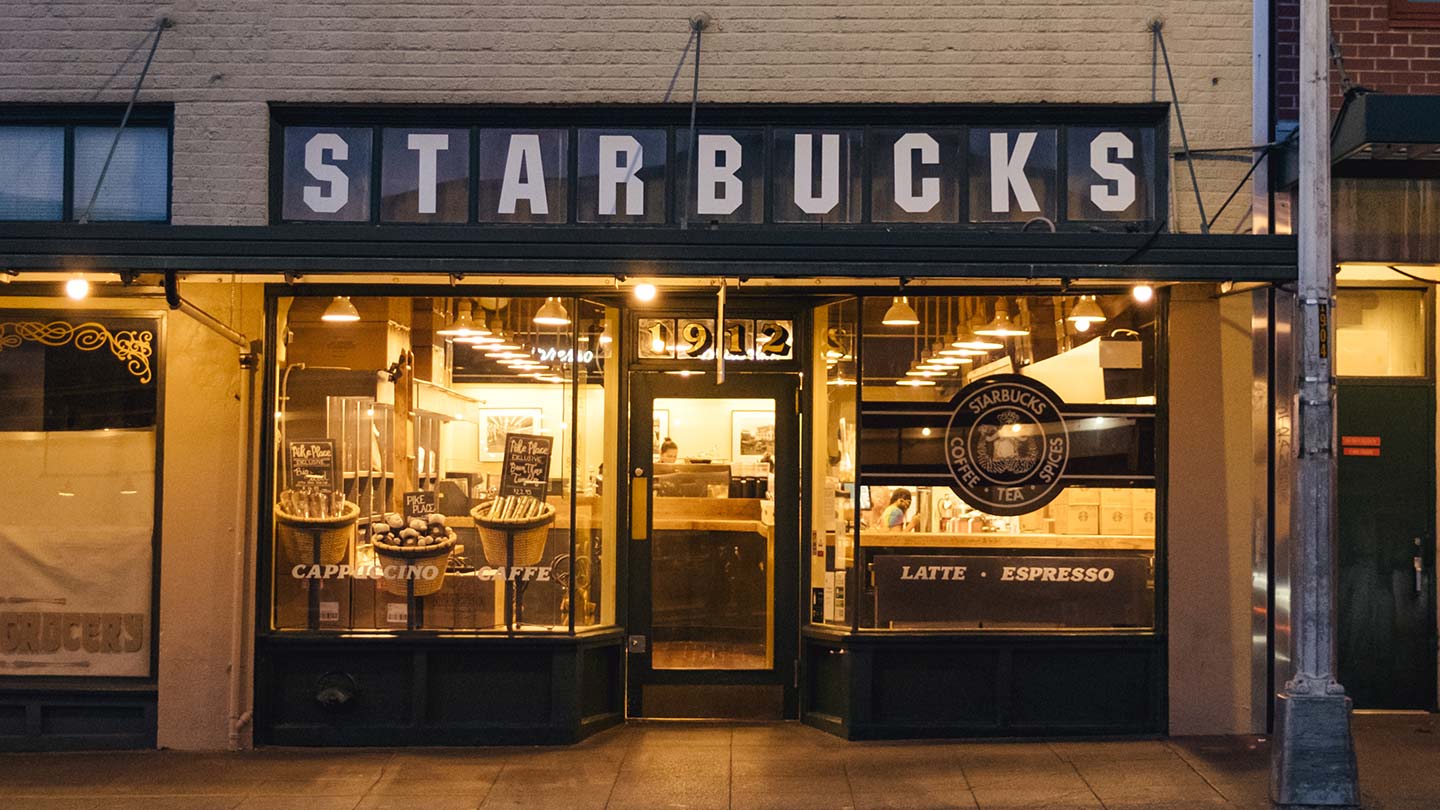
Core Viewpoint - Starbucks Corp. (NASDAQ: SBUX) stock has increased nearly 15% this year, indicating a positive trend in its market performance [1] Company Summary - The stock of Starbucks Corp. is experiencing a rally, marking a significant rise in value within the current year [1]

博裕投资拟收购星巴克开曼60%股份已获批
Sou Hu Cai Jing· 2026-01-22 09:38
博裕五期美元基金于2021年3月30日成立于新加坡,主要从事私募股权基金投资业务。博裕五期美元基 金最终控制人为Boyu Group, LLC(Boyu Group, LLC及其所控制的投资实体统称为"博裕投资")。博裕 投资是一家拥有综合协同平台的另类资产管理公司。 2025年11月,星巴克咖啡公司宣布与博裕投资达成战略合作,双方将成立合资企业,共同运营星巴克在 中国市场的零售业务。星巴克预计其中国零售业务的总价值将超过130亿美元,总价值由三部分构成: 向博裕出让合资企业控股权益所得、星巴克在合资企业中保留的权益价值,以及未来十年或更长时间内 持续支付给星巴克的授权经营收益。新成立的合资企业将继续以上海为总部,管理并运营目前遍布中国 市场的8000家星巴克门店,双方规划未来将星巴克在中国的门店规模逐步拓展至20000家。 央广网北京1月22日消息(记者 邵蓝洁)近日,经营者集中公示信息显示,"博裕五期美元基金有限责 任公司收购星巴克咖啡(开曼)控股有限公司股权案"获批。 根据经营者集中简易案件公示表,博裕五期美元基金有限责任公司("博裕五期美元基金",通过其关联 方),与星巴克股份有限公司("星巴克公司" ...
博裕五期美元基金有限责任公司收购星巴克咖啡(开曼)控股有限公司股权案
Xin Lang Cai Jing· 2026-01-22 06:52
公示期:2026年1月22日至2026年1月31日 联系邮箱:jyzjz@samr.gov.cn 转自:市场监管总局网站 ...
美国银行上调星巴克目标价至114美元
Ge Long Hui A P P· 2026-01-21 11:59
格隆汇1月21日|美国银行:将星巴克(SBUX.US)目标价从106美元上调至114美元。 ...
世界中餐业联合会&黑峪投资:中国咖啡产业报告2025
Xin Lang Cai Jing· 2026-01-21 10:26
Core Insights - The global coffee industry is experiencing significant changes, with key events shaping its future, including extreme weather impacts, mergers, and technological advancements in coffee production and processing [3][4][13]. Group 1: Industry Trends - The global coffee production is projected to reach approximately 178.8 million bags (60kg each) in the 2025/26 season, with a notable increase in Robusta production by 10.9% to 8.33 million tons, while Arabica production is expected to decline by 4.7% to 9.55 million tons [4]. - The coffee market is becoming increasingly competitive, with major players like Nestlé, JDE Peet's, and Starbucks dominating the roasting segment, accounting for about 40% of the market share [15][17]. - The introduction of the EU Deforestation Regulation (EUDR) is pushing companies towards sustainable practices, impacting supply chain costs [3]. Group 2: Market Dynamics - The price of coffee futures has reached a 47-year high, exceeding 430 cents per pound, driven by extreme weather conditions and shipping disruptions [3][13]. - The Chinese coffee market is evolving, with a projected consumption of over 400,000 tons by 2025, reflecting a compound annual growth rate (CAGR) of 10% [39][40]. - The coffee roasting capacity in China is expected to surpass 350,000 tons by 2024, with major brands like Luckin Coffee and Starbucks expanding their production capabilities [41][44]. Group 3: Technological Innovations - Advances in coffee processing technology, such as the development of non-caffeinated coffee through molecular restructuring, are emerging as significant trends [3]. - The integration of AI in coffee production is enhancing yield predictions and flavor profiling, marking a shift towards more data-driven approaches in the industry [3][4]. Group 4: Regional Developments - Indonesia's Fore Coffee has successfully listed on the IDX, highlighting the growth of local coffee brands in emerging markets [3]. - China's coffee cultivation is transitioning from expansion to quality improvement, with a diversification of coffee varieties, particularly in Yunnan, where over 80% of coffee is Arabica [23][24][26].

2025中国咖啡产业报告
世界中餐业联合会&黑峪投资· 2026-01-21 01:20
Investment Rating - The report indicates a positive outlook for the coffee industry, particularly in China, with a projected compound annual growth rate (CAGR) of approximately 20% for the next five years in terminal consumption [6][25]. Core Insights - The global coffee production for the 2025/26 season is expected to reach 178.8 million bags (60kg per bag), with a notable increase in Robusta production by 10.9% to 83.33 million bags, while Arabica production is projected to decline by 4.7% to 95.51 million bags due to adverse weather conditions in Brazil [6][10]. - The coffee market is experiencing significant changes, including the introduction of new technologies in production and brewing, the rise of functional coffee products, and the increasing importance of local brands in China [3][17]. - The Chinese coffee market is evolving from a focus on instant coffee to a more diverse range of products, with an emphasis on quality and specialty coffee, as evidenced by the growth of local brands and the increasing variety of coffee beans being cultivated [25][40]. Summary by Sections Coffee Industry Value Chain - The coffee value chain is highly concentrated, with major players controlling significant portions of production, trade, and retail. The top four traders dominate the upstream segment, while brands like Nestlé and JDE control a large share of the downstream market [6][20]. - The global coffee market is estimated to exceed $100 billion, with the terminal market in China projected to surpass 150 billion yuan [8][10]. Coffee Production and Quality - Coffee quality is influenced by various factors, including the type of beans, processing methods, and roasting techniques. The report highlights the importance of maintaining high standards in each stage of the coffee production process [8][21]. - The report notes that Arabica beans account for nearly 60% of global coffee production, with a focus on quality and flavor driving market trends [10][11]. Chinese Coffee Market - China's coffee planting area is stabilizing, with a shift towards quality improvement and diversification of coffee varieties. By 2025, the production value is expected to rise significantly due to enhanced processing techniques and a growing emphasis on specialty coffee [25][29]. - The consumption of coffee in China is projected to exceed 400,000 tons by 2025, reflecting a growing trend towards premium and specialty coffee products [40][41]. Competitive Landscape - The competitive landscape in the coffee industry is characterized by a mix of global giants and emerging local brands. Companies like Luckin Coffee are expanding rapidly, while traditional players are adapting to new market dynamics [18][46]. - The report identifies a trend towards vertical integration among leading brands, with companies investing in their own roasting facilities to ensure quality control and cost efficiency [46][47].
