Sony Group(SONY)

Search documents
Make TVs Great Again
RealClearMarkets· 2026-01-23 09:00
Core Viewpoint - The exit of Sony from the television market creates an opportunity for Apple to enter and potentially dominate the television set industry [1] Group 1: Market Dynamics - Sony's departure from the television market indicates a significant shift in the competitive landscape, leaving a gap that Apple could fill [1] - The television market is experiencing changes that may favor new entrants, particularly those with strong brand recognition like Apple [1] Group 2: Potential Opportunities - Apple's entry into the television set market could leverage its existing ecosystem, enhancing user experience and integration with other Apple products [1] - The move could also allow Apple to diversify its product offerings and tap into a new revenue stream [1]


索尼退场,日本电视全军覆没
芯世相· 2026-01-23 08:41
Core Viewpoint - Sony's decision to form a joint venture with TCL for its home entertainment business marks a significant shift in the global television market, indicating Japan's exit from the competitive landscape of television manufacturing [4][9]. Group 1: Sony's Strategic Move - Sony will transfer its television business and the BRAVIA brand to a joint venture with TCL, with TCL holding a 51% stake, effectively rebranding Sony's television operations [4]. - The move reflects Sony's lack of display panel production capabilities, which limits its profit margins in the television sector, relying instead on LG and TCL for panel supply [4][9]. - Sony's television market presence has been minimal, often categorized under "others" in market share rankings, and its television segment has historically underperformed compared to its other business units like CIS chips and gaming [4][9]. Group 2: Implications for the Japanese Market - The partnership signifies the end of Japan's independent television brands, as major players like Sharp, Toshiba, and Panasonic have either exited or significantly downsized their television operations [9][10]. - The historical context shows that since 2010, Japanese electronics companies have been selling off their consumer electronics divisions, with Sony's television business being the latest casualty [11][16]. - The decline of Japanese brands in the television market is attributed to their loss of panel production capabilities, which has led to a diminished ability to control pricing and market presence [20][26]. Group 3: The Rise of Chinese and Korean Competitors - TCL's acquisition of Sony's television business is positioned to enhance its competitive stance against Samsung, leveraging Sony's brand equity alongside its own manufacturing capabilities [9]. - The shift in market dynamics has seen Chinese and Korean companies dominate the display panel production, with significant investments leading to a loss of market share for Japanese firms [22][25]. - The transition from Japanese dominance in the television market to a landscape where Chinese and Korean manufacturers hold the majority of panel production capabilities illustrates a broader trend of technological and market leadership shifting eastward [20][29].


The Valuation Mirage: Why P/E Doesn’t Predict Returns Like You Think
The Calm Investor· 2026-01-23 07:16
This post is a detailed follow-up to this previous short post: The Price-Earnings Multiple tells you almost nothing about next years returns. The questions and comments I got were along the lines of “but it works on longer timeframes”, “you’re doing it wrong by only considering 26 data points” and so on. So here’s a much more detailed (no bite-sized simplistic takeaways – the word count should warn you!) exploration of the relationship between Index P/E and Forward Returns, how plain regression struggles in ...

索尼委身TCL,日企时代终落幕了
阿尔法工场研究院· 2026-01-23 04:09
Core Viewpoint - The collaboration between Sony and TCL marks a significant shift in the consumer electronics industry, highlighting the transition from traditional Japanese brands to Chinese manufacturers as key players in the market [5][24]. Group 1: Sony and TCL Collaboration - TCL announced a memorandum of understanding with Sony to establish a joint venture for Sony's home entertainment business, with TCL holding 51% and Sony 49% of the shares [5][7]. - The joint venture will focus on an integrated model for operating television and home audio businesses globally, indicating a shift in control from Sony to TCL [7][22]. - This partnership aims to combine Sony's high-quality audio-visual technology and brand value with TCL's advanced display technology and cost efficiency [20][22]. Group 2: Historical Context of Sony - Sony was once a dominant player in the television market, with its Trinitron technology setting the standard for picture quality in the 1980s and 1990s [9][10]. - The company enjoyed a long period of brand loyalty in China, despite higher prices compared to local brands [12]. - However, the rise of Chinese brands like TCL and Hisense, which offered lower prices and competitive technology, began to erode Sony's market share starting in the early 2000s [12][17]. Group 3: Challenges Faced by Sony - Sony's television business has faced significant challenges, including complaints about product reliability and a decline in brand trust among consumers [17]. - By 2025, Sony's television shipments had dropped to 2.6 million units, ranking it tenth in the market, far behind Chinese competitors [22][24]. - The company has been shifting its focus away from hardware to more profitable sectors like gaming, music, and image sensors, indicating a strategic realignment [24]. Group 4: Rise of Chinese Brands - Chinese brands have transitioned from being price competitors to leaders in technological innovation, with TCL and Hisense achieving significant market shares globally [31][33]. - By 2025, TCL's global television shipments reached 20.8 million units, marking a 4.1% increase year-on-year, while Hisense led the Chinese market in shipments [31][33]. - The collaboration between Sony and TCL symbolizes a broader trend of power shifting in the consumer electronics industry, with Chinese companies increasingly defining market standards [22][24].

告别“唯美元论”:全球资产配置新范式下,为何亚太资产成为穿越周期的“压舱石”?
智通财经网· 2026-01-23 03:54
Core Viewpoint - The global financial market is undergoing a significant paradigm shift, with a movement from single-market asset allocation to diversified global assets, particularly in the Asia-Pacific region, which is characterized by "high growth, low correlation, and low valuation" attributes [1][2]. Group 1: Market Dynamics - The core contradiction in global asset performance in the first half of 2025 revolves around the uncertainty of tariff policies, leading to a risk-off mode in the market [2]. - The U.S. dollar assets faced a collective downturn in April 2025, with the dollar index dropping below 100 and the 10-year U.S. Treasury yield surging, indicating a shift from a "dollar-centric" view to a new paradigm where non-U.S. currencies are gaining importance [2][3]. - Historical trends show that global liquidity typically follows a 4-5 year cycle with the U.S. dollar, and a declining dollar phase tends to favor non-U.S. assets, particularly those in the Asia-Pacific region with strong fundamentals [2]. Group 2: Investment Opportunities in Asia-Pacific - For domestic investors, the low correlation of the CSI 300 index with major global indices allows for effective risk mitigation through investments in Asia-Pacific assets, which are expected to contribute higher economic growth compared to global markets [3]. - The Asia-Pacific market currently offers significantly lower PE valuation levels compared to the high valuations in the U.S. market, presenting a compelling investment opportunity [3]. Group 3: Sectoral Advantages - The dual drivers of "technology growth" and "dividend defense" are central to the investment appeal of Asia-Pacific assets, particularly in the semiconductor industry, which has unmatched global competitiveness [4]. - Major semiconductor companies in the region, such as TSMC and Samsung Electronics, are positioned to benefit from the AI technology boom and the recovery of the semiconductor cycle [4]. - Japan's corporate governance reforms and ultra-loose monetary policy have improved shareholder returns and operational efficiency, making Japanese equities an attractive option for long-term investors [4][5]. Group 4: Asset Allocation Strategy - The Southern Fund's Asia-Pacific Select ETF is designed to capture investment opportunities in the Asia-Pacific market, tracking the FTSE Asia-Pacific Low Carbon Select Index, which includes leading companies while incorporating ESG low-carbon screening [7]. - The ETF's holdings balance quality and diversity, featuring top firms across various sectors, including technology and automotive, while minimizing risks associated with single-country or single-industry volatility [7]. - The fund's low management and custody fees provide a cost-effective pathway for investors to participate in the growth potential of the Asia-Pacific region [7]. Group 5: Performance Resilience - The Asia-Pacific Select ETF has demonstrated resilience in various market conditions, outperforming similar assets during periods of high U.S. Treasury yields and global trade fluctuations [8]. - The rise of Asia-Pacific assets is seen as a natural outcome of evolving global economic dynamics, industry cycles, and improved corporate governance, marking the region's emergence into a "golden era" [8].


索尼退场,日本电视全军覆没
3 6 Ke· 2026-01-23 00:36
Core Viewpoint - Sony has announced a joint venture with TCL to manage its home entertainment business, with TCL holding a 51% stake, effectively transferring Sony's television operations and the BRAVIA brand to TCL, marking a significant shift in the consumer electronics market [1][5]. Group 1: Sony's Strategic Shift - Sony lacks display panel production capabilities, which are crucial for maximizing profits in the television market, relying on LG and TCL for panel supply and Mediatek for picture quality chips [1]. - Sony's television market presence is minimal, consistently ranking in the "others" category, and its television segment is less profitable compared to its other businesses like CIS chips, gaming, and music [1][5]. - The move signifies Sony's exit from the competitive global television market, following a trend where Japanese brands have been selling off their consumer electronics divisions [5][7]. Group 2: TCL's Positioning - For TCL, acquiring Sony's brand equity is a strategic asset that, combined with its own panel production capabilities, positions it to challenge Samsung's dominance in the global market [5]. - TCL is currently the only domestic television brand in China with display panel production capabilities, which is essential for maintaining competitive pricing and product quality [18][27]. Group 3: Decline of Japanese Brands - The exit of Sony marks the end of Japan's independent television brands, with other major players like Sharp, Toshiba, and Panasonic also having exited or significantly downsized their television operations [5][15]. - The decline of Japanese television brands is attributed to their loss of panel production capabilities, which has resulted in a lack of pricing power in the market [16][23]. - The financial crisis of 2008 and subsequent strategic missteps led to a shift in focus for Japanese companies from consumer electronics to higher-margin components, further diminishing their presence in the television market [7][12][13].




财经观察:日韩品牌为何纷纷牵手中国电视厂商
Huan Qiu Shi Bao· 2026-01-22 22:35
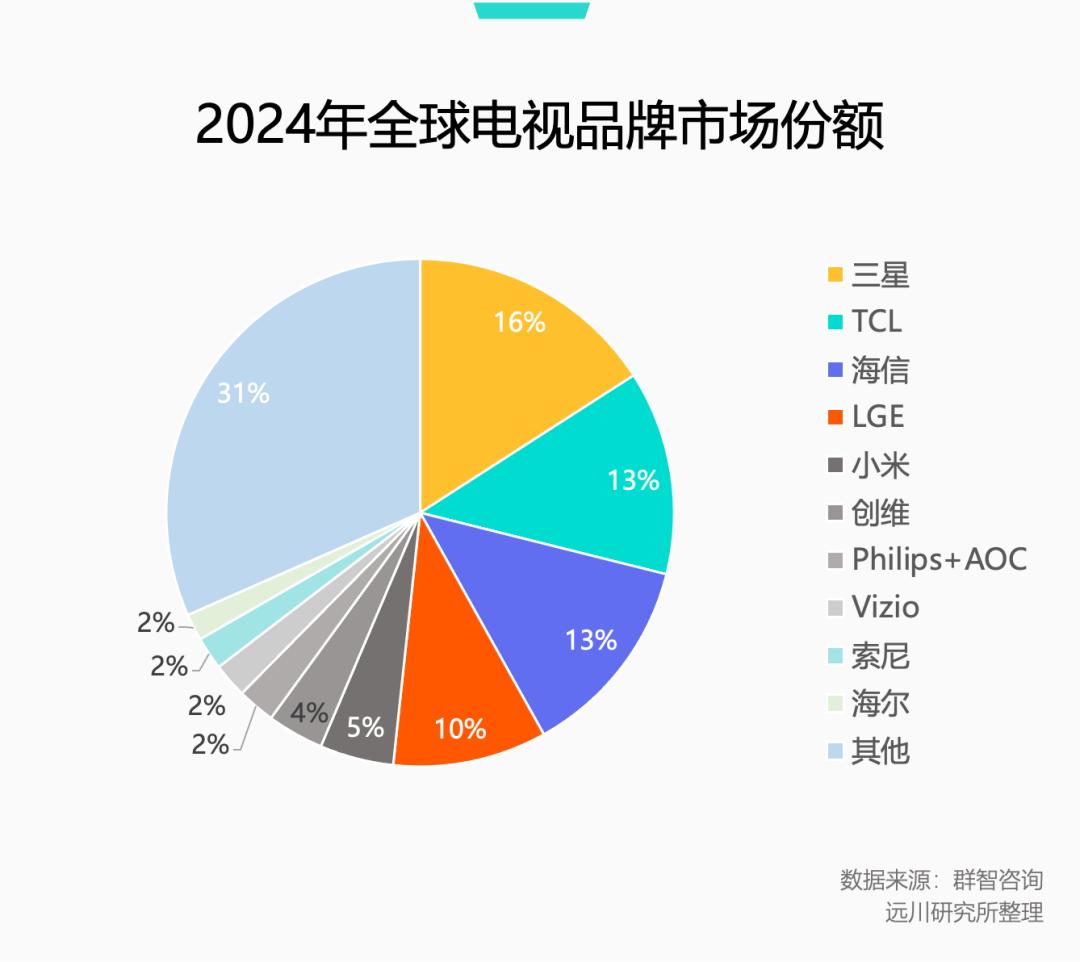
Core Viewpoint - Sony's decision to spin off its television business and form a joint venture with China's TCL reflects a significant structural reorganization in the global television industry, driven by increasing competition and changing consumer demands for larger, higher-resolution screens [1][2][7]. Group 1: Industry Dynamics - The global television market is not declining; instead, it is growing in the large-screen and high-end segments, with a shift in competition rules from technology differentiation to manufacturing scale and cost structure [4][8]. - Japanese brands are losing their competitive edge in the television industry, with companies like Toshiba and Sharp either selling their TV businesses or significantly downsizing their operations [2][6]. - The joint venture between Sony and TCL is seen as a rational choice, allowing both companies to leverage their strengths—Sony's expertise in high-value products and TCL's efficiency and scale [4][7]. Group 2: Market Positioning - Chinese television brands are rapidly gaining market share, with TCL's global TV shipments reaching 20.8 million units in the first three quarters of 2025, marking a 4.1% year-on-year increase [10]. - By 2024, Chinese brands are expected to surpass Korean brands in global TV shipments, with TCL, Hisense, and Xiaomi collectively holding a market share of 31.8% compared to 28.5% for Samsung and LG [8]. - The shift in the global television supply chain is evident, with Chinese manufacturers dominating the LCD panel market, while Japanese and Korean companies are retreating from this segment [11]. Group 3: Competitive Landscape - The decline of Japanese brands is attributed to multiple factors, including slow progress in supply chain advancements and inadequate localization strategies [5][6]. - Despite the rise of Chinese brands, Samsung still maintains a significant lead in brand reputation and high-end market segments, indicating that the competition is ongoing and evolving [12].
Oscars nominations 2026: Sinners becomes first film in history to grab 16 Academy awards nominations, defeats Leonardo DiCaprio's 'One Battle After Another', 'Titanic'
The Economic Times· 2026-01-22 14:42
Core Insights - Ryan Coogler's film "Sinners" received a record-breaking 16 nominations at the 98th Academy Awards, surpassing the previous record of 14 nominations held by "All About Eve," "Titanic," and "La La Land" [1][10] - "One Battle After Another," directed by Paul Thomas Anderson, followed closely with 13 nominations, showcasing strong competition between the two films [2][10] - The Academy's recognition of these films reflects a focus on original American narratives that resonate with current social issues, particularly in the context of race and rebellion [3][10] Nominations Overview - The ten films nominated for Best Picture include "Bugonia," "F1," "Frankenstein," "Hamnet," "Marty Supreme," "One Battle After Another," "The Secret Agent," "Sentimental Value," "Sinners," and "Train Dreams" [6][10] - "Frankenstein," "Marty Supreme," and "Sentimental Value" each received nine nominations, indicating a competitive landscape for the awards [6][10] Actor and Actress Nominations - In the Best Actor category, nominees include Michael B. Jordan for "Sinners," Timothée Chalamet for "Marty Supreme," Leonardo DiCaprio for "One Battle After Another," Ethan Hawke for "Blue Moon," and Wagner Moura for "The Secret Agent" [7][10] - The Best Actress nominees feature Jessie Buckley for "Hamnet," Rose Byrne for "If I Had Legs I'd Kick You," Kate Hudson for "Song Sung Blue," Renate Reinsve for "Sentimental Value," and Emma Stone for "Bugonia," marking her sixth nomination [7][10] Industry Context - The Oscars introduced a new category for casting, which benefited "Sinners" and "One Battle After Another," further enhancing their nomination tallies [9][10] - Warner Bros. achieved its best Oscar nominations morning ever amid a contentious sale to Netflix for $72 billion, highlighting significant industry shifts [10]



Why Amazon Seems To Be Skipping ‘God Of War’ For ‘Ragnarok’ In Its New Show
Forbes· 2026-01-22 14:39
Core Insights - Amazon's adaptation of the God of War series will focus on characters from God of War Ragnarok, such as Heimdall and Lady Sif, rather than the original game [2][3] - The adaptation is expected to condense the original game's narrative significantly, possibly covering only essential elements [4][5] Summary by Sections Adaptation Strategy - Amazon is likely to streamline the first game into its core components, potentially omitting characters like Mimir, who primarily serves as a narrator [5] - The adaptation may cover the Freya and Baldur storyline, leading into the larger conflicts with Norse gods like Thor and Odin [5][6] Season Structure - The first season may consist of half the original game and the initial third of Ragnarok, with a second season encompassing the remainder of Ragnarok [6] - This approach contrasts with other adaptations, such as The Last of Us, which expanded multiple games into several seasons [6] Future Potential - There is potential for further God of War adaptations, as the series has a rich history in ancient Greece, with multiple games set in that era [7] - The adaptation's focus on the Norse storyline raises questions about how Kratos' past will be integrated into the narrative [7] Casting Developments - The casting announcements have generated interest, particularly regarding the role of Atreus, which remains unfilled [8]


盘前:纳指期货涨0.83% 全球股市小幅走高
Xin Lang Cai Jing· 2026-01-22 13:49
Group 1 - Global stock markets experienced a slight increase following Trump's withdrawal of trade threats against Europe, alleviating concerns about a trade war [2][28] - As of the report, Dow futures rose by 0.35%, S&P 500 futures increased by 0.56%, and Nasdaq futures climbed by 0.83% [3][29] - The European Stoxx 600 index rose by 1.1%, with the automotive sector leading gains, particularly Volkswagen which surged by 5.2% [3][29] Group 2 - Gold prices remained stable near record highs, indicating that risk appetite in the stock market has not fully translated into a significant drop in safe-haven demand [4][30] - The market interpreted Trump's statements as a sign of easing geopolitical and trade tensions, leading to a renewed preference for stock assets [4][30] Group 3 - Semiconductor stocks strengthened, with Nvidia's CEO comments at Davos boosting enthusiasm for AI investments, leading to a 17% surge in Disco Corp. and a 2.3% increase in Samsung Electronics [6][31][32] - The Korean benchmark index, a tech stock indicator, reached a historical high [32] Group 4 - The VIX volatility index, known as the "Wall Street fear gauge," saw a significant decline, indicating a reduction in market panic [34] - Japanese government bonds rebounded for the second consecutive trading day, while Bitcoin traded around $90,000 [33] Group 5 - Focused stocks included Western Digital, which rose over 4%, Micron Technology up over 3%, and Seagate Technology increasing by 2.5% [40] - Moderna continued to rise by 5.6% following positive data on its mRNA cancer vaccine [41] - GE Aerospace saw a pre-market increase of over 5%, with adjusted earnings per share expected to be between $7.10 and $7.40 for 2026, exceeding market expectations [42]