Target(TGT)

Search documents
Target Tests New Models for Next-Day Delivery
WSJ· 2025-12-04 18:15
Core Insights - The retailer is implementing strategies to enhance delivery speed and improve the in-store experience by shifting some online-order fulfillment to less-busy stores [1] Group 1 - The company is focusing on optimizing its logistics by utilizing less-busy stores for online order fulfillment [1] - This approach aims to speed up delivery times for customers [1] - The initiative is part of a broader effort to enhance the overall in-store shopping experience [1]


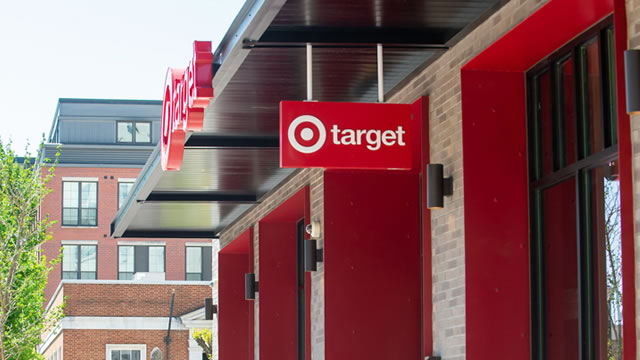
Target Corporation (TGT): A Bull Case Theory
Yahoo Finance· 2025-12-04 17:01
Core Thesis - Target Corporation is at a critical inflection point, presenting a compelling bullish case for investors focusing on strategic transformation and technology-led growth [2][4] Financial Performance - As of November 28th, Target's share was trading at $90.62, with trailing and forward P/E ratios of 10.98 and 11.48 respectively [1] - Gross margins have slipped to 28.2%, and comparable sales have fallen by 2.7%, indicating short-term headwinds [3] - Advertising revenue surged by 44%, and the Target Plus marketplace grew nearly 50%, showcasing the potential of digital and media initiatives [3] Strategic Initiatives - The appointment of Michael Fiddelke as CEO is expected to drive a turnaround, with plans for a $5 billion investment in store remodels, supply-chain upgrades, and technology [3] - Key initiatives include AI-powered merchandising, inventory management, and conversational commerce via ChatGPT [3][4] - The focus is on restoring design-led merchandising authority, enhancing guest experience, and accelerating digital engagement [4] Market Position - Target operates nearly 2,000 U.S. stores and has a growing e-commerce presence, with fulfillment services accounting for over a third of digital sales, which grew over 35% in Q3 2025 [2] - The company's assets are considered undervalued relative to peers, trading at a significant discount to its historical forward multiple [4] - If the CEO successfully executes the strategy, Target could see a meaningful rerating, making it a high-conviction opportunity for investors [4][6]
Target and Dr. Squatch Introduce Kris K. from Target's Limited-Edition "Not Santa" Soap
Prnewswire· 2025-12-04 11:01
Core Insights - Target Corporation is launching a limited-edition men's soap called "Not Santa" in collaboration with Dr. Squatch, available nationwide starting December 7, 2025 [1][5] - The product features Kris K. from Target, a viral sensation known for his holiday-themed marketing, and aims to enhance the festive shopping experience [2][4] Product Details - "Not Santa" is a sandalwood-scented soap made with over 98% natural origin ingredients, designed to evoke a warm and joyful holiday spirit [3][4] - Priced at $7.99, the soap is marketed as an affordable gift option for various demographics, including husbands, dads, and friends [5][6] Marketing Strategy - The collaboration aims to engage consumers through sensory experiences, particularly focusing on pleasant scents to improve mood and reduce stress during the holiday season [4] - Kris K. from Target will feature in a new marketing campaign, appearing in various settings to promote the product and enhance brand visibility [8] Availability and Purchase Options - "Not Santa" soap will be available in all Target stores and on Target.com, with multiple purchasing options including same-day services and free shipping for orders over $35 [5][7] Company Background - Target Corporation operates nearly 2,000 stores and has a long-standing commitment to community support, donating 5% of its profits to local initiatives [9]

Airbus Reduces 2025 Delivery Target: Is Your Aerospace ETF Still Safe?
ZACKS· 2025-12-03 19:01
Core Insights - The aerospace sector faced significant turbulence as Airbus shares dropped sharply, falling as much as 9% on December 1, 2025, due to a newly identified quality issue affecting the A320-family aircraft [1][2] - Airbus lowered its 2025 delivery target from 820 to 790 aircraft, a reduction of 3.7%, citing fuselage panel quality issues [2][5] - The S&P 500 Aerospace & Defense Index also declined by 3% on the same day, reflecting broader sector concerns [2] Quality Issues - A 'supplier quality issue' was reported, where certain metal panels for A320s did not meet quality specifications, leading to inspections of up to 628 aircraft worldwide [3][4] - A separate software problem linked to solar radiation required updates across approximately 6,000 A320-family jets, compounding investor concerns [4] Financial Outlook - The reduction in delivery targets is expected to negatively impact Airbus' share price in the near term, despite a brief recovery [5] - Airbus maintains a strong position in the single aisle aircraft market, with a multiyear backlog supporting future deliveries and cash flow [5][6] - The company has a relatively low debt-to-equity ratio of 59.43 compared to the industry average of 89.26, indicating a more conservative balance sheet [7] Investor Considerations - The situation may prompt aerospace ETF investors to reassess their allocations, given Airbus' significant role in the sector [3][10] - Diversification within aerospace ETFs, which include other major manufacturers like Boeing and General Dynamics, may mitigate the impact of Airbus' short-term challenges [11] - Robust underlying demand for air travel and defense spending is expected to support the aerospace sector over the long term, suggesting that investors may not need to divest from aerospace ETFs [12] ETF Performance - Invesco Aerospace & Defense ETF (PPA) lost 2.5% on December 1, 2025, but has gained 30.5% year to date [13] - State Street SPDR S&P Aerospace & Defense ETF (XAR) lost 2.6% on the same day, with a year-to-date gain of 36.8% [14] - iShares U.S. Aerospace & Defense ETF (ITA) experienced a 2.9% loss on December 1, 2025, but has surged 39.3% year to date [15]


Target Hospitality Announces Multi-Year Contract Diversifying Customer Base and Expanding Regional Presence
Prnewswire· 2025-12-03 11:45
Core Insights - Target Hospitality Corp has announced a multi-year lease and services agreement known as the "Power Community Contract" to support power generation capacity expansion in Northern Nevada, expected to generate approximately $35 million in revenue over 25 months starting June 2026 [1] - The contract will enhance Target's Workforce Hospitality Solutions segment and accommodate up to 250 individuals, showcasing the company's ability to deliver customized workforce accommodations for industrial projects [1] - The company has secured over $530 million in multi-year contracts in 2025, indicating significant progress in its strategic initiatives and the growing demand for high-quality workforce accommodations in remote areas [1] Company Overview - Target Hospitality is one of North America's largest providers of vertically integrated modular accommodations and value-added hospitality services, focusing on customized solutions for various end users [1] - The company builds, owns, and operates a network of communities, offering services such as premium food service management, concierge, laundry, logistics, security, and recreational facilities [1] Industry Context - The Power Community Contract highlights the increasing need for expanded power generation capacity to support large-scale industrial projects, including mining and data center development [1] - As infrastructure development moves into remote areas, the contract emphasizes the importance of customized workforce accommodations at various stages of industrial growth [1] - The current market fundamentals have created a robust commercial growth pipeline, supporting Target's ongoing discussions for additional commercial opportunities amid a historic domestic investment cycle [1]


Is TGT's $5B CapEx Plan a Turning Point for Its Digital & Store Tech?
ZACKS· 2025-12-02 16:35
Core Insights - Target Corporation (TGT) is initiating a significant transformation phase with plans to increase capital expenditure to $5 billion in fiscal 2026, which is approximately $1 billion more than fiscal 2025, reflecting management's commitment to reversing recent performance issues and achieving sustainable growth [1][9] Group 1: Capital Expenditure and Store Modernization - A substantial portion of the capital expenditure will focus on modernizing Target's store fleet, including increasing remodels and opening additional large-format stores that yield strong returns [2] - The company is undertaking its largest floor pad redesign in a decade, aiming to create more inspiring and navigable spaces in key categories such as Home, Baby, and Fun 101 [2] Group 2: Fulfillment and Technology Enhancements - Enhancing fulfillment is a primary focus, with Target implementing a model that reallocates digital order volumes across stores to improve speed and reduce strain, with a successful pilot in Chicago demonstrating efficiency gains [3] - Technology investments are aimed at operational improvements, with machine-learning forecasting increasing in-stock rates by over 150 basis points for the top 5,000 items, and AI tools aiding in trend identification and product decision-making [4] Group 3: Sales Performance and Future Outlook - Despite modest overall growth, early indicators show positive momentum, with digital comparable sales rising by 2.4% in the fiscal third quarter and same-day delivery increasing by over 35%, indicating strong demand for faster fulfillment [5] - Successfully translating these investments into higher conversion rates and stronger comparable sales could make the $5 billion capital expenditure plan a pivotal moment for Target as it approaches fiscal 2026 [5] Group 4: Valuation and Earnings Estimates - Target's stock has declined by 32.5% year-to-date, contrasting with the industry's growth of 5.6% [8] - The forward 12-month price-to-earnings ratio for TGT is 11.90, significantly lower than the industry's average of 30.13, indicating a lower valuation [11] - The Zacks Consensus Estimate for TGT's fiscal 2025 earnings suggests a year-over-year decline of 17.6%, while fiscal 2026 indicates a growth of 6.2%, with recent earnings estimates being revised downward [13]
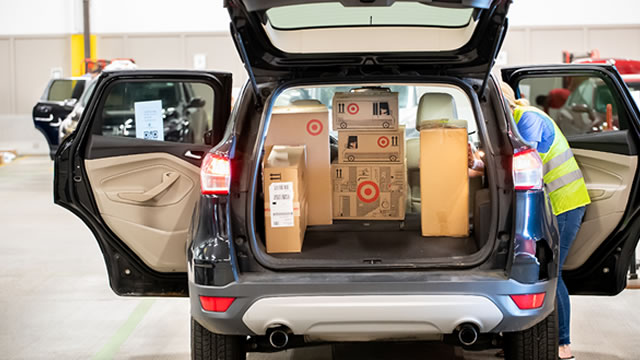
Adobe数据显示:五天假日购物期间,美国在线消费额442亿美元
Xin Lang Cai Jing· 2025-12-02 14:41
Core Insights - Adobe Analytics reported that U.S. shoppers spent $14.25 billion on Cyber Monday, raising the total online sales for the Thanksgiving weekend to $44.2 billion [1][3] - During the "Cyber Week" (from Thanksgiving to Cyber Monday), spending increased by 7.7% compared to $41.1 billion last year, which saw an 8.2% growth [1][3] Online Spending Trends - Adobe projected that online spending during this holiday period would reach $43.7 billion, a 6.3% increase from the previous year [2][4] - Black Friday saw a record online spending of $11.8 billion in the U.S. [2][4] Retailer Strategies - Major retailers like Amazon, Walmart, and Target offered attractive discounts to appeal to both affluent shoppers and budget-conscious consumers [2][4] - Some consumers utilized AI-driven services, such as chatbots, to browse and compare prices on products like appliances, toys, video games, and jewelry [2][4] AI and Payment Trends - On Cyber Monday, traffic to U.S. retail websites related to AI increased by 670%, while it grew by 805% on Black Friday compared to the previous year [2][4] - The usage of "buy now, pay later" services reached a historical high on Cyber Monday, contributing to $1.03 billion in online spending, a 4.2% year-over-year increase [2][4] Consumer Behavior - Analysts noted that despite significant discounts leading some consumers to incur short-term debt, shoppers remained savvy, carefully monitoring price tags to avoid impulse purchases [2][4]


Michael Burry Has a New Short Target: “Ridiculously Overvalued” Tesla
247Wallst· 2025-12-02 14:21
Core Viewpoint - Michael Burry, a billionaire investor known for predicting the 2008 housing crash, has once again influenced market movements [1] Group 1 - Burry's reputation stems from his successful prediction of the housing market collapse, which was depicted in the film "The Big Short" [1] - His recent actions or statements have caused notable reactions in the financial markets [1]


Argus下调塔吉特目标价至125美元
Ge Long Hui· 2025-12-02 09:47
Group 1 - Argus Research has lowered the target price for Target from $135 to $125 while maintaining a "Buy" rating [1]
美国假日消费“强劲”增长背后:零售商更为激进、更具策略性的折扣策略
Di Yi Cai Jing Zi Xun· 2025-12-02 09:18
Core Insights - The strong consumer spending data in the U.S. may mask underlying complexities in the economy, with a notable increase in online spending during the holiday season but a decline in the quantity of items purchased [1][4] Consumer Spending Trends - Adobe Analytics predicts online spending on Cyber Monday to reach $14.2 billion, a 6.3% increase year-over-year, contributing to a total of $43.7 billion over the five days surrounding Thanksgiving [1] - Salesforce reports a similar trend, with Cyber Monday sales at $13.4 billion, up approximately 4% year-over-year, while in-store sales on Black Friday rose by 4.1% [1] - Despite the increase in total spending, the number of items purchased on Black Friday decreased by 2%, indicating a shift towards higher average prices, which rose by 7% [1][6] Discount Strategies - Retailers are employing aggressive discount strategies, with discount retailers like TJX, Burlington, and Ross Stores benefiting from increased foot traffic as consumers shift towards lower-priced options [3][4] - Major retailers such as Walmart and Target have become more explicit in their discount promotions, with Amazon also offering significant discounts on high-value items [3][4] Economic Indicators - Inflation, as indicated by the Consumer Price Index (CPI), rose to 3% in September, contributing to the increase in sales figures driven by higher prices rather than volume [6] - The retail volume growth has been low at approximately 0.3% year-to-date, reflecting consumer frustration as purchasing power diminishes [6] Income Disparities - There is a notable divergence in consumer behavior based on income levels, with high-income households continuing to spend robustly, while middle and low-income consumers face financial pressures and are more price-sensitive [6][7] - High-income consumers, earning $170,000 and above, have increased their spending by over 10% this year, contrasting with lower-income households whose spending has fallen below pre-pandemic levels [6][7]