
Waste Management(WM)

Search documents
Waste Management: A Dividend Darling, But The Premium Stinks (NYSE:WM)
Seeking Alpha· 2026-02-26 12:30
Waste Management ( WM ) has long been one of my favorite companies. Having held the stock briefly, I sold out of my small position when I repositioned my portfolio.Formerly known as "The Dividend Collectuh." Top 1% of financial experts on TipRanks. Contributing analyst to the iREIT+Hoya Capital investment group. Dividend Collection Agency is not a registered investment professional nor financial advisor and these articles should not be taken as financial advice. This is for educational purposes only and I e ...



Waste Management: A Dividend Darling, But The Premium Stinks
Seeking Alpha· 2026-02-26 12:30
Waste Management ( WM ) has long been one of my favorite companies. Having held the stock briefly, I sold out of my small position when I repositioned my portfolio.Formerly known as "The Dividend Collectuh." Top 1% of financial experts on TipRanks. Contributing analyst to the iREIT+Hoya Capital investment group. Dividend Collection Agency is not a registered investment professional nor financial advisor and these articles should not be taken as financial advice. This is for educational purposes only and I e ...
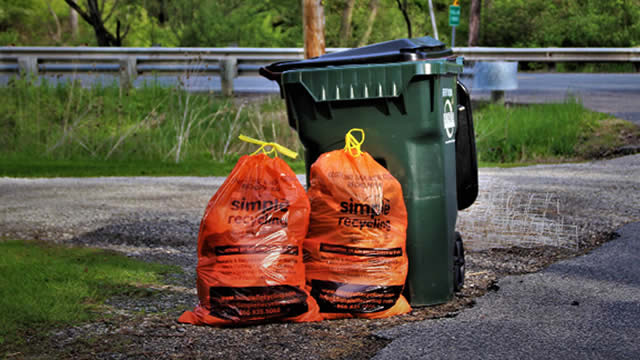
Smart Waste Management Market Size to Worth $13.31 Billion by 2035 | SNS Insider
Globenewswire· 2026-02-18 10:00
Core Insights - The Smart Waste Management Market was valued at USD 3.55 billion in 2025 and is projected to reach USD 13.31 billion by 2035, growing at a CAGR of 14.13% from 2026 to 2035 [1][5]. Market Growth Drivers - Rising urbanization and increasing population are driving the demand for effective waste management solutions, necessitating the adoption of modern waste management systems in urban areas [1]. - Intelligent waste management tools, such as self-cleaning disposal trucks and IoT-enabled garbage cans, are enhancing waste management efficiency and promoting sustainable cities [1]. Market Segmentation By Technology - IoT-based technologies held a revenue share of 36.13% in 2025, with companies like Ecube Labs leading the segment through innovations like solar-powered compactor bins [6]. - The Artificial Intelligence segment is expected to grow the fastest, with a CAGR of 15.30%, driven by advancements in AI-based waste-sorting robots [6]. By Waste Type - The Solid Waste segment accounted for 74.75% of the market revenue in 2025, primarily due to the high volume of municipal solid waste generated [7]. - The Special Waste segment is anticipated to grow at the highest CAGR of 16.78% from 2025 to 2035, influenced by increasing awareness and regulations regarding hazardous waste disposal [7]. By Method - The Smart Collection segment dominated with a market share of 44.80% in 2025, as cities implement systems to optimize waste pickups and reduce emissions [8]. - Smart Processing is projected to have the fastest growth with a CAGR of 15.33% during 2026-2035, driven by demand for automated waste treatment systems [8]. By Source - The residential segment led the market with a share of 46.87% in 2025, attributed to rising waste generation in urban households and the adoption of smart waste solutions [9]. - The business segment is expected to grow at the fastest CAGR of 15.29% from 2026 to 2035, due to increased digital tracking and management of waste in various industries [9][10]. Regional Insights - North America dominated the market in 2025 with a 45.02% share, supported by advanced infrastructure and the adoption of AI-based waste sensor technologies [11]. - Europe is projected to be the fastest-growing region from 2026 to 2035, with a CAGR of 16.05%, driven by stringent environmental regulations [12]. Competitive Landscape - Key players in the Smart Waste Management Market include Ecube Labs, Bigbelly, Enevo Oy, and Veolia Environnement S.A., among others [4]. - Companies are focusing on technological advancements and partnerships to enhance their market presence and operational efficiency [16].



VEOEY vs. WM: Which Stock Should Value Investors Buy Now?
ZACKS· 2026-02-16 17:40
Investors looking for stocks in the Waste Removal Services sector might want to consider either Veolia Environnement SA (VEOEY) or Waste Management (WM) . But which of these two stocks offers value investors a better bang for their buck right now? We'll need to take a closer look.Everyone has their own methods for finding great value opportunities, but our model includes pairing an impressive grade in the Value category of our Style Scores system with a strong Zacks Rank. The Zacks Rank favors stocks with s ...
Waste Management: A Top Defensive Stock For A Bumpy 2026 (NYSE:WM)
Seeking Alpha· 2026-02-16 05:58
Core Viewpoint - The analyst maintains a buy rating on Waste Management, Inc. (WM) and expresses confidence in the company's fundamentals and outlook, noting an 8% increase in stock price since the last update [1] Company Performance - Waste Management, Inc. has shown a positive stock performance, with an increase of approximately 8% since the analyst's last update in late November 2025 [1]
美国废物管理公司股价震荡上行,机构评级分化
Jing Ji Guan Cha Wang· 2026-02-13 22:57
Core Viewpoint - Recent developments in the waste management sector, particularly concerning Waste Management Inc. (WM), highlight changes in policy and internal company dynamics that may influence market performance and investment opportunities [1]. Group 1: Policy Changes - The U.S. Environmental Protection Agency (EPA) is moving to revoke the greenhouse gas hazard finding established in 2009, which could potentially lower compliance costs for the waste management industry, presenting a favorable outlook for the sector [1]. - The Chinese government's release of the "Comprehensive Solid Waste Management Action Plan" may indirectly boost global solid waste management demand, benefiting WM as a leading player in North America [1]. Group 2: Stock Performance - WM's stock price exhibited a fluctuating upward trend over the past week, with a closing price of $226.79 on February 6 and reaching $233.92 by February 13, marking a 3.14% increase [2]. - The stock experienced a high of $236.45 on February 12 and a low of $225.36 on February 9, with a trading volume of $456 million on February 11, indicating varied market activity [2]. - The waste management sector rose by 1.16%, while major U.S. indices faced declines, showcasing WM's relative resilience in the market [2]. Group 3: Institutional Ratings - Institutional ratings for WM have shown divergence but remain generally positive, with Goldman Sachs initiating coverage with a "Buy" rating and a target price of $256, while Morgan Stanley maintained an "Overweight" rating with a target of $265 [3]. - Wells Fargo raised its target price to $250, while TD Securities downgraded its rating to "In-Line" with a target of $250, reflecting mixed sentiment among analysts [3]. - Analysts are particularly focused on the expected 13.53% year-over-year growth in earnings per share for Q4 2025, which may influence short-term market sentiment [3].
美国废物管理财报净利润下滑,机构评级分化,股价上涨
Jing Ji Guan Cha Wang· 2026-02-11 22:51
Financial Performance - The latest financial report for Waste Management (WM) was released on October 28, 2025, for the third quarter of fiscal year 2025, showing revenue of $18.891 billion, a year-on-year increase of 16.83%, but net profit of $1.967 billion, a year-on-year decline of 8.38% [1] - Investors should pay attention to the upcoming fourth quarter and full-year financial reports for 2025, typically disclosed between January and February of the following year, focusing on profit recovery and guidance for 2026 [1] Institutional Ratings - Goldman Sachs initiated coverage on WM on November 24, 2025, with a "Buy" rating and a target price of $256 [2] - JPMorgan maintained an "Overweight" rating on December 1, 2025, with a target price of $265 [3] - Scotiabank downgraded its rating to "In-Line" on January 21, 2026, with a target price of $250 [4] - The divergence in institutional ratings may impact short-term market sentiment, necessitating attention to any further adjustments from other institutions [5] Industry Policy and Environment - On January 1, 2026, the State Council of China released the "Comprehensive Solid Waste Management Action Plan," aiming for a comprehensive utilization of 4.5 billion tons of major solid waste by 2030 [6] - Although the policy directly targets the Chinese market, it may indirectly boost long-term demand in the global solid waste management industry, benefiting WM as a leading player in North America [6] Stock Performance - WM's stock closed at $229 on January 22, 2026, with a monthly increase of 4.23% and a year-to-date gain of 4.23% [7] - Trading volume reached $855 million on January 21, 2026, a 103.88% increase from the previous day, indicating a temporary rise in market activity [7] Future Development - Short-term focus should be on WM's next financial report for signs of profit recovery and changes in institutional ratings [8] - In the medium to long term, the impact of global solid waste management policies on industry demand should be monitored [8]
Waste Management, Inc. (NYSE: WM) Stock Update
Financial Modeling Prep· 2026-02-11 00:06
Company Overview - Waste Management, Inc. (NYSE: WM) is a leading provider of comprehensive waste management services in North America, offering collection, transfer, recycling, and disposal services [1] - The company competes with other waste management firms such as Republic Services and Waste Connections [1] Recent Executive Activity - WM's CEO, James C. Fish Jr., sold 5,706 shares at $230.87 each, while retaining 220,087 shares [1][5] Institutional Investment - Envestnet Asset Management Inc. increased its stake in WM by 16.9% in the third quarter, acquiring an additional 144,860 shares, bringing its total to 1,001,706 shares, valued at $221.2 million [2] - Peregrine Asset Advisers Inc. boosted its holdings by 372.5% to 5,046 shares, valued at $1.1 million [3] - Telos Capital Management Inc. also increased its position in WM by 10.1% [3] Stock Performance - WM's stock is currently priced at $232.03, reflecting a $1.53 increase or 0.66% rise [4] - The stock has fluctuated between $229 and $233.50 today, with a year-high of $242.58 and a low of $194.11 [4][5] - WM's market capitalization is approximately $93.48 billion, with a trading volume of 1,040,699 shares [4]
Waste Management Stock: Analyst Estimates & Ratings
Yahoo Finance· 2026-02-10 08:03
Core Insights - Waste Management, Inc. operates one of North America's largest environmental services platforms with a market cap of $91.4 billion, focusing on waste collection, recycling, disposal, and energy conversion from landfill gas [1] Stock Performance - Over the past 52 weeks, WM stock gained 2.5%, underperforming the S&P 500 Index's 15.6% gain, but year-to-date, WM stock rose 4.9%, outperforming the broader market's 1.7% increase [2] - The State Street Industrial Select Sector SPDR ETF (XLI) has increased by 26.5% over the past year and 12% year-to-date, highlighting the sector's strong performance compared to WM [3] Q4 2025 Earnings Results - In Q4 2025, Waste Management reported revenue of $6.31 billion, which was below the expected $6.39 billion, despite a year-over-year increase of 7.1%, leading to a nearly 3.7% decline in shares [5] - Adjusted EPS was reported at $1.93, slightly below the consensus estimate of $1.95, but showed a year-over-year improvement of 13.5 [6] Margin and EBITDA Performance - Operating adjusted EBITDA in the Legacy Business rose by 10.1% in 2025, with margins expanding by 150 basis points to 31.5% [6] - Healthcare Solutions improved adjusted EBITDA margins by 180 basis points to 16.9% [6] Management Outlook - For 2026, management projects operating EBITDA between $8.15 billion and $8.25 billion, with free cash flow expected to be between $3.7 billion and $3.8 billion, reflecting the strength of Waste Management's solid waste network and investments in various projects [7] - Analysts anticipate diluted EPS of $8.14 for fiscal year 2026, indicating an 8.5% year-over-year growth, with Waste Management having beaten EPS expectations in two of the past four quarters [8]
Waste Management(WM) - 2025 Q4 - Annual Report
2026-02-09 20:54
Business Strategy and Risks - The company faces significant risks in implementing its business strategy, which could adversely affect financial performance and growth [125]. - Key elements of the strategy include yield management and price leadership, which may challenge cash flows and operational results [127]. - The acquisition of Stericycle, now part of the Healthcare Solutions segment, is subject to various risks, including potential decreases in medical waste volume and operational disruptions [129]. - The company anticipates that realizing cost synergies from the Stericycle acquisition may take longer than expected, potentially impacting financial benefits [130]. - The company’s growth strategy, including acquisitions and market expansion, may lead to substantial additional indebtedness, diverting capital from traditional operations [127]. - The company faces intense competition from various sources, including governmental and private entities, which may impact pricing strategies and revenue growth [162]. - The healthcare industry is evolving, leading to consolidation and increased competitive pressure, which could adversely affect financial results [176]. Regulatory and Compliance Challenges - Compliance with extensive regulations is costly and can restrict operations, leading to increased operating costs and potential revenue reductions [131]. - The company is exposed to regulatory compliance risks that could result in legal liabilities and reputational harm, impacting customer retention [139]. - Increased operational costs may arise from compliance with new environmental regulations, particularly concerning emerging contaminants like PFAS [132]. - The company may face challenges in obtaining necessary permits for landfill operations, which could adversely impact financial condition and operational capacity [144]. - Regulatory pressures to transition to electric vehicles may increase costs and require significant capital investment, potentially impairing existing investments in natural gas infrastructure [152]. - Changes in federal and state renewable fuel policies could affect the financial performance of the Renewable Energy segment, particularly due to tax policies and incentive programs [196]. - The evolving regulatory framework for data protection and privacy may expose the company to increased liability and scrutiny from regulators and customers [189]. Financial Performance and Market Conditions - The company experienced a year-over-year revenue decrease of $166 million in 2025 due to declining market prices for recyclable commodities, while 2024 saw a revenue increase of $245 million from rising prices [164][165]. - The company’s financial performance may be negatively impacted by changes in commodity prices and demand, which are susceptible to macroeconomic conditions [163]. - Changes in consumer trends and economic conditions can adversely affect revenues, income from operations margins, and overall financial results [170]. - A decrease in waste volumes generated may lead to increased competitive pricing pressure, negatively affecting revenues and margins [173]. - External factors such as inflation and supply chain disruptions have adversely affected business operations and may continue to do so [160]. Operational Costs and Labor Issues - Labor shortages and competition for skilled employees could lead to increased costs and operational disruptions, negatively affecting results [145]. - Labor costs may increase due to union activities, minimum wage hikes, and regulatory changes, potentially adversely affecting future results [146]. - The company faces challenges in managing costs due to a high fixed-cost structure, which may not correlate with changes in waste volumes [173]. Investments and Sustainability Initiatives - Significant investments in recycling operations aim to increase automation and reduce labor dependency, but these investments expose the company to commodity price fluctuations [166]. - The company is investing in technology to automate operations and improve customer experience, but significant spending may divert capital from traditional operations [181]. - The company has made significant investments in facilities to capture and process landfill gas into renewable natural gas (RNG) to participate in the Renewable Fuel Standard (RFS) program [196]. - The company is pursuing long-term sales transactions in the voluntary market to stabilize its RNG portfolio amid fluctuations in the RINs market [381]. - The company’s sustainability growth strategy is influenced by state and Canadian clean fuel standard programs, which establish annual carbon intensity benchmarks for transportation fuels [382]. Debt and Interest Rate Exposure - The company currently has $1.8 billion of tax-exempt bonds maturing within the next 12 months, which could lead to increased interest expenses if market dynamics change [174]. - The company has $2.9 billion of debt exposed to changes in market interest rates within the next 12 months, primarily from commercial paper borrowings and tax-exempt bonds [206]. - A 100-basis point increase in interest rates on outstanding variable-rate debt obligations is estimated to increase 2025 interest expense by $35 million [373]. - As of December 31, 2025, the company had $22.9 billion of long-term debt, down from $24.1 billion in 2024 [373]. - The company has a $3.5 billion revolving credit facility with no outstanding borrowings as of December 31, 2025, leaving $2.2 billion of unused credit capacity [207]. - An instantaneous, 100-basis point increase in interest rates would decrease the fair value of the company's debt by approximately $0.8 billion as of December 31, 2025 [375]. Environmental and Climate Change Risks - The company may incur significant environmental liabilities due to operations, particularly related to waste management and contamination [194]. - The company faces risks from climate change that could increase operational costs and disrupt services, including damage from extreme weather events [199]. - The Renewable Energy segment's performance is subject to volatility from energy-related price fluctuations and regulatory changes affecting RINs [167]. Cybersecurity and Technology Risks - Cybersecurity risks are increasing due to reliance on digital technology, which could lead to substantial costs and reputational harm if systems are compromised [186]. - The company must adapt to the risks and benefits of artificial intelligence, as failure to do so could negatively impact competitive positioning and financial results [184].