
青海铜业

Search documents
有一种奉献,叫春节在岗
Xin Lang Cai Jing· 2026-02-17 17:35
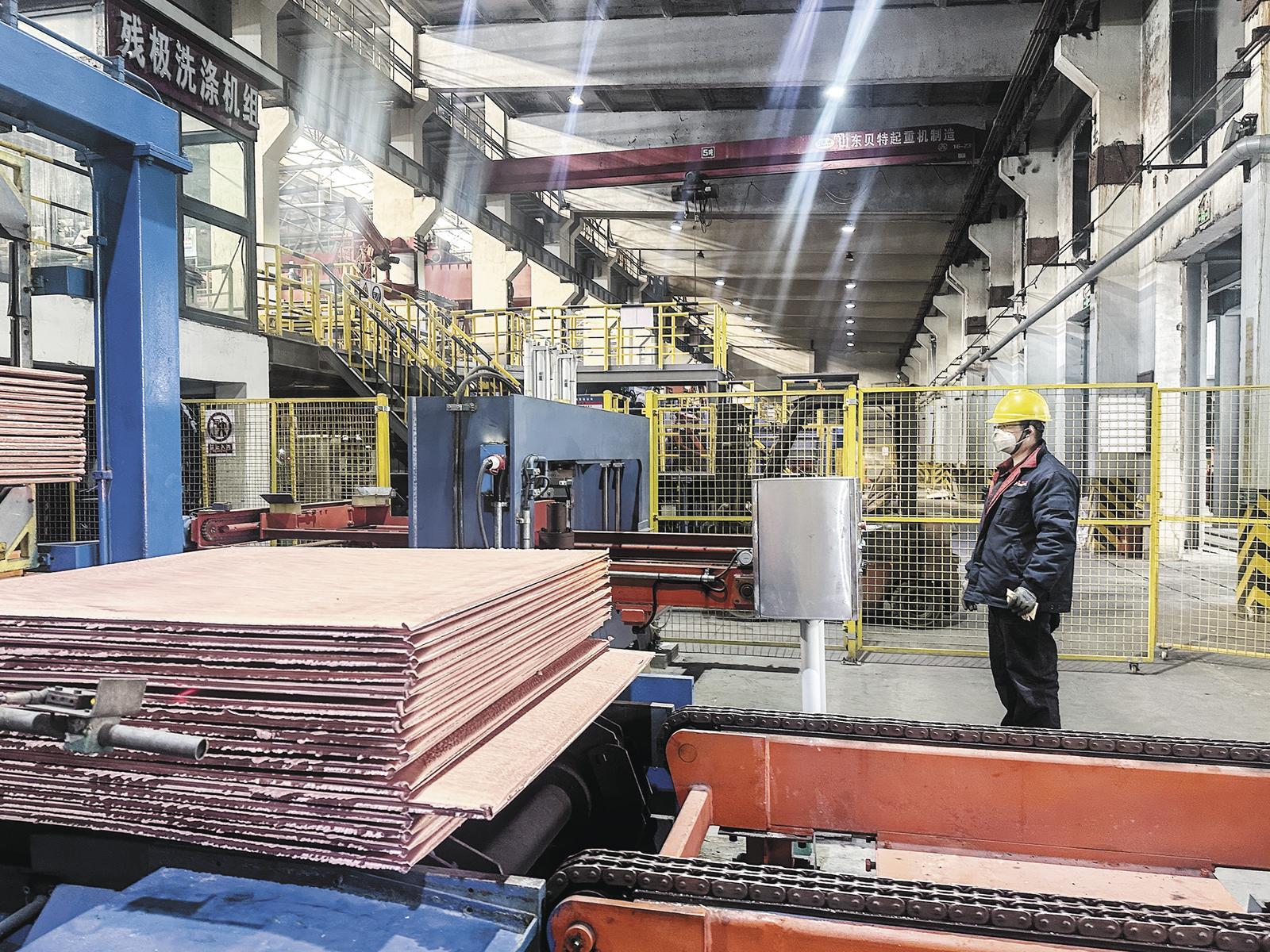
青海铜业电解车间。 新春佳节是万家团圆的日子,西部矿业集团的建设者们没有回家团聚,而是几十年如一日坚守在生产一线,用责任与担当守护生产运转,以实干与奉献书写 新春最美坚守。 工作人员密切关注生产情况。 厂区内,极板无人智能化转运生产线高效运转有序作业。原来独立而复杂的炼铜工序,现在全流程自动化一次就能完成,青海铜业正在重新定义"绿色冶 炼"新样貌。本报记者 张鹏 刘娟娟 阴极铜智能储运系统。本报记者 张鹏 摄 ...

开足马力!
Xin Lang Cai Jing· 2026-02-06 17:54
Core Insights - The Xining Economic and Technological Development Zone aims to achieve an industrial output value of 29.15 billion yuan and a 5% growth in industrial added value in the first quarter of 2026 [1] Group 1: Industrial Performance - Currently, 157 large-scale industrial enterprises in Xining Development Zone are operating at full capacity, while over 100 small and medium-sized enterprises are improving quality and efficiency [1] - More than 70 ongoing projects are being expedited to meet construction deadlines, with a focus on the spring construction peak [2] Group 2: Key Industries and Projects - The development zone is concentrating on three main industries: non-ferrous metals, crystalline silicon, and lithium batteries, with dedicated teams conducting in-depth research to identify potential and bottlenecks in capacity release and supply chain collaboration [1] - Significant projects include the Green Balance's 100,000-ton high-value resource utilization, Yellow River Xinye's phosphorous pig iron casting and graphitization technology upgrades, and the production of high-efficiency lithium battery electrodes by Times New Energy [2] Group 3: Policy and Support Measures - A service coordination leadership group for investment attraction has been established to address pain points in enterprise development and project construction [2] - A one-stop service platform for enterprise policies has been created to facilitate tax reductions, interest subsidies, and regular bank-enterprise matchmaking meetings to alleviate financing difficulties [2]
“提质强企”三年行动圆满收官 青海省重点工业产品质量实现跨越式提升
Zhong Guo Zhi Liang Xin Wen Wang· 2026-01-15 06:23
Core Insights - Qinghai Province's market regulatory bureau has implemented a comprehensive quality improvement system for key industrial products, focusing on hazardous chemicals, fertilizers, cement, electrical cables, food-related products, and building insulation materials, which has significantly enhanced product quality, economic benefits, and management levels in local enterprises [1][2] Group 1: Quality Improvement Measures - The regulatory bureau has adopted a "you point, I help" model, providing targeted technical support and customized quality improvement plans for enterprises facing specific technical challenges [1] - A full-process management system has been established, achieving a problem rectification completion rate of over 98% in hazardous chemicals and food-related products [2] - The focus will shift towards "prevention" by 2025, with initiatives to create risk control lists and foster regional quality brands, assisting small and micro enterprises in overcoming challenges [2] Group 2: Industry-Specific Quality Enhancements - The cement industry has seen an increase in product compliance rates from 85% to 98%, while hazardous chemical companies improved product purity consistency from 86% to 98% [3] - Fertilizer production equipment compliance rates rose from 45% to 80%, and core detection accuracy for effective phosphorus and total nitrogen increased from 75% to 98% [3] - Electrical cable product compliance rates improved from 88% to 98%, and building insulation materials achieved a quality control pass rate of 99.6% [3] Group 3: Collaborative Efforts and Future Directions - The integration of technical resources with enterprise needs has led to significant quality improvements, such as a direct efficiency increase of over 20 million yuan for Xikang Tongxin Chemical through process optimization [4] - A three-dimensional verification mechanism has been established for quality checks, achieving a 100% closure rate for identified risks [4] - The market regulatory system will continue to focus on key areas and products, providing ongoing quality technical support to enhance product quality and eliminate risks [4]