
Agility Robotics

Search documents
2026春晚国产机器人集群亮相,机器人ETF(159770)标的指数高开涨近1%,最新单日净流入超1亿元
Sou Hu Cai Jing· 2026-02-24 01:50
截至2026年2月24日 09:33,机器人ETF(159770)成交1.41亿元。跟踪的中证机器人指数(H30590)上涨0.77%,成分股华昌达上涨3.57%,大族激光上涨 3.23%,拓邦股份上涨2.90%,晶品特装上涨2.61%,科沃斯上涨2.53%。 2026年春晚舞台迎来国产机器人集群亮相,宇树科技、银河通用、松延动力、魔法原子等多家企业集中登场,机器人参与舞蹈、武术、小品、微电影等 多类节目,成为本届春晚科技亮点。本次机器人企业组团登台,覆盖足式、人形、具身智能等多类产品形态,展现国内机器人产业技术落地与商业化提 速,相关板块关注度显著提升。 京东数据显示,除夕至初五,机器人产品访问用户量同比提升超4倍,搜索"机器人"的用户同比增长25倍。同时,春节期间机器人租赁需求也大幅增 长,机器人租赁平台擎天租预计春节期间订单量将突破5000单。 随着机器人技术的进步,机器人企业积极拓展商演、教育、零售等应用场景,预计2026年将迎来订单量与交付规模的增长。 截至2月13日,机器人ETF(159770)最新规模达103.71亿元,最新份额达92.65亿份,均创近1月新高。资金流入方面,机器人ETF(159 ...


Toyota contracts seven Agility humanoid robots for Canadian factory
Yahoo Finance· 2026-02-19 20:29
After a year-long pilot project, Toyota’s Canadian manufacturing subsidiary has contracted seven humanoid robots to work in a plant building RAV4 SUVs under a robots-as-a-service deal. “After evaluating a number of robots, we are excited to deploy Digit to improve the team member experience and further increase operational efficiency in our manufacturing facilities,” Toyota Motor Manufacturing Canada (TMMC) President Tim Hollander said in a statement. The Digit robot in question is built by Agility Ro ...
Toyota hires seven Agility humanoid robots for Canadian factory
TechCrunch· 2026-02-19 20:29
Core Insights - Toyota's Canadian manufacturing subsidiary has integrated seven humanoid robots into its RAV4 SUV production line under a robots-as-a-service agreement, aiming to enhance operational efficiency and improve the work experience for human team members [1][8] Group 1: Robot Deployment - The humanoid robots, named Digit, are developed by Agility Robotics and are designed to operate in industrial settings, specifically to unload auto parts from an automated warehouse [2] - Deploying humanoid robots in real-world environments is challenging, as it requires integration into existing workflows, including maintenance and charging [3] - Agility Robotics is recognized for successfully transitioning robots from laboratory settings to practical applications, with similar robots already in use by logistics companies like GXO, Schaeffler, and Amazon [5] Group 2: Cost and Efficiency - The cost of deploying robots can significantly exceed the purchase price, but AI tools are being utilized to reduce these deployment costs and improve operational performance [6] - The collaboration between Toyota and Agility aims to explore additional use cases that can alleviate repetitive physical tasks for human workers, allowing them to focus on more valuable work [8] Group 3: Future Developments - Agility Robotics is developing a next-generation robot that will be safe to operate alongside human workers, addressing current reliability concerns with existing humanoid robots [9] - Competitors in the humanoid robot space, such as Figure.AI, have also conducted pilot programs, demonstrating the growing interest and investment in this technology across various industries [10]


IDC:2025年全球人形机器人出货量接近1.8万台 同比增长约508%
Zhi Tong Cai Jing· 2026-02-09 05:50
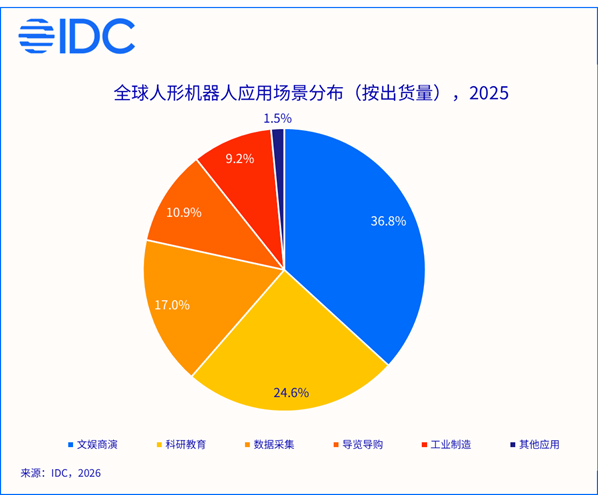
Core Insights - The global humanoid robot market is set to reach a significant scale in 2025, with an expected shipment of nearly 18,000 units, representing a year-on-year growth of approximately 508%, and sales revenue projected at around $440 million [1] - Chinese manufacturers are leading the market with a robust manufacturing system, rapid iteration capabilities, and cost advantages, establishing a dominant position globally [2] - The market is primarily driven by bipedal humanoid robots, which contribute 66.3% of the total sales revenue, with full-sized bipedal robots accounting for 41.6% of the sales [3] Market Dynamics - In 2025, the demand for humanoid robots is mainly driven by applications in entertainment, education, and data collection, emphasizing display effects and interactive experiences [4] - The industry is transitioning from one-time hardware sales to a model that includes Robot as a Service (RaaS), operational services, and a platform ecosystem, creating conditions for scalable applications and sustained revenue [6] Technological Advancements - Humanoid robots are advancing towards engineering and scalable applications, with a focus on enhancing intelligent collaboration capabilities [7] - The integration of upper limb dexterity and the fusion of cognitive models are key breakthroughs that will enhance autonomous operations and human-robot collaboration [7]

中国机器人复制电动汽车成功
Huan Qiu Shi Bao· 2026-02-07 04:29
人形机器人产业尚处于起步阶段,但早期优势加速了中国在研发和布局上的进展,有可能锁定其主导地 位,复制在电动汽车领域的成功策略。全球技术市场研究咨询机构Omdia的分析师苏廉节表示,中国的 早期优势来自于"政策支持、公共投资、成熟的供应链以及人工智能软硬件的进步"。 2025年全球人形机器人出货量在1.3万至1.8万台之间。中国的宇树科技去年出货超过5500台,全球最 高,另一家中国公司智元机器人以5168台排名第二。这让人联想起中国如何在电动汽车领域建立起领先 地位——早期的国家支持、产业政策催生数十家新入局者,快速拓展将它们推上全球畅销车榜前列。在 苏廉节分析师看来,"中国人形机器人供应商在设计中使用越来越多的本土零配件,这有助于提高成本 效益、保障供应链安全,并推动本土化创新和上市进度"。 美国"世界其他地方"网站2月5日文章,原题:中国正在机器人领域复制电动汽车的模式,且行之有效 中国企业控制着全球人形机器人的大部分市场份额,主导着这项重塑制造业和劳动力的前沿科技,西方 企业几乎无法与之竞争。2025年,当硅谷还在为人形机器人的未来营销策划时,中国的机器人已在忙着 出货了。去年,全球销售的人形机器人大多 ...
美媒:中国在机器人领域复制电动汽车模式,且行之有效
Huan Qiu Wang Zi Xun· 2026-02-06 22:48
Core Viewpoint - China is replicating its successful electric vehicle model in the humanoid robot sector, establishing a dominant position in the global market, with significant early advantages in research and development [1][2]. Group 1: Market Position and Competition - Chinese companies control a significant share of the global humanoid robot market, making it difficult for Western firms to compete [1]. - In 2025, global humanoid robot shipments are projected to range between 13,000 and 18,000 units, with Chinese company Yushutech leading with over 5,500 units shipped last year [2]. - The top three non-Chinese companies on Omdia's best-selling humanoid robot list are all from the U.S., with each averaging only about 150 units shipped, highlighting the gap between Chinese and American competitors [2]. Group 2: Factors Contributing to China's Success - China's early advantages in the humanoid robot industry stem from policy support, public investment, a mature supply chain, and advancements in artificial intelligence hardware and software [1]. - The use of more domestic components by Chinese humanoid robot suppliers enhances cost efficiency, ensures supply chain security, and promotes local innovation and market entry speed [2]. - Tesla's CEO Elon Musk acknowledged the strength of Chinese companies in artificial intelligence and manufacturing, indicating they will be formidable competitors [2].
2026前沿科技趋势:塑造自己的下一个版本
3 6 Ke· 2026-01-30 09:58
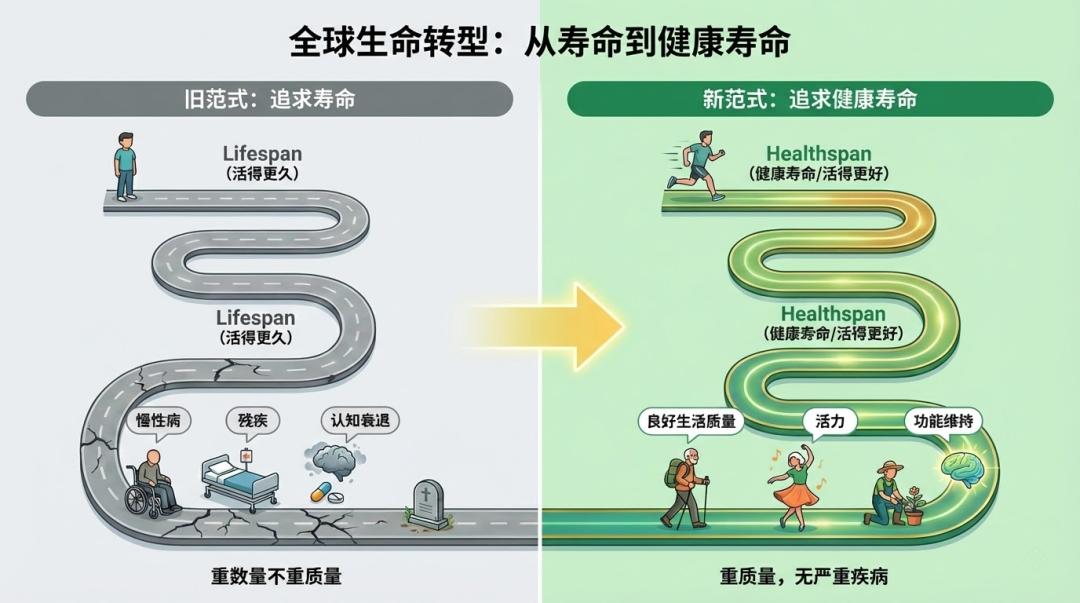
Group 1 - The rapid evolution and application of artificial intelligence and cutting-edge technologies are causing societal adaptation challenges, leading to feelings of uncertainty among people [1][2] - The focus of technological advancement should be human-centered, with an emphasis on shaping a better future through technology by 2030 [2] Group 2 - The "third transformation" of human life aims to extend healthy lifespan rather than just lifespan, with significant implications for global health and economy [3][5] - Human life expectancy has doubled over the past century, but the growth rate has significantly slowed down, with some regions experiencing stagnation or decline [4] - By 2030, the quality of life is projected to be a major focus, with non-communicable diseases potentially costing the global economy up to $47 trillion if not addressed [5] Group 3 - Advances in gene therapy and artificial intelligence are expected to play crucial roles in extending healthy lifespan, with technologies like CRISPR and AI enhancing medical capabilities [9][17] - Clinical breakthroughs in preventive gene therapy and RNA therapies are showing promise in treating chronic diseases effectively [10][12] - Epigenetic reprogramming is emerging as a potential method to reverse aging, with ongoing research aiming for clinical trials by 2026 [15] Group 4 - Artificial intelligence is set to enhance medical efficiency and understanding of human health, with applications in drug development, disease screening, and personal health management expected to yield significant results by 2030 [17][18] - AI is accelerating drug development processes, reducing timelines from years to months, and improving the success rates of new treatments [18][19] Group 5 - The development of exoskeleton technology is enhancing human physical capabilities, with applications in medical rehabilitation, industrial safety, and personal use expected to expand significantly [24][25] - Innovations in exoskeletons are making them more adaptable and user-friendly, with advancements in sensor technology and materials [28][30] Group 6 - The eVTOL market is projected to grow significantly, with advancements in battery technology and noise reduction strategies being critical for its acceptance and integration into urban transportation [31][32] - The evolution of drones into autonomous aerial robots is enhancing their capabilities for both consumer and industrial applications [34] Group 7 - The development of brain-computer interfaces (BCIs) is transforming the treatment of neurological conditions and enhancing human capabilities, with both invasive and non-invasive technologies showing promise [51][54] - BCIs are moving from experimental to standard treatment options for conditions like paralysis, with significant advancements in technology and regulatory approval processes [52][53]
2026前沿科技趋势:塑造自己的下一个版本
腾讯研究院· 2026-01-30 08:18
Core Insights - The article emphasizes the rapid evolution and application of artificial intelligence and cutting-edge technologies across various fields, urging a human-centered approach to technological advancement [3][4][5]. Group 1: Human Life's "Third Transformation" - Extending Healthy Lifespan - Human life expectancy has doubled over the past century, with significant improvements attributed to public health, antibiotics, and vaccines [7]. - Recent research indicates a dramatic slowdown in the growth rate of life expectancy, with the average increase dropping to below 0.25 years per decade in the last 30 years [8]. - A shift is occurring from merely extending lifespan to enhancing healthspan, which is the period of life spent in good health, with potential economic implications of up to $47 trillion in costs from non-communicable diseases by 2030 [9]. Group 2: Programmable Life - Gene Therapy - Gene therapy is moving towards optimizing the "life code," with advancements in CRISPR technology and delivery systems expected to mature by 2030 [11]. - Clinical breakthroughs in preventive gene therapy, such as Verve Therapeutics' treatment for cardiovascular disease, show promising results with significant reductions in LDL-C levels [12]. - The success of personalized CRISPR therapy in curing a fatal metabolic disease in a patient highlights the potential of gene therapy [14]. Group 3: Health Planning - AI Enhancing Medical Efficiency - AI is set to revolutionize drug development, disease screening, and personal health management by 2030, significantly reducing the time and cost associated with traditional drug development [21]. - AI combined with multi-omics technology is facilitating faster and more accurate disease screening, with notable advancements in cancer detection [23]. - Aging clock technology is evolving, enabling precise monitoring of aging processes and identifying underlying causes of aging [25]. Group 4: Enhancing Physical Capability - Exoskeleton Technology - Exoskeleton technology is advancing to enhance human physical capabilities, with applications in medical rehabilitation, industrial safety, and personal use [30]. - In the medical field, exoskeletons are evolving from mere mobility aids to intelligent devices that promote neurological recovery [31]. - Consumer-grade exoskeletons are expected to become popular for outdoor activities, significantly improving mobility for users [32]. Group 5: Flying Technology - eVTOL Development - The eVTOL market is projected to reach $41 billion in China by 2040, with significant advancements in battery technology expected to triple flight ranges [37]. - Noise reduction technologies are being explored to enhance social acceptance of eVTOLs, with strategies like "noise corridors" being implemented [38]. - The evolution of drones into aerial robots is enhancing capabilities in both consumer and industrial applications, with significant advancements in autonomous operations [40]. Group 6: Brain-Machine Interfaces - A New Era of Interaction - Brain-machine interfaces (BCIs) are transitioning from experimental therapies to standard treatment options for conditions like paralysis, with companies like Neuralink leading the way [61]. - Non-invasive BCIs are emerging, allowing for enhanced human-computer interaction, with applications in consumer technology [63]. - The integration of BCIs with AI could redefine human-AI collaboration, raising ethical considerations regarding privacy and data protection [64].

春晚机器人凉了?2026年,机器人要少跳舞,多干活
3 6 Ke· 2026-01-29 08:53
Core Insights - The Chinese robotics industry is experiencing a shift from showcasing technical capabilities to focusing on practical applications and commercial viability, as investors and customers demand tangible results rather than mere demonstrations [1][2][3] Group 1: Industry Trends - The 2026 outlook report emphasizes that the industry no longer wants to see robots performing tricks but rather engaging in useful tasks, indicating a paradigm shift towards commercial deployment [2][3] - The report highlights a significant disparity between soaring valuations and actual sales, with humanoid robot shipments only increasing by 17% despite a 300% rise in valuations, signaling a potential bubble [2][3] - As the number of robots deployed increases, companies are becoming less tolerant of flashy capabilities and more focused on reliability, predictability, and total cost of ownership [3][4] Group 2: Investment Dynamics - Investment logic is shifting, with a concentration of capital towards a few companies deemed to have commercial validation capabilities, as evidenced by the fact that 88% of funding in 2024-2025 went to large deals [4][5] - The report predicts that only 3-4 companies will emerge as clear winners in the humanoid robot sector, while others may face acquisition or closure due to an inability to balance high technical uncertainty with limited commercial validation [4][5] Group 3: Evaluation Metrics - The evaluation criteria for robots are evolving, with a focus on investment payback periods, task-switching capabilities, and operational data rather than just technical prowess [5][6] - Companies are now required to demonstrate clear task lists, performance metrics, and verifiable operational times before procurement, moving away from vague future potential descriptions [9][10] Group 4: Market Dynamics - The report notes a significant trend towards leasing and Robot-as-a-Service (RaaS) models, with 50% of companies preferring leasing to mitigate upfront costs and risks associated with technology [11][15] - The shift in decision-making power from technical teams to financial and operational departments reflects a growing demand for comprehensive total cost of ownership analyses [11][12] Group 5: Future Predictions - The report forecasts a major reshuffling in the investment landscape, with a predicted doubling of IPOs in the robotics sector in 2026, indicating a rush to lock in valuations before a potential downturn [12][24] - The report identifies a critical opportunity for Chinese companies in the global supply chain, as they possess a complete robotics industry chain despite facing policy barriers in overseas markets [14][15] Group 6: Safety and Standards - The establishment of safety standards is anticipated to be a crucial factor in the industry, with the potential to significantly impact market dynamics and competitive advantages [17][18] - Companies that participate in the development of these standards are likely to gain a first-mover advantage, while those that wait may find their technologies non-compliant [18][24]
2026年,机器人要少跳舞,多干活
Xin Lang Cai Jing· 2026-01-29 08:36
文|融中财经 2025年春晚,宇树机器人的一支秧歌舞点燃了资本狂热。2026年春晚,各家又在争夺这个难得的表演名 额。这一年,为了吸引眼球,你方唱罢我登场的戏码层出不穷,观众似乎早已审美疲劳,无非是从跑 步,到跳舞到武打,"大号玩具"的论调此起彼伏。 回顾这一年,在成绩与彷徨中,各家独角兽公司不断摸索与试错。人形机器人在公开场合完成了几乎所 有"可视化"的动作:跑步、跳舞、翻滚、对打……这些动作一次次刷新视频平台的播放量,却也同步降 低了它们在产业语境中的含金量。 真正的拐点在于:当所有公司都能表演,表演就不再是竞争力。 资本市场已经率先感受到这种变化。估值快速抬升的同时,订单、交付和规模化数据却明显滞后,技术 进展与商业兑现之间出现了越来越难以忽视的剪刀差。 这也是为什么,"泡沫"开始频繁出现在行业讨论中——并非因为技术停滞,而是因为衡量成功的标准, 已经悄然发生变化。 当炫技失效 在这场标准重塑的过程中,中国市场并非孤立。一份来自全球机器人产业一线的年度调研报告,提供了 一个有价值的参照坐标。 1月26日,在中国刚刚官宣上春晚的机器人名单时,The Robot Report发布的《2026年机器人行业展望 ...
