
First Republic Bank

Search documents
List of failed banks: 2009-2026
Yahoo Finance· 2026-02-18 20:33
Group 1: Bank Failures Overview - Metropolitan Capital Bank & Trust, based in Chicago, closed on January 30, 2026, marking the first failure of an FDIC-insured bank in that year, with total assets of $261.1 million and total deposits of $212.1 million as of September 2025 [1] - The bank's deposits, excluding certain brokered deposits, were assumed by First Independence Bank from Detroit [1] - In 2023, there were five bank failures, including notable institutions like Silicon Valley Bank and Signature Bank, which ended a streak of over 800 days without a bank failure [5] Group 2: Causes and Frequency of Bank Failures - Bank failures occur when a financial institution becomes insolvent, unable to cover customer deposits and debts, often due to mismanagement, economic factors, or criminal activity [2] - It is common for at least a few banks to fail each year, with historical data showing that years without bank failures are rare [6] - Since March 2023, there have been a total of 10 bank failures, with 2023 experiencing the highest number of failures in recent history [6] Group 3: Importance of FDIC Insurance - Depositors are encouraged to keep their funds in FDIC-insured banks to protect their money, as no depositor has lost FDIC-insured funds since 1933 [4] - It is crucial for depositors to ensure their balances are within FDIC insurance limits and guidelines to safeguard their funds [3] - The FDIC has been operational for 92 years, providing confidence to depositors regarding the safety of their money in the event of a bank failure [4]
Levi Strauss heir Daniel Lurie helped lure the Super Bowl when Levi’s Stadium was under construction. Now he’s mayor for the $440 million windfall
Fortune· 2026-02-03 22:27
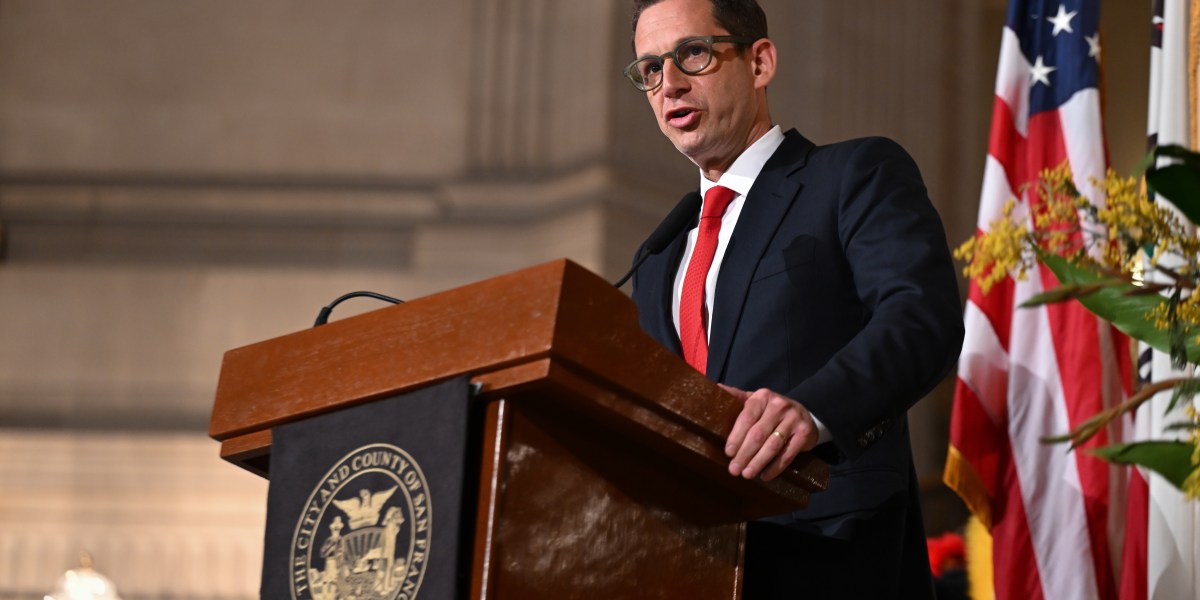
Since taking office in 2025, San Francisco Mayor Daniel Lurie has been on a mission to shake the city out of a post-pandemic economic slump. A political outsider, Lurie was previously best known as an heir to the Levi Strauss family fortune and a philanthropist focused on poverty-fighting initiatives. Now, Lurie has leveraged his connections across industries to boost the city’s reputation and economy following a slow recovery. Years after the pandemic, San Francisco’s downtown is still struggling with a ...

Bipartisan agreement emerges on bank resolution reform
American Banker· 2025-12-17 22:59
Core Insights - Bipartisan bills aimed at limiting the acquisition of failed banks by the largest financial institutions have passed the House Financial Services Committee, signaling a collaborative effort to address issues highlighted by recent bank failures [2][6]. Legislative Developments - The bills must still pass the full House and Senate and receive presidential approval, facing a tight legislative schedule ahead of the midterm elections [2]. - One significant bill, authored by Rep. Mike Flood, R-Neb., proposes to waive the least-cost resolution requirement of the FDIC when such a requirement would lead to increased bank consolidation [4][6]. Key Provisions - The least-cost resolution requirement mandates the FDIC to select the bid for a failed bank that results in the least loss to the Deposit Insurance Fund, but the new bill allows for exceptions in cases where larger banks would benefit disproportionately [4][6]. - Rep. Maxine Waters, D-Calif., supports the reform but emphasizes the need for provisions to prevent large institutions from manipulating the bidding process [5]. Additional Measures - The committee also passed other bipartisan measures, including a bill requiring the FDIC and Office of the Comptroller of the Currency to study modified bids in the failed bank bidding process [5]. - Another bill aims to restrict the use of concentration limit exceptions, which were previously utilized in JPMorgan's bid for First Republic Bank [5].

3 Bank Stocks You'll Want to Own in 2026
The Motley Fool· 2025-12-11 18:56
Core Insights - Bank stocks are positioned to benefit from favorable conditions as interest rates decline and investment banking rebounds, making them a solid choice for portfolio diversification [2] Group 1: JPMorgan Chase - JPMorgan Chase is the largest bank in the U.S. with total assets exceeding $3.8 trillion, nearly 50% larger than Bank of America and more than Citigroup and Wells Fargo combined [4] - The bank has a strong track record under CEO Jamie Dimon, successfully navigating economic challenges and emerging from the 2008 financial crisis [5] - JPMorgan's net interest income is projected to reach around $95 billion next year, reflecting a 3% increase from the current year, supported by robust capital market activity [8] - The bank effectively managed the rising interest rate environment in 2022 and 2023, leading to significant growth in net interest income [6][7] Group 2: Goldman Sachs - Goldman Sachs is expected to benefit from a rebound in capital markets, with a 40% increase in initial public offerings (IPOs) this year compared to 2024, raising total proceeds to $36.4 billion, a 26% year-over-year increase [11] - Mergers and acquisitions (M&A) activity has increased by 8.3%, with total deal value surging 146.5% year-over-year, indicating a strong recovery in deal-making [12] - The bank's CFO noted strong momentum in their backlog, the highest in three years, suggesting continued growth in M&A activity heading into 2026 [13] Group 3: Citigroup - Citigroup has lagged behind peers in key metrics like return on equity, attributed to its complex business structure and regulatory challenges [14] - Under CEO Jane Fraser, Citigroup is undergoing a transformation, including cutting bonuses and selling off less profitable units, such as a 25% stake in its Mexico retail bank for approximately $2.3 billion [15][17] - Citigroup trades at a price-to-tangible book value (P/TBV) of 1.14, making it more attractive to value-seeking investors compared to JPMorgan Chase and Goldman Sachs [18]


Fed traded fast merger for 2023 private equity rescue
American Banker· 2025-11-20 11:00
Core Insights - The U.S. government intervened during the regional banking crisis in 2023, promising to protect uninsured depositors and limit contagion risks [1][2] - The resolution of PacWest Bancorp involved a private-sector rescue, with significant capital injections from private equity firms [3][12] - The Federal Reserve played a crucial behind-the-scenes role in facilitating the sale of PacWest, incentivizing private equity firms to invest [4][10] Government Intervention - Following the failures of Silicon Valley Bank and Signature Bank, the government took actions to protect depositors and stabilize the banking sector [1] - The Federal Deposit Insurance Corporation (FDIC) provided 80% loss coverage on loans during the First Republic Bank acquisition by JPMorganChase [2] PacWest Bancorp's Situation - PacWest faced rapid deposit flight and liquidity issues, leading to its eventual sale to Banc of California [3][19] - The bank had sold $1 billion in securities at a loss and experienced significant deposit outflows following the collapse of SVB [19][20] Role of the Federal Reserve - Comments from banking lawyer Randall Guynn revealed that the Fed expedited the approval process for the TIAA bank sale, which was unrelated to the banking crisis, to facilitate a private-sector solution for PacWest [4][10][11] - The Fed's general counsel indicated readiness to approve the TIAA transaction quickly, influenced by private equity firms' willingness to invest in troubled banks [11][12] Private Equity Involvement - Warburg Pincus and Centerbridge Partners committed a combined $400 million to the PacWest deal, demonstrating the viability of private-sector solutions amid liquidity crises [3][23][25] - The involvement of private equity firms was complicated by regulatory scrutiny, as they cannot control banks under current regulations [9] Regulatory Environment - The approval process for bank mergers and acquisitions slowed under the Biden administration compared to previous administrations, impacting the timeline for TIAA's bank sale [8][9] - The rapid approval of the TIAA transaction highlighted that regulatory processes can be expedited when there is a perceived need for urgency [15][16] Industry Implications - The events surrounding PacWest and the role of the Fed may reignite discussions about the appropriateness of the Fed's involvement in private-sector deals during crises [10][37] - Concerns have been raised about the potential for conflicts of interest and the revolving door between government and private sectors, particularly involving former officials like Tim Geithner [32][36]

Federal Home Loan Bank advances to member banks dip in Q3
American Banker· 2025-11-19 11:00
Core Insights - The recent government shutdown has led to increased interest in data from the Federal Home Loan Banks (FHLBs) to assess the banking system's strength [1][5] - Cash loans to commercial banks from FHLBs decreased by 6% in Q3 to $693.5 million compared to $736.1 million a year earlier, with net income remaining flat at $1.5 billion [2][6] - Experts caution against interpreting the decline in advances as a sign of abundant liquidity in the financial system [3][6] Financial Data and Trends - The dip in FHLB advances is attributed to a lack of financial data due to the government shutdown, affecting the collection of key economic indicators [5] - The Federal Reserve's decision to end quantitative tightening on December 1 suggests a tightening liquidity environment [4] FHLB Operations and Historical Context - FHLBs provide loans, known as "advances," to financial institutions that pledge collateral, typically mortgage loans and U.S. Treasuries [2][11] - The FHLB system has been a reliable source of liquidity, especially during financial crises, such as the regional bank crisis in early 2023 [9][10] - During the pandemic in March 2020, advances peaked at $807 billion, but subsequently declined as federal stimulus increased deposits in financial institutions [10] Regulatory and Governance Issues - The FHLB system's dual mission of providing liquidity and supporting housing has faced scrutiny, leading to proposed changes during the Biden administration [12] - Recent studies indicate that FHLB advances contribute to the stability of the banking system, with a net subsidy to FHLB members estimated at $6.9 billion for fiscal 2024 [14]
These banks rely on their cultures to navigate thorny issues
American Banker· 2025-11-14 17:29
Core Insights - A healthy organizational culture is essential for a bank's long-term success, influencing employee behavior and collaboration [3][9] - The saying "Culture eats strategy for breakfast" highlights the importance of culture in achieving strategic goals [2] Peapack-Gladstone Financial - Peapack-Gladstone Financial, with $7.4 billion in assets, has prioritized culture during its expansion in New York City, hiring many bankers from failed banks [5][6] - The company increased its workforce by 30% over 18 to 24 months, emphasizing clear communication to integrate diverse cultures [6][10] - Peapack's New York expansion has resulted in nearly $2 billion in new deposits and significant growth in client relationships and assets under management [11][12] Pinnacle Financial Partners - Pinnacle Financial Partners, ranked fourth on the Best Banks to Work For list, faces cultural challenges amid its merger with Synovus Financial [13] - Concerns exist regarding the preservation of Pinnacle's unique corporate culture and its ability to maintain growth post-merger [14][15] - Both CEOs have committed to preserving Pinnacle's recruiting and compensation models during the integration process [15][17] BankIowa - BankIowa's values statement has significantly impacted its performance, contributing to improved retention rates and financial results [18][19] - The bank reported a net income of $5 million in the first half of 2025, with a return on assets exceeding 1.2% [20] - The alignment of the company's values with its operations has fostered a supportive culture, enhancing employee satisfaction [21][22]
List of failed banks: How many banks failed in the past 10 years?
Yahoo Finance· 2025-11-12 22:55
Since the 2008 financial crisis, U.S. bank failures have become relatively rare — but they haven’t disappeared. The Federal Deposit Insurance Corporation (FDIC) maintains a detailed record of every bank that has closed its doors. The following is a look at bank failures from 2015 through 2025, offering a snapshot of how stability within the banking industry has evolved over the past decade. What does it mean when a bank fails? A bank failure occurs when a bank is closed by a federal or state regulatory ...
First Western Trust Appoints Alex McDougall as Arizona Regional President
Prnewswire· 2025-11-10 20:11
Core Insights - First Western Financial, Inc. has appointed Alex McDougall as Regional President for its Arizona offices, bringing over 18 years of experience in private banking and wealth management [1][2] - McDougall previously held senior roles at JPMorgan and First Republic Bank, where he achieved significant growth in market share and deposits [1][2] - His appointment reflects First Western Trust's strategic investment in Arizona, emphasizing community engagement and support for local businesses [3][4] Company Strategy - First Western Trust aims to strengthen its presence in Arizona, a key growth market, by focusing on client service and community involvement [3][5] - The firm continues to support local entrepreneurs and nonprofit organizations through partnerships and philanthropy [4][5] - Leadership at First Western believes that exceptional client service and personal connection are critical differentiators in the banking industry [4] Leadership and Experience - Alex McDougall has received multiple industry accolades, including the President's Circle Award and Top Contributions to Banking Award, highlighting his ability to drive client satisfaction and business growth [2] - His leadership style aligns with First Western's philosophy of serving as trusted advisors, which is expected to enhance the firm's client-focused approach in Arizona [4][5] - McDougall holds a Business Administration degree and has served on various nonprofit boards, indicating a commitment to community service [5]


Jamie Dimon, CEO of JPMorgan Chase, announced $1.5 trillion in investments over 10 years. Here's how he became an iconic billionaire banker.
Yahoo Finance· 2025-10-14 22:55
When Weill left American Express in 1985, Dimon followed . The pair ran Commercial Credit, a company they would build into the financial-services conglomerate Citigroup .Dimon's finance skills were clear from early on. At the behest of his mentor, the financier Sandy Weill , he turned down offers from Goldman Sachs and Morgan Stanley to accept a job at American Express after graduating from Harvard.Dimon graduated from Tufts University, where he majored in psychology and economics. After a stint as a manage ...