
Safe Superintelligence

Search documents
Funding for startup AI companies dominates VC investment arena
Yahoo Finance· 2026-02-11 09:05
Core Insights - Venture capital funding for artificial intelligence (AI) and machine learning startups surged by 72% in 2025, marking a significant milestone where VC dollars for these ventures exceeded all other sectors combined for the first time [1][3]. VC Funding Overview - Global funding for AI startups reached $270.2 billion, representing 52.7% of the total $512.6 billion in venture capital investments [2]. - Despite the increase in funding, the overall number of VC deals declined for the third consecutive year, with 9,844 registered deals in the fourth quarter of 2025, the lowest since early 2020 [3]. Deal Dynamics - The trend indicates fewer deals but larger investments, similar to M&A activity, highlighted by SoftBank's $40 billion investment in OpenAI, the largest single investment in a private company [4]. - Other significant investments included Meta's $14.3 billion in Scale AI and Anthropic's $13 billion funding round at a valuation of $183 billion [5]. Regional Distribution - Of the $270 billion invested in AI by VC firms, 79.3% was allocated to North America, 13.6% to Europe, 5.7% to Asia, and only 0.5% to Latin America [6]. Industry Trends - Many heavily funded startups, such as Thinking Machine Labs and Safe Superintelligence, were founded by former OpenAI staff, indicating a concentration of AI expertise in elite startups [7]. - The share of AI in global VC deal value increased from 27.5% in 2023 to 40% in 2024, and further to 52.7% in 2025 [7]. Exit Value - The aggregate value of AI and machine learning exits was $242.4 billion, accounting for about 40% of all exit value, a significant increase from $73.6 billion and 22% in 2024 [8].
挑战Transformer,前OpenAI研究VP宣布创业,拟融资10亿美元
机器之心· 2026-01-31 04:10
Core Insights - The article discusses the shift in focus from Transformer models to alternative approaches in AI research, as highlighted by Llion Jones, co-founder and CTO of Sakana AI, who is reducing his research time on Transformers and seeking new goals [1][3] - Jerry Tworek, former VP of research at OpenAI, has founded Core Automation, which aims to explore a different path in AI model development, specifically focusing on "Continual Learning" capabilities [6][10] - Core Automation is seeking $500 million to $1 billion in funding and plans to develop models that require significantly less data and computational resources compared to current leading models [11][16] Company Developments - Core Automation is in its early stages, with its funding and product direction still subject to change, but it represents a growing group of researchers advocating for a fundamental transformation in AI [8][9] - Tworek's vision includes a single algorithm named "Ceres," which contrasts with the typical multi-stage training process used by major companies [16] - The company aims to automate the production of its own products, with initial goals in industrial automation and long-term ambitions that include creating self-replicating factories and bio-machines [16] Industry Trends - The article notes a trend among researchers who believe that current mainstream model development techniques are inadequate for achieving significant breakthroughs in fields like biology and medicine [9] - There is a growing enthusiasm in the capital markets for new experimental labs, as evidenced by recent funding rounds for startups like Humans& and Thinking Machines Lab, despite many lacking revenue or products [15] - The exploration of "Continual Learning" is not exclusive to Core Automation, as other labs like Safe Superintelligence are pursuing similar goals [13][14]


AI时代造就年轻亿万富翁:创业不到三年就暴富,马斯克都比不上
Feng Huang Wang· 2025-12-30 03:07
新晋AI亿万富豪包括Scale AI联合创始人汪滔(Alexandr Wang)与郭如意(Lucy Guo),他们创建的这家数 据标注公司在今年6月获得了Meta的143亿美元投资。AI编程创业公司Cursor的四位创始人迈克尔·特鲁 埃尔(Michael Truell)、苏阿莱赫·阿西夫(Sualeh Asif)、阿曼·桑格尔(Aman Sanger)与阿尔维德·伦纳马克 (Arvid Lunnemark)也在上个月公司融资估值达270亿美元时跻身亿万富豪行列。 凤凰网科技讯 北京时间12月30日,据《纽约时报》报道,AI热潮已经让英伟达CEO黄仁勋(Jensen Huang)和OpenAI CEO萨姆·奥特曼(Sam Altman)等知名亿万富翁变得更加富有。与此同时,它还造就了 一批来自小型创业公司的新年轻亿万富翁,至少在纸面上是如此。 这些年轻富翁可能会成为未来的硅谷权势人物,就像以往科技热潮造就的富有高管一样。例如,上世纪 90年代末互联网泡沫时期涌现的富豪们就曾投资或协助引领了随后的科技浪潮。 硅谷风险投资公司Sapphire Ventures的合伙人贾伊·达斯(Jai Das)将新晋亿万富豪比作 ...

前Meta首席AI科学家再创业,AI新公司估值直指30亿欧元
Hua Er Jie Jian Wen· 2025-12-19 14:27
Group 1 - Meta's Chief AI Scientist Yann LeCun is seeking €500 million in funding for his newly established AI company, which will value the company at approximately €3 billion before its official launch [1] - The new company, named Advanced Machine Intelligence Labs (AMI Labs), will focus on developing next-generation superintelligent AI systems, particularly "world models" that can simulate and understand the physical world [2] - AMI Labs' technology foundation is based on research led by LeCun during his time at Meta, aiming to create a new AI architecture capable of learning from text, video, and spatial data, with abilities for continuous memory, complex reasoning, and planning [2] Group 2 - Alexandre LeBrun, co-founder of French health tech startup Nabla, has been appointed as the CEO of AMI Labs, while Nabla will maintain a strategic research partnership with AMI Labs [3] - Meta is undergoing a significant strategic shift in its AI approach, with CEO Mark Zuckerberg aiming to compete directly with OpenAI and Google by moving away from long-term exploratory work initiated by LeCun [4] - Meta has recently laid off approximately 600 employees from its AI research team to reduce costs and accelerate the productization process, reflecting ongoing leadership changes within the company [4]

霍华德·马克斯最新投资备忘录:是泡沫吗?
3 6 Ke· 2025-12-11 03:58
Core Viewpoint - The investment memo by Howard Marks discusses the potential "bubble" in AI investments and emphasizes the need for rational evaluation amidst the current AI technology revolution [1][2]. Group 1: AI Investment Landscape - Oaktree Capital has invested in several data centers, with its parent company Brookfield raising a $10 billion fund for AI infrastructure investments [1]. - Major companies like Oracle, Meta, and Google have issued 30-year bonds for AI investments, with yields only slightly above risk-free rates, raising questions about the wisdom of such long-term debt under technological uncertainty [2][27]. - AI is seen as potentially the greatest transformative technology in history, with significant capital being allocated to it [3][16]. Group 2: Market Behavior and Speculation - The current enthusiasm for AI could lead to a bubble, characterized by excessive optimism and speculative behavior among investors [4][5]. - Historical patterns of bubbles suggest that new technologies often attract irrational exuberance, leading to overvaluation and subsequent losses [7][8]. - The memo highlights the cyclical nature of bubbles, where initial excitement can lead to significant financial losses for investors [5][6]. Group 3: Debt Financing in AI - The use of debt financing in AI infrastructure is increasing, with concerns that this could amplify risks associated with speculative investments [26][28]. - The memo warns that the current phase of speculative financing may lead to unsustainable practices, reminiscent of past financial crises [28][29]. - There is a distinction between healthy and unhealthy debt behaviors in the AI sector, with some companies leveraging debt aggressively without clear revenue prospects [27][28]. Group 4: Uncertainties and Future Outlook - Despite the potential of AI, there is considerable uncertainty regarding its commercialization, the identity of future winners, and the overall market dynamics [18][19]. - The memo raises questions about whether AI will lead to monopolistic markets or remain competitive, impacting profitability for companies involved [19][20]. - Concerns are also expressed about the sustainability of AI-related investments, particularly regarding the lifespan and economic viability of AI infrastructure [30][31].





扒完英伟达的84笔投资,我们发现一个秘密丨投中嘉川
投中网· 2025-11-23 07:04
Core Insights - The article highlights Nvidia's significant financial success and strategic investments in AI startups, indicating its dominant position in the AI revolution. Nvidia's operating profit surged by 65% year-over-year to $36 billion, while net profit also increased by 65% to $31.9 billion, marking a nearly 19-fold increase since the launch of ChatGPT 3.5 in November 2022 [6][8]. Investment Overview - Nvidia has made 251 investments in 244 startups since 2022, with 84 investments in 74 startups from January to November 2023 alone, surpassing the total of 76 investments made in 2024 [8][12]. - The majority of these investments focus on AI-related fields, particularly software applications, computational power, and energy, with 39 AI application companies receiving funding [12][14]. - The total funding for model-related companies reached over $28.6 billion, with a significant portion coming from a single round of financing by Musk's xAI [14][16]. Investment Signals - Nvidia's investments signal a narrowing focus on model-layer companies, indicating a trend towards consolidation in the AI model sector [20][23]. - The company is addressing energy supply issues by investing in nine energy or resource management startups, including those focused on nuclear fusion and renewable energy-driven data centers [24][27]. - A significant portion of Nvidia's investments (34 out of 39 AI software applications) targets enterprise clients, reflecting a strategic shift towards more stable and predictable revenue sources [29][32]. Financial Strategy - Nvidia's frequent investments are driven by its substantial cash reserves, which reached $60.6 billion, allowing for aggressive stock buybacks and dividends [37][40]. - The company aims to diversify its revenue sources, as 50% of its revenue currently comes from three clients, reducing reliance on a few major customers [40][42]. - Nvidia is also focused on exploring new business opportunities, as data center revenue accounted for 89% of total revenue, while autonomous driving revenue remains minimal [42].

理解中国独角兽:如何超越估值泡沫 | 商学院观察
Jing Ji Guan Cha Wang· 2025-11-10 07:31
Group 1 - The core viewpoint emphasizes that unicorn companies must balance development speed and quality, ensuring their growth is based on solid technological foundations and sustainable business logic [2][3] - The global unicorn growth rate is slowing, with investors increasingly scrutinizing profitability models and long-term value, leading to a market correction of previous valuation bubbles [3][6] - "DownRounds" financing is becoming a focal point, indicating companies are facing challenges in meeting growth expectations, prompting a shift from a "burning cash for growth" model to a focus on profitability and sustainability [6][7] Group 2 - The terms "ZIRPicorns" and "Papercorns" have been introduced to describe unicorns that emerged during the zero-interest rate period and those with inflated valuations lacking market validation, respectively [7][8] - Approximately 60% of unicorns in the U.S. fall under the "ZIRPicorns" category, facing challenges in achieving profitability as funding runs out amid rising interest rates [7][8] - "Papercorns" represent 93% of U.S. unicorns, highlighting a significant shift from the original unicorn concept where valuations indicated mature business models with clear exit paths [7][8] Group 3 - Chinese unicorns are characterized as "ecological builders," focusing on rapid scaling and ecosystem collaboration, leveraging existing business models to create stable cash flows [8][9] - Companies like Ant Group and Yuanfudao exemplify this pragmatic innovation approach, enhancing efficiency through technological or model innovations rather than creating entirely new markets [8][9] - In contrast, U.S. unicorns exhibit a "dreamer" mentality, investing in seemingly impossible technologies with the aim of disrupting existing systems rather than optimizing current models [12][13] Group 4 - The innovation paths of Chinese and U.S. unicorns differ significantly, with Chinese firms favoring independent development and collaboration, while U.S. firms focus on market-driven innovation [14][16] - Historical and cultural factors contribute to these differences, with China's innovation historically leaning towards business model innovation due to practical needs [17][18] - Recent trends indicate a shift in China towards accelerated technological innovation, particularly in hard tech sectors like integrated circuits, reflecting a move towards self-sufficiency in key technologies [20][24] Group 5 - The investment landscape shows a stark contrast, with U.S. venture capital heavily focused on AI, while China's investments are more diversified across industry applications and infrastructure [28][29] - As of early 2025, 451 generative AI services have been registered in China, with over 80% being customized solutions for specific verticals, indicating a depth of application [29] - China's complete industrial chain and diverse application environments provide a unique systemic advantage, with the potential for AI integration across various sectors [29]
马斯克、奥特曼X上再开撕,Ilya最新52页证词曝光,抖出OpenAI更多内幕
3 6 Ke· 2025-11-03 08:34
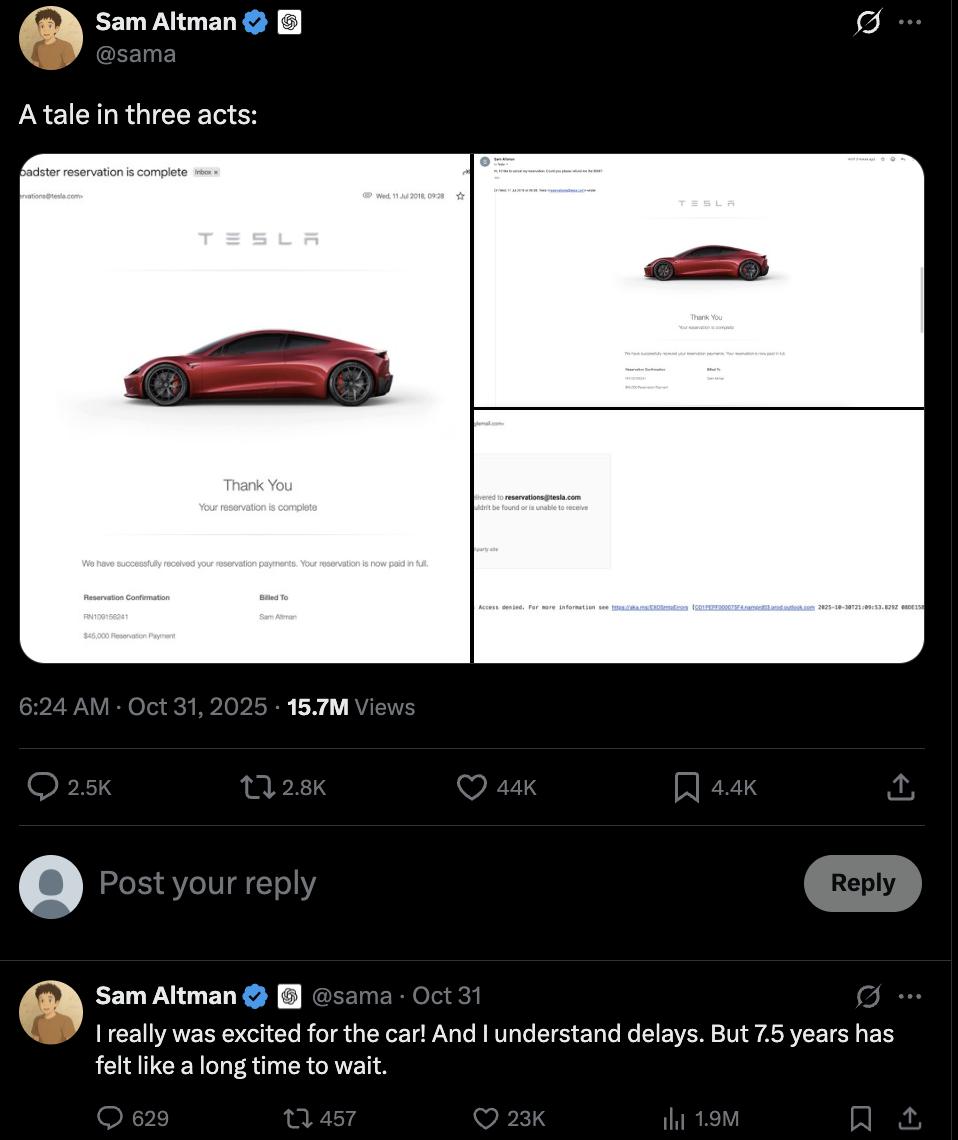
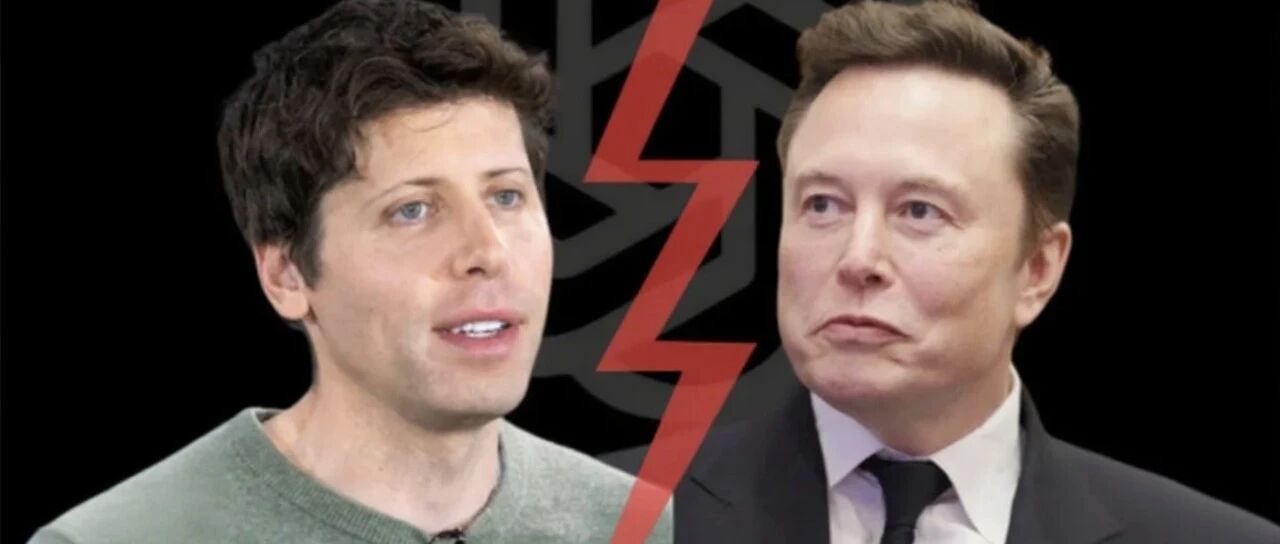
Core Points - The ongoing feud between Elon Musk and Sam Altman has escalated, with Altman publicly criticizing Musk's claims regarding OpenAI's success and Musk accusing Altman of stealing from a non-profit organization [3][4][6]. - The conflict stems from their shared history at OpenAI, which Musk co-founded in 2015 as a non-profit, but later left due to disagreements, leading to Altman's leadership and the company's significant valuation increase to $500 billion [6][8]. - Recent developments include a 52-page testimony from Ilya Sutskever, revealing internal conflicts and accusations against Altman, which were based on second-hand information [10][13][14]. Group 1 - Musk and Altman have exchanged accusations on social media, with Musk claiming Altman received a refund for a canceled Tesla Roadster order within 24 hours, while Altman argues he transformed OpenAI into a $500 billion AI giant after Musk's departure [3][4][6]. - The tension is compounded by Musk's legal actions against OpenAI, which he believes has strayed from its original non-profit mission [6][8]. - Sutskever's testimony highlights a lack of direct communication and reliance on second-hand information regarding Altman's alleged misconduct, raising questions about the board's decision-making process [10][13][14]. Group 2 - The internal dynamics of OpenAI's board are under scrutiny, with Sutskever indicating that the board acted hastily in removing Altman, attributing this to a lack of experience [15][24][30]. - A proposal for a merger with Anthropic was discussed shortly after Altman's removal, but it did not progress due to practical obstacles [17][18][30]. - Sutskever's motivations for Altman's ousting appear to have been brewing for at least a year, suggesting deeper issues within the company's governance [19][29].
马斯克、奥特曼X上再开撕,Ilya最新52页证词曝光,抖出OpenAI更多内幕
机器之心· 2025-11-03 04:04
Core Points - The article discusses the ongoing feud between Elon Musk and Sam Altman, highlighting a recent exchange on social media regarding a refund issue related to a Tesla Roadster reservation made by Altman [2][4][5] - It also delves into the internal dynamics at OpenAI, particularly focusing on the circumstances surrounding Altman's dismissal and the subsequent board actions [11][16][22] Group 1: Musk and Altman's Dispute - Altman canceled his Tesla Roadster reservation after waiting for 7.5 years and faced difficulties in obtaining a refund due to a non-functional email address [4][5] - Musk responded to Altman, suggesting that the refund issue was resolved quickly and accused Altman of stealing from a non-profit organization [7] - Altman defended his leadership of OpenAI, emphasizing its growth to a valuation of $500 billion and criticizing Musk's past comments about the company's success rate [8][11] Group 2: OpenAI's Internal Dynamics - The article outlines the timeline of OpenAI's founding, Musk's departure, and the establishment of a for-profit subsidiary that attracted a $1 billion investment from Microsoft [11] - Ilya Sutskever's testimony reveals that Altman was accused of a consistent pattern of lying and undermining executives, leading to his dismissal [16][22] - The board's decision-making process was criticized for being rushed and lacking experience, particularly regarding the roles of board members Helen Toner and Tasha McCauley [22][43] - A proposal for a merger with Anthropic was discussed shortly after Altman's dismissal, but it ultimately did not proceed due to practical obstacles [23][47]
“AI盛世”还是“AI泡沫”?10家AI独角兽,估值1年增长1万亿,VC一年投入超2000亿美元,利润为0
Hua Er Jie Jian Wen· 2025-10-16 12:39
Core Insights - The surge in AI investments has led to a dramatic increase in valuations of unprofitable AI startups, totaling nearly $1 trillion in the past year, marking the fastest wealth expansion in history [1] - U.S. venture capital (VC) investments in AI are projected to exceed $200 billion this year, significantly surpassing previous tech bubbles, indicating a strong market focus on AI [2] - The current investment climate is characterized by a "winner-takes-all" mentality, with expectations that only a few companies will dominate the market, reminiscent of the internet era [3] Investment Trends - The AI sector has attracted over $200 billion in VC funding this year, which is more than the $135 billion invested during the SaaS bubble in 2021 [2] - AI companies are experiencing inflated valuations, with some startups valued at 100 times their annual revenue, driven by a fear of missing out (FOMO) among investors [2] - The expectation is that while a significant amount of AI investment may be wasted, the technology could ultimately create tenfold value [3] Market Dynamics - The valuations of private AI companies are beginning to impact public markets, with major tech firms like AMD and NVIDIA seeing substantial market cap increases due to their associations with AI startups [3] - The competition among AI companies, particularly between OpenAI and tech giants like Microsoft and Google, is intensifying, leading to high operational costs and uncertain profitability timelines [4] - The current capital frenzy in AI resembles previous market bubbles, with valuations detached from actual earnings, raising concerns about the sustainability of this growth [5]