人身保险

Search documents
人身保险监管工作会议举行:2026或沿袭六大主线,下一位人身险司司长成最大悬念
Xin Lang Cai Jing· 2026-02-13 13:23
来源:慧保天下 本周2月9日,金融监管总局召开人身保险监管工作会议。新一年的监管部署,在传统的农历"小年"前落 地。 值得注意的是,由于金融监管总局人身司新一任司长迟迟未能就位,此次人身保险监管工作会议召开时 间较晚,且从坊间流传的各种消息来看,与以往思路也并未发生显著变化。如此重要的位置,空缺如此 久的时间,这与当下人身保险行业发展所面临的复杂形势形成了某种微妙的"互文"。 结合2025年行业逻辑,笔者梳理出2026年人身险业发展中最值得关注的六大主线,有关新一任人身险司 司长、属地化监管下的市场演变、市场风险化解、"报行合一"下的费用管控、营销体制改革与"产品+服 务"新范式。 一个最大的悬念:最强监管周期下,谁来掌舵 一个值得期待的利好:属地化监管或有利于中小公司发展 一项最具挑战的任务:利率低、负债长,如何化解市场风险冲击 一条长期博弈的主线:"报行合一"下的费用管理 一则最古老的命题:营销体制改革再进一步 一个包含社会责任的热望:小产品如何对接大服务 01 一个最大的悬念:最强监管周期下,谁来掌舵 2025年,人身保险行业迎来盈利最强年。已披露数据的57家非上市人身险公司,有超过80%的公司实现 盈 ...
净利再创新高是喜是忧?“泰康系”、中信保诚大增,信批机构数量再降,15险企“常胜”,亏损险企数降至十家
Xin Lang Cai Jing· 2026-02-05 12:25
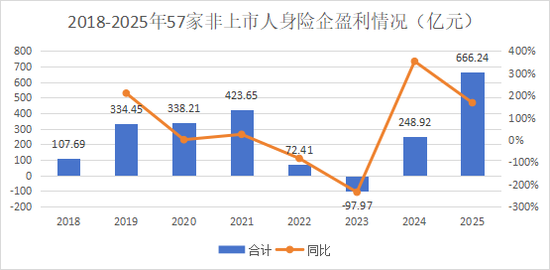
对比数据来看,2024年仅泰康人寿、中邮、中意等3家非上市险企净利润超十亿,但2025年的净利润水 平则改天换地,达此盈利线的险企翻了数倍。这期间行业业务模式、真实的盈利影响因素未发生根本性 改变。 综合来看,2025年资本市场回暖,随着"报行合一"的深入实施,产品及渠道带来的结构性优化,都在一 定程度上助长了利润走势的高涨。但不得不承认的是,会计准则切换对数据的决定性影响。2025年行业 性盈利数据需理性看待,并做好应对准备。 来源:观潮财经 2025人身险业净利再创新高,是喜是忧? 2025年,在官方规定披露时间内57家非上市人身险企披露2025年Q4偿付能力报告。与2024年同期相 比,信批险企数量再降2家,分别为瑞华健康与鼎诚人寿。 尽管信批险企数量下降,但净利润数据却是历史新高,整体达到666亿元,较曾经的历史最高水平—— 2021年仍高出了三分之一。 观潮小注:全文所述2025年净利润,系四季度累计数据口径,为未经审计的全年净利润数据。 01 信批险企再减2家,净利创历史新高 2025年四季度,仅57家非上市人身险企公布偿付能力报告,较2024年同期减少2家,分别为瑞华健康和 鼎诚人寿。 观潮财经 ...

2026人身险经营8大推演:渠道+产品+投资……怎么变?
Xin Lang Cai Jing· 2026-01-05 10:10
Core Insights - The year 2025 marks a significant transformation in the life insurance industry, influenced by external macroeconomic pressures, declining interest rates, and the acceleration of digitalization and AI technologies. The competitive landscape is increasingly polarized, with leading companies expanding their advantages while smaller firms face multiple challenges [1][41]. Group 1: Regulatory Changes and Cost Management - The "reporting and operation integration" policy will be further refined in 2026, requiring life insurance companies to align reported costs with actual expenses, promoting fair competition and healthy development [2][44]. - The insurance industry is expected to reduce costs by over 300 billion yuan in 2024, primarily within the life insurance sector, as a result of regulatory pressures [2][3]. - The introduction of new regulations will lead to more detailed cost management and a shift towards rational product design, focusing on customer value and sustainable profitability [4][45]. Group 2: Channel Dynamics - The bancassurance channel has become a key growth driver for the industry, with its share of new business premiums rising to approximately 65% by 2025, driven by banks' increasing focus on wealth management [5][10][52]. - Despite the growth, the bancassurance model still faces challenges in professionalization, particularly in addressing deeper customer needs such as family protection and retirement planning [11][53]. - The individual insurance sector is experiencing significant difficulties, with a projected decline in new business premiums of around 5% in 2025, necessitating a focus on professionalization to retain agents and improve average premiums [12][56]. Group 3: Product Trends - The long-term decline in interest rates and the recovery of the capital market are expected to drive the growth of participating insurance products, as traditional high-guarantee products lose appeal [17][18]. - The implementation of DRG/DIP reforms is anticipated to enhance the mid-tier medical insurance market, with a focus on innovative products that cater to unmet healthcare needs [20][22]. - The aging population is creating new growth opportunities in pension insurance, with a significant increase in the elderly demographic expected to drive demand for retirement products [23][26]. Group 4: Investment and Asset Management - The insurance sector has seen a recovery in investment returns, with a notable increase in equity holdings, although market volatility poses challenges for stable operations [33][34]. - New asset-liability management regulations are set to be implemented, emphasizing the need for a robust governance structure and regular reporting to address the pressures on solvency [36][38]. - The industry is increasingly relying on perpetual bonds and capital-raising measures to alleviate solvency pressures, with a focus on maintaining a stable yield curve [37][38]. Group 5: Technological Integration - The integration of AI and advanced technologies is expected to reshape the insurance value chain, enhancing customer insights and enabling personalized product recommendations [39][40]. - The shift towards a customer-centric approach in sales and marketing is being reinforced by regulatory encouragement for professional sales practices [30][32]. - The industry is moving towards a model of precise and consultative marketing, which is anticipated to improve overall efficiency and customer satisfaction [29][30].
排行榜丨73人身险企偿付能力全扫描,2家未达标,1家被重点关注,TOP10多为养老公司
Xin Lang Cai Jing· 2025-12-25 10:35
Core Insights - In Q3 2025, among 73 disclosed solvency reports from life insurance companies, 72 companies were rated, with 31 classified as A, 40 as B, and one, Huahui Life, rated C due to governance issues [1][34] - The solvency data verification mechanism indicates that companies with a core solvency ratio below 60% or a comprehensive solvency ratio below 120% will be closely monitored, with two companies falling below these thresholds in Q3 2025 [1][36] - Overall, 18 companies saw a year-on-year increase in comprehensive solvency, accounting for 25%, while 55 companies experienced a decline, representing 75% [1][22] Solvency Ratings - Among the 72 companies with disclosed risk ratings, 71 met the standards, with 31 in the A category (43%) and 40 in the B category (56%), while one company was rated C (1%) [4][36] - Huahui Life, despite having the highest core (1898.92%) and comprehensive solvency ratios (1909.25%), was rated C due to unresolved governance issues [3][36] Industry Trends - The life insurance industry faced downward pressure in solvency ratios, with both core and comprehensive solvency ratios declining in Q3 2025 [7][31] - The average core solvency ratio decreased by 0.6 percentage points to 118.9%, while the comprehensive solvency ratio fell by 13.4 percentage points to 175.5% compared to the previous year [9][11] - The maximum core solvency ratio dropped significantly by 348.63 percentage points, indicating a narrowing gap among companies [10][12] Company Performance - In Q3 2025, 21 companies (29%) reported an increase in core solvency, while 52 companies (71%) saw a decline, with the most significant drop being from Changsheng Life [12][19] - The top 10 companies in core solvency included Huahui Life, which, despite a decline, maintained the highest ratio, followed by several pension insurance companies [17][28] - Conversely, the bottom 10 companies saw declines, with Changsheng Life experiencing the largest drop of 61.1 percentage points [20][30] Future Outlook - The industry is expected to focus on optimizing asset allocation and transforming high-value business models to address ongoing challenges [31][32]

为产品科学定价护航 为行业风险防范立标
Jin Rong Shi Bao· 2025-11-05 01:29
Core Viewpoint - The China Actuarial Society has released the "Experience Life Table of China's Life Insurance Industry (2025)", which reflects the latest mortality trends and provides a scientific basis for life insurance product pricing and risk management [1][2]. Group 1: Background of Life Table Compilation - The previous life table, published in December 2016, was outdated due to changes in mortality rates and life expectancy in China, necessitating a new table to enhance risk management and service levels in the life insurance industry [2]. Group 2: Main Achievements of the Life Table Compilation - A new experience life table has been created, reflecting the latest mortality rates and providing a scientific reference for life insurance product pricing [3]. - The first single life table has been compiled, allowing for cross-company and cross-insurance type mortality research, enhancing comparability with population mortality rates [3]. - A comprehensive report and educational materials on population aging will be produced to present the findings to various audiences [3]. Group 3: Highlights of the Life Table Compilation - The data collection for this life table achieved full industry coverage, incorporating all life insurance policies with death or survival benefits [4]. - Data processing efficiency improved, with a 40% reduction in processing time compared to the previous table, and the use of AI and machine learning minimized manual data entry errors [4]. - Innovative methods were employed to address missing death status data, ensuring a more accurate mortality rate without discarding valuable data [4]. - Trend factors were established based on historical insurance industry data, providing significant insights for understanding mortality trends [5]. - A two-step method for high-age extrapolation was introduced, ensuring that mortality rates reflect natural life patterns while maintaining risk characteristics [5]. - A multi-dimensional analysis of mortality rates was conducted, examining various factors such as age, gender, and region, and comparing the new table with previous versions and external data [5]. Group 4: Future Work - The Actuarial Society plans to conduct promotional and training activities to disseminate the findings of the new life table, along with completing the related reports [6][7].
人身险第四套生命表明年实施,如何影响你的保费吗?
Guo Ji Jin Rong Bao· 2025-10-30 15:04
Core Insights - The release of the "2025 Experience Life Table" marks a significant milestone for the life insurance industry in China, transitioning from price competition to a focus on data accumulation, risk identification, and actuarial capabilities [1][3][4] Industry Developments - The new life table will be implemented starting January 1, 2026, and is expected to enhance risk management and operational stability within the industry, leading to a more mature and sustainable market ecosystem [1][3] - The fourth life table reflects changes in mortality rates and life expectancy, with a notable increase of approximately 10 years in life expectancy compared to the first life table [4][5] Data and Methodology - The fourth life table is based on nearly a decade's worth of comprehensive policy data, making it the largest sample size in the global insurance market [3] - It includes four categories of tables: pension-related, non-pension type one, non-pension type two, and a single life table, which is a first in using individual identification numbers for mortality research [7][8] Pricing and Risk Management - The introduction of the new life table is expected to lead to more precise pricing and risk management, reducing the risk of "death loss" and improving the financial foundation of insurance companies [4][9] - The notification mandates that insurance companies must consider both the new life table and their own experience data when determining product rates, leading to differentiated pricing strategies [9][11] Regulatory Framework - The notification introduces a "mortality deviation assessment mechanism," requiring companies to evaluate potential deviations in mortality rates and establish a retrievable mechanism for regular assessments [11][12] - The regulatory body emphasizes the importance of enhancing data governance and protecting consumer rights while ensuring the effective application of the new life table [12]
非上市人身险公司业绩向好
Jing Ji Ri Bao· 2025-08-19 03:31
Group 1: Industry Performance - The non-listed life insurance companies reported a total insurance business income exceeding 760 billion yuan in the first half of the year, representing a year-on-year growth of approximately 4.7% [1] - The net profit reached nearly 30 billion yuan, doubling compared to the same period last year, with over 60% of companies achieving profitability [1] - The overall insurance industry, including listed companies, achieved original insurance premium income of 3.74 trillion yuan, a year-on-year increase of 5.3% [2] Group 2: Market Dynamics - Leading companies such as Taikang Life, Zhongyou Life, and Xintai Life maintained strong positions, with Taikang Life leading with 130.973 billion yuan in premium income [1] - Bank-affiliated life insurance companies like Jianxin Life and Nongyin Life saw premium growth rates exceeding 20%, while foreign companies like MetLife experienced over 50% growth [1] - The industry is witnessing a mixed performance, with some companies like Hengqin Life and China United Insurance experiencing declines of over 20% due to channel and product adjustments [1] Group 3: Profitability and Structural Changes - Taikang Life led the profitability rankings with a net profit of over 10 billion yuan, while Zhongyou Life earned 5.177 billion yuan, indicating a broadening and deepening of profit recovery across the industry [1] - The industry is entering a "repricing" era for liabilities, with the predetermined interest rate for ordinary life insurance products dropping to 1.99%, prompting a structural adjustment in product offerings [2] - The improvement in investment returns and cost optimization is driving the upward trend in profits, reflecting a shift from high-speed growth to high-quality development in the industry [3] Group 4: Future Outlook - The life insurance industry is expected to face challenges from low interest rates and a scarcity of quality assets in the second half of the year [3] - Companies are encouraged to enhance asset-liability management and innovate products and services to meet diverse customer needs, focusing on comprehensive solutions covering retirement, health, and wealth management [3] - Institutions with strong capital adequacy and stable operations are likely to gain a competitive edge in the upcoming market environment [3]
上半年盈利近300亿,非上市人身险公司赚麻了
Sou Hu Cai Jing· 2025-08-11 09:48
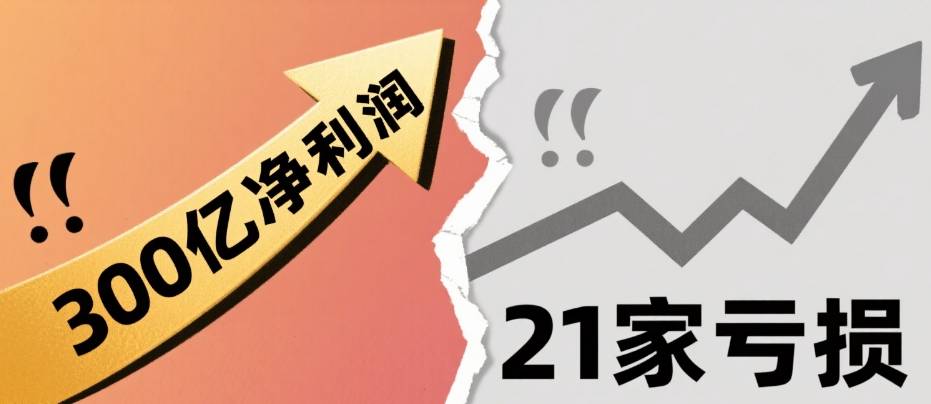
Core Insights - The non-listed life insurance industry is showing signs of recovery, with a total net profit of nearly 30 billion yuan in the first half of 2025, representing a year-on-year increase of over 230% [1][7] - The industry is experiencing a significant disparity between leading companies and smaller firms, with some smaller companies still facing substantial losses [1][14] Premium Growth - The total insurance business income for over 60 non-listed life insurance companies reached approximately 763.37 billion yuan in the first half of 2025, marking a year-on-year growth of 4.79% [3][4] - The top two companies, Taikang Life and Zhongyou Life, surpassed 100 billion yuan in premium income, with Taikang Life at 130.97 billion yuan (a 5.8% decrease year-on-year) and Zhongyou Life at 118.07 billion yuan (a 12.07% increase year-on-year) [3][5] - The market is characterized by a "head-heavy" distribution, with the top ten companies accounting for 62.33% of the total premium income [4] Profitability - The total net profit for the industry reached 29.35 billion yuan, with the top ten companies contributing 95% of this profit [7][8] - Taikang Life led with a net profit of 15.998 billion yuan, a year-on-year increase of 164.55%, while Zhongyou Life's profit slightly decreased by 9.01% to 5.177 billion yuan [7][9] - Among 38 profitable companies, 14 turned losses into profits, with notable improvements from companies like Yingda Life and Taikang Pension [8] Investment Performance - Investment returns are showing increased differentiation, with a range of 0.96% to 4.67% for 59 companies, and only 14 companies reporting an increase in comprehensive investment returns [11][12] - Junlong Life achieved the highest investment return at 4.67%, a significant increase from the previous year [12] - The overall investment environment remains challenging, with many companies experiencing pressure on their asset performance [11][14] Market Outlook - The industry is expected to face both opportunities and challenges in the second half of the year, driven by aging demographics and increased demand for health and pension insurance [14] - Companies need to optimize their business structures and enhance investment capabilities to navigate the competitive landscape [14] - The "Matthew Effect" may become more pronounced, favoring companies with strong brand recognition and risk management capabilities while posing survival challenges for poorly managed firms [14]
新华财经早报:6月20日
Zhong Guo Jin Rong Xin Xi Wang· 2025-06-19 23:50
Group 1: New Energy Vehicles and Safety Management - The Ministry of Industry and Information Technology and other departments held a video conference to strengthen safety management in the new energy vehicle sector, emphasizing the responsibility of vehicle and battery manufacturers for product quality and safety [2][2][2] - Companies are required to prevent exaggerated and false advertising, avoid "involution-style" competition, and ensure product quality is not compromised for short-term cost reductions [2][2][2] Group 2: Financing and Investment - Yushu Technology has completed its Series C financing round, with a pre-investment valuation exceeding 10 billion yuan, led by funds from China Mobile and Tencent among others [2][2] - Three Flowers Intelligent Control announced the final price for its H-share issuance at 22.53 HKD per share, with the shares expected to be listed on the Hong Kong Stock Exchange on June 23, 2025 [3][3] Group 3: Industry Regulations and Compliance - The Ministry of Commerce stated that China is committed to maintaining the stability and security of global supply chains, expediting the review of rare earth export license applications [2][2] - The China Photovoltaic Industry Association discussed "production limits to maintain prices," indicating a 10%-15% reduction in operating rates for the third quarter and strict controls on below-cost sales [2][2] Group 4: Corporate Announcements - Kweichow Moutai announced a cash dividend of 27.673 yuan per share for the 2024 fiscal year, totaling 34.671 billion yuan for all shareholders, with the record date set for June 25 and payment date on June 26 [2][2] - Ningde Times plans to use up to 4.5 billion yuan of idle fundraising for cash management [7][7]

新华财经晚报:光伏三季度“减产令”升级
Xin Hua Cai Jing· 2025-06-19 09:55
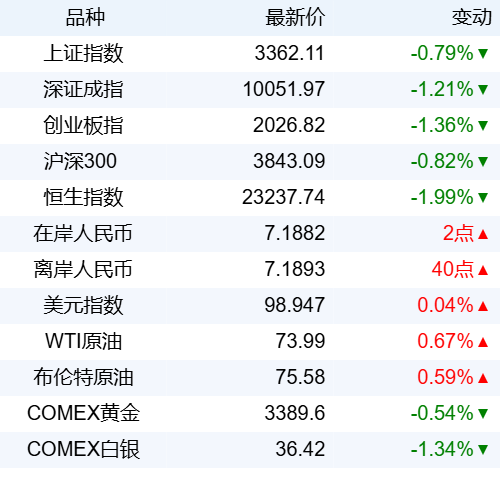
Domestic News - The China Banking and Insurance Regulatory Commission issued a document to life insurance companies, stating that the level of dividends for participating insurance must not engage in "involution" competition, requiring companies to justify the necessity, rationality, and sustainability of proposed dividend levels [1] - The China Photovoltaic Industry Association indicated that the industry will face greater production cuts in Q3, with operating rates expected to decrease by 10%-15% compared to the previous quarter. A special audit team will investigate low-cost sales practices, and companies found violating regulations will face various measures [2] - The Beijing Municipal Committee of Propaganda and other departments issued a notice to promote the high-quality development of the gaming and esports industry, focusing on improving review quality and efficiency, and reducing review cycles for domestic network games [2] International News - The U.S. Federal Reserve maintained the federal funds rate at its current level for the fourth consecutive time, amid unclear impacts of tariffs on inflation, while raising inflation expectations for 2025-2027 [4] - Russian President Putin announced that negotiation teams from Russia and Ukraine are preparing for talks after June 22, aiming to find a long-term solution to the Ukraine crisis [4] Market Overview - The Shanghai Composite Index decreased by 0.79% to 3362.11, while the Shenzhen Component Index fell by 1.21% to 10051.97. The Hang Seng Index dropped by 1.99% to 23237.74 [6]