AIoT

Search documents
Powerfleet, Inc.(AIOT) - 2026 Q3 - Earnings Call Transcript
2026-02-09 14:30
Financial Data and Key Metrics Changes - In Q3 2026, total revenue increased by 7% year-over-year, with an adjusted growth of 9% when accounting for a prior year comparison that included $2 million in accelerated product revenue [5][21] - Service revenue grew by 11% year-over-year, now representing 80% of total revenue, up from 77% in the prior year [5][21] - Adjusted EBITDA increased by 26% year-over-year to $25.7 million, with adjusted EBITDA margins expanding by 4% to 23% [6][21] - Net debt to Adjusted EBITDA improved to 2.7 times, with expectations to decline to around 2.4 times by year-end [6][23] Business Line Data and Key Metrics Changes - The company reported a strong focus on high-margin recurring revenue, with service revenue growth being a significant contributor to overall revenue [20] - The integration of the Fleet Complete acquisition is reflected in the financials, impacting service gross margins by over 6% due to non-cash amortization [20] Market Data and Key Metrics Changes - The company secured a significant contract with the South African public sector, expected to generate substantial recurring SaaS and services revenue over a multi-year term [6][7] - The AI video pipeline grew by 71% sequentially, indicating strong demand for advanced safety and compliance solutions [10] Company Strategy and Development Direction - The company is focused on accelerating high-margin recurring revenue growth, expanding profitability, and strengthening its balance sheet while maintaining disciplined execution [4] - The Unity platform is positioned as a key differentiator, enabling the company to deliver integrated solutions across various industries [12][16] - The Data Highway strategy aims to connect fragmented data across enterprises, enhancing operational efficiency and safety [13][16] Management's Comments on Operating Environment and Future Outlook - Management expressed confidence in achieving a Q4 exit run rate for FY26 of 10% total revenue growth and over 10% growth in recurring revenue [4][5] - The operating environment is perceived to be improving, with the company finding effective solutions to market challenges [36] Other Important Information - The company is maintaining operating expense investments to support business growth, resulting in updated Adjusted EBITDA guidance of approximately 45% annual growth [22][23] - The South African contract is expected to be one of the largest deployments in the company's history, with strong initial enrollments [7][45] Q&A Session Summary Question: Can you provide more color on the growth mix and contribution of new logos versus upsell? - The business is composed of 65%-70% from existing customers and 30% from new customers, with a developing new logo pipeline [28] Question: How is AI impacting fleet management platforms? - AI is seen as an enabler, helping to manage and interpret large amounts of data for better business decisions [32] Question: Is the business environment better, the same, or worse than six months ago? - The environment is improving, with the company finding effective market positions and generating tangible ROI for customers [36] Question: Can you provide an update on the AT&T reps and the South Africa contract revenue? - The South Africa contract is expected to be within the company's average ARPU and margin range, but specific financial details cannot be disclosed [39] Question: How competitive was the contracting process for the South African contract? - The contract was highly competitive, requiring robust capabilities and strong governance, with Powerfleet's partnership with MTN being a key differentiator [71]

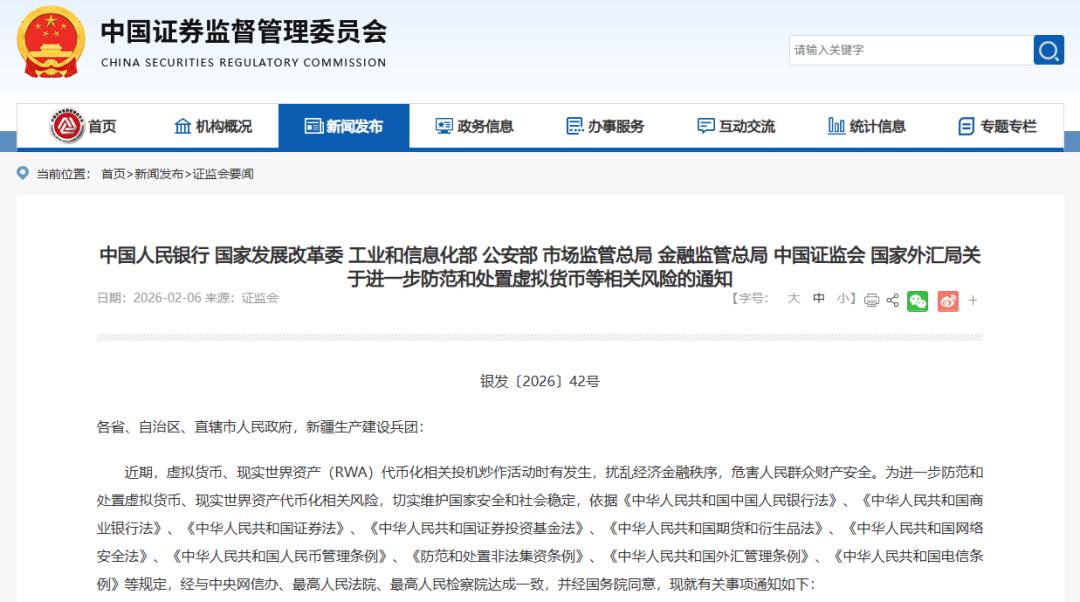
境内严禁,境外严管,设备数据可能正在"踩线"?42号文给AIoT企业3个合规警示
3 6 Ke· 2026-02-09 10:42
Core Viewpoint - The recent regulatory documents from Chinese authorities signify a shift in the approach to digital asset regulation, moving from strict prohibition to a framework that allows for compliance and controlled utilization of tokenization of real-world assets (RWA) [1][15]. Regulatory Framework - The primary focus of the regulatory documents is on virtual currencies and RWA activities, explicitly prohibiting the tokenization of real-world assets within China and related services, which are deemed illegal financial activities [2][7]. - The documents establish a differentiated regulatory approach, allowing RWA activities under specific conditions while maintaining strict prohibitions on virtual currency operations [3][10]. Definition and Scope - RWA tokenization is defined as the use of cryptographic technology and distributed ledger to convert ownership and rights into tokens for issuance and trading [5]. - The distinction between asset digitization and tokenization is crucial, as the former does not fall under the regulatory scope, while the latter does [4][5]. Compliance Obligations - The regulations impose specific compliance obligations on various market participants, including financial institutions and technology service providers, to ensure that they do not engage in unauthorized RWA activities [9][11]. - For compliant cross-border RWA activities, technology service providers must adhere to legal frameworks, enhance risk management, and report their activities to relevant authorities [11]. Data Security and Cross-Border Concerns - The documents emphasize the importance of data security and the risks associated with cross-border data flows, particularly when domestic asset data is used in foreign financial contexts [12][13]. - Companies must ensure the legality of data transfers and classify data appropriately, especially when it pertains to sensitive information related to asset tokenization [13][14]. Implications for AIoT Companies - AIoT companies must recognize the potential implications of their data usage, especially if their outputs are utilized in RWA activities, as this could subject them to regulatory scrutiny [6][14]. - The regulatory framework necessitates that AIoT firms proactively clarify their data usage and ensure compliance with the new obligations set forth in the regulatory documents [15].

拟最高25亿港元回购股份,小米集团再“护盘”
Huan Qiu Lao Hu Cai Jing· 2026-01-23 03:46
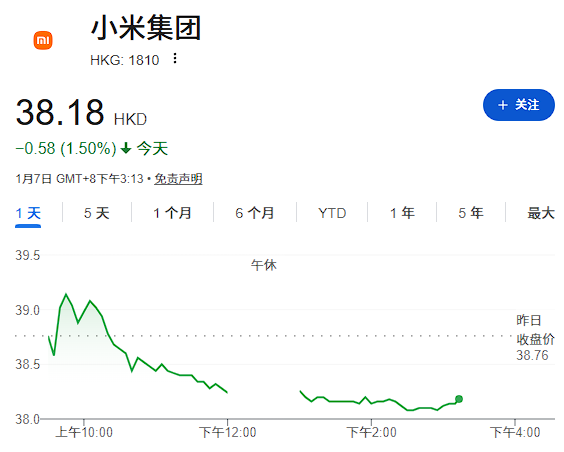
Group 1 - Xiaomi Group announced a share buyback plan not exceeding HKD 2.5 billion, targeting Class B ordinary shares, with all repurchased shares to be canceled [1] - The buyback plan is set to start on January 23, 2026, and will end on the earliest of the day before the 2026 annual general meeting, when the total buyback cost reaches the HKD 2.5 billion cap, or if terminated early [1] - Following the announcement, Xiaomi's stock price rose over 3% at the opening on January 23, closing at HKD 36.02 per share, a 2.21% increase from the previous day, with a total market capitalization of HKD 775.8 billion [1] Group 2 - Since the beginning of 2026, Xiaomi has conducted 13 share buybacks, totaling approximately 60.56 million shares, which is 0.23% of the total share capital, with a cumulative investment of about HKD 2.25 billion, representing 30% of the total buyback amount for 2025 [2] - Xiaomi's co-founder and vice chairman, Lin Bin, announced a long-term plan to sell up to USD 5 billion of Class B ordinary shares annually starting December 2026, with a total cap of USD 20 billion, primarily to establish an investment fund [2] - Xiaomi's core business spans four major sectors: smartphones, AIoT, internet services, and new energy vehicles, establishing the largest consumer-grade AIoT platform globally [2] Group 3 - In the first three quarters of 2025, Xiaomi achieved a revenue of CNY 340.37 billion, a year-on-year increase of 32.49%, and a net profit attributable to shareholders of CNY 35.1 billion, surpassing the total for 2024, with a year-on-year growth of 139.87% [3]

手机业务如何应对内存风险、AIot、电车、研发布局.....一文读懂小米高管在高盛电话会发言
硬AI· 2026-01-07 15:35
Core Viewpoint - Xiaomi is focusing on increasing the average selling price of smartphones as a primary operational goal for 2026, while significantly boosting investments in artificial intelligence to transform its entire business line and setting an annual delivery target of 550,000 electric vehicles [1][3]. Group 1: Smartphone Business - Xiaomi's strategy to counter the unprecedented rise in memory chip costs involves increasing the average selling price (ASP) of its smartphones [5][6]. - The upcoming Xiaomi 17 Ultra will be priced 500-700 RMB higher than the Xiaomi 15 Ultra, reflecting the company's commitment to price increases [6]. - The company aims to improve its market share in China by 1 percentage point annually, emphasizing the strategic importance of the Chinese market for its premiumization strategy [8]. Group 2: AIoT Business - The AIoT segment is positioned as a profit stabilizer for Xiaomi, with expectations of approximately 20% year-on-year revenue growth in 2025 and a 2-2.5 percentage point expansion in gross margin [10]. - Xiaomi plans to increase the number of its retail stores from about 500 in 2025 to over 1,000 in 2026, while expanding product categories and exploring partnerships with cross-border e-commerce platforms [10][11]. - Currently, overseas AIoT revenue accounts for about 30% of total revenue, with the company viewing its overseas smartphone revenue (60%) as a long-term reference for AIoT business expansion [10]. Group 3: Electric Vehicle Business - Xiaomi has raised its 2026 delivery target for electric vehicles to 550,000, significantly higher than the previously set target of 410,000 for 2025 [13]. - The growth is driven by increased manufacturing capacity and consumer confidence in new vehicle models, including the SU7 and a new third model [14]. - The company aims to focus on the high-end electric vehicle market, which constitutes 50% of annual passenger car sales in China, while accounting for 80-90% of industry profits [15]. Group 4: R&D Investments - Xiaomi plans to invest 200 billion RMB in R&D from 2026 to 2030, focusing on AI, intelligent driving, and chip development [16]. - The company aims to leverage AI to empower its ecosystem and internal operations, with a significant portion of its code being AI-generated [17]. - Xiaomi has invested 135 billion RMB in the development of its XRING O1 chip over the past four years, with plans to enhance its self-developed smart electric vehicle chips [19][20].

手机业务如何应对内存风险、AIot、电车、研发布局.....一文读懂小米高管在高盛电话会发言
Hua Er Jie Jian Wen· 2026-01-07 08:54
Core Viewpoint - Xiaomi is focusing on increasing the average selling price of smartphones as a primary operational goal for 2026, while significantly boosting investments in artificial intelligence to transform its entire business line and setting an annual delivery target of 550,000 electric vehicles [1][2]. Group 1: Smartphone Business - Xiaomi's strategy to counter the rising costs of storage chips involves increasing the average selling price (ASP) of smartphones, with a clear focus on high-end models [3][4]. - The upcoming Xiaomi 17 Ultra will be priced 500-700 RMB higher than the Xiaomi 15 Ultra, reflecting this strategy [3]. - The company aims to increase its market share in China by 1 percentage point annually, emphasizing the strategic importance of the Chinese market for its high-end strategy [4]. Group 2: AIoT Business - The AIoT segment is positioned as a profit stabilizer for Xiaomi, with expectations of approximately 20% year-on-year revenue growth in 2025 and a margin expansion of 2-2.5 percentage points [5]. - Xiaomi plans to increase the number of its retail stores from about 500 in 2025 to over 1,000 in 2026, while expanding product categories and exploring partnerships with cross-border e-commerce platforms [5]. - Currently, overseas AIoT revenue accounts for about 30%, with overseas smartphone revenue at 60%, indicating potential for future growth in AIoT [5]. Group 3: Electric Vehicle Business - Xiaomi has raised its delivery target for electric vehicles to 550,000 units for 2026, significantly up from the previous target of 410,000 units for 2025 [6][7]. - The growth is driven by increased manufacturing capacity and consumer confidence in new models, including the SU7 facelift and a third model set for release in the second half of 2026 [6]. - The company aims for a healthy gross margin of over 20% in the electric vehicle segment, although margins may be lower in 2026 due to tax incentives and changes in product mix [6][7]. Group 4: R&D Investments - Xiaomi plans to invest 200 billion RMB in R&D from 2026 to 2030, focusing on AI, autonomous driving, and chip development [8][9]. - AI investments are expected to account for 25% of the 320-330 billion RMB R&D budget in 2025, with a commitment to maintaining reasonable levels of investment [9]. - The company has a strong focus on developing its own chips, with significant investments already made in the XRING O1 chip, which is expected to enhance its capabilities in the electric vehicle sector [11].
小米集团- 高盛中国汽车 2026 管理层展望电话会要点
Goldman Sachs· 2026-01-07 03:05
Investment Rating - The report assigns a "Buy" rating to Xiaomi Corp. with a 12-month target price of HK$53.50, indicating an upside potential of 38.0% from the current price of HK$38.76 [15][17]. Core Insights - Xiaomi is positioned as the world's 3 smartphone brand and a leading consumer AIoT/NEV platform, with a multi-year ecosystem expansion strategy under the "Human x Car x Home" framework, projecting revenue and EPS CAGRs of 24% and 28% respectively from 2024 to 2027 [13]. - The company plans to invest Rmb200 billion in R&D from 2026 to 2030, focusing on AI, assisted driving, and chipset development to enhance its competitive edge [7][14]. Summary by Sections Smartphone Segment - Xiaomi aims to increase the average selling price (ASP) of smartphones by raising prices for premium models and optimizing product structure, targeting a 1 percentage point annual market share increase in China [7][8]. - The company expects revenue growth in 2026 to be supported by government consumption subsidies and overseas expansion, while maintaining gross profit margin (GPM) at or above 2025 levels by reducing low-margin categories [8] AIoT Segment - The AIoT segment is seen as a profit stabilizer, with a revenue growth of approximately 20% year-over-year and a contribution of around 30% to overseas revenue by Q3 2025 [3][10]. - Xiaomi plans to expand its Mi Home store count to over 1,000 by 2026 and increase the contribution of large home appliances to its revenue [10]. Smart EV Segment - Xiaomi targets 550,000 unit deliveries for its smart EVs in 2026, up from over 410,000 in 2025, driven by increased manufacturing capacity and new model launches [9][11]. - The company focuses on the premium auto segment, which captures a significant profit pool, and plans to export EVs to Europe starting in 2027 [11][12]. R&D Investments - AI accounts for approximately 25% of Xiaomi's R&D budget, with plans to increase investments while leveraging AI for ecosystem empowerment and internal operations [14]. - Xiaomi has made significant progress in assisted driving technology and aims to release new features in 2026, alongside a commitment to self-developing chips for its smart EVs [14]. Share Buyback - In 2025, Xiaomi repurchased 150 million shares for a total consideration of HK$6.3 billion, indicating confidence in its stock value [14].

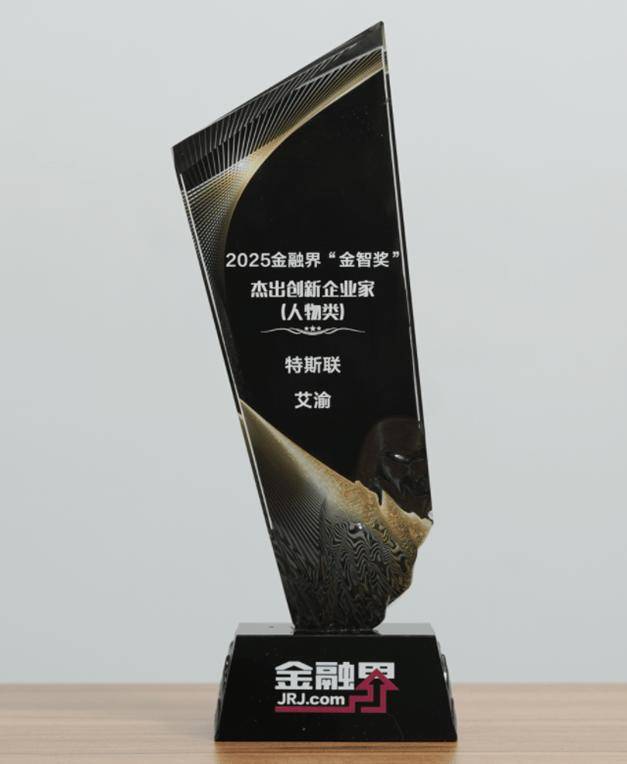
特斯联创始人兼首席执行官艾渝荣获第十四届金融界“金智奖”杰出创新企业家
Sou Hu Cai Jing· 2025-12-26 11:38
Core Insights - The "Qihang·2025 Financial Summit" was successfully held in Beijing, focusing on the theme of "New Start, New Momentum, New Journey," gathering hundreds of leaders and guests from various sectors including regulatory bodies, industry associations, financial institutions, listed companies, and media [1] - The 14th "Jinzhi Award" results were announced, with Ai Yu, the founder and CEO of Teslion, awarded "Outstanding Innovative Entrepreneur" for demonstrating innovation and leadership in technology, social responsibility, and value realization [2][3] Group 1 - The "Jinzhi Award" aligns with the "14th Five-Year Plan" recommendations to enhance the quality of listed companies, breaking down high-quality development into six dimensions: social responsibility, industrial contribution, investment returns, growth prospects, innovation efficiency, and outstanding brand [3] - The award evaluation covered over 8,000 companies across A-shares, Hong Kong stocks, and Chinese concept stocks, resulting in nearly 200 award-winning companies [3] Group 2 - Teslion, as a pioneer in the AIoT field, is extending its mature AIoT interconnectivity capabilities into intelligent computing infrastructure and intelligent agents under Ai Yu's leadership, enhancing its global technological influence [4] - Recent product launches include "Heterogeneous Computing Super Nodes" and "New Intelligent Agents," with a strategic upgrade focusing on a dual core of computing infrastructure and intelligent agents, promoting a virtuous cycle of AI technology application [4] - The "Jinzhi Award" aims to set benchmarks for high-quality development, encouraging listed companies to focus on their core business, deepen innovation, and fulfill social responsibilities, thereby fostering consensus for the coordinated development of the real economy and capital markets during the "14th Five-Year" period [4]
小米集团:近期豆包 AI 智能手机助手发布后的观点
2025-12-05 06:35
Summary of Xiaomi Corp. (1810.HK) Conference Call Company Overview - **Company**: Xiaomi Corp. (1810.HK) - **Industry**: Smartphone and AIoT (Artificial Intelligence of Things) Key Points Recent Developments - **Doubao AI Smartphone Assistant**: Released by ByteDance on December 1, integrating a system-level GUI agent into smartphones, enhancing mobile operating systems with visual content interpretation and multi-step tasks [1][3] - **StepFun's GUI Agent**: StepFun launched an open-sourced GUI Agent, GELab-Zero, achieving state-of-the-art (SOTA) performance in GUI benchmarks [2][3] AI Integration in Smartphones - **AI Smartphone Agents**: The integration of AI into smartphones is expected to continue, with major Chinese brands embedding AI assistants in their operating systems [10][11] - **Xiaomi's AI Initiatives**: Xiaomi is actively developing both edge-based and cloud-based LLMs (Large Language Models) for various applications, including visual and audio processing [11][22] Market Dynamics - **Smartphone Market Consolidation**: The Chinese smartphone market is dominated by six leading players, capturing over 90% of the shipment share, limiting space for new entrants [10][12] - **AI Assistant Penetration**: Xiaomi's Super XiaoAI is among the top three OS-native AI assistants in China, with a penetration rate of 71% among Xiaomi smartphone users [11][18] Competitive Landscape - **Challenges for AI Integration**: Key challenges include obtaining system-level operation permissions from smartphone OEMs, memory capabilities, and interface connectivity across applications [9][10] - **Competition in AI Value Chain**: Ongoing competition is expected between consumer AI terminals, internet platforms, and third-party LLMs [9][10] Financial Outlook - **Revenue Growth Projections**: Xiaomi is projected to experience a revenue CAGR of 24% and EPS CAGR of 28% from 2024 to 2027 [22] - **Investment Rating**: Xiaomi is rated as a "Buy" with a 12-month target price of HK$53.50, indicating a potential upside of 33% from the current price [23][25] Risks - **Market Risks**: Key risks include intensified competition, pressure on gross profit margins, execution challenges in brand premiumization, geopolitical risks, and macroeconomic conditions [23][24] Conclusion - **Ecosystem Expansion**: Xiaomi is positioned for a multi-year ecosystem expansion, leveraging its interconnected consumer terminals and AI capabilities to enhance competitiveness in the smartphone and AIoT markets [22][23]
国内“AIoT第一股”特斯联赴港IPO的背后
Sou Hu Cai Jing· 2025-12-01 17:01
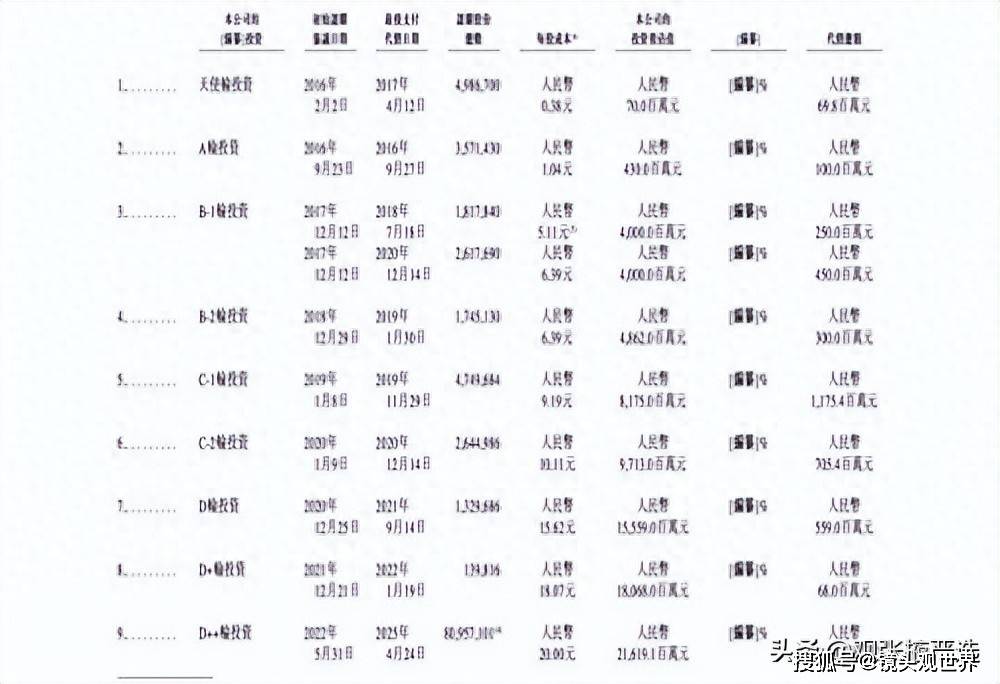
Core Viewpoint - Teslin Smart Technology Co., Ltd. has submitted its application for a mainboard IPO to the Hong Kong Stock Exchange, marking its third attempt to enter the capital market. The funds raised will be used to enhance R&D capabilities, develop green computing systems, improve large model advantages, expand commercialization and market reach, and seek strategic investment and acquisition opportunities [1][2]. Company Overview - Founded in December 2015, Teslin is led by CEO Ai Yu, who has over ten years of experience in private equity investment and new economy businesses. The chairman, Jin Zheng, has over 16 years of experience in private equity investment [1]. - The company has completed nine rounds of financing totaling approximately 5.297 billion yuan, with notable investors including JD.com, iFlytek, SenseTime, and IDG. Following a 1.619 billion yuan D++ round in April, Teslin's valuation reached 21.619 billion yuan [2]. Financial Performance - Teslin's revenue from AI industrial digitization for the years 2022 to 2024 and the first half of this year was approximately 472 million, 624 million, 1.641 billion, and 577 million yuan, accounting for 64.0%, 62.0%, 89.0%, and 91.3% of total revenue, respectively. The AI industrial digitization business saw a year-on-year revenue increase of 191% in the first half of this year [8]. - The company's revenue for the same period was approximately 738 million, 1.006 billion, 1.843 billion, and 632 million yuan, with a compound annual growth rate of 58% from 2022 to 2024 and a year-on-year increase of 77% in the first half of this year [10]. R&D and Innovation - Teslin has invested approximately 329 million, 322 million, and 377 million yuan in R&D from 2022 to 2024, with R&D spending of about 162 million yuan in the first half of this year, reflecting an 11.4% year-on-year growth. The company holds 1,057 patents, 346 copyrights, and 590 trademarks, supported by a high-quality R&D team comprising 255 members [11]. Market Position and Product Offerings - Teslin is recognized as one of the top five public domain AIoT product providers in China, with its TacOS system serving as a preferred infrastructure for industrial digitization. The company has developed four major AIoT application scenarios covering public domain spaces, including AI industrial digitization, AI city intelligence, AI smart living, and AI smart energy [7][5]. - As of June 30, the company's products have been deployed by over 900 clients across 172 cities globally, including China, the UAE, Singapore, and Australia, with a backlog of orders amounting to approximately 2.6 billion yuan [10].
【IPO前哨】德风新征程转战港股:深耕工业AIoT,高增长背后藏隐忧
Sou Hu Cai Jing· 2025-12-01 02:46
Core Viewpoint - Defeng New Journey Technology Co., Ltd. is shifting its focus from the A-share market to the Hong Kong capital market, aiming to address its development challenges through an IPO [2] Group 1: Company Overview - Defeng New Journey is a developer of AI-enabled industrial IoT production optimization software, focusing on digital needs in energy, manufacturing, and mixed industries [3] - The company has a three-tier business structure consisting of solutions, services, and products, centered around its self-developed Delt@AIoT platform [3] Group 2: Market Position and Financial Performance - As of the 2024 fiscal year, Defeng New Journey ranks as the fifth largest independent AIoT service provider in China, holding a market share of approximately 1.8% [5] - The company has received investments from notable institutions, including China Merchants Innovation and SAIC Jinshi, prior to its IPO [5] - In the first half of 2025, revenue from state-owned enterprise clients accounted for 53.4% of total revenue, with major clients including State Grid and China National Petroleum [5] - Revenue grew from 313 million RMB in 2022 to 525 million RMB in 2024, reflecting a compound annual growth rate of 29.7% [5] Group 3: Profitability and Losses - Despite revenue growth, the company has faced significant losses, totaling 730 million RMB from 2022 to the first half of 2025 [7] - The losses are attributed to low gross margins, high R&D expenses, and changes in the fair value of redeemable liabilities [7] - Adjusted net profit for 2024 was 5.52 million RMB, indicating potential for profitability in core operations [7] Group 4: Cash Flow and Financial Health - The company has experienced negative operating cash flow, with net cash flows of -173 million RMB in 2022 and -64 million RMB in the first half of 2025 [8] - Accounts receivable have increased significantly, reaching 214 million RMB by June 2025, a 92% increase from the end of 2022 [8] - Cash and cash equivalents were only 43.99 million RMB as of June 2025, against current liabilities of 1.714 billion RMB, indicating substantial short-term debt pressure [9] Group 5: Industry Outlook - The AIoT market in China is projected to grow from approximately 128.7 billion RMB in 2025 to 220.9 billion RMB by 2029, with a compound annual growth rate of about 14.5% [11] - The energy sector's AIoT market is expected to grow at a rate of 15.7%, indicating long-term growth potential for the industry [11] - The IPO is seen as a crucial step for the company to alleviate financial pressure and enhance its brand and talent acquisition [11]