
Alcohol

Search documents
Here's Why I Wouldn't Touch Tilray With a 10‑Foot Pole
Yahoo Finance· 2026-02-23 15:20
Tilray Brands (NASDAQ: TLRY) is focused on expanding its reach. The marijuana company has now branched out to include CBD products and alcohol, and has started to call itself "a global lifestyle and consumer packaged goods company." It's not a bad idea, given the headwinds in the marijuana space, but there are material risks to consider here. The marijuana market hasn't panned out as hoped The first big problem with Tilray Brands isn't actually specific to the company. It is a problem that the entire mar ...

Don't Even Think About Buying Tilray Stock Until You Read This Warning
Yahoo Finance· 2026-02-22 21:48
Core Viewpoint - Tilray Brands is struggling to achieve profitability despite its diverse product offerings in the beverage, cannabis, and wellness industries, with significant competition and ongoing losses impacting its financial performance [1][4]. Group 1: Financial Performance - Tilray Brands' stock price has decreased by 99% from its all-time high, reflecting investor fatigue over the company's inability to generate profits [4]. - The company has been expanding aggressively into other areas, particularly alcohol, but this strategy has not yet resulted in positive earnings [4]. Group 2: Revenue Growth and Strategy - Tilray is focusing on revenue growth through aggressive brand acquisitions since 2021, which has led to increased revenue and potential synergies [5]. - However, the rising share count due to stock sales for cash or acquisitions is diluting existing shareholders and complicating profit generation [6]. Group 3: Investment Risks - The ongoing losses and aggressive acquisition strategy present high risks for investors, with the company having to take write-downs across all divisions [7]. - Investors are advised to be cautious and may benefit from observing the company's performance before committing capital [7].
Canada SEEKS TO BUILD coalition that rivals US trade power
Youtube· 2026-02-18 18:15
Group 1 - Canada's Prime Minister Mark Carney aims to establish the world's largest trading alliance excluding the United States [1] - A significant portion of Canada's economy is tied to the US, with 80% of the population living within 100 miles of the border and 75% of exports going to the US [2] - Prime Minister Carney has negotiated a tariff deal with China to increase Chinese imports into Canada and is working to connect the Trans-Pacific Partnership with the European Union to form a competing trade bloc against the US [3] Group 2 - Alberta Premier Danielle Smith emphasizes the need for Canada to protect its interests while maintaining a strong trade relationship with the US [4] - President Trump has expressed discontent with Canada's trading strategies and has hinted at not renewing the USMCA, citing that negotiations have been tough but have led to significant trade deals benefiting American workers [5] - The US is particularly interested in opening Canada's agriculture market, especially in dairy and alcohol, which have historically been protected [6]


Technical Indicators Flash Warning Signs for Alcohol Stocks as Staples Surge
Barrons· 2026-02-17 15:37
Consumer staples have surged as investors seek safety, but technical signals suggest alcohol stocks like Anheuser-Busch InBev and Boston Beer may be running out of steam. ...

午评:沪指窄幅震荡,地产、石油等板块拉升,AI应用概念活跃
Sou Hu Cai Jing· 2026-01-29 04:12
Core Viewpoint - The A-share market is experiencing a mixed performance with over 2800 stocks declining, indicating a phase of high-level fluctuations and diverging expectations in the short term [1] Market Performance - As of the midday close, the Shanghai Composite Index fell by 0.1%, the Shenzhen Component Index saw a slight increase, the ChiNext Index decreased by 0.05%, and the STAR Market 50 Index dropped by 1.52% [1] - The total trading volume in the Shanghai, Shenzhen, and North markets reached approximately 2.03 trillion yuan [1] Sector Analysis - Sectors such as semiconductors, brokerage, pharmaceuticals, and military industries are showing declines, while media, real estate, oil, non-ferrous metals, liquor, insurance, and banking sectors are experiencing gains [1] - AI application concepts and rare earth concepts are becoming more active in the market [1] Investment Outlook - According to Zhongyin Securities, the market is expected to enter a phase of oscillation and game-playing before the holiday, with a focus on performance-driven stocks [1] - There is an anticipation for policies aimed at expanding domestic demand and curbing "involution" in industries, which may provide a temporary boost to cyclical stocks [1] - However, caution is advised regarding the impact of short-term regulatory easing on the incremental marginal weakening of ETF and leveraged funds in the market [1]
Sin Stocks: Controversial Yet Cash-Generative Plays for Smart Investors
ZACKS· 2026-01-16 17:35
Core Insights - The sin stock market consists of companies in sectors considered unethical or socially undesirable, including alcohol, tobacco, gambling, weapons, and cannabis [1] - Sin stocks are often excluded by institutional and ESG-focused investors, leading to lower valuations and higher dividend yields, which can present opportunities for return-focused investors [2] Investment Characteristics - Sin stocks generate stable cash flows due to consistent demand, making them attractive for investors seeking defensive exposure [3] - These companies often trade at lower valuation multiples compared to the broader market, while strong cash generation allows for above-average dividend yields [4] - Sin stock companies can pass on cost increases through price hikes due to high barriers to entry, protecting margins and supporting long-term profitability [5] - Sin stocks exhibit low correlation with economic cycles, providing useful portfolio diversification [6] Investor Mindset - Investors in sin stocks prioritize risk-adjusted returns, income stability, and diversification, weighing ethical concerns against financial objectives [7] Sector Trends - Alcohol companies like Diageo benefit from premiumization and steady global demand, while tobacco firms like Philip Morris are transitioning to reduced-risk products [9] - Gambling stocks are experiencing growth from online betting and digital gaming legalization, while weapons stocks are influenced by geopolitical tensions [10] Company Highlights - Boyd Gaming's appeal lies in its diversified gaming portfolio and disciplined capital allocation, with a focus on operational efficiency and customer loyalty [12] - Universal Corporation reported 3% revenue growth and an 18% increase in operating income in the first half of fiscal 2026, supported by strong demand dynamics [14] - Constellation Brands maintains a dominant position in the U.S. high-end beer market, with strategies that emphasize pricing discipline and cost-saving initiatives [16]




Vice Stocks Enter ’26 With a Harsh Hangover
Yahoo Finance· 2026-01-02 05:01
Sector Overview - Vice stocks experienced mixed performance in 2025, with Philip Morris International rising nearly 34% and AB InBev increasing about 29%, while Molson Coors fell 18% [1] - Despite challenges, vice stocks are considered "recession-proof" and are expected to remain resilient in the market [2] Cannabis Industry - President Trump signed an executive order reclassifying marijuana from Schedule 1 to Schedule 3, marking a significant regulatory change for the cannabis sector [4] - Companies in the cannabis industry are facing difficulties accessing financial services and capital, leading to investor wariness [4] Nicotine Market - The shift towards smokeless products is evident, with 41% of Philip Morris's revenue derived from smoke-free products like Zyn [4] - Philip Morris successfully defended against a class-action lawsuit regarding pricing practices for Zyn, the only FDA-approved nicotine pouch [4] Alcohol Sector - Sales of beer, wine, and spirits are declining, with Molson Coors reporting a loss of $2.9 billion in the fall quarter and anticipating a 4% sales drop this year [4] - AB InBev reported its slowest profit growth since 2021, while the industry faces challenges from the "sober-curious" trend [4]


贵州将举办2026年“多彩贵州欢乐购”促消费活动
Xin Lang Cai Jing· 2025-12-29 19:18
Core Viewpoint - Guizhou Province is planning a series of consumer promotion activities for 2026, titled "Shopping in China · Colorful Guizhou Happy Shopping," aimed at enhancing consumption through a combination of policies and activities [1] Group 1: Consumer Promotion Activities - The provincial business departments will create diverse consumption scenarios to better meet the needs of urban and rural residents as well as tourists [1] - Guizhou will launch the "Shopping in Four Seasons" initiative, distributing consumption vouchers for liquor cloud exhibitions throughout the year during holidays and key events [1] - Specific activities for residents include new car purchases and an online Spring Festival goods fair, along with the issuance of various consumer vouchers to stimulate spending [1] Group 2: Tourism and External Consumer Engagement - For tourists from outside the province, Guizhou will integrate consumption with cultural tourism, sports, and exhibitions, offering discounts in key commercial areas and specialty dining [1] - Tourists can enjoy benefits by presenting tickets from A-level scenic spots, cultural performances, major festival events, and significant exhibitions [1]

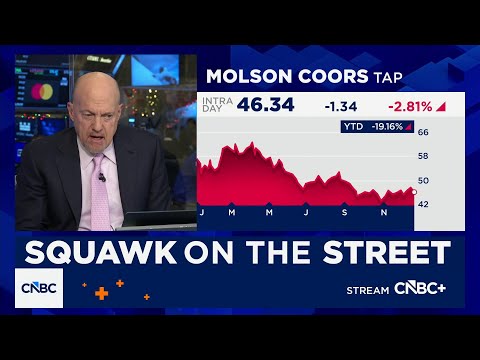
Cramer’s Stop Trading: Molson Coors
CNBC Television· 2025-12-22 15:15
Market Trends & Consumer Behavior - Molson Coors' stock decreased by 2.76% [1] - Alcohol stocks are perceived as underperforming [1] - Younger generations are shifting towards mocktails and consuming less alcohol per occasion [2][3] - Restaurant margins are affected by decreased alcohol consumption [2] Company Performance & Financials - Shake Shack's stock is down 34% year-to-date [2] - Chipotle's stock is down 38% year-to-date [2] - Cava's stock is down 50% year-to-date [2] Potential Disruptors & Future Outlook - Eli Lilly's GB-1 in pill form may further negatively impact alcohol sales [1] - The aging population may contribute to decreased alcohol consumption [1] - Restaurants are finding it difficult to pass on increased costs to consumers [2]
印度消费:隧道尽头的曙光-尚未到来-India Consumer_ Light at the end of tunnel_ Not yet.
2025-12-08 00:41
Summary of Key Points from the Conference Call Industry Overview - The focus is on the Indian consumer market, particularly evaluating the anticipated recovery in consumption for the festive season of 3Q F26 [1][2]. - The analysis is based on three data points: UPI transaction data, app usage data for e-commerce, and management commentary from 2Q F26 conference calls [1]. Core Insights - **UPI Transaction Data**: - UPI transactions now account for approximately 39% of India's Private Final Consumption Expenditure (PFCE) [2][21]. - The growth in UPI transactions has been slowing, indicating that the increase is reflective of underlying category growth rather than merely a shift in payment methods [2]. - No consumption category is showing definitive festive momentum, with most categories experiencing lower YoY growth in October 2025 compared to 2Q F26 [3][28]. - **E-commerce and Quick Commerce Trends**: - Quick Commerce platforms like Blinkit, JioMart, and BigBasket are experiencing significant DAU growth of 70-200% during the festive period, while traditional e-commerce platforms like Amazon and Flipkart are seeing declines [4][58]. - Food delivery services have shown muted DAU growth, with Domino's being the strongest performer in the food services space [5][66]. - **Management Commentary**: - Mixed sentiments from management across sectors: - Food Services/QSRs reported better-than-expected trends but remain cautious due to a challenging demand environment [6][70]. - FMCG companies faced temporary disruptions due to GST changes but expect recovery in H2 [6][71]. - Fashion retail saw strong festive traction, with expectations of continued momentum into the wedding season [6][70]. - Jewellery companies reported record festive sales, indicating strong confidence in sustaining momentum [6][73]. - Alcohol brands are showing early signs of recovery, with October performing better than previous months [6][74]. Investment Implications - There is insufficient evidence to suggest a broad-based consumption revival in 3Q F26 despite government interventions [7]. - Categories such as jewellery, alcohol, and fast food are showing some festive growth momentum [7]. - Consumer preference for digital channels, particularly Quick Commerce, remains strong [7]. Additional Insights - **Category Performance**: - Essentials like grocery and general merchandise show stable growth, while discretionary categories like electronics and fashion retail are experiencing significant declines [28]. - Liquor and department stores are outperforming other categories, indicating a shift in consumer spending patterns [28]. - **DAU Trends**: - The analysis of DAU growth around Diwali indicates that Quick Commerce is becoming a structural consumption channel, while traditional e-commerce platforms are struggling [58][59]. - **Management Outlook**: - Companies across various sectors are cautiously optimistic about the upcoming months, with expectations of improved performance post-Diwali and during the wedding season [70][72]. This summary encapsulates the key points discussed in the conference call, highlighting the current state of the Indian consumer market, sector-specific insights, and management outlooks.