
ASCENTAGE(06855)

Search documents
亚盛医药股价震荡:研发利好难抵行业调整与资金避险压力
Jing Ji Guan Cha Wang· 2026-02-13 17:58
股票近期走势公司新一代BTK降解剂APG-3288于2026年2月6日获中国国家药监局临床许可,并于2月11 日启动针对复发/难治性血液系统恶性肿瘤的全球多中心I期临床。虽然该进展凸显了公司的技术壁垒, 但市场对此反应平淡,股价未出现显著提振。例如,在2月5日至12日期间,港股累计跌幅为0.38%,而 美股同期下跌0.62%。截至2月13日,港股收盘价为47.50港元,单日上涨2.41%,但年初至今累计跌幅仍 达9.09%。 行业板块情况创新药板块近期普遍面临估值回调压力,市场对未盈利生物科技公司的远期商业化兑现缺 乏耐心,更关注短期盈利能力。同期,港股生物技术板块下跌0.95%,而恒生指数下跌1.72%,板块表 现弱于大市进一步加剧了个股压力。 资金面与技术面资金流向数据显示,2月12日港股主力资金净流出492.6万港元,散户资金净流出1,153.4 万港元,反映短期资金避险情绪较强。尽管2月13日出现资金净流入(总净流入149.48万港元),但主力资 金仍净流出19.39万港元,表明机构态度谨慎。技术指标显示,MACD柱状图虽转正,但KDJ处于超卖 区间,短期动能偏弱。 未来发展亚盛医药的研发进展虽为长期 ...
亚盛医药股价震荡下行,研发进展难抵市场压力
Jing Ji Guan Cha Wang· 2026-02-12 23:14
亚盛医药-B 公司核心产品耐立克2025年上半年销售收入同比增长93%至2.17亿元,利生妥亦于2025年7月获批上 市。但同期净亏损扩大至5.91亿元,主因知识产权授权收益减少及研发投入增加。关键催化剂(如海外 适应症获批)集中在2027年后,当前市场对长期故事缺乏耐心。 股价情况 港股股价于2026年2月3日触及44.92港元的阶段低点,虽后续小幅反弹,但MACD指标显示短期动能偏 弱,KDJ处于超卖区间。市场情绪受宏观环境拖累,投资者更关注行业竞争加剧及临床数据兑现节奏。 亚盛医药的研发进展与基本面改善未完全抵消板块调整及资金面压力,股价走弱反映市场对创新药企业 远期估值逻辑的审慎态度。后续需关注核心产品商业化放量进度及全球临床数据读出节点。 2026年2月,公司新一代BTK降解剂APG-3288获中国国家药监局临床许可,并启动针对血液系统恶性肿 瘤的全球多中心I期临床。尽管该进展凸显技术壁垒,但股价未显著提振,港股(06855.HK)在2026年2月 5日至12日期间累计跌幅0.38%,美股(AAPG.OQ)同期跌0.62%。截至2026年2月12日,港股收盘价46.38 港元,单日下跌2.60%,年 ...
亚盛医药研发新药获临床许可,股价小幅波动
Jing Ji Guan Cha Wang· 2026-02-11 22:47
Group 1 - The core focus of Ascentage Pharma is on its research and development progress, particularly the initiation of Phase I clinical trials for its BTK degrader APG-3288 targeting relapsed/refractory hematologic malignancies, with a target enrollment of 360 patients [1] - The new drug clinical application (IND) for APG-3288 was approved by the Center for Drug Evaluation (CDE) of the National Medical Products Administration (NMPA) of China on February 6, 2026, marking a new phase in the global multi-center clinical development of the drug [1] - APG-3288 utilizes the PROTAC technology platform aimed at overcoming resistance issues associated with traditional BTK inhibitors, providing a new treatment option for hematologic cancers [1] Group 2 - Ascentage Pharma's stock (06855.HK) experienced slight fluctuations over the past week, closing at 47.62 HKD on February 11, 2026, with a daily increase of 0.46% and a cumulative decline of 0.38% over the past five days [2] - The stock reached a peak price of 48.60 HKD on February 9 and a low of 45.74 HKD on February 10, with a trading range of 5.98% [2] - Southbound funds increased their holdings by 59,500 shares on February 10, with a net increase of 83,000 shares over the past five days, indicating short-term capital inflow [2]
美国医药调研反馈:肿瘤、代谢、自免、中枢神经系统赛道推荐更新
Haitong Securities International· 2026-02-06 11:33
Investment Rating - The report provides an "Outperform" rating for multiple companies in the healthcare sector, including BeiGene, JD Health, WuXi Biologics, and others, indicating a positive outlook for these stocks [1]. Core Insights - The macro and industry environment is improving due to the resolution of policy uncertainties, the release of significant clinical data, and a resurgence in global M&A activity, leading to a notable increase in investor sentiment towards innovative drugs for 2026 [4][11]. - In oncology, the PD-1/VEGF dual antibody approach is transitioning from "mechanism validation" to "clinical and industrial resonance," with multiple global Phase III trials underway, expected to catalyze approvals and data releases within the year [5][17]. - The metabolic sector is seeing growth in the cash-pay market for GLP-1 drugs, driven by limited insurance coverage and high out-of-pocket costs, prompting companies to enhance accessibility through direct sales and pricing adjustments [6][25]. - In the autoimmune space, there is a growing concentration risk among major products from multinational corporations (MNCs), with new antibody platforms expected to yield significant data in 2026, potentially leading to new business development opportunities [7]. - The central nervous system (CNS) investment focus remains on advancing Aβ monoclonal antibody treatments, with key data expected to open up early intervention market opportunities [9]. Summary by Sections Oncology - The PD-1/VEGF dual antibody's clinical and industrial certainty is strengthening, with major companies conducting multiple global Phase III trials across high-value indications [17]. - The Pan-RAS precision therapy is entering a realization phase, with key Phase III data expected in 2026 for pancreatic cancer and NSCLC [22]. Metabolic - The cash-pay market for GLP-1 drugs is expanding due to limited insurance coverage, with companies like Eli Lilly and Novo Nordisk adopting different direct-to-consumer strategies to enhance accessibility [25][26]. - Small nucleic acid therapies are expected to upgrade treatment paradigms, showing competitive data in weight loss and safety profiles when combined with GLP-1 [30]. Autoimmune - MNCs are increasingly reliant on a few blockbuster products, with structural opportunities arising from new antibody platforms expected to report data in 2026 [7]. - The trend towards oral formulations in autoimmune diseases is gaining traction, offering advantages in adherence and competitive differentiation [7]. CNS - The focus in CNS remains on Aβ monoclonal antibody treatments, with advancements expected to shift treatment towards earlier intervention populations [9]. - New delivery methods, such as systemic administration of small nucleic acids, are being explored as complementary approaches [9].


亚盛医药(06855) - 截至二零二六年一月三十一日止股份发行人的证券变动月报表
2026-02-05 14:35
股份發行人及根據《上市規則》第十九B章上市的香港預託證券發行人的證券變動月報表 | 截至月份: | 2026年1月31日 | | | | 狀態: 新提交 | | --- | --- | --- | --- | --- | --- | | 致:香港交易及結算所有限公司 | | | | | | | 公司名稱: | 亞盛醫藥集團 | | | | | | 呈交日期: | 2026年2月5日 | | | | | | I. 法定/註冊股本變動 | | | | | | | 1. 股份分類 | 普通股 | 股份類別 | 不適用 | 於香港聯交所上市 (註1) | 是 | | 1. 股份分類 | 普通股 | 股份類別 | 不適用 | | 於香港聯交所上市 (註1) | | 是 | | | --- | --- | --- | --- | --- | --- | --- | --- | --- | | 證券代號 (如上市) | 06855 | 說明 | | | | | | | | | | 法定/註冊股份數目 | | | 面值 | | 法定/註冊股本 | | | 上月底結存 | | | 500,000,000 | USD | 0.0 ...
国产创新药,正在破局
3 6 Ke· 2026-02-05 11:26
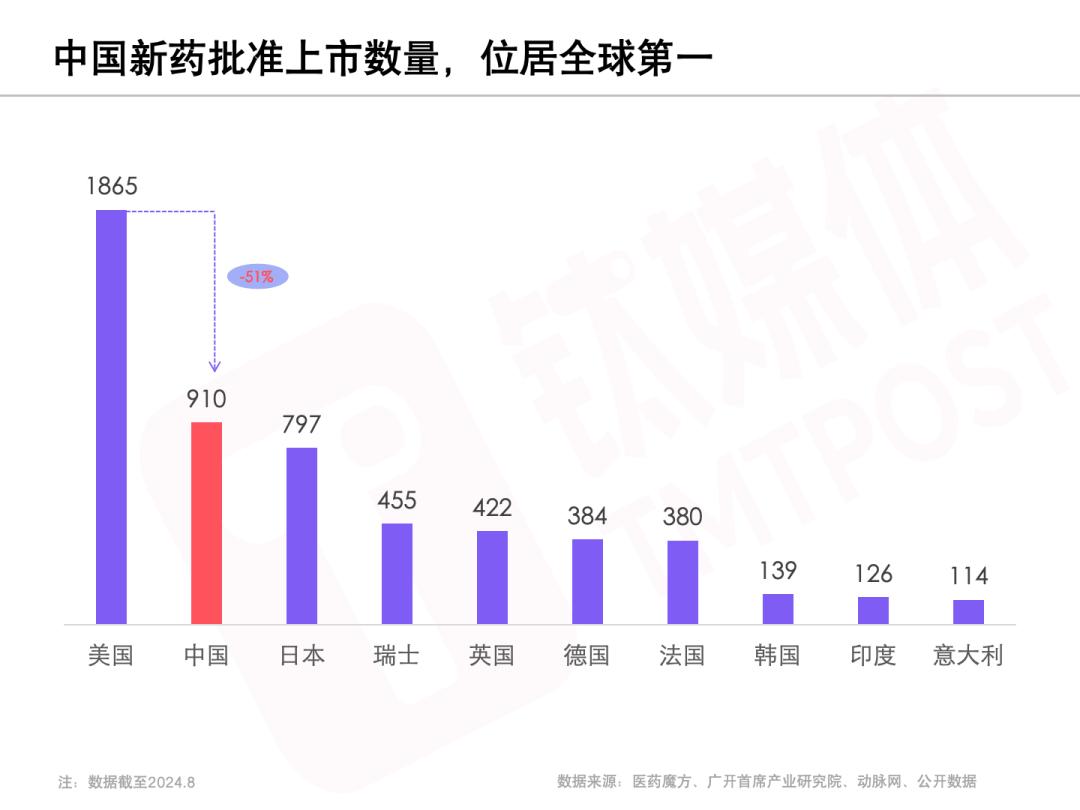
Core Viewpoint - The article discusses the significant progress in China's innovative drug development, highlighting the increase in the number of new drugs approved and the growing competitiveness of Chinese pharmaceutical companies in both domestic and international markets [4][16]. Group 1: Growth of Innovative Drugs - In 2024, the number of domestically developed Class 1 new drugs in China reached 40, a substantial increase from just 9 in 2018 [2][3][4]. - Since the beginning of the 14th Five-Year Plan, 113 innovative drugs have been approved, which is 2.8 times the number approved during the 13th Five-Year Plan [4]. - As of August 2024, there are 910 new drugs available in China, indicating a robust growth in the pharmaceutical market [6]. Group 2: Clinical Trials and Breakthroughs - In a head-to-head clinical trial, the drug Ivoris (依沃西单抗) developed by Kangfang Biopharma outperformed the global best-selling cancer drug, Pembrolizumab (K drug), marking a significant achievement for Chinese innovation [7][9]. - The global sales of Pembrolizumab reached $29.482 billion in 2024, underscoring the competitive landscape [8]. Group 3: Market Dynamics and International Expansion - Chinese innovative drugs are not only performing well domestically but are also gaining traction in international markets, with products like Sidakio (西达基奥仑赛) achieving $1.596 billion in cumulative sales since its launch [12][13]. - The total transaction scale of technology licensing by Chinese pharmaceutical companies exceeded $34 billion in 2024, indicating a shift towards international collaboration [14][15]. Group 4: R&D Landscape and Challenges - As of August 2024, there are 5,380 new drug candidates in development in China, accounting for over one-third of the global pipeline [18]. - The average cost of developing an innovative drug is around $1 billion, with a typical development timeline of 10 years [20][21]. - The efficiency of drug development in China is improving, with preclinical phases taking 12-20 months compared to 24-36 months internationally [23]. Group 5: Policy Support and Ecosystem - The Chinese government has implemented various policies since 2008 to support innovative drug development, including expedited approval processes and financial incentives [28][29]. - The combination of government support, industry collaboration, and technological advancements is creating a conducive environment for innovation in the pharmaceutical sector [41]. Group 6: Future Outlook - The article emphasizes that the development of innovative drugs in China has made significant strides over the past decade, transitioning from imitation to innovation [42]. - The government's continued support for innovative drugs is expected to enhance the industry's growth and provide hope for patients [42].




亚盛医药-B涨超3% BTK降解剂1类新药APG-3288片获批临床
Zhi Tong Cai Jing· 2026-02-04 02:32
Core Viewpoint - Ascentage Pharma-B (06855) saw its stock rise over 3%, currently trading at 47.44 HKD with a transaction volume of 31.5152 million HKD, following the announcement of clinical approval for its new drug APG-3288 by the China National Medical Products Administration (NMPA) [1] Group 1: Drug Approval and Development - The China NMPA's Center for Drug Evaluation (CDE) has publicly announced the clinical approval of Ascentage Pharma's first-class new drug APG-3288, which is intended for the treatment of relapsed/refractory hematologic malignancies [1] - APG-3288 is a next-generation BTK-targeted protein degradation therapy developed by Ascentage Pharma, which had already received clinical approval in the United States in August for treating relapsed/refractory B-cell malignancies [1] Group 2: Drug Characteristics and Potential - APG-3288 is the company's first novel, highly efficient, and selective BTK degrader, which promotes the formation of a ternary complex leading to BTK degradation via the proteasome [1] - Preclinical studies indicate that APG-3288 demonstrates stronger BTK degradation capability, higher selectivity, and superior pharmacokinetic characteristics compared to other BTK degraders in development, showcasing significant potential [1]
港股异动 | 亚盛医药-B(06855)涨超3% BTK降解剂1类新药APG-3288片获批临床
智通财经网· 2026-02-04 02:32
Core Viewpoint - Ascentage Pharma-B (06855) has seen its stock price increase by over 3%, currently trading at 47.44 HKD with a transaction volume of 31.5152 million HKD, following the approval of its new drug APG-3288 for clinical trials by the China National Medical Products Administration (NMPA) [1] Group 1: Drug Approval and Development - The China National Medical Products Administration (NMPA) has publicly announced the approval of Ascentage Pharma's first-class new drug APG-3288 for clinical trials, aimed at treating relapsed/refractory hematologic malignancies [1] - APG-3288 is a next-generation BTK-targeted protein degradation therapy developed by Ascentage Pharma, which has already received clinical approval in the United States in August for treating relapsed/refractory B-cell malignancies [1] Group 2: Drug Characteristics and Potential - APG-3288 is the first novel, highly efficient, and selective BTK degrader independently developed by Ascentage Pharma, which promotes the formation of a ternary complex leading to BTK degradation via the proteasome [1] - Preclinical research results indicate that APG-3288 exhibits stronger BTK degradation capability, higher selectivity, and superior pharmacokinetic characteristics compared to other BTK degraders in development, showcasing significant potential [1]
创新药还能加仓?这场会定调2026
Jing Ji Guan Cha Wang· 2026-01-24 10:07
Core Insights - The 2026 JPM conference showcased a positive outlook for Chinese innovative pharmaceutical companies, with significant interest from multinational corporations in collaboration opportunities [2][3][4] - Chinese companies are shifting from merely licensing patents to deeper involvement in clinical development and commercialization in international markets [3][8] - The FDA's stance at JPM was relatively moderate, acknowledging the R&D efficiency of Chinese companies and suggesting improvements in approval processes using AI [3][6] Group 1: Conference Overview - The JPM conference, held in San Francisco, attracted numerous founders, executives, and investors from Chinese innovative pharmaceutical companies, indicating a vibrant atmosphere compared to previous years [2][5] - The event has evolved from a small gathering to a major industry benchmark, with participation from nearly all multinational pharmaceutical companies [5][10] - The number of attendees increased significantly in 2026, reflecting a more optimistic market sentiment compared to the previous year [5][10] Group 2: Market Trends - The Chinese innovative drug sector experienced a substantial stock price increase from March to August 2025, driven by business development (BD) transactions and foreign capital inflow, but faced a market correction afterward [4][11] - The interest in Chinese assets is growing, with many multinational companies expressing intentions for mergers and acquisitions (M&A) and BD transactions [11][12] - The trend of Chinese companies seeking deeper engagement in global markets is evident, moving beyond simple patent licensing to collaborative operational models [8][9] Group 3: Regulatory Environment - FDA officials at JPM highlighted the efficiency of Chinese clinical trials, with China completing Phase I trials in four weeks compared to much longer timelines in the U.S. [6][12] - The FDA's comments suggested a focus on optimizing clinical trial approval processes rather than emphasizing protectionist policies [5][6] Group 4: Future Outlook - The absence of major transactions at JPM 2026 was noted, but many multinational companies expressed a willingness to explore significant deals in the near future [11][12] - The upcoming expiration of patents for several blockbuster drugs is expected to drive increased M&A activity as companies seek to replenish their pipelines [12][13] - The trend of U.S. biotech firms considering establishing operations in China to leverage R&D efficiencies is emerging, indicating a shift in cross-border collaboration dynamics [10][11]

亚盛医药董事长杨大俊:以持续创新筑根基,全球布局启新程
Zhong Guo Zheng Quan Bao - Zhong Zheng Wang· 2026-01-24 04:37
Core Insights - The company, Ascentage Pharma, is focused on addressing unmet clinical needs in oncology and has established a strong positioning in global innovation through its deep expertise in apoptosis pathways and related drug development [1][2] Pipeline and Product Development - Ascentage Pharma has developed a rich pipeline of innovative drugs, including the next-generation BTK-targeted protein degrader APG-3288, which is a highlight of its global innovation strategy [2] - The company has successfully launched two major Class 1 new drugs: Nilotinib, approved in 2021 as China's first third-generation BCR-ABL inhibitor, and Lisenglitazone, set to be approved in July 2025 as China's first domestically developed Bcl-2 inhibitor [2][3] - Lisenglitazone is expected to break the nine-year monopoly of AbbVie’s Bcl-2 inhibitor Venetoclax, with a broader approval scope for chronic lymphocytic leukemia (CLL) patients compared to Venetoclax [3] Research and Development Strategy - The company adheres to two core principles: focusing on unmet clinical needs and ensuring true innovation, which have been pivotal in the successful launch of its core products [3] - Ascentage Pharma employs a rigorous pipeline selection process based on three criteria: addressing unmet clinical needs, emphasizing disease biology research, and ensuring drug viability [4] Global Development and Commercialization - The company is conducting over 40 clinical trials globally, including three global Phase III trials for Nilotinib, which have received approval from the FDA and EMA [5][6] - Ascentage Pharma has established significant partnerships, including a major collaboration with Takeda for Nilotinib, which has provided substantial financial benefits and enhanced brand recognition [6] - The company plans to list on NASDAQ in January 2025, becoming the first biopharmaceutical company to achieve dual listing in Hong Kong and the U.S., which is crucial for attracting international investors [7] Financial Performance and Market Strategy - In the first half of 2025, Ascentage Pharma reported revenues of 234 million yuan, with Nilotinib sales reaching 217 million yuan, a 93% increase year-on-year due to its inclusion in the national medical insurance directory [8] - The company has developed a dual approach for commercializing its products, partnering with established firms for initial market entry while building its own commercialization team for long-term growth [8][9] - Following the approval of Lisenglitazone, the company quickly signed agreements with major pharmaceutical distributors to facilitate rapid market entry and patient access [9] Future Outlook - Ascentage Pharma aims to expand its commercialization team significantly, from over 200 to 400 members by 2026, to enhance market presence and patient accessibility [9] - The company plans to accelerate multiple key global Phase III clinical projects and push for the inclusion of Lisenglitazone in the medical insurance directory, continuing its global innovation strategy [9]