REMEGEN(09995)

Search documents
荣昌生物2026年临床进展与产品获批展望
Jing Ji Guan Cha Wang· 2026-02-13 01:46
经济观察网 荣昌生物在2026年有多项临床进展、产品获批及合作里程碑值得关注。 股票近期走势 泰它西普用于重症肌无力的海外III期临床继续入组,预计2026年上半年完成;用于原发性干燥综合征已 获FDA快速通道资格,全球III期临床有望启动。维迪西妥单抗用于二线尿路上皮癌的全球II期注册临床 已完成,一线尿路上皮癌全球III期临床加速入组,预计辉瑞将于2026年上半年递交二线尿路上皮癌的海 外上市申请。 公司项目推进 维迪西妥单抗和眼科药物RC28的新适应症有望在2026年第二至三季度获批;泰它西普用于IgA肾病的适 应症预计在第四季度获批。核心产品RC148(PD-1/VEGF双抗)有3项III期临床试验已获批准,海外开 发计划值得关注。 关联交易情况 与艾伯维就RC148达成的授权协议首付款6.5亿美元将体现在2026年业绩中,该交易总金额达56亿美 元。此外,与Vor Bio和参天制药的合作后续里程碑付款也可能推进。 产品研发进展 RC278(靶向CDCP1的ADC)已进入I/II期临床,RC288(双特异性ADC)计划于2026年初启动临床。 以上内容基于公开资料整理,不构成投资建议。 ...

生物医药板块近期动态:迈威生物、荣昌生物、联康生物合作与业绩引关注
Jing Ji Guan Cha Wang· 2026-02-11 16:59
Group 1: Core Insights - The article highlights the absence of significant announcements from a company named "Shengyan Bio" as of February 11, 2026 [1] - It points out notable developments in the biopharmaceutical sector involving companies with similar names [1] Group 2: Stock Performance - Maiwei Bio-U announced a global strategic cooperation agreement with Sentonix on January 7, 2026, to jointly develop innovative drugs for neurodegenerative diseases [2] Group 3: Business Performance - Rongchang Bio's 2025 earnings forecast indicates a revenue increase of approximately 89% year-on-year, achieving profitability. The company has multiple new drug indication applications accepted, with expected market attention in 2026 [3] Group 4: Strategic Initiatives - Liankang Biotechnology Group signed a tripartite strategic cooperation agreement with Wenzhou Medical University National Engineering Research Center and the People's Government of Ouhai District, Wenzhou, on December 30, 2025, to enhance its R&D pipeline in skin, ophthalmology, and metabolic diseases [4]

ETF复盘资讯|创新药反弹还看港股!520880放量摸高近4%!字节Seedance2.0爆火出圈,科创AI、科创芯片连续上攻
Sou Hu Cai Jing· 2026-02-10 12:19
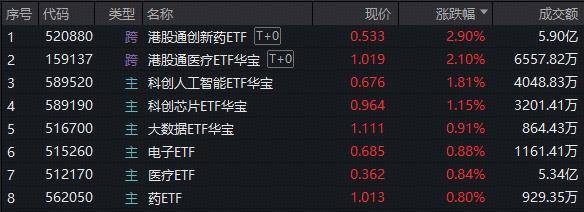
Market Overview - A-shares experienced narrow fluctuations, with the Sci-Tech Innovation Board showing strong performance, particularly in AI applications and computing chips [1] - The Hong Kong stock market saw a significant rebound in the pharmaceutical sector, with the Hong Kong Innovation Drug ETF (520880) reaching a peak increase of 3.86% and closing up 2.9% [3][5] ETF Performance - The Hong Kong Innovation Drug ETF (520880) recorded a trading volume of 5.9 billion, while the Hong Kong Medical ETF (159137) rose by 2.1%, marking its sixth consecutive day of gains [2][3] - The Sci-Tech Artificial Intelligence ETF (589520) increased by 1.81%, with a peak rise of over 2.4% during the trading session [8] Industry Insights - The Chinese innovative drug sector is experiencing a dual breakthrough in internationalization and commercialization, with over 70% of innovative drug companies reporting positive revenue growth [6][7] - Significant collaborations in the innovative drug space include a strategic partnership between Innovent Biologics and Eli Lilly, valued at up to $8.85 billion, and a $18.5 billion collaboration between CSPC Pharmaceutical and AstraZeneca [6] AI and Technology Developments - ByteDance's recent launches, including the Seedance 2.0 video generation model and Seedream 5.0 image generation model, have generated significant interest in the AI sector [11] - The Sci-Tech Artificial Intelligence ETF (589520) has a substantial exposure to ByteDance, with a weight of 29.42% in its index [11][13] Semiconductor and Chip Industry - The semiconductor equipment industry is experiencing an upward trend, with projected sales growth of 26% in 2026, reaching $791.7 billion [17] - The Sci-Tech Chip ETF (589190) is positioned to benefit from the ongoing "super cycle" in the semiconductor industry, with a focus on domestic production and expansion [15][17] Investment Strategy - Analysts suggest that the current market conditions present a favorable opportunity for investment in innovative drugs and AI sectors, with a recommendation to focus on ETFs that track these industries [7][19] - The Sci-Tech Chip ETF has shown a strong annualized return of 17.93%, outperforming other semiconductor indices [19][20]


10日港股向上 恒指科指双双收涨
Xin Hua Cai Jing· 2026-02-10 12:08
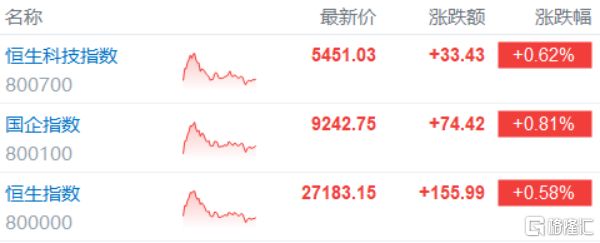
Market Overview - The Hang Seng Index rose by 0.58% to close at 27,183.15 points, while the Hang Seng Tech Index increased by 0.62% to 5,451.03 points, and the National Enterprises Index climbed by 0.81% to 9,242.75 points [1] - The index opened at 27,202.96 points, initially rising before retreating, and ultimately gained 155.99 points with a total turnover exceeding 234 billion HKD [1] - There were 1,344 advancing stocks, 923 declining stocks, and 896 stocks closing flat by midday [1] - The net inflow for the southbound trading (Hong Kong Stock Connect) was 84.7 million HKD [1] Sector Performance - Most sectors experienced gains, including chips, optical communications, biomedicine, new energy vehicles, oil and gas, banking, aviation, and port transportation [1] - Mixed performance was noted in new consumption, non-ferrous metals, and brokerage sectors, while gold, technology, real estate, and electricity sectors mostly declined [1] Individual Stock Movements - Notable stock movements included Pop Mart rising by 4.90%, Longi Green Energy increasing by 8.88%, Xiaomi Group up by 1.08%, and SMIC gaining 1.71% [1] - China Ping An rose by 0.62%, AIA fell by 0.52%, Zijin Mining increased by 2.52%, and Tianzuo Zhixin surged by 12.40% [1] - COSCO Shipping Energy rose by 5.49%, Zhihui gained 14.81%, and Rongchang Biotech increased by 3.64% [1] - HSBC Holdings rose by 0.72%, Industrial and Commercial Bank of China increased by 0.77%, and China Petroleum gained 1.64% [1] Top Traded Stocks - Tencent Holdings saw a decline of 1.61% with a turnover exceeding 16.1 billion HKD; Alibaba rose by 1.65% with a turnover over 9.3 billion HKD; Meituan fell by 2.47% with a turnover of 6.6 billion HKD [2]




港股收评:Seedance2.0引爆!AI应用股大涨,影视股走强
Ge Long Hui· 2026-02-10 08:53
Market Overview - The Hong Kong stock market showed initial gains but narrowed its increase, with the Hang Seng Index closing up 0.58% above 27,000 points, while the Hang Seng China Enterprises Index and Hang Seng Tech Index rose by 0.81% and 0.62% respectively [1][2]. Sector Performance - Technology stocks rebounded, driven by AI application stocks, with the stock of Reading Group surging over 15%. The film and entertainment sector remained active, and the biopharmaceutical sector saw widespread gains, led by Fuhong Hanlin [3][4]. - New consumption concept stocks, paper industry stocks, home appliance stocks, shipping stocks, and automotive stocks mostly increased. Conversely, education stocks faced declines, with gaming stocks collectively sluggish, and real estate, gas, electric, and telecom stocks also underperformed [3][4]. Notable Stocks - AI application stocks saw significant gains, with Reading Group rising 15.41%, and Zhiyun up 14.81%, reaching a new historical high during the session. Other stocks like Fubo Group and Yidu Technology also experienced increases [6][8]. - In the film sector, Orange Sky Entertainment rose over 7%, with other companies like Damai Entertainment and Ningmeng Film also following suit [10]. - The biopharmaceutical sector was buoyed by Fuhong Hanlin's increase of over 7%, with other companies like WuXi Biologics and WuXi AppTec also seeing gains [12]. Industry Insights - The real estate sector faced pressure, with Shimao Group dropping over 6% amid ongoing sales challenges in the industry. Major real estate companies are reportedly initiating organizational restructuring [13][14]. - Education stocks struggled, with Guangzheng Education falling over 5%, alongside declines in New Oriental and other educational institutions [15]. Investment Outlook - According to Everbright Securities, the current liquidity environment in the Hong Kong stock market is entering an observation period, with limited space for further tightening. Positive catalysts could lead to a recovery in market sentiment and capital inflow [22].


驱动基因阴性NSCLC专题:下一代治疗范式:双抗、IO+ADC
Southwest Securities· 2026-02-10 03:06
Investment Rating - The report does not explicitly state an investment rating for the industry Core Insights - The proportion of driver gene-negative non-small cell lung cancer (NSCLC) patients is approximately 31% in both China and the United States, indicating a significant market opportunity for treatments targeting this demographic [2][15] - The estimated market size for immune drugs used in first-line treatment of driver gene-negative NSCLC is projected to be around 7.5 billion CNY (approximately 1.1 billion USD) in China and 18 billion CNY (approximately 2.7 billion USD) in the United States by 2030 [2] - The current first-line treatment for advanced driver gene-negative NSCLC primarily relies on PD(L)-1 inhibitors combined with chemotherapy, but there are limitations in long-term efficacy and options for patients intolerant to chemotherapy [3] Summary by Sections Section 1: NSCLC Global Overview - Lung cancer is the leading cancer type globally, with new cases accounting for approximately 12% of all cancer cases in 2022, translating to about 2.5 million new lung cancer cases [10] - In China, lung cancer represents about 22% of new cancer cases, with approximately 1.06 million new cases in 2022 [10] Section 2: Market Potential for Driver Gene-Negative NSCLC - The report highlights the significant market potential for immune therapies in treating driver gene-negative NSCLC, with a focus on the limitations of current treatment options [2][3] Section 3: Next-Generation Immunotherapy Approaches - The report discusses the advancements in dual (multi) antibody therapies and immune-oncology (IO) combined with antibody-drug conjugates (ADC), emphasizing their potential to improve treatment outcomes for patients with driver gene-negative NSCLC [5][8] - The clinical data supporting these new therapies is expected to catalyze further investment and development in this area [5] Section 4: Treatment Guidelines Comparison - The report compares treatment guidelines for driver gene-negative NSCLC between the United States and China, noting differences in treatment stratification and recommended therapies [32][34] - The U.S. guidelines emphasize PD-L1 expression levels, while Chinese guidelines focus more on performance status (PS) [32][34] Section 5: Future Catalysts - Key upcoming clinical data releases and studies are highlighted as potential catalysts for investment opportunities in the sector, particularly regarding dual antibodies and ADC therapies [5][8]



港股医药板块回暖复苏,恒生医药ETF(159892)涨近2%
Mei Ri Jing Ji Xin Wen· 2026-02-09 02:44
Group 1 - The Hong Kong stock market showed a strong opening on February 9, with the Hang Seng Index rising by 1.59%, the State-owned Enterprises Index increasing by 1.54%, and the Technology Index up by 1.9% [1] - The Hang Seng Biotechnology Index, focusing on innovative drugs, performed robustly, with the largest ETF tracking this index (159892) rising nearly 2% [1] - The innovative drug sector is expected to enter a profit realization acceleration phase by 2025, with companies like Innovent Biologics and Rongchang Biopharmaceuticals turning losses into profits, while companies like 3SBio are significantly increasing their performance [1] Group 2 - The strong performance of the innovative drug sector validates the effectiveness of the domestic innovative drug business model, with core product volume growth supported by medical insurance becoming the foundation for performance growth [1] - External collaborations, such as business development (BD) partnerships, are becoming important drivers for enhancing performance in the innovative drug sector [1] - The Hang Seng Medical ETF (159892) focuses on innovative drugs, CXO, and related industries, benefiting from the advantages of the Hong Kong Stock Exchange's 18A system, covering numerous innovative targets like BeiGene and Innovent Biologics, and is expected to continue its valuation recovery trend under catalysts like overseas expansion of innovative drugs and commercial insurance directories [1]

——海外消费周报(20260130-20260205):港股医药 2025 年报业绩前瞻:商业化销售放量叠加授权收入,部分公司有望迎来盈利拐点-20260208
Shenwan Hongyuan Securities· 2026-02-08 13:37
Investment Rating - The report indicates a positive outlook for the pharmaceutical sector, particularly for innovative drugs and companies expected to reach profitability in 2025 [1][9][15]. Core Insights - The innovative drug sector is anticipated to see significant growth due to the commercialization of core products and contributions from business development (BD) revenues, with companies like BeiGene, Innovent Biologics, and others expected to achieve profitability [1][9]. - The Pharma sub-sector is projected to experience a revenue growth rate of 15-20% in 2025, with notable companies such as Hansoh Pharmaceutical and China Biologic Products leading this growth [2][10]. - The CXO sector is also expected to report strong performance, with companies like WuXi AppTec forecasting substantial revenue and profit increases [3][11]. - The medical services sector is currently valued at historical lows, with a projected revenue growth of 13% for Genscript Biotech, highlighting the importance of monitoring industry changes [4][12]. Summary by Sections Innovative Drugs - Companies expected to achieve profitability in 2025 include BeiGene, Innovent Biologics, and others, driven by increased commercialization and BD revenues [1][9]. Pharma - Revenue growth of 15-20% is expected for leading companies such as Hansoh Pharmaceutical and China Biologic Products, with a significant boost anticipated for 3SBio due to a major BD deal with Pfizer [2][10]. CXO - WuXi AppTec is projected to achieve approximately 454.56 billion RMB in revenue, reflecting a year-on-year growth of about 15.84%, with adjusted net profits expected to rise significantly [3][11]. Medical Services - Genscript Biotech is expected to see a revenue increase of 13% in 2025, emphasizing the need to focus on overseas business expansion and AI integration in traditional medicine [4][12].

海外消费周报:港股医药2025年报业绩前瞻:商业化销售放量叠加授权收入,部分公司有望迎来盈利拐点-20260208
Shenwan Hongyuan Securities· 2026-02-08 09:41
Investment Rating - The report maintains a positive outlook on the pharmaceutical sector, indicating an "Overweight" rating for the industry, suggesting it will outperform the overall market [1]. Core Insights - The report highlights that the commercialization of innovative drugs, combined with licensing income, is expected to lead to profitability for several companies in 2025, including BeiGene, Innovent Biologics, and others [1][9]. - The Pharma sub-sector is projected to achieve a revenue growth rate of 15-20% in 2025 for companies like Hansoh Pharmaceutical and China Biologic Products, with a significant revenue increase expected for 3SBio due to a major business development deal with Pfizer [2][10]. - The CXO sector is also expected to show strong performance, with companies like WuXi AppTec forecasting a revenue increase of approximately 15.84% and a net profit growth of about 102.65% in 2025 [3][11]. - In the medical services sector, the report notes that valuations are at historical lows, with a projected revenue growth of 13% for GuoShengTang in 2025, emphasizing the importance of overseas business expansion and AI integration in traditional Chinese medicine [4][12]. Summary by Sections Innovative Drugs - The report anticipates that several innovative drug companies will reach profitability in 2025 due to increased commercialization and business development income [9][15]. Pharma - The Pharma sub-sector is expected to see a revenue growth of 15-20% in 2025 for key players, with 3SBio projected to achieve over 100% growth due to a significant partnership with Pfizer [2][10]. CXO - WuXi AppTec is expected to report a revenue of approximately 454.56 billion RMB in 2025, with a net profit growth of around 102.65% [3][11]. Medical Services - GuoShengTang is projected to have a revenue growth of 13% in 2025, with a focus on overseas acquisitions and AI applications in traditional medicine [4][12].
美国医药调研反馈:肿瘤、代谢、自免、中枢神经系统赛道推荐更新
Haitong Securities International· 2026-02-06 11:33
Investment Rating - The report provides an "Outperform" rating for multiple companies in the healthcare sector, including BeiGene, JD Health, WuXi Biologics, and others, indicating a positive outlook for these stocks [1]. Core Insights - The macro and industry environment is improving due to the resolution of policy uncertainties, the release of significant clinical data, and a resurgence in global M&A activity, leading to a notable increase in investor sentiment towards innovative drugs for 2026 [4][11]. - In oncology, the PD-1/VEGF dual antibody approach is transitioning from "mechanism validation" to "clinical and industrial resonance," with multiple global Phase III trials underway, expected to catalyze approvals and data releases within the year [5][17]. - The metabolic sector is seeing growth in the cash-pay market for GLP-1 drugs, driven by limited insurance coverage and high out-of-pocket costs, prompting companies to enhance accessibility through direct sales and pricing adjustments [6][25]. - In the autoimmune space, there is a growing concentration risk among major products from multinational corporations (MNCs), with new antibody platforms expected to yield significant data in 2026, potentially leading to new business development opportunities [7]. - The central nervous system (CNS) investment focus remains on advancing Aβ monoclonal antibody treatments, with key data expected to open up early intervention market opportunities [9]. Summary by Sections Oncology - The PD-1/VEGF dual antibody's clinical and industrial certainty is strengthening, with major companies conducting multiple global Phase III trials across high-value indications [17]. - The Pan-RAS precision therapy is entering a realization phase, with key Phase III data expected in 2026 for pancreatic cancer and NSCLC [22]. Metabolic - The cash-pay market for GLP-1 drugs is expanding due to limited insurance coverage, with companies like Eli Lilly and Novo Nordisk adopting different direct-to-consumer strategies to enhance accessibility [25][26]. - Small nucleic acid therapies are expected to upgrade treatment paradigms, showing competitive data in weight loss and safety profiles when combined with GLP-1 [30]. Autoimmune - MNCs are increasingly reliant on a few blockbuster products, with structural opportunities arising from new antibody platforms expected to report data in 2026 [7]. - The trend towards oral formulations in autoimmune diseases is gaining traction, offering advantages in adherence and competitive differentiation [7]. CNS - The focus in CNS remains on Aβ monoclonal antibody treatments, with advancements expected to shift treatment towards earlier intervention populations [9]. - New delivery methods, such as systemic administration of small nucleic acids, are being explored as complementary approaches [9].