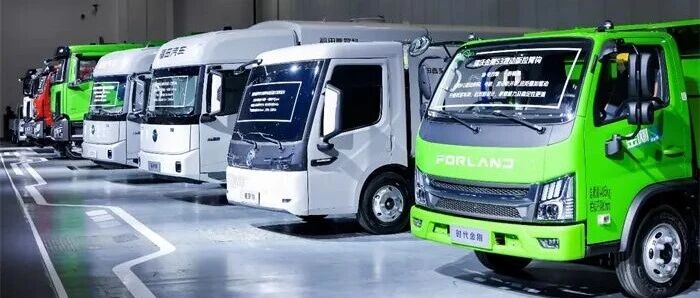
FOTON(600166)

Search documents
重汽超30万 解放超20万!陕汽/东风超18万!徐工第六!重卡2025定格114.5万辆 | 头条
第一商用车网· 2026-01-14 12:33
Core Viewpoint - The heavy truck market in China experienced significant growth in December 2025, achieving a year-on-year increase of 22%, with total sales reaching 10.27 million units, marking a strong finish to the year with an overall annual sales figure of 1.1449 million units, a 27% increase compared to 2024 [1][3][19]. Group 1: December Sales Performance - In December 2025, the total truck market (including chassis and tractors) sold 361,000 units, reflecting a month-on-month increase of 7% and a year-on-year increase of 17% [3]. - The heavy truck segment alone sold 102,700 units in December, which is a notable performance compared to the average December sales of 72,300 units over the past decade [3][5]. - December 2025 marked the second highest sales figure for heavy trucks in the last ten years, only surpassed by December 2020 [5]. Group 2: Annual Sales Overview - The total sales for the heavy truck market in 2025 reached 1.1449 million units, ranking as the second highest in the last five years and the fifth highest in the last decade, with a net increase of over 240,000 units from 2024 [7][13]. - The average monthly sales for heavy trucks in 2025 was approximately 95,300 units, significantly higher than the average monthly sales of 75,000 units in both 2024 and 2023 [7]. Group 3: Market Share and Company Performance - In December 2025, five companies sold over 10,000 units each, with the top company, Heavy Truck, achieving sales of 22,800 units, followed by Shaanxi Automobile, Dongfeng, and others [10][12]. - The top ten companies in the heavy truck market accounted for 94.6% of total sales, with the top five companies alone holding 84.6% of the market share [10]. - Notably, companies like Foton and Chery achieved remarkable year-on-year growth rates of 108% and 141%, respectively, indicating strong competitive performance [12][16]. Group 4: Industry Trends and Future Outlook - The heavy truck market maintained a strong performance in the last four months of 2025, with monthly sales consistently exceeding 100,000 units [19]. - The industry anticipates whether the positive momentum observed in late 2025 will continue into 2026, suggesting a potential for sustained growth [19].






最高省14.6万元!福田针对2026以旧换新国补政策再加码!| 头条
第一商用车网· 2026-01-14 11:52
Core Viewpoint - The article highlights the proactive measures taken by Foton Motor in response to the national "old-for-new" policy, showcasing its commitment to customer benefits through substantial subsidies and financial incentives [1][12]. Group 1: Policy Implementation - The "old-for-new" policy announced by the National Development and Reform Commission and the Ministry of Finance has garnered significant attention in the commercial vehicle industry [1]. - Foton Motor has expanded its subsidy offerings across multiple brands, including Auman, Aomark, Ouling, Times, and Tuya, providing tailored replacement schemes based on user needs and market characteristics [3][12]. Group 2: Financial Incentives - In the heavy truck sector, Foton's Auman offers an additional manufacturer subsidy of up to 6,000 yuan on top of the national subsidy of 140,000 yuan, with financing options including 0 down payment and low-interest rates starting at 4% [5]. - For urban logistics, brands like Aomark and Ouling are providing attractive models and significant discounts through a combination of old vehicle trade-in value, direct price reductions, and financial subsidies [5][7]. Group 3: Customer-Centric Approach - Foton Motor's initiatives ensure that various levels of commercial vehicle users can find suitable cost-saving solutions during the "New Year welfare feast," with specific subsidies for different models [7][12]. - The company emphasizes transparency and ease of access to subsidies, enhancing the purchasing experience and fostering brand loyalty among customers [14][15]. Group 4: Market Positioning - Foton Motor's response to the national policy reflects its strength and commitment to customer needs, opting to enhance service rather than cut costs amid economic challenges [12]. - The combination of substantial national and manufacturer subsidies demonstrates Foton's strategic alignment with user economic concerns, reinforcing its market position in the competitive commercial vehicle sector [12][15].
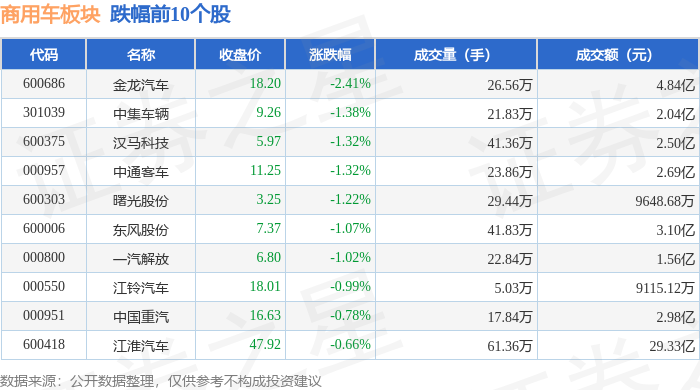
商用车板块1月14日跌0.83%,金龙汽车领跌,主力资金净流入1.26亿元
Zheng Xing Xing Ye Ri Bao· 2026-01-14 08:50
Group 1 - The commercial vehicle sector experienced a decline of 0.83% on January 14, with Jinlong Automobile leading the drop [1] - The Shanghai Composite Index closed at 4126.09, down 0.31%, while the Shenzhen Component Index closed at 14248.6, up 0.56% [1] - Key stocks in the commercial vehicle sector showed varying performance, with Jinlong Automobile closing at 18.20, down 2.41% [1] Group 2 - The net inflow of main funds in the commercial vehicle sector was 126 million yuan, while retail investors saw a net outflow of 149 million yuan [1] - Jianghuai Automobile had a significant net inflow of 65.08 million yuan from main funds, but a net outflow of 5.36 million yuan from retail investors [2] - Jinlong Automobile also saw a net inflow of 40.11 million yuan from main funds, with a notable net outflow of 36.38 million yuan from retail investors [2]



2025年我国新能源汽车出口达261.5万辆,出口规模再上新台阶
Xin Lang Cai Jing· 2026-01-14 07:19
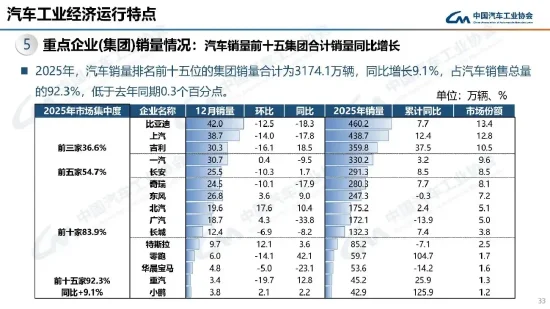
Core Insights - The Chinese automotive industry is projected to achieve record production and sales figures of 34.53 million and 34.40 million vehicles respectively in December 2025, maintaining its position as the world's largest market for 17 consecutive years [1][4]. Group 1: Market Performance - The passenger vehicle market is experiencing steady growth, significantly contributing to the overall automotive market expansion [5]. - The commercial vehicle market is recovering, with production and sales increasing by over 10%, surpassing 4 million units [5]. - New energy vehicles (NEVs) are leading the market, with production and sales exceeding 16 million units, accounting for over 50% of domestic new car sales [5]. Group 2: Export and Trade - The automotive export market shows strong resilience, with total exports exceeding 7 million vehicles, including 2.615 million NEVs, marking a new high in export scale [5]. Group 3: Market Concentration - The top fifteen automotive groups sold a total of 31.741 million vehicles, reflecting a year-on-year growth of 9.1%, which constitutes 92.3% of total vehicle sales, slightly down by 0.3 percentage points from the previous year [5][7]. - The top three groups, BYD, SAIC, and Geely, accounted for 36.6% of total vehicle sales [5][7]. - In the NEV segment, the top fifteen groups sold 15.669 million units, a year-on-year increase of 29.2%, representing 95% of total NEV sales, up by 0.7 percentage points from the previous year [5][7].





全年销量行业登顶,福田汽车“十五五”竞争壁垒全面成型 | 头条
第一商用车网· 2026-01-14 02:37
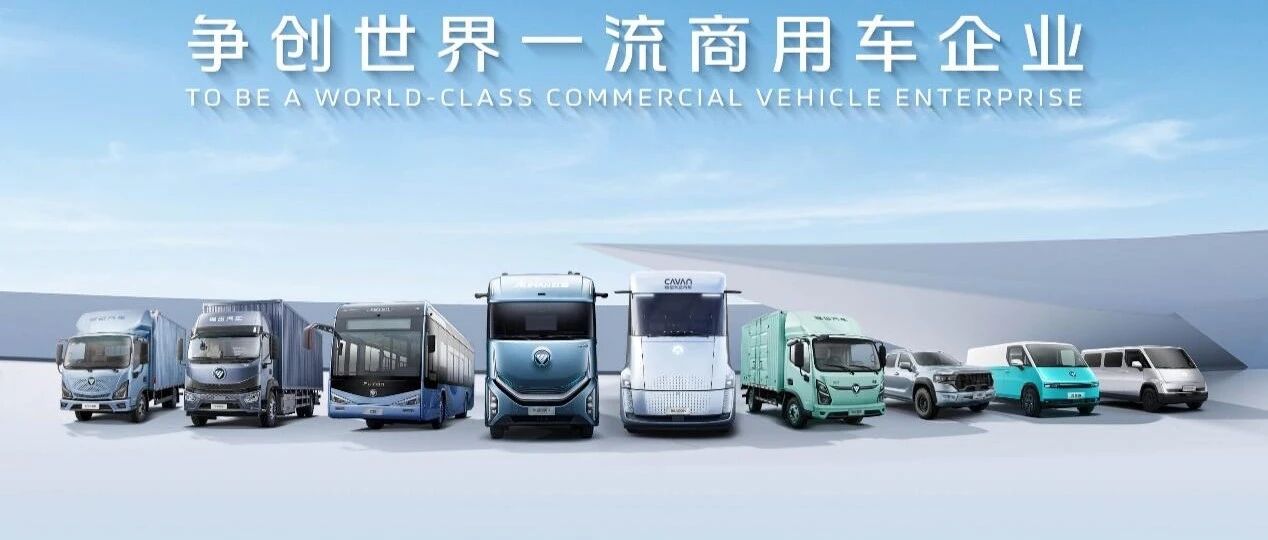
Core Viewpoint - Foton Motor achieved a record high sales volume of over 650,000 vehicles in 2025, marking a 5.9% year-on-year increase, solidifying its position as the industry sales leader during a challenging period for the automotive sector [1][3]. Group 1: Sales Performance - In 2025, Foton's total sales reached 650,000 units, the highest during the "14th Five-Year Plan" period and the second highest in its history, only behind 2020's 680,000 units [3]. - The truck segment sold 597,000 units, a 6.5% increase year-on-year, serving as the main growth driver, with heavy-duty trucks achieving a remarkable 103.6% year-on-year growth, totaling 142,000 units sold [3][4]. - Light-duty trucks maintained a strong sales base with 445,000 units sold, demonstrating stability in traditional market segments [4]. Group 2: Heavy-Duty Truck Growth - The explosive growth in heavy-duty trucks is a highlight of Foton's 2025 performance, with sales consistently high throughout the year, culminating in 142,000 units sold [6]. - Foton's success in this segment is attributed to a clear brand strategy and a comprehensive product matrix that covers various technology routes, including fuel, electric, hybrid, and hydrogen fuel [6]. - Innovative marketing strategies, such as the "Starry Sky" global product performance verification and extensive promotional activities, have translated technical advantages into market orders [6]. Group 3: New Energy and Overseas Markets - Foton achieved a significant milestone in the new energy sector, with sales of new energy vehicles surpassing 100,000 units, reaching 101,000 units, a substantial year-on-year increase of 87.2% [7][10]. - The product lineup in the new energy sector includes various models tailored for different operational scenarios, enhancing Foton's market presence [8]. - In the overseas market, Foton's sales reached 165,000 units, a 7.3% year-on-year increase, supported by deepened market layout and localized operations [11]. Group 4: Strategic Framework - Foton's success in 2025 is a result of its long-term commitment to three core strategies: comprehensive internationalization, comprehensive electrification, and comprehensive intelligence [13][15]. - The "three-in-one" strategy has created a competitive edge that is difficult to replicate, with a focus on upgrading production capacity, product adaptation, and cooperation models [15]. - Significant investments in R&D, totaling 1.379 billion yuan in the first three quarters, have been directed towards core areas such as new energy and intelligent technology [15][18]. Group 5: Product Innovation - Foton launched several new products in 2025, including the "Qiming Star" platform for electric light trucks and the Kavin BEACON intelligent heavy-duty truck, enhancing its product offerings across various market segments [18]. - These new products incorporate the latest technology and design concepts, closely aligning with user needs and operational scenarios, contributing to the overall sales increase [18].
北汽2025年销量突破175万辆,自主品牌成增长引擎
Bei Jing Ri Bao Ke Hu Duan· 2026-01-13 10:33
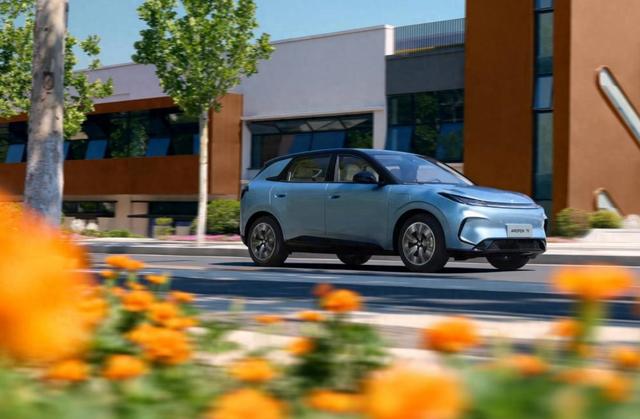
Group 1 - The core objective of the company is to achieve a vehicle sales target of 1.752 million units by 2025, representing a year-on-year growth of 5.6%, with over 60% of sales coming from its own brands [1] - The company's self-owned brands have become the main growth engine, with passenger and commercial vehicles achieving collaborative growth [1] - The electric vehicle brand Arcfox has seen significant growth, with annual sales reaching 163,000 units, doubling year-on-year, and maintaining a growth rate exceeding 100% for two consecutive years [1][3] Group 2 - The company aims for high-quality development, with internationalization and new energy businesses progressing simultaneously, achieving historical highs [3] - The export volume is projected to reach 308,000 units by 2025, a year-on-year increase of 26%, outpacing the industry growth rate by 7.3 percentage points, with products covering over 130 countries and regions [3] - The company sold over 390,000 new energy vehicles in the past year, marking a 95% year-on-year increase, with significant growth in its self-owned brands [3] Group 3 - The company has made advancements in autonomous driving, with two models receiving L3-level conditional autonomous driving product approval, including one from the Arcfox brand [3] - The company has initiated large-scale road trials for L3-level autonomous driving, positioning itself competitively in the key technology race defining future mobility [3] Group 4 - Continuous innovation in the field of intelligence is reflected in the company's efforts to create "technical highlights," such as the launch of the world's first engineering liquid hydrogen heavy truck [4] - The company has successfully developed an electric vehicle drive motor rotor that challenges ultra-high speeds of 55,000 RPM [4]
北汽集团公布2026年目标 计划实现整车销量220万辆
Zhong Guo Zhi Liang Xin Wen Wang· 2026-01-13 07:24
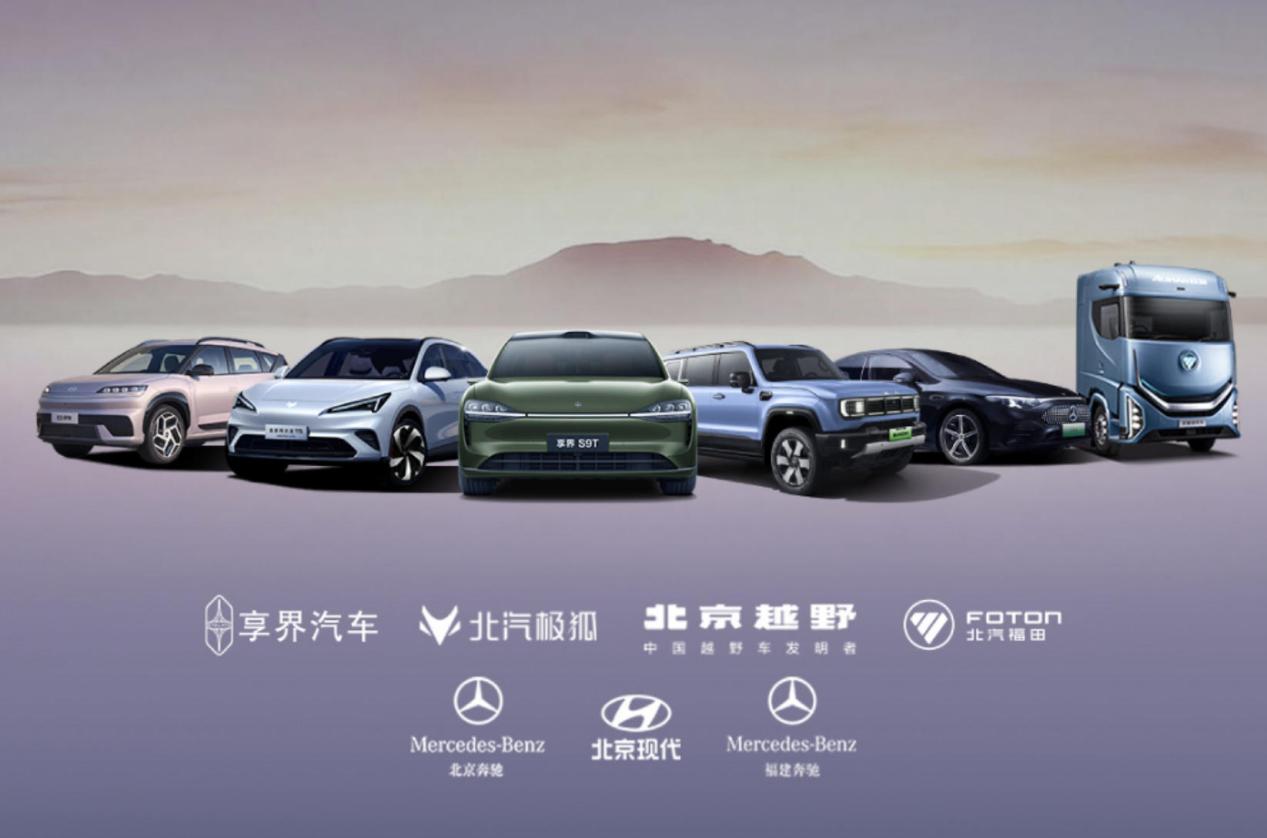
Group 1 - The core viewpoint of the article highlights the significant growth in sales and production for BAIC Group, particularly in the electric vehicle (EV) sector, indicating a strong market position and successful transition to new energy vehicles [2] Group 2 - BAIC Group achieved a total vehicle sales volume of 1.752 million units in 2025, representing a year-on-year increase of 5.6% [2] - The sales of self-owned brands reached 1.07 million units, accounting for 61% of total sales [2] - BAIC Arcfox sold 163,000 units, marking a remarkable year-on-year growth of 101%, with sales doubling for two consecutive years [2] - Beijing Off-road vehicles exceeded 200,000 units in sales, showing a year-on-year increase of 38% [2] - The sales of Xiangjie vehicles surpassed 10,000 units per month, while BAIC Foton achieved annual sales of over 650,000 units [2] - The company exported 308,000 vehicles, setting a historical high with a year-on-year growth of 26% [2] Group 3 - In the new energy sector, BAIC Group's sales of new energy products exceeded 390,000 units, reflecting a year-on-year increase of 95% [2] - The self-owned brands accelerated their transition to new energy, with BAIC Arcfox and Xiangjie achieving significant scale growth [2] - The proportion of new energy sales for Beijing Off-road vehicles approached 40% [2] - The sales of new energy commercial vehicles saw a substantial increase of 82.3%, with significant enhancements in product offerings and network scale [2] Group 4 - In the joint venture segment, Beijing Benz celebrated its 20th anniversary, launching the first model from the MMA platform, the all-new electric CLA [2] - Beijing Hyundai initiated the "Smart Start 2030 Plan," with the launch of its first pure electric platform SUV, EO Yiou [2]
独家|赵长江履新智界,一场先锋硬仗怎么打?
Xin Lang Cai Jing· 2026-01-13 04:14
Core Viewpoint - The article discusses the strategic transformation of Zhijie under the leadership of Zhao Changjiang, emphasizing the integration of Huawei's technology and Chery's manufacturing capabilities to create a pioneering smart electric vehicle brand. Group 1: Strategic Transformation - Zhijie 2.0 is a strategic initiative that involves a significant investment of 10 billion yuan and the establishment of a 5,000-person R&D team to enhance brand positioning and organizational structure [1][12] - The brand aims to leverage Huawei's technological leadership and Chery's manufacturing expertise to create a unique identity in the competitive electric vehicle market [1][13] - Zhao Changjiang emphasizes the need for a complete embrace of Huawei's methodologies in management, culture, and business logic to ensure the brand's success [12][14] Group 2: Market Positioning and Product Strategy - The company plans to target high-income, highly educated consumers while emphasizing the application of cutting-edge smart technology in its products [22][24] - The 2026 product lineup includes a flagship MPV (V9) and a large SUV, with a focus on enhancing user experience through advanced AI capabilities [29][36] - The brand's differentiation lies in its commitment to creating a "pioneering" identity that resonates with consumers seeking innovative technology and design [22][23] Group 3: Operational Efficiency and Supply Chain - The integration of Huawei's digital thinking into the supply chain aims to transform production processes from passive to proactive, enhancing efficiency and quality control [5][26] - The company is restructuring its production and sales coordination to ensure a seamless flow of operations, which is critical for meeting market demands [25][31] - Zhao Changjiang highlights the importance of a collaborative culture between manufacturers and suppliers, moving away from traditional adversarial relationships [7][12] Group 4: Future Outlook and Challenges - The company anticipates that the smart vehicle market will experience significant growth, with a focus on creating user-centric products that exceed current expectations [11][36] - Zhao Changjiang acknowledges the challenges of fully implementing Huawei's capabilities within the brand, estimating current progress at 20-30% [28] - The long-term goal is to achieve annual sales of one million units by 2030, establishing Zhijie as a global leader in the smart electric vehicle sector [38]

中国进出口银行北京分行支持自主品牌新能源汽车行业高质量发展
Xin Hua Cai Jing· 2026-01-13 04:11
Core Viewpoint - Beijing's "14th Five-Year Plan" emphasizes the development of new energy vehicles (NEVs) and aims to steadily increase their proportion while improving supporting infrastructure for NEV charging [1] Group 1: Policy and Strategic Support - The Beijing Municipal Government prioritizes NEVs as a key development area, aligning with the city's economic and social development goals [1] - The China Export-Import Bank's Beijing branch has collaborated with BAIC Group for over a decade, enhancing strategic cooperation to support the development of BAIC's self-owned NEV brands [1] Group 2: Financial Support and Development - BAIC New Energy Co., as a crucial part of BAIC Group's "high, new, and special" strategy, is positioned as a major focus for future growth [1] - During a critical phase for BAIC New Energy, the China Export-Import Bank's Beijing branch implemented differentiated credit policies, providing comprehensive financial services including working capital loans and bank acceptance bills to support the launch of mid- to high-end products [1] Group 3: Future Outlook - The China Export-Import Bank's Beijing branch plans to leverage policy-driven financial support to facilitate the high-quality development of China's automotive industry, aligning with national industrial planning [1]
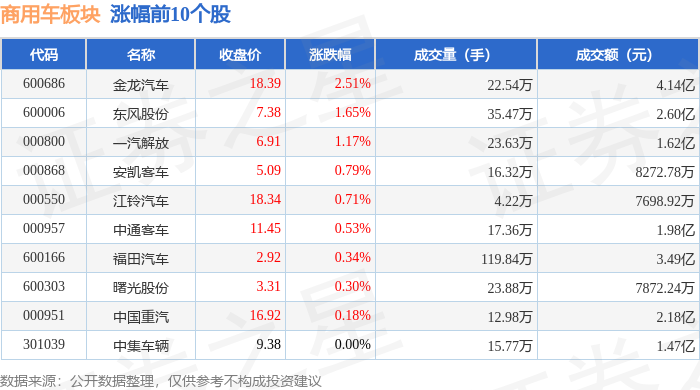
商用车板块1月12日跌0.69%,宇通客车领跌,主力资金净流出5.05亿元
Zheng Xing Xing Ye Ri Bao· 2026-01-12 09:04
Group 1 - The commercial vehicle sector experienced a decline of 0.69% on January 12, with Yutong Bus leading the drop [1][3] - The Shanghai Composite Index closed at 4165.29, up 1.09%, while the Shenzhen Component Index closed at 14366.91, up 1.75% [1] - Major stocks in the commercial vehicle sector showed varied performance, with Jinlong Automobile increasing by 2.51% and Yutong Bus decreasing by 2.65% [1][3] Group 2 - The net outflow of main funds in the commercial vehicle sector was 505 million yuan, while retail investors saw a net inflow of 314 million yuan [3][4] - The trading volume for major stocks included 248,600 shares for Yutong Bus and 578,000 shares for Jianghuai Automobile, with transaction amounts of 784 million yuan and 2.851 billion yuan respectively [3][4] - The fund flow analysis indicated that retail investors had a significant net inflow in several stocks, including Jiangling Motors, which saw a net inflow of 11.05% [4]