
GXED(600617)

Search documents
吉利银河全系车型远征北欧,引领中国新能源测试标准升级
Xin Lang Cai Jing· 2026-02-11 09:28
Core Insights - The article highlights the significant milestone of China's new energy vehicle (NEV) market, with penetration rates expected to exceed 50% by 2025, led by domestic brands like Geely Galaxy, which achieved over 1.23 million annual sales, marking it as the fastest NEV brand to reach this milestone [1][3] - Geely Galaxy's sales momentum continued into January 2026, with a monthly sales figure of 82,000 units, contributing to Geely's total sales of 270,200 units in the same month, indicating a strong start for the year [1][11] Group 1 - Geely Galaxy's ambition extends beyond sales figures, as it undertook a comprehensive winter testing expedition in Northern Europe, featuring 25 models across various conditions, marking a first for a single brand to conduct such extensive testing [3][5] - The winter testing in Northern Europe serves as a rigorous evaluation of vehicle performance under extreme conditions, showcasing Geely Galaxy's commitment to quality and reliability, which is crucial for entering global markets [5][10] - The testing environment in Northern Europe, characterized by extreme cold and high humidity, poses unique challenges that Geely Galaxy successfully addressed, enhancing its product's adaptability to global standards [7][10] Group 2 - Geely Galaxy's winter testing aligns with national policies aimed at elevating the quality standards of the automotive industry, transitioning from volume-driven growth to quality-focused development [7][8] - The company has established a global research and validation system, with extensive testing capabilities across various climates and terrains, ensuring that its products meet international regulatory requirements [11][13] - The successful completion of the winter tests not only demonstrates Geely Galaxy's technological prowess but also reinforces its strategy of integrating user feedback into product development, thereby enhancing market competitiveness [11][14]




1月中国新能源汽车出口同比增长1倍
Zhong Guo Xin Wen Wang· 2026-02-11 08:06
Core Insights - In January, China's electric vehicle (EV) exports reached 302,000 units, marking a year-on-year increase of 100% and a month-on-month increase of 0.5% [1] - The overall automotive industry in January showed stable performance, with a decline in the passenger vehicle market but continued growth in the commercial vehicle sector [1] - The total production and sales of vehicles in January were 2.45 million and 2.346 million units, respectively, with production increasing by 0.01% year-on-year and sales decreasing by 3.2% year-on-year [1] Automotive Export Performance - In January, total vehicle exports amounted to 681,000 units, reflecting a year-on-year growth of 44.9% but a month-on-month decline of 9.5% [1] - The new energy vehicle (NEV) market in January saw production and sales of 1.041 million and 945,000 units, respectively, with year-on-year growth of 2.5% and 0.1% [1] - NEVs accounted for 40.3% of total new vehicle sales in January [1] Market Analysis - Factors contributing to the decline in the automotive market include the adjustment of the NEV purchase tax policy, the transition of local vehicle purchase subsidy policies, and the early release of some consumer demand in 2025 [1] - In January 2026, the government introduced a series of policies aimed at improving livelihoods and economic development, which are expected to stabilize and boost market demand [2] - The "Two New" policies are being implemented smoothly, with local governments following up with detailed implementation rules [2]
1月我国新能源汽车产销量同比实现增长
Xin Hua Wang· 2026-02-11 06:14
Core Insights - The China Association of Automobile Manufacturers reported that in January 2026, the production and sales of new energy vehicles reached 1.041 million and 945,000 units, representing year-on-year growth of 2.5% and 0.1% respectively [1] - Overall, the automotive industry in January saw production and sales of 2.45 million and 2.346 million vehicles [1] - The deputy secretary-general of the association, Chen Shihua, stated that the automotive industry is operating smoothly at the beginning of 2026, with policies focusing on the automotive aftermarket stimulating market vitality [1] Industry Performance - New energy vehicle production and sales figures for January 2026 indicate a stable growth trend, with production increasing by 2.5% and sales by 0.1% year-on-year [1] - The total automotive production and sales figures for January 2026 were 2.45 million and 2.346 million vehicles, respectively, reflecting the overall market performance [1] Policy Impact - The implementation of "two new" policies is reported to be orderly, contributing to the stabilization and recovery of market demand [1] - Detailed policy execution is expected to further support the automotive market's demand rebound [1]
中汽协:1月份我国新能源汽车产销分别完成104.1万辆和94.5万辆 同比分别增长2.5%和0.1%
Xin Lang Cai Jing· 2026-02-11 06:09
Core Viewpoint - The Chinese automotive industry showed stable performance in January 2026, with a notable growth in the new energy vehicle (NEV) sector despite a slight decline in overall vehicle sales [1] Group 1: Overall Automotive Market Performance - In January 2026, the total production and sales of automobiles reached 2.45 million and 2.346 million units, respectively, with production increasing by 0.01% year-on-year and sales decreasing by 3.2% [1] - The commercial vehicle market continued to show positive trends, with both production and sales maintaining double-digit growth year-on-year [1] Group 2: New Energy Vehicle Market - The production and sales of new energy vehicles in January 2026 were 1.041 million and 0.945 million units, reflecting year-on-year growth of 2.5% and 0.1%, respectively [1] - The export of new energy vehicles experienced significant growth, with 302,000 units exported, marking a year-on-year increase of 100% [1]
万象更“新” 无限可“能”——探访中国新能源项目建设运营一线
Zhong Guo Hua Gong Bao· 2026-02-10 05:29
Core Insights - The article highlights the rapid development of various green energy projects across China, emphasizing the country's commitment to transforming its energy landscape and promoting sustainable development during the Lunar New Year celebrations [1][2]. Group 1: Biomass Gasification Project - The "Donghua Furnace," a biomass gasification device developed by Donghua Engineering Technology Co., is successfully operational, utilizing agricultural waste to produce synthesis gas, which can significantly reduce carbon emissions by 70% to 90% compared to fossil fuels [4][5]. - The project aims to enhance the value of agricultural waste and contribute to local economic development while promoting ecological protection [6][7]. - The team is focused on continuous optimization of the gasification process, with confidence in the technology's applicability and replicability [7]. Group 2: Hydrogen Production Project - A hydrogen production project in Panzhihua, based on "concentrated solar water splitting" technology, is set to launch its commercial production line by December 2025, with an expected annual hydrogen output of approximately 200 tons [8][10]. - The innovative technology allows for a significant increase in hydrogen production efficiency, achieving a production rate that exceeds current laboratory benchmarks by over 100 times [9]. - The project has garnered interest from various government and corporate entities, indicating strong market potential for green hydrogen applications in industries such as metallurgy and chemicals [11]. Group 3: Geothermal Heating in Xiong'an - Xiong'an New Area has implemented geothermal heating across its urban areas, significantly reducing coal usage and CO2 emissions, with one heating season replacing 4,847 tons of standard coal and reducing CO2 emissions by 11,636 tons [14]. - The geothermal energy system utilizes a "direct extraction and reinjection" method, ensuring optimal energy utilization and minimal environmental impact [15]. - The area is developing into a comprehensive energy hub, integrating geothermal, solar, and smart energy systems to provide efficient energy services [16]. Group 4: Controlled Nuclear Fusion Research - New Hope Group is advancing in controlled nuclear fusion research, aiming to make fusion energy a viable and clean energy source within the next two decades [18][19]. - The group has achieved significant milestones with its "Xuanlong-50U" fusion device, positioning itself among the leading facilities globally [19][20]. - The long-term vision includes developing fusion energy as a key to future human civilization and addressing energy demands sustainably [20].
万象更“新” 无限可“能” ——探访中国新能源项目建设运营一线
Zhong Guo Hua Gong Bao· 2026-02-10 03:22
Group 1: Biomass Gasification Project - The "Donghua Furnace" is a biomass gasification core device developed by Donghua Engineering Technology Co., which successfully produced synthesis gas from agricultural waste [4][5] - The gasification process can reduce carbon emissions by 70% to 90% compared to fossil fuels, producing high-value green chemicals and sustainable aviation fuel [4][5] - The project aims to enhance the value of agricultural waste and promote local economic development while reducing reliance on coal [6][7] Group 2: Hydrogen Production Project - The "Hydrogen Boat" project in Panzhihua is set to launch the world's first commercial production line based on "concentrated solar water electrolysis" technology, with an expected annual hydrogen output of 200 tons by December 2025 [8][9] - This innovative technology allows for a direct energy conversion from solar to hydrogen, significantly improving production efficiency [9][10] - The project has attracted interest from multiple government and corporate entities, indicating strong market potential for green hydrogen applications in industries such as metallurgy and chemicals [11][12] Group 3: Geothermal Heating in Xiong'an - Xiong'an New Area has implemented geothermal heating, replacing traditional coal heating and significantly reducing carbon emissions [15][16] - The geothermal energy system utilizes underground heat sources, achieving a heating area of 2.6 million square meters and reducing CO2 emissions by 14,140 tons annually [16][17] - The integration of geothermal heating with solar energy and smart grid technology aims to create a near-zero carbon energy microgrid [17][18] Group 4: Controlled Nuclear Fusion Research - New Hope Group is advancing controlled nuclear fusion technology, with the goal of making it a viable energy source within the next 20 years [19][20] - The team has achieved significant milestones, including the world's first megampere-level hydrogen-boron fusion discharge, positioning them at the forefront of global fusion research [20][21] - The initiative emphasizes the importance of talent development and collaboration with various research institutions to support the long-term goals of fusion energy commercialization [21]

万象更“新” 无限可“能” ——探访中国新能源项目建设运营一线 | 2026新春走基层
Zhong Guo Hua Gong Bao· 2026-02-10 03:09
Group 1: Biomass Gasification Project - The "Donghua Furnace," developed by Donghua Engineering Technology Co., is a biomass gasification device that successfully converts agricultural waste into synthesis gas, significantly reducing carbon emissions by 70% to 90% compared to fossil fuels [4][6] - The project aims to enhance the value of agricultural waste and promote local economic development while ensuring ecological protection [6][7] - The team is focused on continuous optimization of the gasification process and aims to replicate the technology in other regions [7] Group 2: Hydrogen Production Project - The "Hydrogen Boat" project in Panzhihua, utilizing "concentrated solar water splitting" technology, is set to produce approximately 200 tons of hydrogen annually by December 2025 [8][10] - The technology boasts a hydrogen production efficiency significantly higher than current global standards, with a cost projection of 8 to 12 yuan per kilogram for large-scale production [10][11] - The project has garnered interest from multiple government entities and enterprises, indicating strong market potential for green hydrogen applications in industries such as metallurgy and chemicals [9][12] Group 3: Geothermal Heating in Xiong'an - Xiong'an New Area has implemented geothermal heating, replacing traditional coal heating and achieving significant reductions in carbon emissions, with one heating season replacing 4,847 tons of standard coal [15][16] - The geothermal system utilizes underground heat sources and has expanded to cover the entire urban area, with over 100 geothermal stations operational [16][19] - The integration of geothermal energy with other renewable sources is being explored to create a smart energy microgrid, enhancing energy efficiency and sustainability [18][19] Group 4: Controlled Nuclear Fusion Research - New Hope Group has made significant advancements in controlled nuclear fusion, with the "Xuanlong-50U" device achieving several world-first milestones in fusion technology [22][23] - The project aims to make fusion energy a viable and clean energy source within the next two decades, addressing the growing global energy demand [21][22] - The team emphasizes the importance of talent development and collaboration with various research institutions to support the long-term goals of fusion energy commercialization [23]
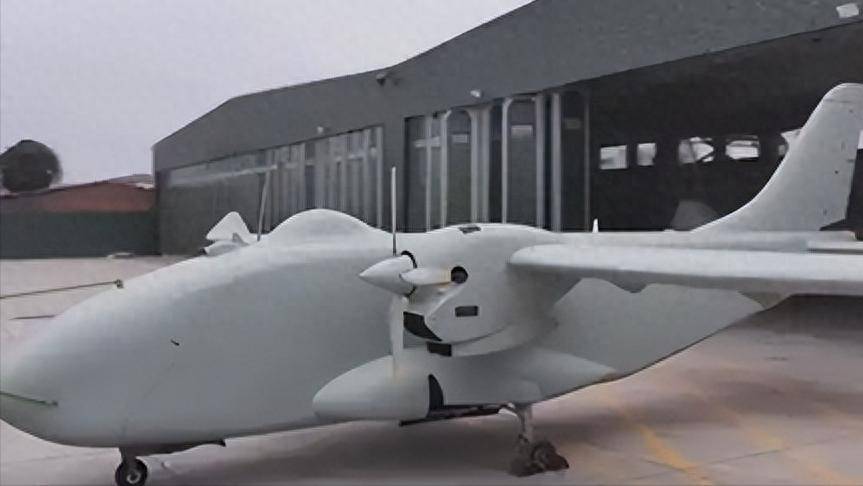
全球首架!中国新能源飞机成功首飞,空中物流要变天了!
Sou Hu Cai Jing· 2026-02-09 04:24
Core Insights - The YH-1000S is the world's first hybrid unmanned transport aircraft, showcasing advanced technology integration in unmanned transport and hybrid power systems [1][3] - The aircraft's hybrid system utilizes a smart closed-loop design combining electric and fuel power, significantly enhancing its operational capabilities [1][7] Group 1: Technological Advancements - The YH-1000S can take off and land on various surfaces, including ordinary secondary roads and even snow, demonstrating its versatility [5] - The aircraft has a maximum range of 1500 kilometers and a payload capacity of 1.2 tons, representing a performance improvement of approximately 30% over its predecessor [5] - The dual backup system ensures operational reliability, allowing one power system to take over if the other fails [5][7] Group 2: Industry Context - The development of the YH-1000S benefits from China's robust electric vehicle industry, leveraging existing technology and supply chains [7][9] - China's strategy focuses on transitioning to green power in multiple transportation sectors, aiming to establish dominance in future industry standards and regulations [9] - The hybrid unmanned transport aircraft represents a significant step in China's broader strategy to lead in green technology and break existing monopolies in the aviation sector [9]
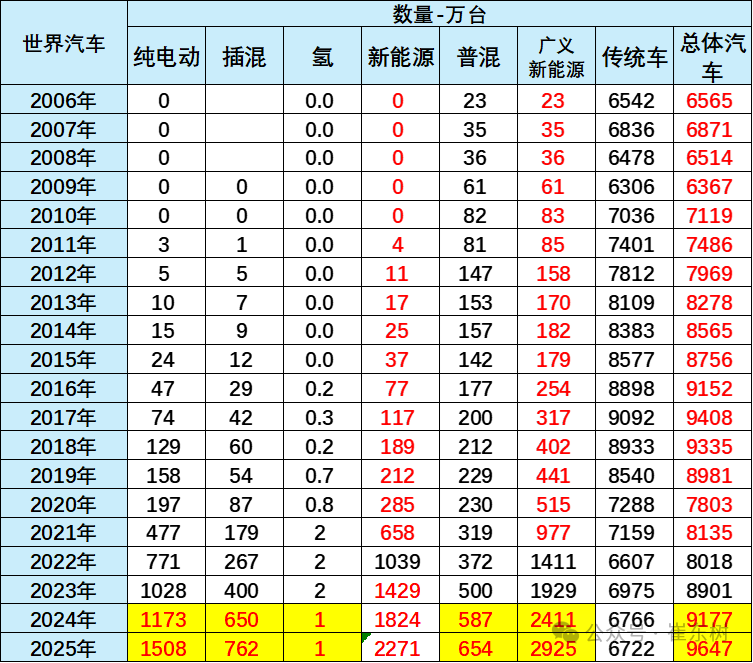
崔东树:2025年中国新能源乘用车世界份额为68.4%
智通财经网· 2026-02-06 11:53
Global New Energy Vehicle Trends - In 2025, China's share of the global new energy passenger vehicle market is projected to be 68.4%, with a peak of 71.9% in Q4 [1][31] - The global automotive sales for 2025 are expected to reach 96.47 million units, with new energy vehicles accounting for 22.71 million units, representing 30% of total sales, an increase of 4 percentage points from 2024 [1][3] - The contribution of new energy vehicle sales in 2025 is primarily from China (66%), followed by Germany (6%) and India (4%) [1][29] Market Performance - In 2025, the sales of new energy vehicles in the world are expected to reach 22.71 million units, with pure electric vehicles making up 15.6% and plug-in hybrids 7.9% [1][6] - The U.S. new energy vehicle sales for 2023 are projected at 1.63 million units, with a growth rate of 1%, while December sales dropped by 31% year-on-year due to high tariffs and the removal of subsidies [1][23] - European new energy vehicle sales for 2023 are expected to reach 3.83 million units, a 32% increase from the previous year, with December sales showing a 35% year-on-year growth [1][24] Autonomous New Energy Vehicle Export - The overseas market share of autonomous new energy passenger vehicles is expected to reach 20.8% by December 2025, up from 15.3% in 2024 [2][17] - The significant increase in export performance of autonomous new energy vehicles is attributed to changes in the U.S. market [2][17] Regional Market Dynamics - The global new energy vehicle penetration rate is expected to reach 26.3% by Q4 2025, with China leading at 49.3%, followed by Germany at 30% and the U.S. at only 7% [26][27] - The European new energy vehicle market is projected to maintain a stable growth trajectory, with a share of 17% in the global market by 2025 [30][31] Sales Growth and Trends - The sales of new energy passenger vehicles in 2025 are expected to grow by 27% year-on-year, with December sales reaching 230,000 units, a 10% increase from the previous year [11][12] - The overall trend indicates that while China continues to strengthen its position in the new energy vehicle market, Europe and the U.S. are experiencing a slowdown in growth [27][31]

破难题、优服务、强协同 我国新能源车险改革有序推进
Zheng Quan Ri Bao Wang· 2026-02-06 06:28
Core Viewpoint - The rapid development of China's new energy vehicle (NEV) industry presents both opportunities and challenges for the insurance sector, prompting regulatory bodies to issue guidance aimed at enhancing insurance coverage and service levels for NEVs [1][2]. Group 1: Policy Initiatives - The Financial Regulatory Administration, along with three other ministries, released the first guidance on NEV insurance on January 24, 2025, focusing on five key areas to promote high-quality development [2]. - The guidance aims to lower maintenance costs, establish a risk-sharing mechanism, optimize pricing coefficients, enrich insurance products, and create a comprehensive vehicle classification system [2][6]. Group 2: Implementation and Impact - The "Good Insurance for Vehicles" platform was launched immediately after the guidance, addressing the "insurance difficulty" issue for high-risk NEVs, with 37 companies participating, covering 95% of the market [4]. - The platform has registered nearly 1.7 million users, facilitating insurance for 1.35 million NEVs and generating approximately 6.2 billion yuan in premium income, providing risk coverage of 13.6 trillion yuan [4]. Group 3: Industry Collaboration - The establishment of a vehicle classification system is crucial for improving insurance pricing accuracy and fostering collaboration between the insurance and automotive industries [6][7]. - Research and development efforts are ongoing to implement this classification system, with plans for pilot projects focusing on new NEV models [7]. Group 4: Future Directions - Continuous optimization of the "Good Insurance for Vehicles" platform and collaboration with relevant ministries are essential for the successful implementation of the guidance and the promotion of high-quality development in both the NEV and insurance sectors [8].