
FYG,FUYAO GLASS(600660)

Search documents
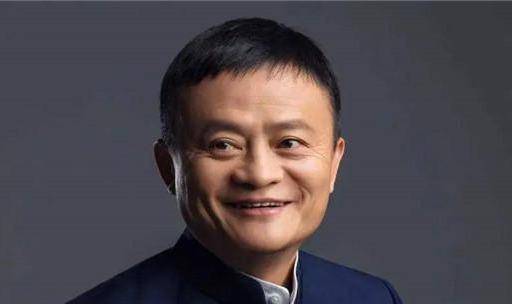
曹德旺评价马云:吹牛谁都会,淘宝的市场根本没有13亿!
Sou Hu Cai Jing· 2026-02-09 12:07
**消费力的真谛** 有声音认为:一块钱的消费和100块钱的消费,本质上没有区别。这种看似逻辑清晰 的说法,实际上忽略了消费的层次和质量。曹德旺的批评,实际上是在对这种偷换概念的论点提出反 驳。消费不仅仅是一个数字的堆砌,更是生存与享受的区分。当生存问题依旧是大多数人面临的主要问 题时,消费便不再是简单的数量问题。相对于一块钱的生存消费,100块钱的享受消费所代表的是社会 的富裕与发展。 因此,当我们讨论所谓的13亿市场时,必须明确的是,哪些群体有能力参与到其中。 即使互联网和电商扶贫政策的推进,依然有大量贫困人口未能享受到这一市场的红利。从某种意义上 说,这一市场的局限性和瓶颈,决定了淘宝所宣称的13亿只是一个美丽的梦想,而非现实。 一个是全球闻名的玻璃大王,一个是电商领域的先驱与巨头,曹德旺与马云,作为中国商业界两位举足 轻重的人物,分别代表着制造业与互联网电商的巅峰。曹德旺的福耀玻璃在制造业中无疑占据着霸主地 位,而马云的阿里巴巴,则以其庞大的电商平台影响着全球经济的格局。这两个行业,一个是传统的实 体经济,另一个是崛起中的虚拟经济,它们的碰撞早已超越了行业之间的讨论,成了社会舆论的焦点, 甚至引发了两 ...


福耀玻璃遭Mitsubishi UFJ Financial Group, Inc.减持14.4...
Xin Lang Cai Jing· 2026-02-07 05:57
Group 1 - Mitsubishi UFJ Financial Group, Inc. reduced its stake in Fuyao Glass (03606) by 144,400 shares at a price of HKD 66.1601 per share, totaling approximately HKD 9.5535 million [1] - After the reduction, Mitsubishi UFJ's latest holding is 36,280,400 shares, representing a holding percentage of 5.97% [1]
Mitsubishi UFJ Financial Group, Inc.减持福耀玻璃(03606)14.44万股 每股作价约66.16港元
Zhi Tong Cai Jing· 2026-02-06 13:49
Core Viewpoint - Mitsubishi UFJ Financial Group, Inc. has reduced its stake in Fuyao Glass (03606) by selling 144,400 shares at a price of approximately HKD 66.16 per share, totaling around HKD 9.5535 million [1] Group 1 - The sale resulted in Mitsubishi UFJ Financial Group's remaining shareholding of 36,280,400 shares, which represents a holding percentage of 5.97% [1]
Mitsubishi UFJ Financial Group, Inc.减持福耀玻璃14.44万股 每股作价约66.16港元
Zhi Tong Cai Jing· 2026-02-06 13:42
Group 1 - Mitsubishi UFJ Financial Group, Inc. reduced its stake in Fuyao Glass (600660) by 144,400 shares at a price of HKD 66.1601 per share, totaling approximately HKD 9.5535 million [1] - After the reduction, Mitsubishi UFJ's latest holding is 36,280,400 shares, representing a holding percentage of 5.97% [1]
福建“豪门”,打响继承之战
创业家· 2026-02-04 10:35
Core Viewpoint - The article discusses the generational transition in family businesses, particularly among Fujian entrepreneurs, highlighting the challenges faced by the second generation as they take over their family enterprises amidst a changing economic landscape and societal expectations [5][8]. Group 1: Succession Battles - The transition of leadership is becoming a reality among Fujian private enterprises, with notable examples including Xu Yangyang taking over Dali Group and Cao Hui succeeding his father at Fuyao Group [7][8]. - The second generation faces dual pressures from familial expectations and societal reputation, often leading to comparisons with their predecessors [5][9]. - The traditional method of succession in Fujian remains focused on blood relations, with the eldest son often seen as the most suitable successor [9][11]. Group 2: Individual Case Studies - Xu Yangyang's journey at Dali Group began with her education and gradual rise through the ranks, ultimately leading to her role as president after her father's retirement [16][23]. - Cao Hui's path to leadership at Fuyao Group involved significant preparation, including international education and hands-on experience in the family business [12][26]. - Xu Lianjie of Hengan Group faced challenges in finding a successor, as his sons initially showed little interest in the family business, but eventually, his eldest son Xu Qingliu took over [13][16]. Group 3: Business Performance and Challenges - Dali Group's revenue peaked at 22.294 billion yuan in 2021 but has since declined, with 2023 revenue reported at 18.86 billion yuan [22][24]. - Hengan Group's paper towel business aims for significant growth, with Xu Qingliu setting ambitious targets despite industry challenges [26]. - Fuyao Group continues to experience growth, with a reported revenue of 21.45 billion yuan and a net profit exceeding 4.8 billion yuan in the first half of 2025 [26][27]. Group 4: Cultural and Strategic Adaptations - The article highlights the importance of adapting to changing consumer preferences, with younger generations needing to innovate beyond traditional business models [24][32]. - Fujian entrepreneurs are increasingly forming family offices to manage wealth and address succession issues, reflecting a blend of traditional and modern approaches to business continuity [30][31]. - Marriages between the second generation of Fujian entrepreneurs are seen as a strategy to strengthen business alliances and create a supportive network [28][29].


福耀玻璃:清阳下项目、安徽合肥项目已于2025年年底完成各300万套的产能建设
Mei Ri Jing Ji Xin Wen· 2026-02-02 09:21
Group 1 - The company exports products to Brazil and is exploring local manufacturing options [1] - The company employs financial instruments such as forward contracts and currency swaps to hedge against USD depreciation and foreign exchange risks [1] - The company’s new projects in Fuzhou and Hefei are expected to reach a total production capacity of 3 million sets each by the end of 2025, after which they will enter a ramp-up production phase [1]
福耀玻璃(600660) - H股市场公告
2026-02-02 09:15
股份發行人及根據《上市規則》第十九B章上市的香港預託證券發行人的證券變動月報表 截至月份: 2026年1月31日 狀態: 新提交 致:香港交易及結算所有限公司 公司名稱: 福耀玻璃工業集團股份有限公司 呈交日期: 2026年2月2日 I. 法定/註冊股本變動 | 1. 股份分類 | 普通股 | 股份類別 | H | | 於香港聯交所上市 (註1) | | 是 | | | --- | --- | --- | --- | --- | --- | --- | --- | --- | | 證券代號 (如上市) | 03606 | 說明 | H股 | | | | | | | | | 法定/註冊股份數目 | | | 面值 | | 法定/註冊股本 | | | 上月底結存 | | | 606,757,200 | RMB | | 1 RMB | | 606,757,200 | | 增加 / 減少 (-) | | | 0 | | | RMB | | 0 | | 本月底結存 | | | 606,757,200 | RMB | | 1 RMB | | 606,757,200 | 第 1 頁 共 10 頁 v 1.2.0 FF301 ...
福耀玻璃(03606) - 截至二零二六年一月三十一日止月份之股份发行人的证券变动月报表
2026-02-02 08:38
股份發行人及根據《上市規則》第十九B章上市的香港預託證券發行人的證券變動月報表 截至月份: 2026年1月31日 狀態: 新提交 | 2. 股份分類 | 普通股 | 股份類別 | A | | 於香港聯交所上市 (註1) | | 否 | | | --- | --- | --- | --- | --- | --- | --- | --- | --- | | 證券代號 (如上市) | 600660 | 說明 | A股 | | | | | | | | | 法定/註冊股份數目 | | | 面值 | | 法定/註冊股本 | | | 上月底結存 | | | 2,002,986,332 | RMB | | 1 RMB | | 2,002,986,332 | | 增加 / 減少 (-) | | | 0 | | | RMB | | 0 | | 本月底結存 | | | 2,002,986,332 | RMB | | 1 RMB | | 2,002,986,332 | 本月底法定/註冊股本總額: RMB 2,609,743,532 FF301 第 1 頁 共 10 頁 v 1.2.0 致:香港交易及結算所有限公司 公司名稱: 福耀玻 ...
行业周报:FSD付费用户渗透率超12%,2025全球人形机器人出货量同比增长5倍
KAIYUAN SECURITIES· 2026-02-02 00:30
Investment Rating - The industry investment rating is "Positive" (maintained) [1] Core Insights - The automotive sector is experiencing a significant shift with the introduction of Tesla's Robotaxi strategy, focusing on a dual-seat Cybercab to address 90% of travel scenarios [5][13] - Tesla has disclosed that approximately 1.1 million Full Self-Driving (FSD) paid users account for about 12% of its total vehicle sales, with a year-on-year growth of 38% [14] - The Shanghai government has introduced a subsidy for replacing old vehicles with new energy vehicles, offering an 8% subsidy on the purchase price, capped at 15,000 yuan [14] - The National Energy Administration plans to establish 28 million charging facilities by the end of 2027, expected to drive over 200 billion yuan in investments [15] - The global humanoid robot shipment is projected to increase by 508% in 2025, with Chinese manufacturers leading the market [20][22] Market Performance - The automotive sector underperformed the market, with the A-share automotive index declining by 4.67%, ranking 29th among primary industries [6][25] - The passenger vehicle index fell by 1.84%, while the commercial vehicle index decreased by 1.21% [6] - The automotive parts index saw a decline of 6.82%, with various segments experiencing different levels of performance [6] Investment Recommendations - For passenger vehicles, there is an unexpected demand in the domestic high-end luxury market, with recommendations for Jianghuai Automobile and Seres, while Geely Automobile is identified as a beneficiary [7] - In the automotive parts sector, profitability is expected to improve, with recommendations for Desay SV, Zhejiang Xiantong, Meili Technology, and others, while Weichai Power and others are seen as beneficiaries [7]


展望二〇二六驶向汽车产业提质增效新征程
Jing Ji Ri Bao· 2026-02-02 00:00
Core Insights - The Chinese automotive industry is transitioning from "scale expansion" to "quality improvement and efficiency enhancement" in 2026, driven by electrification and intelligent transformation [1] - The market competition is shifting from price wars to a "value war" focused on technological innovation, product iteration, quality enhancement, and experience optimization [1] Market Overview - In 2026, the total vehicle sales in China are projected to reach 34.75 million, a slight increase of 1%, while another estimate suggests around 28 million units, growing by 2% [2] - The industry is entering a phase characterized by high sales volume but low growth, with competition focusing on quality and efficiency rather than scale [2] - The central economic work conference emphasizes a policy direction of "stability while seeking progress" and "quality improvement and efficiency enhancement" for the automotive sector [2] New Energy Vehicles (NEVs) - NEVs are expected to achieve significant growth, with sales projected to exceed 20 million units in 2026, solidifying their market dominance [3] - Domestic automakers are leveraging technological innovation and supply chain advantages to produce competitively priced NEVs, shifting from policy-driven sales to market-driven sales as penetration rates exceed 50% [3] Competitive Landscape - Leading domestic automakers like Geely, BYD, and Chery are expected to benefit from product structure upgrades and global expansion, with Geely targeting over 4.5 million units in sales for 2026 [3] - New entrants in the automotive market are experiencing accelerated differentiation, with companies like Leap Motor and Xpeng doubling their sales, while others like NIO are focusing on operational efficiency [4] Internationalization and Global Expansion - The Chinese automotive industry is increasingly focusing on international markets, with exports projected to exceed 8 million units in 2026, primarily driven by NEVs [12] - Major automakers are establishing overseas production facilities to mitigate tariffs and trade barriers, enhancing local integration and responsiveness [13] Technological Innovation - Key areas of technological advancement include power batteries, chips, and software, with significant breakthroughs expected in 2026 [6] - The development of next-generation battery technologies, such as solid-state batteries, is progressing, with initial production expected to begin in 2026-2027 [6] - Intelligent driving technologies are advancing, with L2-level driving assistance features expected to penetrate over 70% of new passenger vehicles by 2026 [7] Emerging Trends - The automotive industry is evolving into a "super platform," integrating various technologies and services beyond traditional transportation [11] - Companies are exploring new growth avenues, including humanoid robots and low-altitude economy sectors, with significant developments anticipated in 2026 [9][10]



