
Qi An Xin Technology (688561)

Search documents
95015网络安全应急响应分析报告
奇安信· 2026-02-06 15:09
主要观点 2025 年,奇安信集团安服团队共接到应急服务需求 575 起。政府部门、制造业、金 融机构的业务专网是 2025 年攻击者攻击的主要目标。 网络安全基础设施建设的不完善,网络安全运营能力的缺失,是当前国内绝大多数 政企机构的通病。一方面,永恒之蓝、弱口令等基础漏洞仍然普遍存在,高危端口 大量暴露;另一方面,仅有 14.2%的政企机构能够通过安全巡检提前发现问题,避 免损失,而绝大多数政企机构只能在重大损失发生之后,或被第三方机构通报之后 才能发现安全问题。 安全意识问题依旧是制约政企机构安全生产的根本性问题。近三成左右的应急事件 与弱口令有关;内部人员违规操作引发的应急响应事件占 2025 年 95015 服务平台 接报事件总量的五分之一;而因员工安全意识不足导致的各类风险更是层出不穷, 包括遭受黑客钓鱼攻击、私自下载携带恶意软件的应用程序、滥用 U 盘引发系统瘫 痪,以及随意开放端口感染勒索病毒等。值得注意的是,钓鱼邮件的利用占比呈现 显著增长态势,从 2024 年的 4.7%快速攀升至 2025 年的 13.6%,增幅接近两倍。这 一趋势进一步凸显了大中型政企机构亟需加强内部员工网络安全防范意 ...

防火墙行业报告:市场集中度较高,市场稳步发展,定制化防火墙产品将不断涌现
Xin Lang Cai Jing· 2026-02-05 12:18
Core Insights - The firewall market in China is steadily growing, with the market size expected to increase from $1.17 billion in 2016 to $3.02 billion by 2025, and projected to reach $3.156 billion in 2026 [2][7][20] - The growth is driven by policy support, increasing market demand, and technological advancements, particularly with the deployment of 5G, private networks, and industrial internet [2][15] - The rise of edge computing is increasing the demand for lightweight firewalls, and customized firewall products for scenarios like IoT and smart cities are expected to emerge [2][15] Firewall Industry Definition and Classification - A firewall is an access control product that creates barriers between internal networks and insecure external networks, preventing unauthorized access and attacks [3][16] - Firewalls can be categorized based on technology into traditional firewalls, Unified Threat Management (UTM) firewalls, Next-Generation Firewalls (NGFW), and AI firewalls [5][18] - They can also be classified by form into software firewalls, hardware firewalls, and chip-level firewalls [5][18] Current Development Status - The firewall industry is characterized as a critical component of IT infrastructure, acting as a gatekeeper for network security [7][20] - The market is experiencing steady growth due to supportive policies and increasing technological advancements [7][20] Industry Value Chain - The upstream of the firewall industry includes basic hardware (chips, hard drives, network cards, etc.) and basic software (BIOS, operating systems, encryption) [9][22] - The midstream consists of firewall products, while the downstream applications span various sectors including government, finance, telecommunications, energy, education, healthcare, transportation, and aerospace [9][22] Key Companies - Notable listed companies in the firewall sector include Sangfor Technologies (300454.SZ), Tianrongxin (002212.SZ), Hillstone Networks (688030.SH), Deepin Technology (300768.SZ), Ruijie Networks (301165.SZ), Venustech (002439.SZ), Qihoo 360 (688561.SH), and NSFOCUS (300369.SZ) [2][15]





奇安信科技集团股份有限公司 2025年年度业绩预告
Zheng Quan Ri Bao· 2026-01-30 23:37
Core Viewpoint - The company anticipates a revenue of approximately 4.391 billion yuan for the year 2025, with a projected net loss narrowing compared to the previous year, indicating a potential improvement in financial performance despite ongoing market challenges [1][3]. Group 1: Performance Forecast - The company expects to achieve an operating revenue of around 4.391 billion yuan for the year 2025 [1]. - The projected net profit attributable to the parent company is estimated to be between -1.3588076 billion yuan and -1.1344174 billion yuan, representing a reduction in loss of 20.5643 million yuan to 244.9545 million yuan, or a year-on-year improvement of 1.49% to 17.76% [1]. - The net profit attributable to the parent company after deducting non-recurring gains and losses is expected to be between -1.5953308 billion yuan and -1.3318817 billion yuan, with a reduction in loss of 16.5099 million yuan to 279.9590 million yuan, reflecting a year-on-year improvement of 1.02% to 17.37% [1]. Group 2: Previous Year Performance - In the previous year, the company reported an operating revenue of 4.349 billion yuan [2]. - The total profit for the previous year was -1.4348133 billion yuan, with a net profit attributable to the parent company of -1.3793719 billion yuan, and a net profit after deducting non-recurring gains and losses of -1.6118407 billion yuan [2]. - The basic earnings per share for the previous year was -2.02 yuan [2]. Group 3: Reasons for Performance Changes - The network security market is still in the recovery phase, with intense competition, but new policies and technologies are creating opportunities [3]. - The company anticipates a sales collection of approximately 5.14 billion yuan for 2025, representing a year-on-year growth of about 8.03% [3]. - The net cash flow from operating activities is expected to be around -61 million yuan, showing an improvement of approximately 281 million yuan, marking the best cash flow level since the company went public [3]. - The company is focusing on major clients and core products, successfully implementing new products like AISOC and large model guardians, and has reduced operating expenses by about 16% [3]. Group 4: Asset Evaluation - The company has conducted a preliminary assessment of its assets and has made provisions for asset impairment based on prudence, which has impacted the current period's profit [4].
全国政协委员齐向东:“五条红线”护航“十五五”数字安全升级
Guo Ji Jin Rong Bao· 2026-01-30 14:27
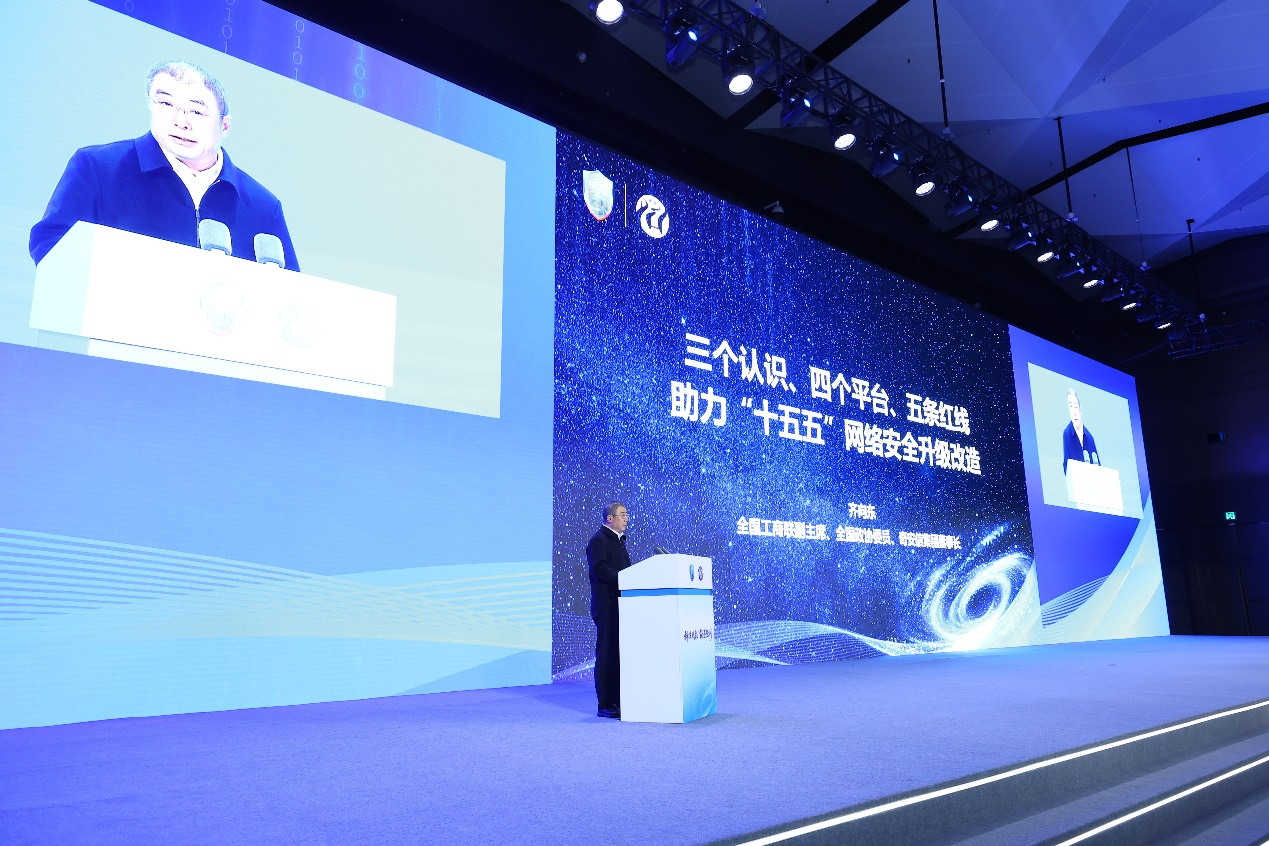
在近日举行的2026年网络安全等级保护技术学术交流活动上,全国政协委员、全国工商联副主席、奇安信集团董事长齐向东在主题演讲中指出,需提高 三个认识、建设四个平台、划定五条红线,推动"十五五"网络安全升级改造。其中,"五条红线"是拉高全社会网络安全水位的前提和保障,唯有严守合规、 投入、信创、日清、"零事故"红线,才能让安全认知落地为防护实效,为"十五五"网络安全升级改造筑牢制度根基。 其四是日清红线。新的漏洞、新的攻击突破口每天都会出现,如果做不到当天的告警当天清零,小隐患就会酿成大事故。齐向东强调,仅靠人工难以实 现告警清零,需将AI深度融入安全运营,全面覆盖告警、漏洞、补丁管理,避免漏判误判;同时打通处置全流程闭环,沉淀实战经验,实现同类事件自动 响应,让隐患消除在萌芽状态。 其一是合规红线。合规红线是网络安全的"生命线",2026年1月1日新修《网络安全法》正式实施,嵌入AI治理框架并压实主体责任,等保2.0(国家网 络安全等级保护制度的最新标准)作为核心实施标准,为防护建设提供明确指引。政企机构必须实现安全建设"三同步",做到应保尽保,方能筑牢发展根 基。 其二是投入红线。针对"重建设、轻安全"的普遍 ...
奇安信:预计2025年度净利润为约-13.59亿元到-11.34亿元
Mei Ri Jing Ji Xin Wen· 2026-01-30 09:45
每经头条(nbdtoutiao)——核电建设热潮下,设备厂忙到"飞起"!订单已排至2028年,员工三班倒, 产线24小时不停 (记者 王晓波) 每经AI快讯,奇安信1月30日晚间发布业绩预告,预计2025年年度归属于母公司所有者的净利润为 约-13.59亿元到约-11.34亿元,与上年同期相比将减亏2056.43万元~2.45亿元,同比减亏1.49%~17.76%。 业绩变动主要原因是,2025年,网络安全市场下游需求尚处于复苏过程中,市场竞争依然较为激烈。与 此同时,国内"十五五"规划正全面推进,新修订的《中华人民共和国网络安全法》及配套法规政策落地 实施,释放政策红利。AI大模型及智能体技术加速渗透千行百业,给整个网络安全行业带来了新的市 场机遇。 ...
奇安信(688561) - 2025 Q4 - 年度业绩预告
2026-01-30 09:10
Revenue Projections - The company expects to achieve approximately CNY 4.391 billion in revenue for the year 2025, representing a year-on-year increase from CNY 4.349 billion in 2024[4][6]. - The company anticipates a total sales collection of approximately CNY 5.14 billion for 2025, reflecting a year-on-year growth of about 8.03%[8]. Profit and Loss Forecast - The net profit attributable to the parent company is projected to be between CNY -1.358 billion and CNY -1.134 billion, indicating a reduction in losses by CNY 20.56 million to CNY 244.95 million, a year-on-year improvement of 1.49% to 17.76%[4]. - The net profit attributable to the parent company after deducting non-recurring gains and losses is expected to be between CNY -1.595 billion and CNY -1.332 billion, with a reduction in losses of CNY 16.51 million to CNY 279.96 million, a year-on-year improvement of 1.02% to 17.37%[4]. Cash Flow and Expenses - The net cash flow from operating activities is expected to be around CNY -61 million, showing an improvement of approximately CNY 281 million, marking the best cash flow level since the company went public[8]. - The company has reduced its three major expenses (selling, research and management) by approximately 16% year-on-year[8]. Business Strategy and Operations - The company has focused on large customers and core products, successfully securing multiple large orders worth tens of millions[8]. - New products such as AISOC and the Large Model Guardian have been successfully scaled in application among customers[8]. Financial Reporting and Audit - The performance forecast has not been audited by a registered accountant and is based on preliminary calculations by the company's financial department[10]. - The company has made provisions for asset impairment based on cautious principles, which will impact the current profit[9].
奇安信:预计2025年净亏损11.34亿元-13.59亿元 同比减亏
Di Yi Cai Jing· 2026-01-30 09:06
Group 1 - The company expects to achieve an annual revenue of approximately 4.391 billion yuan in 2025 [1] - The projected net profit attributable to the parent company's owners for 2025 is estimated to be between -1.3588076 billion yuan and -1.1344174 billion yuan, indicating a reduction in losses compared to the previous year [1] - The expected reduction in losses ranges from 20.5643 million yuan to 244.9545 million yuan, representing a year-on-year decrease in losses of 1.49% to 17.76% [1]
两会声音 | 齐向东:建议设立京津冀科创担保基金,开通信用修复“绿色通道”
Jin Rong Jie· 2026-01-26 10:09
Core Viewpoint - The financing cost for private technology innovation enterprises averages between 8% and 15%, while state-owned enterprises can secure medium to long-term loans at rates below 3%, creating a disparity that stifles innovation vitality [1] Group 1: Financing Challenges - Private technology innovation enterprises face high financing costs, which are significantly higher than those of state-owned enterprises [1] - The proposal includes establishing a financing guarantee fund for technology innovation in the Beijing-Tianjin-Hebei region to lower financing costs for private enterprises [1] - A mechanism for credit repair for technology innovation enterprises is suggested to prevent non-malicious overdue credit from affecting their financing opportunities [1] Group 2: Policy Recommendations - There is a call to break down administrative barriers and improve the industrial collaboration mechanism among Beijing, Tianjin, and Hebei [2] - The proposal advocates for consensus on industrial management standards, definitions, and approval processes to reduce institutional costs for enterprises operating across regions [2] - The ultimate goal is to facilitate the free flow of resources within the urban agglomeration, transitioning from mere physical assembly to effective collaboration [2]
2026北京两会丨对话市政协委员齐向东:AI助力京津冀科技成果转化“弯道超车”
Bei Jing Shang Bao· 2026-01-25 13:42
Core Insights - The article discusses the importance of AI in enhancing the innovation chain and addressing the challenges faced by small and medium-sized tech enterprises in Beijing's smart city development [3][4][9]. Group 1: Smart City Development - The "14th Five-Year Plan" period is crucial for Beijing to achieve socialist modernization, with smart city construction entering a phase of deep integration [3]. - Key areas of smart city development include smart governance, smart transportation, smart energy, and smart healthcare, which are essential for high-quality growth in the capital [3]. Group 2: Innovation Chain Challenges - Despite being an international tech innovation center, Beijing faces challenges in the "last mile" of technology transfer, particularly in the pilot testing phase [3][8]. - The city has introduced policies to support industrial cluster development and encourage the establishment of pilot testing platforms, aiming to bridge information gaps for small and medium-sized tech enterprises [3][8]. Group 3: Role of AI - AI plays a critical role in addressing information disparities between pilot testing platforms and small tech enterprises, enhancing search and matching capabilities [9]. - It also helps reduce secondary development costs and shorten cycles in the pilot testing phase, improving compatibility and adaptability of research outcomes [9][10]. Group 4: AI Safety Governance - The article highlights the need for proactive governance of AI technologies, emphasizing the establishment of dynamic governance mechanisms and safety buffers in high-risk sectors [12]. - It suggests that AI safety governance should incorporate real-time monitoring and precise regulatory measures to ensure responsible development and application [12][13]. Group 5: Future Outlook - The article anticipates significant breakthroughs in AI safety governance within five years, proposing that AI can empower smart city safety operations and establish a new benchmark for security in the capital [14]. - Recommendations include creating a collaborative response mechanism across regions and industries, and developing a standardized approach to risk management in smart city scenarios [14].

北京两会直播间 | 市政协委员齐向东:AI赋能智慧城市,打造网络安全“北京样板”
Xin Lang Cai Jing· 2026-01-24 11:20
Core Viewpoint - The article emphasizes the importance of AI in enhancing smart city initiatives in Beijing, proposing the establishment of a "Beijing model" for cybersecurity during the 14th Five-Year Plan period [1] Group 1: AI and Smart Cities - The integration of AI is expected to drive the development of smart cities in Beijing, marking a new phase of deep integration and comprehensive empowerment [1] - The proposal suggests that AI should be the core driving force behind the advancements in urban infrastructure and services [1] Group 2: Cybersecurity Standards - The establishment of a "Beijing model, Beijing standard, and Beijing sample" for cybersecurity is advocated, highlighting the need for robust security measures in the digital transformation of urban environments [1]