
CHANGAN AUTOMOBILE-B(000625)

Search documents
A股震荡调整 智能驾驶、零售概念走强
Shang Hai Zheng Quan Bao· 2025-12-16 18:42
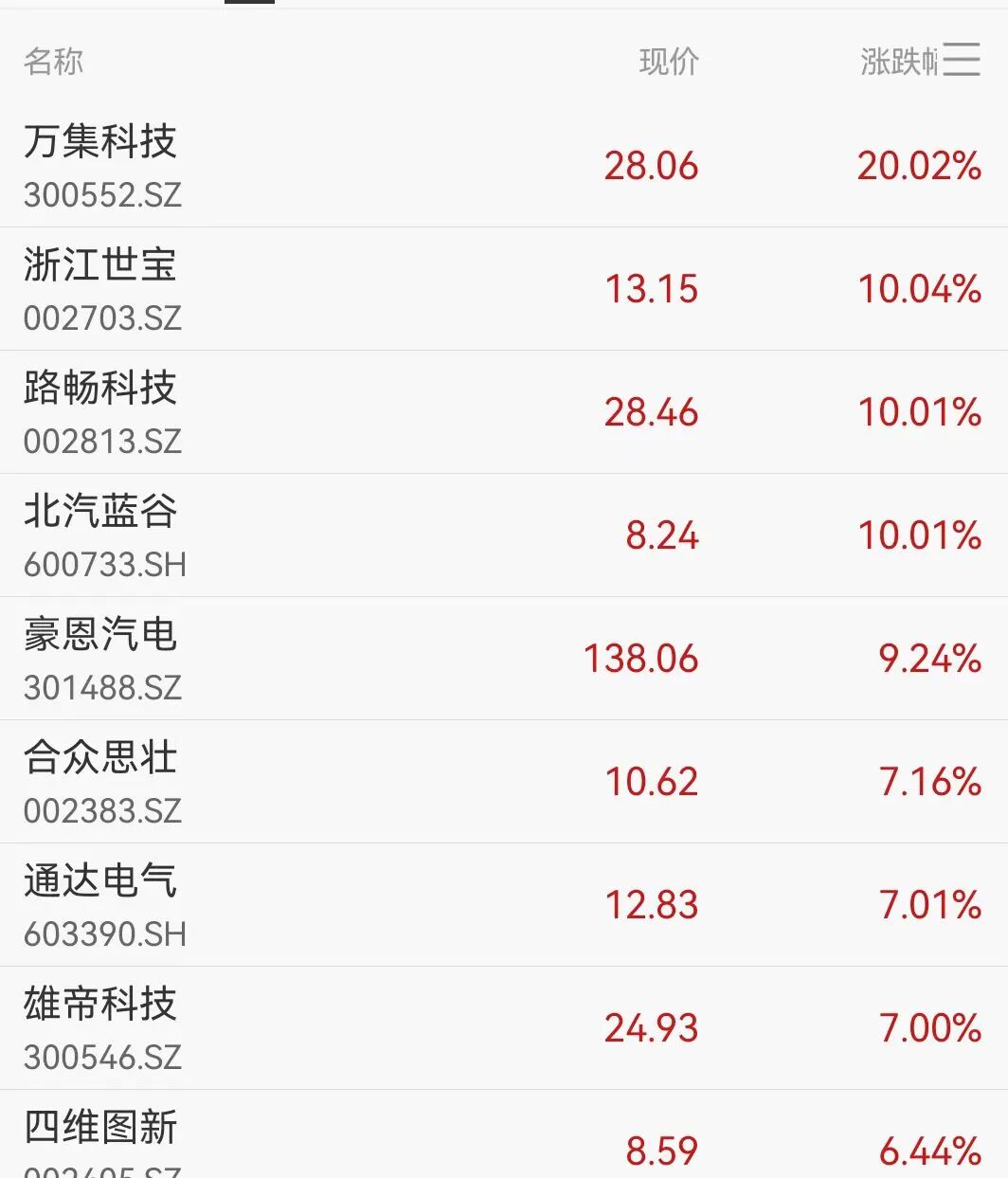
Group 1: Market Overview - The A-share market experienced a weak fluctuation on December 16, with major indices closing down: Shanghai Composite Index at 3824.81 points, down 1.11%; Shenzhen Component Index at 12914.67 points, down 1.51%; and ChiNext Index at 3071.76 points, down 2.10% [2] - The total trading volume in the Shanghai and Shenzhen markets was 172.42 billion yuan, a decrease of 49.3 billion yuan compared to the previous day [2] Group 2: Intelligent Driving Sector - The intelligent driving concept was the biggest highlight of the market, driven by the launch of the first batch of L3 autonomous driving models, leading to a surge in related stocks [2] - Stocks such as Hanxin Technology, BAIC Blue Valley, and Wanji Technology all hit the daily limit of 30% increase [2] - The Ministry of Industry and Information Technology officially announced the approval of two L3 autonomous driving models, marking a significant step towards commercial application in China [3] Group 3: Retail Sector Performance - The retail sector showed resilience, with the Shenwan Commercial Retail Index rising by 1.32%, the highest among all primary industries [3] - Stocks like Yonghui Supermarket and Central Mall also reached their daily limit [3] - A recent notice from the Ministry of Commerce and other financial authorities aims to enhance collaboration between commerce and finance to boost consumer spending [3] Group 4: Declining Sectors - The precious metals sector saw a significant decline, with the Shenwan Precious Metals Index dropping by 4.91%, the worst-performing sector [4] - Other sectors such as photovoltaic equipment and film industry also experienced high-level pullbacks, indicating strong profit-taking behavior as the year-end approaches [4] Group 5: External Factors and Market Sentiment - Recent reports highlight external factors that may affect market sentiment, including rising U.S. Treasury yields despite the Federal Reserve's interest rate cuts [4] - Concerns about the commercialization of AI applications and potential interest rate hikes by the Bank of Japan are also noted [4] - Recommendations suggest focusing on financial and dividend sectors as a stable base while being cautious of external disturbances [4]



我国首批L3级自动驾驶车型获准上路 试点应用开启商业化探索新阶段
Zheng Quan Ri Bao Zhi Sheng· 2025-12-16 16:09
Core Viewpoint - The Ministry of Industry and Information Technology of China has officially granted conditional access permits for the first batch of L3-level conditional autonomous driving vehicles, marking a significant step towards real-world operation and commercialization of autonomous driving technology in China [1][2]. Group 1: Regulatory Framework - L3-level conditional autonomous driving is seen as a critical milestone in the development of autonomous driving, allowing vehicles to perform all dynamic driving tasks under specific conditions while requiring the driver to remain capable of taking control [2][3]. - The two models approved for conditional access are from Changan Automobile and BAIC Group's Arcfox brand, with specific operational limits: Changan's model can operate at speeds up to 50 km/h in congested traffic, while BAIC's model can reach 80 km/h in relatively smooth conditions [2][3]. Group 2: Testing and Safety Measures - The approval process involved collaboration among multiple government departments, ensuring comprehensive testing and safety evaluations of the vehicles, which included multiple safety redundancy designs in critical systems [3][4]. - The Arcfox Alpha S (L3 version) has undergone rigorous testing, completing over 800,000 kilometers of equivalent mileage tests, ensuring comprehensive coverage of its operational design domain [5][6]. Group 3: Industry Implications - The introduction of L3-level autonomous driving is not just a technological breakthrough but a systemic engineering challenge that involves collaboration across various sectors, including vehicle manufacturing, core components, software algorithms, and data governance [4][6]. - The approval of these vehicles provides real-world application scenarios for automakers and suppliers, fostering collaborative development across the industry chain [4][5]. Group 4: Future Outlook - Experts suggest that while the approval of L3 vehicles represents a milestone, the current operational scenarios are limited to simpler environments like highways and urban expressways, which aligns with safety requirements and technological maturity [6][7]. - The pilot program will involve designated operators, insurance requirements, and continuous monitoring of vehicle performance, with the potential for adjustments based on operational feedback [7].


首批2款L3准入车型均暂不能变道
Di Yi Cai Jing· 2025-12-16 16:02
Core Viewpoint - The market is focused on the limitations of the first two L3 conditional autonomous driving models, specifically regarding lane changing capabilities and speed restrictions [1] Group 1: Model Specifications - The two L3 models, Changan Automobile's Deep Blue SL03 and BAIC's Arcfox Alpha S, currently do not support lane changing [1] - The operational scenarios for Deep Blue SL03 are limited to specified congested traffic environments on highways and urban expressways within a single lane, while Arcfox Alpha S is restricted to designated highways and urban expressways in a single lane [1] - The maximum speed for Deep Blue SL03 in its operational scenario is set at 50 km/h, whereas Arcfox Alpha S has a higher limit of 80 km/h [1] Group 2: Technical Capabilities and Future Plans - Changan has the technical capability for intelligent lane changing but has opted not to include this feature in the initial approval for safety considerations, planning to incorporate it in future approvals [1]

福田摘冠,江淮/江铃并列,跃进暴涨1.4倍!11月轻卡销量近18万辆 | 头条
第一商用车网· 2025-12-16 15:59
Core Viewpoint - In November 2025, China's commercial vehicle sales increased by 24% year-on-year, with the truck market growing by 26%, slightly above the overall commercial vehicle market growth. The light truck segment, being the largest in the truck market, showed a mixed performance, raising questions about its competitiveness in the final month of the year [1][3][6]. Summary by Sections Overall Market Performance - In November 2025, the truck market sold 338,400 units, a month-on-month increase of 9% and a year-on-year increase of 26%. The light truck market sold 179,500 units, with a year-on-year growth of 7%, marking a "10 consecutive months increase" [3][4][6]. Light Truck Market Analysis - The light truck market's year-on-year growth of 7% in November was lower than the overall truck market's growth, indicating a recent decline in performance compared to earlier months. Cumulatively, from January to November, the light truck market grew by 6%, also lagging behind the overall truck market growth [6][28]. Historical Context - November is typically not a peak sales month for the truck market, with average sales in the last decade around 150,000 units. The 2025 November sales of 179,500 units ranked third in the last ten years, indicating a decent performance but not exceptional [8][10]. Company Performance - In November, nine companies sold over 10,000 light trucks, with Foton leading at 37,000 units, followed by Changan and Great Wall. The top five companies accounted for 56.07% of the market share [13][14][20]. - Year-to-date, Foton maintained the highest cumulative sales at 403,100 units, with a market share of 22.11%. Other notable companies included Changan, Great Wall, and Jianghuai, each exceeding 150,000 units in sales [20][21]. Growth Trends - Among the top ten companies, eight reported year-on-year sales increases in November, with Leap Motor and BYD showing significant growth rates of 142% and 70%, respectively. The overall light truck market growth was outpaced by several companies [18][19][23]. Market Share Changes - Compared to 2024, companies like Leap Motor and BYD saw notable increases in market share, while others experienced declines. The competitive landscape shifted, with Jianghuai and Changan moving up in rankings [26][28].



首批两款L3准入车型,均暂不能变道
Di Yi Cai Jing· 2025-12-16 15:13
Core Viewpoint - The market is focused on the limitations and specifications of two L3 conditional autonomous driving models, namely the Deep Blue SL03 and the Arcfox Alpha S, particularly regarding lane changing capabilities and speed restrictions [2][3]. Group 1: Model Specifications - Both the Deep Blue SL03 and Arcfox Alpha S currently do not support lane changing [2]. - The operational scenarios for the Deep Blue SL03 are limited to specified congested traffic environments on single lanes of highways and urban expressways, while the Arcfox Alpha S is restricted to designated single lanes on highways and urban expressways [2]. - The maximum speed for the Deep Blue SL03 is set at 50 km/h, whereas the Arcfox Alpha S has a higher limit of 80 km/h [2]. Group 2: Regulatory Context - The Ministry of Industry and Information Technology (MIIT) has outlined a five-stage process for the trial implementation of intelligent connected vehicles, which includes trial application, product approval, road testing, trial suspension and exit, and evaluation adjustments [3]. - Currently, only two models have progressed to the road testing phase, while seven out of nine companies that entered the trial application stage have yet to receive L3 approval [4]. - Companies such as BYD, GAC, SAIC, FAW, NIO, SAIC Hongyan, and Yutong Bus are still awaiting L3 approval, while others like XPeng and Li Auto are in line for selection to join the trial [4].
利好来了,长安、北汽两款车型获首批L3级准入许可,万集科技、久之洋20CM涨停,概念股全线爆发
2 1 Shi Ji Jing Ji Bao Dao· 2025-12-16 14:44
Core Viewpoint - The Ministry of Industry and Information Technology (MIIT) of China has officially granted the first batch of L3 conditional autonomous driving vehicle permits to Changan Automobile's Deep Blue SL03 and BAIC's Arcfox Alpha S, marking a significant step in the commercialization of autonomous driving technology in China [1][2]. Group 1: Vehicle Permits and Specifications - The Deep Blue SL03 is equipped with Changan's self-developed "Tianshu Intelligent" driving assistance system, while the Arcfox Alpha S features Huawei's ADS intelligent driving system [1]. - The SL03 is permitted to operate in congested urban environments and on highways in Chongqing, with a maximum speed of 50 km/h [5]. - The Arcfox Alpha S can operate on highways and urban expressways in Beijing, with a maximum speed of 80 km/h [6]. Group 2: Industry Impact and Market Response - Following the announcement, shares of intelligent driving concept stocks surged, with companies like Wanji Technology and Jiuzhiyang hitting the daily limit [2]. - The approval of these vehicles reflects the government's support for the rapid transition from technology validation to mass production and commercialization of autonomous vehicles [2][9]. Group 3: Regulatory Framework and Future Prospects - The MIIT's issuance of permits is part of a broader initiative to establish a dual-track mechanism for product approval and road testing, ensuring safety while fostering innovation [9][10]. - The government aims to expand L3 autonomous driving trials in the coming year, with a focus on clarifying traffic safety responsibilities and enhancing regulatory frameworks [10].

长安汽车斩获首批L3级自动驾驶准入 2026年一季度启动上路试点
Zheng Quan Shi Bao Wang· 2025-12-16 14:30
Core Insights - The first batch of L3 conditional autonomous driving vehicles has been approved for entry, including Changan's SC7000AAARBEV and Arcfox's BJ7001A61NBEV electric cars [1] Group 1: Approval and Features - Changan Automobile's Deep Blue brand received approval for L3 autonomous driving capabilities, allowing for single-lane autonomous driving in congested traffic at speeds up to 50 km/h [1][2] - The speed range of 0-50 km/h was chosen based on user needs and safety considerations, focusing on urban congestion scenarios where drivers face frequent acceleration and deceleration [2] Group 2: Technology and Safety - Changan employs a seven-layer redundancy architecture for its L3 technology platform, integrating advanced perception systems including high-resolution 4D imaging radar and innovative micro-Doppler sensors [3] - The system is designed to handle various challenging scenarios, including adverse weather and sudden stops, ensuring optimal performance in critical situations [3] Group 3: Future Plans and Development - Changan plans to initiate road testing with its L3 technology in Q1 2026, targeting consumer market entry following the implementation of relevant national regulations [3][4] - The company has been developing L3 capabilities since 2017, with significant milestones achieved in 2020 and 2021, leading to its current status as a pioneer in L3 autonomous vehicle testing and evaluation [4]
中国自动驾驶迈出关键一步 重庆跻身全国第一方阵!
Xin Lang Cai Jing· 2025-12-16 14:04
Core Viewpoint - The Ministry of Industry and Information Technology of China has officially granted the first batch of L3 conditional autonomous driving vehicle permits, marking a significant transition from closed testing to commercial application in the autonomous driving sector [2][15]. Group 1: Approval and Implementation - Changan Automobile and BAIC Jihe have received approval to conduct road trials in designated areas of Chongqing and Beijing [2][15]. - Changan's vehicle can achieve autonomous driving in congested traffic conditions on highways and urban expressways at speeds up to 50 km/h, limited to specific routes in Chongqing [15][21]. - This approval positions Chongqing among the leading cities in China for autonomous driving applications, contributing to the development of standards, technology iteration, and industrial application [15][19]. Group 2: Market Growth and Industry Dynamics - The autonomous driving market in China is rapidly expanding, with projections estimating it will approach 450 billion yuan by 2025, driven by technological advancements and cost reductions [5][16]. - Numerous domestic automakers are accelerating their investments in the autonomous driving sector, with Changan leveraging its "Tianshu Intelligent" self-developed technology system for L3-level autonomous driving [5][16]. - The competitive landscape among automakers is fostering technological advancements, with hardware costs decreasing and software algorithms maturing, leading to more affordable smart configurations in vehicles [18][21]. Group 3: Infrastructure and Ecosystem Development - The transition of L3 autonomous driving from closed environments to open roads tests not only the technical capabilities of automakers but also the comprehensive capabilities of cities in terms of smart network ecosystems, regulatory innovation, and infrastructure [19][22]. - Chongqing has established 17 trial routes for intelligent connected vehicles, facilitating the testing of L3 and L4 autonomous driving capabilities [22]. - The successful implementation of autonomous vehicles will necessitate the development of new infrastructure, including roadside perception devices and traffic information systems, thereby stimulating related industries [18][22].

L3级自动驾驶“准生证”落地!长安北汽抢先上车,概念股现上涨潮
Guo Ji Jin Rong Bao· 2025-12-16 13:45
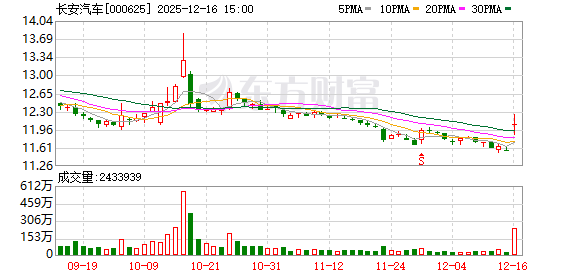
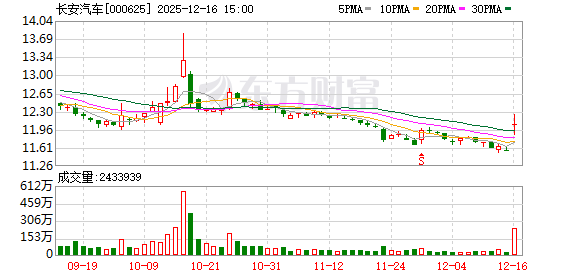
Core Viewpoint - The first batch of vehicles equipped with Level 3 (L3) conditional autonomous driving has been approved, marking a significant step from technology validation to mass production application in China's automotive industry [2][4]. Group 1: Approval of L3 Vehicles - The Ministry of Industry and Information Technology and three other departments have jointly released the list of the first batch of models approved for L3 conditional autonomous driving, with two models from Changan Automobile and BAIC Blue Valley Magna Auto [2][4]. - The approved Changan model, SC7000AAARBEV, focuses on autonomous driving in traffic congestion environments, with a maximum speed of 50 km/h, and is set to be tested in specific areas of Chongqing [4][6]. - The BAIC Blue Valley model, BJ7001A61NBEV, is designed for high-speed scenarios, capable of autonomous driving at speeds up to 80 km/h, with testing areas in Beijing [6]. Group 2: Market Impact - Following the approval, BAIC Blue Valley's stock surged to a closing price of 8.24 yuan per share, a 10.01% increase, while Changan Automobile's stock rose by 4.42% to 12.06 yuan per share [7]. - The positive market response extended to the supply chain, with companies like Hanxin Technology and Wanji Technology experiencing significant stock price increases [9]. Group 3: Industry Developments - Other automakers are also advancing in L3 autonomous driving, with XPeng Motors obtaining a testing license in Guangzhou and GAC Group securing a high-speed L3 testing license for its model [9]. - The transition from Level 2 to Level 3 autonomous driving introduces new commercial challenges, as the responsibility for accidents shifts from human drivers to a shared responsibility between humans and machines [11][12]. Group 4: Regulatory and Infrastructure Challenges - The current insurance framework needs reform to accommodate the shift in liability, as automakers will need to purchase substantial product liability insurance to cover potential accidents caused by system failures [12]. - There are concerns regarding the legal framework for liability distribution among manufacturers, software suppliers, and vehicle owners, which could hinder consumer adoption of L3 technology [12][13]. - Infrastructure and data interoperability issues remain significant barriers, as L3 technology relies heavily on high-definition maps and standardized road signage, necessitating government-led collaborative efforts for development [13].
L3级自动驾驶车型获附条件准入许可 商业化落地迎来关键节点
Xin Hua She· 2025-12-16 13:41
Core Insights - The Ministry of Industry and Information Technology has officially announced the first batch of L3 conditional autonomous driving vehicle permits in China, marking a significant step from testing to commercial application for L3 autonomous driving [2] Group 1: Vehicle Details - Two models have been approved: a Changan brand electric sedan and a Jihe brand electric sedan, both capable of autonomous driving in congested traffic and on highways, but limited to specific routes in Beijing and Chongqing [3] Group 2: Technology Differentiation - The core difference between L2 assisted driving and L3 conditional autonomous driving lies in the role and responsibility division between the system and the driver, with L3 offering a leap from "assisted driving" to "system-led" experience [4] Group 3: Safety and Regulation - China emphasizes safety as a prerequisite for innovative applications, establishing a systematic approach that covers key technology research, testing evaluation, policy regulations, and scenario validation [5] - The Ministry of Industry and Information Technology plans to collaborate with relevant departments and local authorities to enhance vehicle operation monitoring and safety assurance, continuously improving the management and regulatory framework for intelligent connected vehicles [6]
