FAW Jiefang(000800)

Search documents
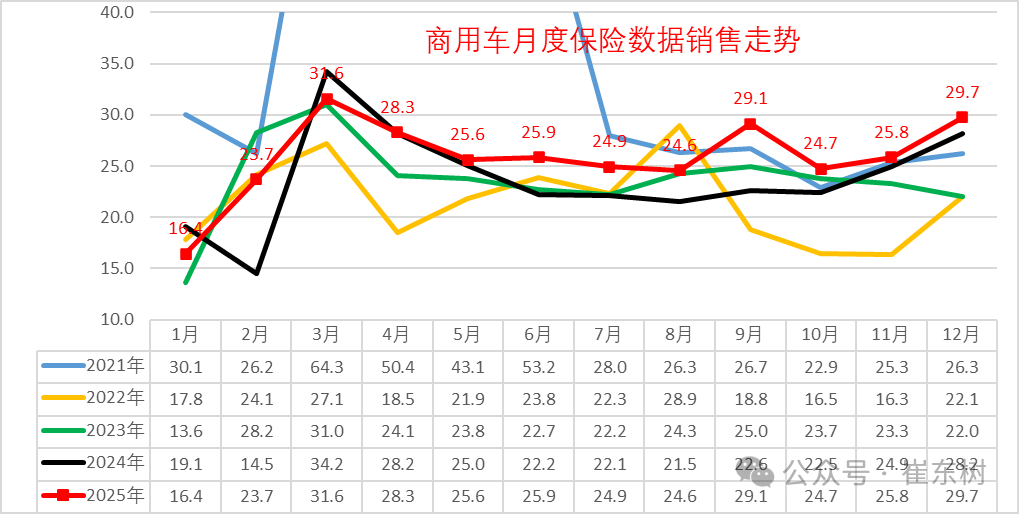
崔东树:2025年国内商用车交强险数据强势增长 12月商用车国内销量同比增5%
智通财经网· 2026-01-29 07:46
Core Insights - The commercial vehicle market in China is expected to see significant growth in 2025, driven by the strong performance of new energy vehicles (NEVs) and supportive policies for vehicle upgrades [1][7][12] - In December 2025, the sales of commercial vehicles reached 300,000 units, marking a 5% year-on-year increase and a 15% month-on-month increase [7][12] - The penetration rate of new energy commercial vehicles is projected to reach 46% by December 2025, a substantial increase from 29% in December 2024 [12][14] Commercial Vehicle Market Analysis - The total sales of commercial vehicles in China for 2025 are forecasted to be 3.1 million units, representing a 9% year-on-year growth compared to the stable period since 2022 [1][7] - The market showed a strong upward trend from March to December 2025, with December achieving a historical high for the month [5][7] - The sales of new energy commercial vehicles in December 2025 are expected to hit 140,000 units, reflecting a 71% year-on-year increase and a 49% month-on-month increase [1][8] New Energy Vehicle Performance - The penetration rate of new energy commercial vehicles has increased significantly, from approximately 3% in 2019-2021 to 46% in December 2025 [12][14] - The sales of new energy commercial vehicles for the entire year of 2025 are projected to reach 910,000 units, a 57% increase compared to the previous year [1][8] - The growth in new energy vehicle sales is attributed to strong demand and government incentives, particularly in the commercial vehicle sector [10][12] Market Structure and Competition - The market for commercial vehicles is characterized by a stable structure, with significant contributions from light and heavy-duty trucks [14][18] - Key players in the commercial vehicle market include Beiqi Foton, SAIC-GM-Wuling, and China National Heavy Duty Truck Group, which dominate the light truck, heavy truck, and bus segments respectively [15][18] - The performance of heavy-duty trucks has improved significantly due to subsidy policies, with notable growth in electric heavy-duty trucks in regions like Beijing, Tianjin, and Shanghai [16][17] Regional Market Dynamics - The light truck market is particularly strong in regions such as East China and South China, with increasing sales in these areas [18][19] - The penetration of new energy vehicles in the truck segment reached 38% in December 2025, while the bus segment saw a penetration rate of 78% [14][18] - The market for new energy light trucks is primarily concentrated in East China and South China, with significant growth observed in these regions [19][21]




一汽解放:公司气氢重卡已实现批量销售
Ge Long Hui· 2026-01-29 07:18
格隆汇1月29日丨一汽解放(000800.SZ)在投资者互动平台表示,公司气氢重卡已实现批量销售,在五大 城市群和富氢地区标杆级示范运营,同时,液氢重卡方面,公司刚刚完成国内首辆液氢重卡示范运营, 车辆续航里程突破1000公里,创造国内续航能力记录。氢气发动机方面,自主重型氢气发动机已搭载整 车示范运营超两万公里。未来公司将融合产业持续深耕氢能源车辆的研发、运营与制造。 ...

一汽解放(000800.SZ):2025年公司国内中重卡终端份额22.5%,稳居行业第一
Ge Long Hui· 2026-01-29 07:16
格隆汇1月29日丨一汽解放(000800.SZ)在投资者互动平台表示,2025年公司国内中重卡终端份额 22.5%,稳居行业第一。具体经营信息请关注公司定期报告。 ...
一汽解放(000800.SZ):公司气氢重卡已实现批量销售
Ge Long Hui· 2026-01-29 07:09
格隆汇1月29日丨一汽解放(000800.SZ)在投资者互动平台表示,公司气氢重卡已实现批量销售,在五大 城市群和富氢地区标杆级示范运营,同时,液氢重卡方面,公司刚刚完成国内首辆液氢重卡示范运营, 车辆续航里程突破1000公里,创造国内续航能力记录。氢气发动机方面,自主重型氢气发动机已搭载整 车示范运营超两万公里。未来公司将融合产业持续深耕氢能源车辆的研发、运营与制造。 ...
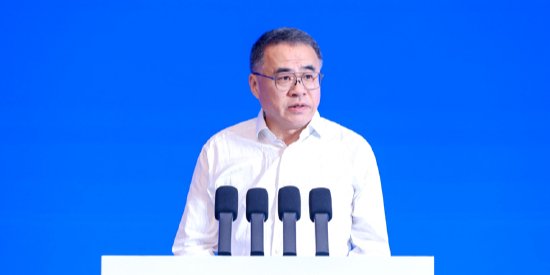
东风商用车董事长张小帆升任中国一汽党委常委、副总经理
Jing Ji Guan Cha Wang· 2026-01-28 12:25
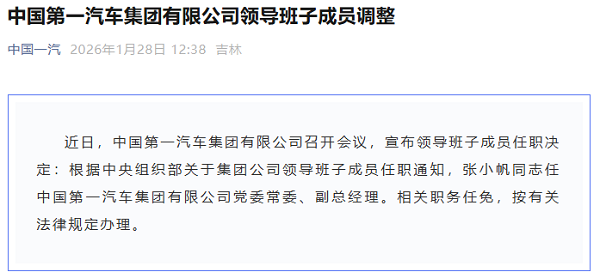
经观汽车 2026年1月28日,中国第一汽车集团有限公司召开会议,宣布领导班子成员任职决定:根据中央组织部关于集团公司领导班子成员任职通知, 张小帆同志任中国第一汽车集团有限公司党委常委、副总经理。相关职务任免,按有关法律规定办理。 目前,中国一汽领导班子成员扩大到9人,分别为邱现东(董事长、党委书记)、刘亦功(董事、总经理、党委副书记)、梁贵友(董事、党 委副书记)、孙继光(党委常委、纪委书记,驻一汽纪检监察组组长)、方世力(党委常委、总会计师)、吴碧磊(党委常委、副总经 理)、陈彬(党委常委、副总经理)、高璞(党委常委、副总经理)以及新调任的张小帆(党委常委、副总经理)。 从年龄结构来看,领导班子有5位是70后,分别是方世力、吴碧磊、陈彬、高璞和张小帆,体现了中国一汽领导班子年轻化的特征。 此外,上述班子成员中,有3位来自东风汽车,除张小帆外,另外两人是董事长、党委书记邱现东于2017年3月加入及党委常委、副总经理陈 彬于2024年7月加入。 公开资料显示,张小帆出生于1970年3月,于1992年7月自武汉钢铁学院(现武汉科技大学)毕业后便加入东风公司,职业生涯始于东风公司 襄樊管理部办公室秘书等岗位。在 ...

创近五年新低 2025年汽车行业销售利润率仅4.1%
经济观察报· 2026-01-28 12:24
Core Viewpoint - The automotive industry is experiencing a significant decline in profitability, with upstream components showing steady growth, while vehicle manufacturing and downstream dealerships face considerable pressure [1][2]. Group 1: Profitability Trends - In 2025, the automotive industry achieved a profit of 461 billion yuan, a year-on-year increase of 0.6%, but the sales profit margin dropped to 4.1%, lower than the average of 5.9% for downstream industrial enterprises [2]. - The profit margin for the automotive industry fell to 4.1% in 2025, marking a five-year low, with December profits plummeting to 20.7 billion yuan, a year-on-year decrease of 57.4% [2][3]. - The overall profit margin for the automotive industry in December 2025 was the lowest in five years, with a significant decline from 4.1% in December 2024 to 1.8% [2]. Group 2: Performance of Different Segments - Among 129 A-share automotive parts companies, 80 reported a year-on-year profit increase, indicating over 60% had both revenue and profit growth [3]. - In the vehicle manufacturing segment, 16 out of 22 A-share car manufacturers were profitable, but major players like BYD and GAC Group saw significant profit declines, with GAC Group's profit dropping by 3691.33% [3]. - The downstream dealership segment is under severe pressure, with only 28% meeting sales targets and a loss rate climbing to 55% [3]. Group 3: Cost Pressures - The overall unit cost for industrial enterprises has increased significantly, with lithium carbonate prices doubling and raw material costs rising for midstream and downstream sectors [3][4]. - The cost of a typical mid-sized smart electric vehicle has increased by 4,000 to 7,000 yuan due to rising prices of lithium, aluminum, and copper, which are difficult for manufacturers to pass on to consumers [4]. - Starting in 2026, a 5% purchase tax on new energy vehicles and changes to subsidy policies will further increase consumer costs, complicating demand and supply dynamics in the automotive market [4]. Group 4: Strategic Responses - Some automotive companies are accelerating collaboration with upstream suppliers to address challenges, as seen in the strategic discussions between China Aluminum Group and China FAW Group [5].



张小帆出任一汽集团副总经理,领导班子成员增至9人
Zhong Guo Jing Ji Wang· 2026-01-28 11:29
Core Viewpoint - The appointment of Zhang Xiaofan as the new Deputy General Manager of China First Automobile Group Co., Ltd. is expected to enhance the company's strategic layout in the commercial vehicle sector, leveraging his extensive experience in the industry and expertise in market operations [3][5]. Group 1: Leadership Changes - Zhang Xiaofan has been appointed as a member of the Party Committee and Deputy General Manager of China First Automobile Group, increasing the leadership team to nine members [3]. - The leadership team has become younger and more professional, with five members born in the 1970s, including Zhang Xiaofan [3]. Group 2: Zhang Xiaofan's Background - Zhang Xiaofan, born in March 1970, has over 30 years of experience in the automotive industry, primarily within the Dongfeng system [4]. - He has held various key positions in Dongfeng, including General Manager of Dongfeng Commercial Vehicles and has been instrumental in the strategic integration and development of the commercial vehicle sector [4][5]. Group 3: Strategic Initiatives - During his tenure at Dongfeng, Zhang Xiaofan focused on strategic integration, technological innovation, and international expansion, leading to significant growth in sales, exports, and new energy vehicle sales [5]. - The commercial vehicle sector is crucial for the automotive industry's transition to new energy and smart technologies, and Zhang's experience is expected to support the strategic upgrades of China First Automobile Group, particularly for its core commercial vehicle segment [5]. Group 4: Market Performance - China First Automobile Group's subsidiary, FAW Jiefang, aims to achieve sales of over 280,000 vehicles in 2025, with a market share leading in the industry [7]. - In the new energy sector, FAW Jiefang's sales are projected to exceed 45,000 units, with a remarkable growth rate of 328.7%, particularly in the new energy heavy-duty truck segment, which has risen to the top position in the industry [7].
解放J6累计销量突破200万辆 全新J6 PRO正式上市
Xin Lang Cai Jing· 2026-01-28 09:28
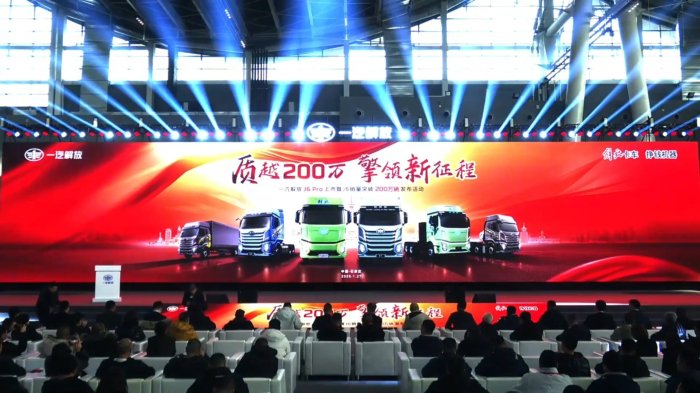
Core Viewpoint - The launch of the J6 PRO and the milestone of J6 platform surpassing 2 million units sold highlight the achievements of FAW Jiefang in the commercial vehicle industry, showcasing its commitment to high-quality development and innovation in both traditional and new energy vehicles [1][5][19]. Group 1: Product Launch and Achievements - FAW Jiefang's J6 platform has achieved a cumulative sales milestone of over 2 million units, making it the top-selling single commercial vehicle platform globally [6][19]. - The J6 PRO product line is designed to meet new market demands with 30 innovative breakthroughs, emphasizing energy efficiency, safety, reliability, and practicality [6][17]. - The J6 PRO series includes both LNG and pure electric models, demonstrating FAW Jiefang's dual technological capabilities in traditional and new energy sectors [11][19]. Group 2: Customer Engagement and Strategic Partnerships - During the launch event, FAW Jiefang awarded the title of "Dream Partner - Winning Customer" to five key customers, recognizing their long-term support [13]. - A strategic cooperation agreement was signed with 10 key customers, resulting in over 2,000 orders for the J6 PRO, reflecting strong market recognition [17]. - Since the pre-order phase began in December 2025, a total of 3,315 orders for the J6 PRO have been received, indicating high customer confidence in the product [17]. Group 3: Future Strategy and Market Positioning - FAW Jiefang aims to leverage the J6 PRO to drive the transformation of the commercial vehicle industry towards high-end, intelligent, and green solutions [19]. - The company is committed to its "1333" strategic goal, focusing on customer-centricity and product leadership to enhance development momentum and value creation [19].
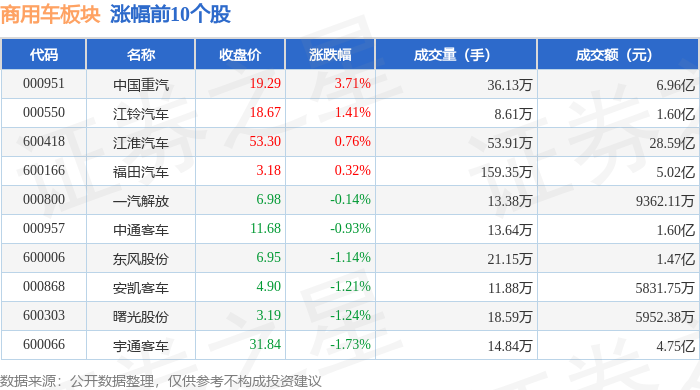
商用车板块1月28日跌0.27%,金龙汽车领跌,主力资金净流出7318.92万元
Zheng Xing Xing Ye Ri Bao· 2026-01-28 08:58
Group 1 - The commercial vehicle sector experienced a decline of 0.27% on January 28, with Jinlong Automobile leading the drop [1] - The Shanghai Composite Index closed at 4151.24, up 0.27%, while the Shenzhen Component Index closed at 14342.9, up 0.09% [1] - Key stocks in the commercial vehicle sector showed varied performance, with China National Heavy Duty Truck rising by 3.71% and Jinlong Automobile falling by 5.29% [2] Group 2 - The net outflow of main funds in the commercial vehicle sector was 73.19 million yuan, while retail investors saw a net inflow of 230 million yuan [2] - The trading volume and turnover for major stocks in the sector varied, with Jianghuai Automobile achieving a turnover of 2.859 billion yuan [1][2] - Detailed fund flow analysis indicated that several companies, including Dongfeng Motor and Ankai Bus, experienced significant net outflows from main funds [3]


创近五年新低 2025年汽车行业销售利润率仅4.1%
Jing Ji Guan Cha Wang· 2026-01-28 07:36
Core Viewpoint - The Chinese automotive industry is facing significant profit declines, with 2025 projected profits at 461 billion yuan, a mere 0.6% increase year-on-year, and a sales profit margin of 4.1%, which is below the average of 5.9% for downstream industrial enterprises [2] Group 1: Profit Trends - The automotive industry's profit margin is expected to drop to 4.1% in 2025, marking a five-year low, following a decline to 4.3% in 2024 [2] - In December 2025, the automotive industry reported profits of 20.7 billion yuan, a year-on-year decrease of 57.4%, with a profit margin of 1.8%, significantly lower than the 4.1% in December 2024 [2] - Excluding the pandemic-affected April 2022, December 2025's profit margin is the lowest in five years [2] Group 2: Industry Performance - The automotive supply chain shows a mixed performance, with upstream parts manufacturers experiencing stable growth, while vehicle manufacturing and downstream dealerships face significant challenges [3] - Among 22 A-share automotive companies, 16 reported profits, but major players like BYD and GAC Group saw substantial profit declines, with GAC Group's profit dropping by 3691.33% [3] - The dealership segment is under severe pressure, with only 28% meeting sales targets and a loss rate climbing to 55% [3] Group 3: Cost Pressures - The automotive industry is experiencing increased cost pressures, with lithium carbonate prices doubling and overall raw material costs rising, impacting profit margins [3][4] - The cost of a typical electric vehicle has increased by 4,000 to 7,000 yuan due to rising prices of lithium, aluminum, and copper, which manufacturers struggle to pass on to consumers [4] - Starting in 2026, a 5% tax on new energy vehicle purchases and changes to subsidy policies will further increase consumer costs, complicating demand and supply dynamics [4][5] Group 4: Future Outlook - The China Automotive Industry Association forecasts total vehicle sales to reach 34.75 million units in 2026, a 1% year-on-year increase, with new energy vehicles projected to grow by 15.2% to 19 million units [5] - Some automotive companies are accelerating collaborations with upstream suppliers to address these challenges, focusing on strategic partnerships and new material development [5]