Zhejiang Jingsheng Mechanical & Electrical (300316)

Search documents
培育钻石板块盘初上扬,四方达涨近9%
Mei Ri Jing Ji Xin Wen· 2026-02-09 01:58
Group 1 - The cultivated diamond sector experienced an initial rise on February 9, with significant gains in several companies [1] - Sifangda saw an increase of nearly 9%, while Huanghe Xuanfeng and Power Diamond both rose over 5% [1] - Jing Sheng Mechanical and Chao Hong Ji also showed positive movement, with increases exceeding 4% [1]




商业航天深度:太空光伏的技术底层逻辑(附29页PPT)
材料汇· 2026-02-08 15:24
Core Viewpoint - The article discusses the emergence of a new era in satellite technology, emphasizing the urgent need for efficient power supply systems for satellites as China prepares to launch a significant number of satellites by the end of 2025 [6][9]. Group 1: Satellite Launch and Development - By the end of 2025, China plans to submit approximately 203,000 satellites to the ITU, covering 14 satellite constellations, with the Radio Innovation Institute applying for two constellations, each with 96,714 satellites, totaling nearly 193,000 satellites [7][8]. - Major operators and commercial satellite companies are also advancing medium-scale constellations, with China Mobile applying for 2,520 satellites, Yuxin Satellite for 1,296, and Guodian Gaoke for 1,132 [8][10]. - As of December 2025, the overall launch completion rate for major domestic constellations remains low, indicating they are in the early stages of network formation [13]. Group 2: Starlink Program and Launch Trends - The Starlink program exhibits a clear generational rhythm, with cumulative launches reaching approximately 11,034 satellites and applications totaling about 41,943 as of January 2026 [2][16]. - The annual launch volume has increased significantly, with projections for 2025 reaching around 3,200 satellites, reflecting a trend of accelerating deployment [15][20]. - Starlink's V1 to V3 satellites utilize crystalline silicon technology to prioritize supply chain scalability and system-level cost reduction, while V4 may adopt P-type silicon HJT or P-type silicon HJT-perovskite tandem structures [3][4]. Group 3: Photovoltaic Technology in Space - The current mainstream technology for space photovoltaic applications in China is multi-junction gallium arsenide (GaAs), although there is ongoing testing and validation of perovskite systems by various companies [4][26]. - The high unit price of GaAs photovoltaic cells is becoming a significant factor limiting system economics, prompting the industry to explore lower-cost alternatives such as silicon-based and perovskite technologies [21][34]. - The article highlights the unique requirements for photovoltaic cells in space, including radiation resistance, thermal stability, and long-term reliability under extreme conditions [22][25]. Group 4: Industry Outlook and Recommendations - The acceleration of satellite launches and the continuous validation of new photovoltaic technologies indicate a rising industry outlook and long-term growth potential for the space photovoltaic sector [5][6]. - The article recommends a "buy" rating for the space photovoltaic industry, citing key companies such as Maiwei Co., Aotewi, and others as relevant investment targets [5][6].


马斯克点火A股光伏,奥特维等股价翻倍
2 1 Shi Ji Jing Ji Bao Dao· 2026-02-07 01:48
Core Viewpoint - Elon Musk is significantly influencing the Chinese A-share photovoltaic sector, with his comments on solar energy and its potential to provide substantial power, which has led to a surge in stock prices within the sector [2][3][4]. Group 1: Market Reaction - On January 23, 2026, following Musk's remarks at the World Economic Forum, 24 photovoltaic stocks in China hit their daily limit up, with the photovoltaic index rising by 7.46% [2]. - Two weeks later, Musk's interest in Chinese photovoltaic companies, including JinkoSolar and TCL Zhonghuan, further ignited stock price increases, with many stocks reaching their daily limit up again [3]. - The excitement surrounding Musk's "space photovoltaic" vision has injected new vitality into the previously stagnant A-share photovoltaic market [3][4]. Group 2: Industry Context - The photovoltaic industry is currently facing challenges, with nearly 70% of A-share photovoltaic companies reporting losses due to low prices in the supply chain [8]. - Despite some companies showing signs of recovery, the overall market sentiment remained negative, as indicated by a 4.10% decline in the Wind photovoltaic index during a week of earnings announcements [8]. - Musk's "space photovoltaic" concept has shifted the focus of the industry from terrestrial applications to potential space-based solutions, which could represent a new growth avenue for the sector [12]. Group 3: Future Prospects - Analysts predict that the "space photovoltaic" market could become a significant growth area, with estimates suggesting a market size of approximately 295 billion RMB by 2030, which is ten times the current scale [15]. - Musk's plans for deploying 100GW of solar power in space could potentially open up vast opportunities for new technologies and applications in the photovoltaic sector [15]. - However, the current competitive landscape and the need for immediate solutions to existing challenges in the industry remain pressing concerns [16].


中国光伏估值,因马斯克重塑?
2 1 Shi Ji Jing Ji Bao Dao· 2026-02-06 12:10
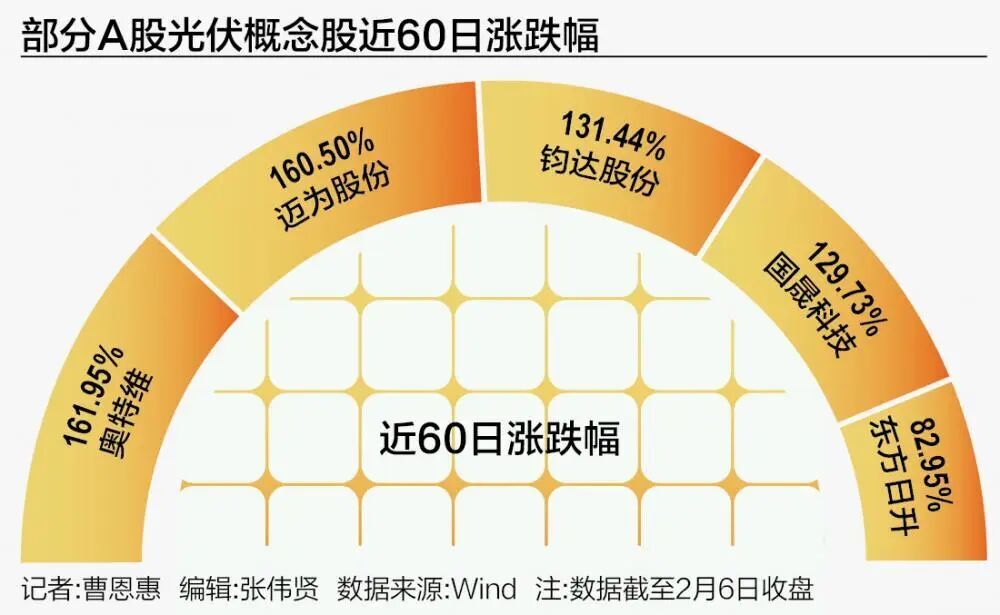
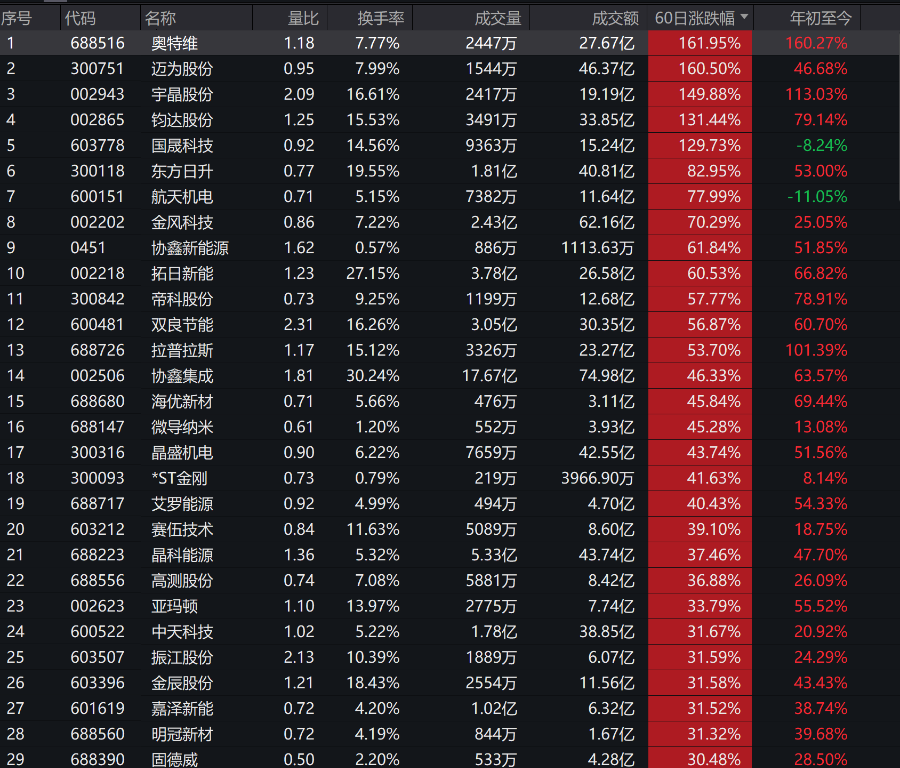
Core Viewpoint - Elon Musk's recent statements and activities have significantly influenced the A-share photovoltaic sector, leading to a surge in stock prices for various companies in this industry [2][3][5]. Group 1: Market Reaction - On January 23, 2026, 24 photovoltaic stocks reached their daily limit up, with the photovoltaic index rising by 7.46%, outperforming the overall market [2]. - Following Musk's remarks about the potential of solar energy in China, several companies, including JinkoSolar and TCL Zhonghuan, saw their stock prices rapidly increase [3][6]. - The A-share photovoltaic sector experienced a collective surge, with stocks like Aotaiwei and Maiwei doubling in price over a two-month period [6]. Group 2: Industry Fundamentals - Despite the recent stock price increases, many photovoltaic companies are still facing financial difficulties, with nearly 70% of 75 companies reporting losses for 2025 [4]. - The photovoltaic industry is currently at a low point, and while some companies are seeing a narrowing of losses, this has not translated into positive market sentiment [4][12]. - The concept of "space photovoltaics" has emerged as a potential new growth area for the industry, driven by the need for new market opportunities amid intense competition in ground-based solar energy [10][13]. Group 3: Future Prospects - Analysts predict that the space photovoltaic market could reach significant sizes, with estimates suggesting a potential market space of 200 billion yuan if 10,000 satellites are launched annually [10]. - Musk's exploration of Chinese photovoltaic companies signals a demand for support from the Chinese supply chain for his space energy ambitions [10][12]. - The push for space photovoltaics may compel companies to focus on new technologies and product quality, potentially leading to a return to value development in the industry [14].



每周回顾 马斯克团队走访中国多家光伏企业;1月港股IPO集资额同比增长555%
Sou Hu Cai Jing· 2026-02-06 10:41
Macro & Industry - China has banned the use of hidden door handles in vehicles, requiring mechanical door handles for all car doors except the tailgate, effective from January 1, 2027 [1] - NAND flash prices are expected to rise by over 40% in Q1 2026 due to reduced consumer-grade production and increased demand from AI servers [1] - The VAT rate for basic telecom services will increase from 6% to 9% starting January 1, 2026, impacting the revenue and profits of major telecom operators [2] Company News - Meituan announced the acquisition of Dingdong Maicai's China business for approximately 7.17 billion USD (about 49.75 billion RMB), enhancing its service offerings [4] - NIO is projected to achieve its first quarterly adjusted operating profit between 700 million RMB and 1.2 billion RMB in Q4 2025, marking a significant milestone in its 11-year history [4] - SpaceX has confirmed the acquisition of xAI, aiming to integrate AI with its existing technologies to create a highly ambitious innovation engine [8]




“马斯克团队考察光伏产业链”,多家巨头回应
Nan Fang Du Shi Bao· 2026-02-05 16:21
2月4日,有市场传闻称,马斯克团队近期走访了中国多家光伏企业,考察项目涉及设备、硅片、电池组件等环节,其中重点考察了有异质结、钙钛矿技术 路线的光伏企业。当日,协鑫、晶科能源(688223.SH)、TCL中环(002199.SZ)等上市公司确认与马斯克团队有过接洽。 对此,多家光伏产业链公司在回应中强调,目前并未与马斯克团队达成实质性合作,并提示"太空光伏"仍处早期阶段,投资者应理性看待相关概念;且光 伏调整期下公司业绩处于大幅下滑或亏损态势,提醒投资者审慎投资。 光伏板块上市公司2月5日走势,截至5日午间收盘 上市公司回应: 尚未开展合作,"太空光伏"处于探索期 2月4日晚,晶科能源发布股票异动公告表示,公司关注到近期资本市场对"太空光伏"等概念关注度较高,相关板块二级市场表现较为活跃。目前"太空光 伏"尚处技术初步探索阶段,产业化进程受技术发展、行业政策、市场环境等多方面因素影响,未来技术应用与产业化落地仍需要一定的时间周期。截至 目前,公司主营业务产品仍聚焦于地面光伏领域,公司未有涉及"太空光伏"的订单收入,未对公司经营业绩造成影响,请投资者 注意理性判断。 晶科能源进一步指出,截至目前,公司未与马斯克 ...


事关“太空光伏” 天合光能、协鑫集成回应
2 1 Shi Ji Jing Ji Bao Dao· 2026-02-05 15:41
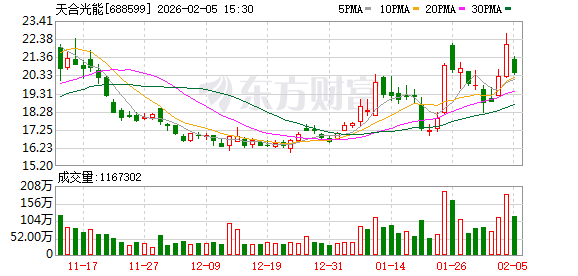
Core Viewpoint - The recent visit of SpaceX to several Chinese photovoltaic companies led to a surge in the space photovoltaic concept stocks on February 4, but the momentum could not be sustained, resulting in a significant decline in the space photovoltaic index on February 5 [2][3]. Group 1: Market Performance - On February 5, the space photovoltaic index (8841929) dropped by 4.86%, closing at 3837.43, with notable declines in stocks such as JunDa Co., JinCheng Co., and Shuangliang Energy, which hit the daily limit down [2][3]. - Other companies like GaoCe Co., JieJia WeiChuang, MaiWei Co., JingSheng JiDian, and HaiYou New Materials saw declines exceeding 9%, while Trina Solar fell over 7% and JinkoSolar dropped over 6% [2][4]. Group 2: Company Announcements - Trina Solar announced that it has not engaged in any cooperation with SpaceX and has no related orders in the "space photovoltaic" sector, clarifying that its main products are focused on ground photovoltaic applications [5][6]. - GCL-Poly Energy stated that it has not received any orders in the "space photovoltaic" field and emphasized that the technology is still in the exploratory phase, with uncertain commercial prospects [8]. - JinkoSolar confirmed it has not collaborated with SpaceX and highlighted that the "space photovoltaic" concept remains in the early exploration stage [10]. - Other companies like Guosheng Technology, Shuangliang Energy, and JingSheng JiDian also reported no involvement in "space photovoltaic" business, reiterating the uncertainty surrounding the commercialization of this technology [11][12][13]. Group 3: Financial Forecasts - Trina Solar projected a net loss of between 6.5 billion to 7.5 billion yuan for the year 2025 [7]. - GCL-Poly Energy expects a net loss of between 890 million to 1.29 billion yuan for the same year [8].




光伏设备板块回调
Di Yi Cai Jing· 2026-02-05 12:28
奥特维跌超10%,钧达股份、金辰股份双双跌超9%,迈为股份、拉普拉斯、东方日升、晶盛机电、晶 科能源等个股跟跌。 (本文来自第一财经) ...


A股太空光伏概念股坐上“过山车”
Jin Rong Shi Bao· 2026-02-05 12:00
Group 1 - The A-share photovoltaic sector experienced a sharp decline, with several popular concept stocks dropping approximately 5% as the market shifted from a heated phase to a "cooling period" [1] - The rapid market reversal was primarily driven by two factors: the release of announcements by multiple listed companies clarifying business uncertainties and a statement from the China Photovoltaic Industry Association indicating that space photovoltaic technology is still in the early stages of exploration and verification [1][2] - On February 4, around seven related concept stocks issued announcements regarding abnormal trading fluctuations or risk warnings [2] Group 2 - Guosheng Technology clarified that it does not engage in space photovoltaic business, despite recent stock price fluctuations, and warned investors about market risks [3] - Jinjing Technology reported a projected net loss of approximately 560 million yuan for 2025 and indicated that its TCO glass revenue is currently a small portion of its total income [4] - Shuangliang Energy stated that it has not confirmed any revenue related to commercial space projects and emphasized the uncertainties surrounding the commercialization of space photovoltaic technology [5] Group 3 - Jingsheng Mechanical and JinkoSolar both noted that space photovoltaic technology is still in the initial exploration phase, with significant uncertainties in the industrialization process [6][7] - Tian Tong Co. announced that it does not produce light module products and warned investors about the risks associated with market speculation [8] - The market buzz around space photovoltaic concepts was fueled by rumors of SpaceX's team visiting several Chinese photovoltaic companies, which led to stock price surges [9] Group 4 - The China Photovoltaic Industry Association emphasized the importance of mature and replicable manufacturing capabilities for the successful commercialization of new technologies [10] - The association encouraged Chinese photovoltaic companies to leverage their advantages in manufacturing to seek partnerships with leading global commercial space enterprises [11][12]


概念股暴涨后遇冷!马斯克带火的“太空光伏”,前景几何?谁已入局?
Da Zhong Ri Bao· 2026-02-05 10:30
Core Viewpoint - The recent surge and subsequent decline in the space photovoltaic concept stocks were triggered by news of Elon Musk's team conducting research on solar energy companies, raising questions about the viability and market potential of space photovoltaics [1][2][3]. Group 1: Market Reaction - On February 4, space photovoltaic concept stocks experienced significant gains, with companies like Zhonglai Co. hitting a 20% limit up, while others like Guosheng Technology saw consecutive gains [3]. - Following the initial excitement, by February 5, the Wind Space Photovoltaic Index dropped by 4.86%, with several stocks, including Junda Co. and Jincheng Co., hitting their daily limit down [4]. Group 2: Company Responses - Multiple companies, including TCL Zhonghuan and Jinko Solar, confirmed interactions with Musk's team but clarified that no formal agreements or collaborations had been established [2][3]. - Jinko Solar stated that while they had contact with Musk's team, they had not signed any contracts or received orders related to space photovoltaics [3]. Group 3: Industry Insights - The concept of space photovoltaics involves harnessing solar energy in outer space and transmitting it back to Earth, which is seen as a potential solution for energy supply in commercial space endeavors [8]. - Industry experts, including the Secretary-General of the China Photovoltaic Industry Association, indicated that space photovoltaic technology is still in the exploratory phase, with significant uncertainties regarding its commercialization [3][8]. - The Ministry of Industry and Information Technology emphasized the need for high standards and quality regulation in the photovoltaic industry, aiming to address challenges such as supply-demand mismatches and promote innovation [8]. Group 4: Future Outlook - Analysts from Zhongyuan Securities noted that space photovoltaics are currently in the early stages, requiring validation across various technical and economic dimensions for large-scale commercial application [9]. - Huaxi Securities highlighted that emerging applications in space photovoltaics could drive growth across the entire photovoltaic industry, benefiting equipment, materials, and battery manufacturers [9].