
S.C(300724)

Search documents
机械行业2026年度策略报告:与时代共舞,拥抱“科技+出海”-20260213


CMS· 2026-02-13 08:04
Core Viewpoints - The mechanical industry is expected to embrace "technology + going global" as its dual main lines in 2026, focusing on high elasticity growth opportunities and performance certainty from overseas expansion [13][9][7] 2025 Review Market Performance - In 2025, the mechanical sector achieved a 41% increase, significantly outperforming the CSI 300 index, which rose by 18%, ranking fifth among A-share sub-industries [6][16] - The sub-sectors that performed well included PCB equipment (+252%), 3C equipment (+129%), controllable nuclear fusion (+119%), data centers (+112%), and humanoid robots (+85%) [20][6] Demand Side - Domestic demand showed signs of bottoming out, with a marginal improvement towards the end of 2025, while external demand began to recover positively [31][35] - The manufacturing PMI in December 2025 rebounded to 50.1, indicating a return to expansion territory, driven by large enterprises and high-tech manufacturing [32][35] Cost Side - The cost structure showed a continuous improvement trend, with PPI declining by 2.6% year-on-year in 2025, reflecting insufficient industrial demand [31][33] 2026 Outlook Macro Perspective - The macro narrative for the next five years is centered around "AI commercialization + global re-industrialization," with expectations of a cyclical recovery driven by proactive fiscal policies [6][7] Mid-level Perspective - Technology - The technology sector is expected to see explosive growth, with key areas including data centers, PCB equipment, semiconductor equipment, humanoid robots, and commercial aerospace [7][9] Mid-level Perspective - Going Global - The overseas production capacity is anticipated to enter a release phase in 2026, with significant revenue and profit growth expected for companies in the machinery and equipment sectors [7][8] Investment Recommendations - Investment strategies should focus on high-certainty directions with strong industry trends and competitive advantages, prioritizing stock selection based on industry trends, competitive positioning, and valuation [7][8] - Long-term investments should consider companies with platform capabilities that offer sustainable value [7][8]
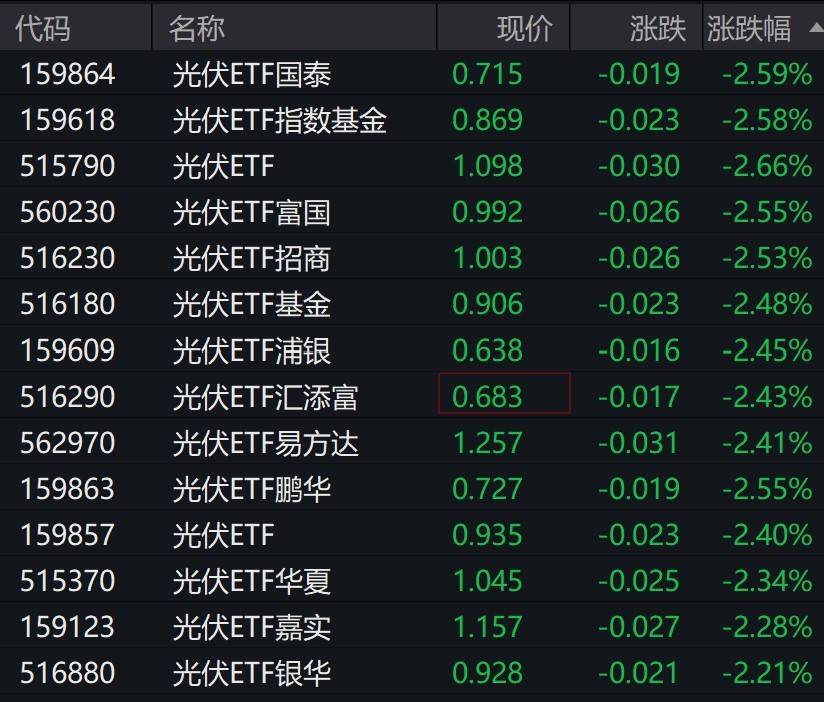
光伏概念股走低,相关ETF跌超2%
Sou Hu Cai Jing· 2026-02-13 06:30
| 代码 | 名称 | 现价 | | 涨跌 涨跌幅 ▲ | | --- | --- | --- | --- | --- | | 159864 | 光伏ETF国泰 | 0.715 | -0.019 | -2.59% | | 159618 | 光伏ETF指数基金 | 0.869 | -0.023 | -2.58% | | 515790 | 光伏ETF | 1.098 | -0.030 | -2.66% | | 560230 | 光伏ETF富国 | 0.992 | -0.026 | -2.55% | | 516230 | 光伏ETF招商 | 1.003 | -0.026 | -2.53% | | 516180 | 光伏ETF基金 | 0.906 | -0.023 | -2.48% | | 159609 | 光伏ETF浦银 | 0.638 | -0.016 | -2.45% | | 516290 | 光伏ETF汇添富 | 0.683 | -0.017 | -2.43% | | 562970 | 光伏ETF易方达 | 1.257 | -0.031 | -2.41% | | 159863 | 光伏ETF鹏华 | 0.72 ...





研判2026!中国太阳能扩散炉行业概述、产业链、市场规模、竞争格局、发展趋势分析:光伏产业推动,太阳能扩散炉市场规模持续增长[图]
Chan Ye Xin Xi Wang· 2026-02-13 03:30
内容概要:近年来,我国太阳能扩散炉行业市场规模总体呈现上升趋势,2025年中国太阳能扩散炉行业 市场规模达到60.5亿元,同比上涨11%。这一增长主要得益于光伏产业的持续扩张。我国通过出台扶持 政策,如《关于大力实施可再生能源替代行动的指导意见》等,鼓励太阳能产业发展,推动能源结构向 清洁低碳转型。这为扩散炉行业创造了良好的政策环境和市场机遇。此外,行业持续研发新技术,如非 晶硅扩散、蓝宝石基板扩散、等离子体扩散等,这些创新提升了生产效率、降低了成本,为太阳能扩散 炉行业的发展提供了有力支撑。 相关上市企业:北方华创(002371)、捷佳伟创(300724)、晶盛机电(300316)、拉普拉斯 (688726)、阳光电源(300274)、隆基绿能(601012)、特变电工(600089)、通威股份 (600438)、晶科能源(688223)等。 相关企业:株洲众欣科技发展有限责任公司、深圳丰盛装备股份有限公司、青岛赛瑞达电子装备股份有 限公司、北京晶伏华控电子设备有限公司、山东力冠微电子装备有限公司、青岛华旗科技有限公司、青 岛育豪微电子设备有限公司等。 关键词:太阳能扩散炉行业产业链、太阳能扩散炉行业市场规 ...




捷佳伟创(300724) - 关于公司2022年员工持股计划出售完毕暨终止的公告
2026-02-09 10:22
证券代码:300724 证券简称:捷佳伟创 公告编号:2026-002 深圳市捷佳伟创新能源装备股份有限公司 关于公司 2022 年员工持股计划出售完毕暨终止的公告 本公司及董事会全体成员保证信息披露的内容真实、准确、完整,没 有虚假记载、误导性陈述或重大遗漏。 深圳市捷佳伟创新能源装备股份有限公司(以下简称"公司")2022年员工 持股计划所持有的公司股票已全部出售完毕,根据《关于上市公司实施员工持股 计划试点的指导意见》《深圳证券交易所上市公司自律监管指引第2号——创业 板上市公司规范运作》等相关规定,现将公司2022年员工持股计划有关情况公告 如下: 一、公司2022年员工持股计划的基本情况 3、本次员工持股计划锁定期为12个月,自公司公告最后一笔标的股票登记 过户至资管/信托产品名下之日起算(即2022年4月30日至2023年4月29日),公 司于2023年5月4日在巨潮资讯网(www.cninfo.com.cn)披露《关于2022年员工持 股计划锁定期届满的提示性公告》(公告编号:2023-045)。 4、鉴于公司2022年员工持股计划存续期将于2025年3月10日届满,公司于 2025年2月21日 ...
太空光伏最新8大核心龙头企业,这篇文章帮你梳理清楚
Xin Lang Cai Jing· 2026-02-09 04:51
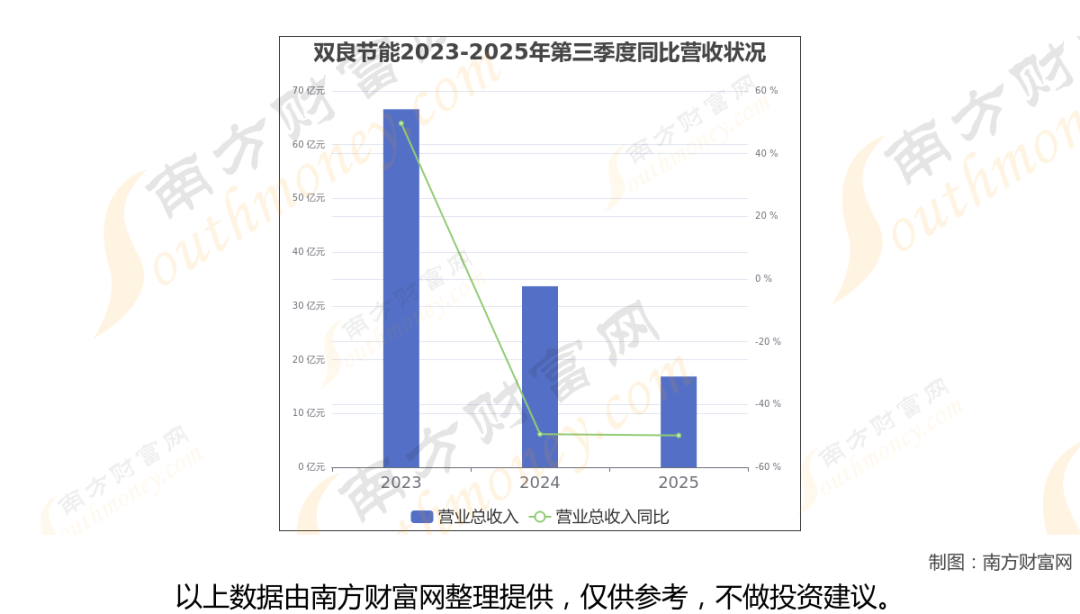
Core Concept - Space photovoltaic technology captures solar energy in space and transmits it to Earth, providing stable and efficient power supply regardless of ground conditions Group 1: Company Performance - Shuangliang Energy reported a main business revenue of 1.688 billion yuan, a decrease of 49.86% year-on-year [3] - Shuangliang Energy achieved a net profit of 53.18 million yuan, with a year-on-year growth rate of 164.75% and a gross margin of 20.43% [4] - Saiwu Technology's main business revenue reached 687 million yuan, an increase of 4.84% year-on-year [8] - Saiwu Technology reported a gross margin of -2.18%, a net margin of -6.78%, and a net profit of -44.89 million yuan, with a year-on-year growth of 43.92% [9] - JinkoSolar's revenue for the third quarter was 16.155 billion yuan, a decline of 34.11% year-on-year [13] - JinkoSolar reported a net loss of 1.012 billion yuan, with a gross margin of 3.76% [15] - GCL-Poly's revenue was 3.998 billion yuan, an increase of 3.12% year-on-year [17] - GCL-Poly reported a net loss of 228 million yuan, with a year-on-year growth rate of -691.81% and a gross margin of 2.52% [19] - Qianzhao Optoelectronics achieved a main business revenue of 1.007 billion yuan, an increase of 65.8% year-on-year [21] - Qianzhao Optoelectronics reported a net profit of 18.72 million yuan, with a year-on-year growth of 56.01% and a gross margin of 9.08% [23] - Dongfang Risen's revenue was 3.024 billion yuan, a decrease of 31.95% year-on-year [25] - Dongfang Risen reported a net loss of 254 million yuan, with a year-on-year growth of 57.39% and a gross margin of 1.4% [27] - Jiejia Weichuang's revenue was 4.734 billion yuan, a decline of 17.26% year-on-year [29] - Jiejia Weichuang reported a gross margin of 28.06%, a net margin of 18.13%, and a net profit of 858 million yuan, with a year-on-year growth of 7.72% [31] - Maiwei's revenue reached 1.991 billion yuan, a decrease of 31.3% year-on-year [33] - Maiwei reported a net profit of 26.9 million yuan, with a year-on-year decline of 9.42% and a gross margin of 39.81% [35]


东方证券:海内外同步催化驱动太空光伏景气度向上 优选高市占率设备厂及核心材料企业
智通财经网· 2026-02-09 03:32
Group 1 - The core viewpoint is that the space photovoltaic industry has significant potential, driven by both domestic and international developments, particularly with SpaceX's plans for a solar energy satellite network and China's increasing satellite launch capabilities [1][2] - The global market for space photovoltaics could reach 8GW annually, with a potential market size of 8 trillion yuan, even if the cost of components decreases significantly [2] - China's photovoltaic industry is strong, with leading manufacturers in equipment and materials, such as Maiwei and Aotwei, which are expected to gain incremental orders due to the expansion of overseas leaders [3] Group 2 - The report suggests focusing on key photovoltaic equipment manufacturers like Aotwei, Maiwei, and others that are likely to benefit from the expansion of overseas leaders [3] - It also highlights core material manufacturers like Dongfang Risen and others that have established deep relationships with overseas clients, which will drive profit growth [3]



未知机构:国海机械张钰莹Again继续持续再次Call太空光伏设备0208-20260209
未知机构· 2026-02-09 02:45
Summary of Conference Call on Space Photovoltaic Equipment Industry Overview - The conference call focuses on the space photovoltaic industry, particularly in the context of China's satellite deployment plans and the evolution of satellite technology, including the Starlink project [1][2]. Key Points and Arguments 1. **China's Satellite Deployment Plans**: - By the end of 2025, China plans to submit approximately 203,000 satellites to the ITU, covering 14 satellite constellations. This includes 96,714 satellites for each of the CTC-1 and CTC-2 constellations, totaling nearly 193,000 satellites [1]. - Operators and commercial satellite companies are advancing medium-scale constellations, with China Mobile applying for 2,520 satellites, Yuanxin Satellite for 1,296, and Guodian Gaoke for 1,132 [1]. - As of December 2025, the overall launch completion rate for major domestic constellations remains low, indicating a "low launch rate and early networking stage" [1]. 2. **Starlink Project Development**: - As of January 25, 2026, Starlink has cumulatively launched approximately 11,034 satellites and applied for about 41,943 [2]. - The annual launch volume has increased from "hundreds" in 2018-2019 to an expected peak of around 3,200 satellites in 2025 [2]. 3. **Cost and Efficiency Dynamics**: - Gallium arsenide (GaAs) remains the mainstream technology for space photovoltaic applications, but it is no longer the only viable option due to high costs. The industry is exploring lower-cost alternatives such as silicon-based and perovskite solar cells [2]. - Starlink's V1-V3 satellites utilize crystalline silicon technology to achieve supply chain scalability and system-level cost reductions, sacrificing some unit efficiency for significant cost advantages [2]. 4. **Future Directions for Starlink**: - Starlink V4 may adopt P-type silicon HJT or P-type silicon HJT-perovskite tandem structures, which are expected to offer better reliability in space environments [3]. 5. **Domestic Space Photovoltaic Developments**: - The core technology remains multi-junction GaAs, but several companies are reporting progress in testing perovskite systems in orbit. For instance, Jiangyin Jinghao has completed over three months of stable operation for perovskite components in orbit as of May 6, 2025 [4]. - The industry outlook is positive, with an upgrade in the rating for the space photovoltaic sector to "recommended" due to accelerated satellite launches and ongoing validation of new photovoltaic technologies [4]. Additional Important Content - **Related Companies**: The call mentions several companies involved in the space photovoltaic sector, including Maiwei Co., Aotewi, High Measurement Co., Jing Sheng Machinery, Jiejia Weichuang, and Shanghai Port [5]. - **Risk Factors**: The report highlights several risks, including uncertainties in technology maturity and reliability, challenges in industrialization and commercialization, early investment and project execution risks, market space and competitive landscape uncertainties, and potential changes in policy and regulatory environments [7].


上周A股融资余额小幅回落 5股获融资客大手笔买入
Sou Hu Cai Jing· 2026-02-08 23:44
Core Viewpoint - The financing balance of A-shares has been declining, with a latest figure of 26,640.67 billion yuan as of February 5, indicating a net repayment trend in financing funds totaling 42.915 billion yuan for the week [1] Industry Summary - The electronic sector led the net repayment of financing, amounting to 10.55 billion yuan [1] - The non-ferrous metals sector followed with a net repayment of 8.421 billion yuan [1] - The communication, banking, and food & beverage sectors also experienced net repayments exceeding 2 billion yuan each [1] Company Summary - The construction and decoration sector saw net purchases of financing, totaling 319 million yuan [1] - The comprehensive sector recorded net purchases of 80.9149 million yuan [1] - A total of 58 stocks had net financing purchases exceeding 100 million yuan, with the top five being Zhongji Xuchuang, SMIC, Jiejia Weichuang, China Satellite, and Hengtong Optic-Electric, each with net purchases over 400 million yuan [1]




商业航天深度:太空光伏的技术底层逻辑(附29页PPT)
材料汇· 2026-02-08 15:24
Core Viewpoint - The article discusses the emergence of a new era in satellite technology, emphasizing the urgent need for efficient power supply systems for satellites as China prepares to launch a significant number of satellites by the end of 2025 [6][9]. Group 1: Satellite Launch and Development - By the end of 2025, China plans to submit approximately 203,000 satellites to the ITU, covering 14 satellite constellations, with the Radio Innovation Institute applying for two constellations, each with 96,714 satellites, totaling nearly 193,000 satellites [7][8]. - Major operators and commercial satellite companies are also advancing medium-scale constellations, with China Mobile applying for 2,520 satellites, Yuxin Satellite for 1,296, and Guodian Gaoke for 1,132 [8][10]. - As of December 2025, the overall launch completion rate for major domestic constellations remains low, indicating they are in the early stages of network formation [13]. Group 2: Starlink Program and Launch Trends - The Starlink program exhibits a clear generational rhythm, with cumulative launches reaching approximately 11,034 satellites and applications totaling about 41,943 as of January 2026 [2][16]. - The annual launch volume has increased significantly, with projections for 2025 reaching around 3,200 satellites, reflecting a trend of accelerating deployment [15][20]. - Starlink's V1 to V3 satellites utilize crystalline silicon technology to prioritize supply chain scalability and system-level cost reduction, while V4 may adopt P-type silicon HJT or P-type silicon HJT-perovskite tandem structures [3][4]. Group 3: Photovoltaic Technology in Space - The current mainstream technology for space photovoltaic applications in China is multi-junction gallium arsenide (GaAs), although there is ongoing testing and validation of perovskite systems by various companies [4][26]. - The high unit price of GaAs photovoltaic cells is becoming a significant factor limiting system economics, prompting the industry to explore lower-cost alternatives such as silicon-based and perovskite technologies [21][34]. - The article highlights the unique requirements for photovoltaic cells in space, including radiation resistance, thermal stability, and long-term reliability under extreme conditions [22][25]. Group 4: Industry Outlook and Recommendations - The acceleration of satellite launches and the continuous validation of new photovoltaic technologies indicate a rising industry outlook and long-term growth potential for the space photovoltaic sector [5][6]. - The article recommends a "buy" rating for the space photovoltaic industry, citing key companies such as Maiwei Co., Aotewi, and others as relevant investment targets [5][6].



捷佳伟创:公司目前在手订单以TOPCon为主,海外订单保持增长,海外订单占比持续提升
Mei Ri Jing Ji Xin Wen· 2026-02-07 07:17
Core Viewpoint - The company, Jiejia Weichuang, is experiencing growth in overseas orders, primarily driven by the upgrade of production lines in the industry, expansion in overseas markets, and the company's increased focus on new technology routes [1] Group 1: Company Orders - The current orders held by the company are mainly focused on TOPCon technology [1] - The development of overseas markets is contributing positively to the company's order growth [1] - The proportion of overseas orders is continuously increasing [1]