ASML Holding(ASML)

Search documents
谁真正控制着芯片供应?
半导体行业观察· 2026-02-11 01:27
Core Insights - Semiconductor manufacturing equipment is the most constrained link in the chip supply chain, determining the capacity ramp-up and process node scaling of wafer fabs [2] - The delivery cycle for advanced equipment can take months, leading to wafer shortages and increased chip prices during any disruptions [2] - Despite the recovery of equipment supply since the 2020-2022 period, demand remains strong, driven by AI servers, HBM, and increased capital expenditures from foundries and IDMs [6] Group 1 - The global equipment investment is projected to reach approximately $130 billion by 2025, with China being the largest investor despite U.S. export controls [6] - The supply chain faces several challenges, including the complexity of equipment components sourced from a few suppliers, which creates structural bottlenecks [9] - The long certification cycles for alternative suppliers exacerbate supply disruptions, as wafer fabs require proven performance before switching suppliers [9] Group 2 - Geopolitical factors are reshaping market dynamics, with U.S. export restrictions altering order flows and prompting China to accelerate domestic equipment development [9] - Global logistics and material trade remain fragile, with reliance on specialized inputs that often require international integration [10] - The demand for on-site support and spare parts is increasing, which can limit service capabilities in certain regions [10] Group 3 - Yole Group anticipates three major transformations in the semiconductor equipment ecosystem, focusing on regionalization and collaboration with subsystem suppliers [11] - The diversification of technology will shift the location of bottlenecks, as advanced packaging and heterogeneous integration create new equipment demands [12] - Key players in the semiconductor equipment market include ASML, Applied Materials, Lam Research, and Tokyo Electron, with emerging Chinese OEMs like Naura and AMEC gaining traction [12]



Broader Market Falls Ahead of Wednesday’s US Jobs Report
Yahoo Finance· 2026-02-10 21:32
Economic Indicators - Nonfarm payrolls are expected to increase by +68,000 in January, with the unemployment rate remaining unchanged at 4.4% [1] - Average hourly earnings are projected to rise by +0.3% month-over-month and +3.7% year-over-year in January [1] - Initial weekly unemployment claims are anticipated to decrease by -7,000 to 224,000 [1] - Existing home sales in January are expected to decline by -4.3% month-over-month to 4.16 million [1] - January CPI is expected to rise by +2.5% year-over-year, with core CPI also expected to increase by +2.5% year-over-year [1] Retail Sales and Employment Costs - US December retail sales were unchanged month-over-month, falling short of expectations of +0.4% [2] - The employment cost index for Q4 rose by +0.7% quarter-over-quarter, which is the smallest increase in 4.5 years and below the expected +0.8% [2] Stock Market Performance - Stock indexes experienced mixed trading, with the Dow Jones reaching a new all-time high while the S&P 500 closed down -0.33% and the Nasdaq down -0.56% [6][5] - The broader market initially found support from weaker-than-expected retail sales and employment cost index reports, which lowered bond yields [5] Earnings Season Insights - Over half of the S&P 500 companies have reported earnings, with 78% beating expectations [7] - S&P earnings growth is expected to rise by +8.4% in Q4, marking the tenth consecutive quarter of year-over-year growth [7] - Excluding the Magnificent Seven tech stocks, Q4 earnings are projected to increase by +4.6% [7] Interest Rates and Bond Market - The markets are pricing in a 23% chance of a -25 basis point rate cut at the next Federal Reserve meeting [8] - The 10-year T-note yield fell to a 3.5-week low of 4.13%, supported by weaker-than-expected economic reports [9] Sector Performance - AI-infrastructure stocks faced pressure, with Western Digital down more than -7% and other tech stocks also declining [12] - Wealth-management stocks dropped significantly, with Raymond James Financial down more than -8% due to concerns over AI disruption [13] - Homebuilding stocks rose after the drop in mortgage rates, with Toll Brothers up more than +6% [14] Company-Specific Developments - Goodyear Tire & Rubber Co reported Q4 adjusted EPS of 39 cents, below the consensus of 49 cents, leading to a decline of more than -14% [15] - Incyte forecasted dull-year total net product revenue of $4.77 billion to $4.94 billion, causing a drop of more than -8% [16] - Spotify reported a record 38 million monthly active users in Q4, leading to a rise of more than +17% [17]





Attention Catholics: There’s a New Index Fund For Your Values
Yahoo Finance· 2026-02-10 19:07
Core Viewpoint - The Vatican Bank has launched two new stock indices based on Catholic principles, aiming to guide investments that align with the values of the Catholic Church [1]. Group 1: New Indices - The Vatican's Institute for the Works of Religion introduced the Morningstar IOR Eurozone Catholic Principles Index and the Morningstar IOR US Catholic Principles Index [1]. - Each index consists of fifty stocks, including major companies like Meta, Amazon, ASML Holding NV, and Deutsche Telekom AG [2]. Group 2: Investment Strategy - The Vatican Bank's move reflects a desire for financial returns while adhering to Catholic values, despite some ambiguity regarding how certain tech and retail companies align with these values [2]. - The initiative is part of a broader strategy to enhance transparency and accountability within the Vatican Bank, especially after previous financial losses [3].


边加谷歌边减英伟达!百年巨头柏基披露去年四季度大动作
Ge Long Hui· 2026-02-10 03:42
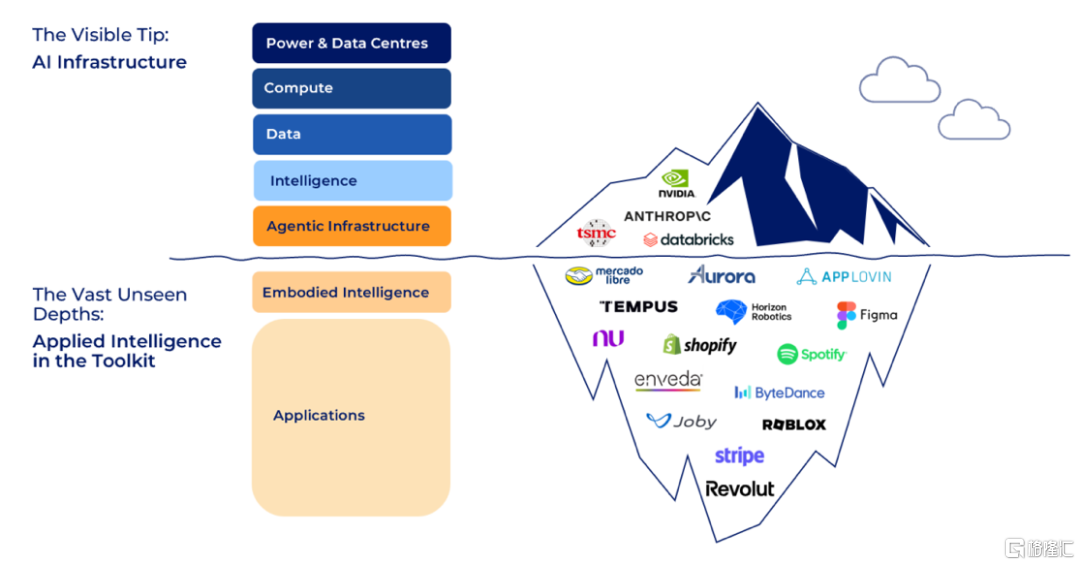
Summary of Key Points Core Viewpoint - Baillie Gifford's total holdings value decreased to $120.34 billion in Q4 2025, down approximately 10.8% from $135 billion in Q3 2025, primarily due to a net selling strategy and some growth stocks experiencing high-level corrections [1][2]. Group 1: Portfolio Adjustments - Nvidia remains the largest holding despite a 5.76% reduction in shares, accounting for 6.80% of the portfolio [3]. - Mercado Libre saw a 4.95% increase in holdings, raising its share to 5.83%, solidifying its position as a cornerstone of the portfolio [3]. - The top five holdings also include Amazon, Shopify, and Sea Ltd, with the top ten holdings comprising 43.4% of the total portfolio [4]. Group 2: Notable Transactions - Significant reductions were made in Amazon, Shopify, Meta, and Cloudflare, while Google saw a notable increase in holdings by 166%, reflecting a strategic shift towards AI capabilities [5][6]. - Baillie Gifford's investment in Google is valued at approximately $1.7 billion post-increase [6]. Group 3: Investment Philosophy and Trends - The investment team emphasizes the importance of adapting to the AI wave, suggesting that companies must pivot quickly to meet new market demands [9][10][12]. - The transition to AI is viewed as a new paradigm shift, with potential for significant growth opportunities as new companies emerge [14][15]. - The focus is on both "AI core" companies and those using AI as a tool to enhance existing services [21][24]. Group 4: Insights on China and Platform Companies - The sentiment in China has shifted, with a recognition of the country's potential to foster visionary entrepreneurs, particularly in the battery sector where CATL holds a significant market share [25][26]. - Platform companies are highlighted for their ability to create value through network effects and adaptability, requiring a long-term investment perspective [28]. Group 5: Non-Public Company Investments - Baillie Gifford has committed over £6 billion to non-public companies since 2012, recognizing the increasing duration of private company ownership before IPOs [31][32]. - The firm holds significant stakes in companies like SpaceX and ByteDance, which have shown substantial revenue growth compared to public market indices [33]. Group 6: Portfolio Construction Approach - The investment strategy is bottom-up, focusing on global transformations rather than specific trends or technologies [34]. - The portfolio includes a diverse range of companies across various sectors, with ongoing adjustments to capitalize on emerging growth opportunities [38].



AI落地加速,中国半导体为何更需理性协作?
Guan Cha Zhe Wang· 2026-02-10 03:21
Core Viewpoint - The global technology industry is experiencing a significant dichotomy between the explosive growth of artificial intelligence (AI) and the geopolitical tensions affecting the semiconductor industry, leading to a narrative of division and competition [1][2]. Group 1: AI and Semiconductor Industry Dynamics - The AI sector is entering a phase of intensive implementation starting in 2025, which is expected to drive a structural cycle of supply shortages in the semiconductor industry [1]. - ASML, a leading company in semiconductor equipment, reported a record annual sales of €32.7 billion, with China becoming the largest region for ASML's equipment shipments in 2024-2025 [1]. - Major semiconductor equipment manufacturers, including Lam Research and Applied Materials, continue to have China as their primary supply market, indicating a sustained industrial connection despite geopolitical tensions [2]. Group 2: Importance of Mature Process Technology - The narrative that AI solely depends on advanced process technology overlooks the critical role of mature process chips, which are essential for various applications, including autonomous vehicles and IoT devices [4][5]. - While advanced processes determine the speed of AI "thinking," mature processes are crucial for AI's ability to "perceive" the world and operate effectively in real-world applications [5]. - China's semiconductor industry is positioned to meet the growing demand for mature process technology, which is characterized by high reliability and cost sensitivity, thus maintaining a strong connection with the global semiconductor supply chain [5].

透过ASML 2025全年财报,看增长背后的结构变化
3 6 Ke· 2026-02-10 03:09
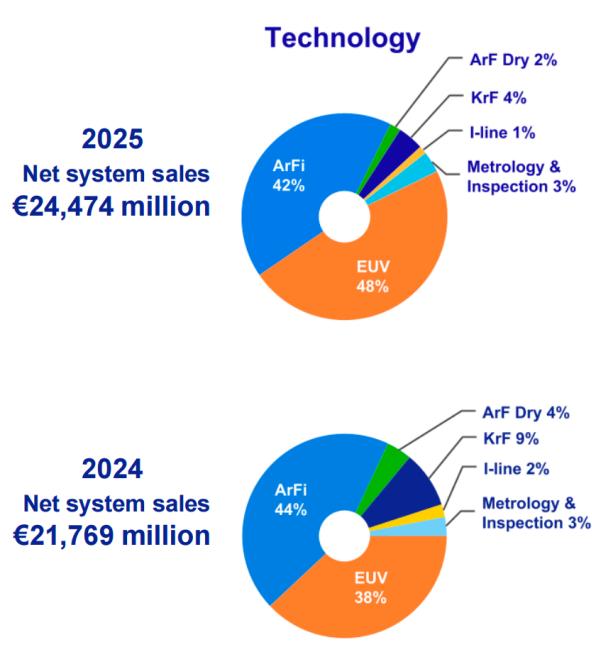
站在2026年初的节点回看,半导体行业不再是一条单线叙事,由手机、PC 等单一终端主导的传统周期,正转入以"AI 算力基建"为代表的多元驱动演进。 2025年,随着生成式 AI 迈入应用爆发期,全球数据中心对逻辑芯片与 HBM(高带宽存储)的算力需求近乎狂热。以AI训练和数据中心建设为核心的新 一轮算力需求,正在拉动先进制程相关投资回暖,与此同时由AI驱动的应用也带动了对成熟制程的需求。在这一背景下,芯片制造设备,尤其是光刻 机,可以看作衡量本轮产业复苏质量与可持续性的关键窗口之一。 最近光刻机巨头ASML发布了2025年全年的财报。在经历了2024年的"调整年"之后,ASML 在 2025 年交出了一份极具分量的成绩单:营收、利润、在手 订单全部刷新纪录。 AI 不再只是英伟达和SK海力士等芯片公司的狂欢,而是沿着台积电、英特尔、三星的产线,逐级向上游设备传导,也体现在了ASML的订单簿上。 EUV收入增长,而DUV仍是主力 2025年,ASML实现全年净销售额约327亿欧元,全年毛利率约52.8%,净利润约96亿欧元。尽管2023–2024年半导体行业经历资本开支波动,但最近几年 ASML的营收保持稳健增 ...
透过ASML 2025全年财报,看增长背后的结构变化
半导体行业观察· 2026-02-10 01:14
站在2026年初的节点回看,半导体行业不再是一条单线叙事,由手机、PC 等单一终端主 导的传统周期,正转入以 "AI 算力基建" 为代表的多元驱动演进。 2025年,随着生成式 AI 迈入应用爆发期,全球数据中心对逻辑芯片与 HBM(高带宽存 储)的算力需求近乎狂热。以AI训练和数据中心建设为核心的新一轮算力需求,正在拉动 先进制程相关投资回暖,与此同时由AI驱动的应用也带动了对成熟制程的需求。在这一背 景下,芯片制造设备,尤其是 光刻机,可以看作衡量本轮产业复苏质量与可持续性的关键 窗口之一。 最近光刻机巨头ASML发布了2025年全年的财报。在经历了2024年的"调整年"之后,ASML 在 2025 年交出了一份极具分量的成绩单:营收、利润、在手订单全部刷新纪录。 AI 不再只是英伟达和SK海力士等芯片公司的狂欢,而是沿着台积电、英特尔、三星的产线,逐级 向上游设备传导,也体现在了ASML的订单簿上。 EUV收入增长,而DUV仍是主力 2025年,ASML实现全年净销售额约327亿欧元,全年毛利率约52.8%,净利润约96亿欧元。尽管 2023–2024年半导体行业经历资本开支波动,但最近几年ASML的营 ...
Stocks Recover Early Losses as Tech Stocks Rebound
Yahoo Finance· 2026-02-09 16:14
Earnings Overview - More than half of the S&P 500 companies have reported Q4 earnings, with 79% of the 293 companies beating expectations [1] - S&P earnings growth is projected to increase by +8.4% in Q4, marking the tenth consecutive quarter of year-over-year growth [1] - Excluding the Magnificent Seven technology stocks, Q4 earnings are expected to rise by +4.6% [1] Economic Indicators - The Q4 employment cost index is expected to rise by 0.8% [2] - December retail sales are anticipated to increase by +0.4% month-over-month [2] - January nonfarm payrolls are expected to rise by +69,000, with the unemployment rate remaining at 4.4% [2] - January average hourly earnings are projected to increase by +0.3% month-over-month and +3.7% year-over-year [2] - Initial weekly unemployment claims are expected to decrease by -7,000 to 224,000 [2] - January CPI is expected to rise by +2.5% year-over-year [2] Market Movements - The S&P 500 Index is up +0.46%, the Dow Jones is up +0.09%, and the Nasdaq 100 is up +0.61% [6] - Overseas markets are also showing positive movements, with the Euro Stoxx 50 up +0.66% and Japan's Nikkei Stock 225 up +3.89% [7] Sector Performance - Chip makers and AI-infrastructure stocks have rebounded, with Nvidia up more than +3% and AMD, Broadcom, and Western Digital up more than +2% [12] - Mining stocks are performing well, with gold prices up more than +1% and silver prices up more than +6% [13] - AppLovin is up more than +13% after positive client performance news [13] - Oracle is up more than +9% following an upgrade to buy from neutral [14] Company-Specific News - Dynatrace reported Q3 revenue of $515.5 million, exceeding consensus estimates, and raised its full-year revenue forecast [15] - Kyndryl Holdings is down more than -54% after reporting lower-than-expected Q3 revenue and cutting its profit estimate [16] - Hims & Hers Health is down more than -23% after halting sales of a new product [17] - Monday.com is down more than -21% after forecasting lower Q4 revenue [17]





韩国加快EUV光刻机进口
半导体芯闻· 2026-02-09 10:10
Core Viewpoint - The South Korean government is simplifying the safety approval process for importing extreme ultraviolet (EUV) lithography equipment, which is crucial for semiconductor production, particularly for advanced chips at 7nm and below [1][2]. Group 1: Regulatory Changes - The current approval process for EUV lithography equipment takes about 15 days due to safety inspections related to high-pressure gas usage, which is not required in other regions like the US and Taiwan [1]. - The South Korean Ministry of Trade, Industry and Energy plans to revise the implementation details of the High-Pressure Gas Safety Management Act to significantly simplify the safety inspection process for EUV equipment [2]. - The proposed changes will categorize EUV lithography equipment as "specific equipment" rather than high-pressure gas facilities, aiming to reduce inspection time to less than two days [2]. Group 2: Industry Perspectives - ASML's Korea president emphasized the need for regulatory relaxation to allow South Korean semiconductor manufacturers to compete fairly with international counterparts [2]. - Industry insiders argue that EUV lithography equipment should be excluded from high-pressure gas regulations due to its inherent safety, suggesting that easing regulations would alleviate burdens on companies [2].

从DeepSeek恐慌到Cowork恐慌
虎嗅APP· 2026-02-09 09:43
Core Viewpoint - The article discusses the recent sell-off in global software stocks, termed "SaaSpocalypse," triggered by the launch of Anthropic's Claude Cowork, which poses a significant challenge to traditional SaaS business models by offering high-level results at lower costs [5][10]. Group 1: Market Reaction - On February 4, major software companies experienced significant stock declines, with Thomson Reuters dropping 15.8%, LegalZoom nearly 20%, and Salesforce and Workday also seeing notable decreases [5]. - The S&P 500 Software and Services Index fell nearly 13% over five trading days, marking a 26% drop from its October peak [5]. - The sell-off is compared to a previous market panic caused by DeepSeek, highlighting the similarities in market reactions to disruptive AI technologies [7][10]. Group 2: Comparison of Two Market Panics - The panic caused by Cowork is expected to be more prolonged than that of DeepSeek, as Cowork represents a novel AI application, while DeepSeek was a cheaper alternative to existing models [10]. - The market's response to both events shows a pattern of overreaction, with analysts suggesting that the fears may be exaggerated [9][10]. - Cowork's impact has spread beyond the U.S. to global markets, affecting stocks in London, Tokyo, and India, indicating a broader concern within the tech industry [11]. Group 3: SaaS Pricing Models and Challenges - Traditional SaaS pricing models are under pressure, with many companies shifting from fixed pricing to usage-based models due to increased efficiency and cost-cutting measures [14][15]. - The average SaaS company in the PricingSaaS 500 index has experienced 3.6 pricing changes per year, with a significant increase in companies adopting usage-based pricing [15]. - Companies like Salesforce have struggled with pricing strategies, leading to a transition from fixed pricing to more flexible models to accommodate rising operational costs [15][17]. Group 4: Emergence of AI-Native Startups - AI-native startups are gaining traction, with their revenue growth rates significantly outpacing traditional SaaS companies, highlighting a shift in enterprise spending towards these new players [18]. - For instance, companies like Harvey and Glean have achieved valuations of $5 billion and $7.25 billion, respectively, indicating strong investor interest in AI-driven solutions [18]. - The article notes that AI-native companies are expected to capture over half of enterprise AI spending, reflecting a fundamental change in the software landscape [18]. Group 5: Vibe Coding and Its Implications - The rise of Vibe Coding could lead enterprises to create their own tools rather than relying on third-party SaaS products, potentially disrupting traditional software markets [20][21]. - If Vibe Coding matures, it may enable employees to develop solutions quickly, reducing reliance on complex software development processes [21]. - The article suggests that traditional software companies may face a "three-step path to extinction" if they fail to adapt to these emerging trends [22].